Loading...
Andres de Santa Cruz vs Sitiveni Rabuka
Andres de Santa Cruz leads by 8.8 pts · 2 figures compared
…
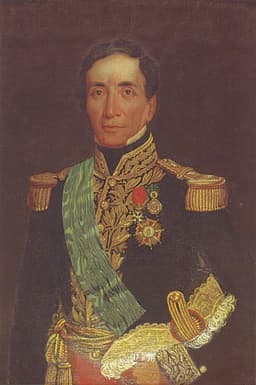
Andres de Santa Cruz
General · Modern
60.5Total
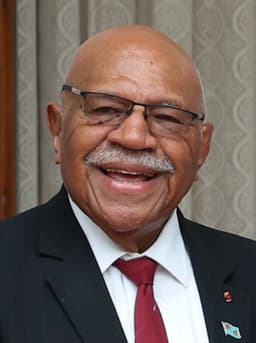
Sitiveni Rabuka
General · Modern
51.7Total
Basic Information
Born
1792
1948
Died
1865
—
Era
Modern
Modern
Nationality
Bolivia
Fiji
Occupation
General
General
Civilization
Western
Other
Score Comparison
Military (10%)
67.5
10.2
Political (20%)
59.3
60.0
Influence (20%)
62.0
53.3
Legacy (20%)
50.0
46.7
Leadership (15%)
68.0
85.0
Strategy (15%)
66.3
39.6
TOTAL
60.5
51.7
Andres de Santa Cruz — Complete Timeline
1823 AD
Battle of ZepitaWar
Santa Cruz commanded Peruvian forces in a victory over Spanish royalists at Zepita during the Peruvian War of Independence. This battle enhanced his military reputation and contributed to the eventual liberation of Peru from Spanish rule.
Peruvian War of IndependenceBattleLiberation
Impact: regional
1826 AD
Presidency of PeruPolitical Action
Santa Cruz served as President of the Council of Government of Peru from 1826 to 1827, effectively ruling the country. His administration focused on centralizing power and organizing the state, but he was overthrown by a rebellion led by Agust
PresidencyPeruCentralization
Impact: national
1829 AD
Presidency of BoliviaPolitical Action◆ Major
Santa Cruz became President of Bolivia in 1829, serving until 1839. He implemented administrative reforms, stabilized the economy, and modernized the military, establishing Bolivia as a more coherent state after the chaos following independence.
PresidencyBoliviaReforms
Impact: nationalconstructive
1836 AD
War of the ConfederationWar◆ Major
Chile and Argentina declared war on the Peru-Bolivia Confederation, viewing it as a threat to the balance of power. Santa Cruz led the confederation's forces in a conflict that lasted until 1839, ultimately resulting in the confederation's defeat.
WarChileArgentinaConfederation
Impact: regional
Creation of the Peru-Bolivia ConfederationPolitical Action
Santa Cruz established the Peru-Bolivia Confederation, uniting Bolivia and Peru into a single state with himself as Supreme Protector. This confederation aimed to create a powerful Andean nation and challenged the regional influence of Chile and Argentina.
ConfederationUnificationAndean Power
Impact: regional
1839 AD
Battle of YungayWar
Santa Cruz's confederation forces were decisively defeated by the Chilean army at the Battle of Yungay. This defeat led to the dissolution of the Peru-Bolivia Confederation and forced Santa Cruz into exile, ending his political project.
BattleDefeatEnd of Confederation
Impact: regionaltragic
Exile and DeathPolitical Action
After the defeat at Yungay, Santa Cruz fled to Ecuador and later to France. He spent the rest of his life in exile, making unsuccessful attempts to return to power. He died in France in 1865, never regaining his former influence.
ExileDeathFailure
Impact: nationaltragic
Sitiveni Rabuka — Complete Timeline
1987 AD
1987 Fijian Coup d'étatPolitical Action
Rabuka, as a colonel in the Fijian military, led a coup overthrowing the elected government of Timoci Bavadra. The coup was motivated by ethnic Fijian opposition to Indo-Fijian political influence. Rabuka declared Fiji a republic.
CoupMilitary InterventionEthnic Tension
Impact: nationaldestructive
1992 AD
1992 Election as Prime MinisterPolitical Action◆ Major
Rabuka transitioned from military leader to civilian politician, winning the 1992 general election as leader of the Fijian Political Party. He became Prime Minister, serving until 1999.
ElectionCivilian GovernmentPolitical Transition
Impact: national
1997 AD
1997 Constitution ReformReform◆ Major
Rabuka's government oversaw the adoption of a new constitution that removed ethnic-based voting and provided for a multi-ethnic government. The constitution aimed to reduce ethnic tensions and promote national unity.
ConstitutionReformEthnic Reconciliation
Impact: nationalconstructive
1999 AD
1999 General Election DefeatPolitical Action◆ Major
Rabuka's government was defeated in the general election by the Labour Party led by Mahendra Chaudhry. Rabuka stepped down as Prime Minister, marking the end of his first period in power.
Election DefeatGovernment ChangeChaudhry
Impact: national
2022 AD
2022 Return as Prime MinisterPolitical Action◆ Major
Rabuka led the People's Alliance to victory in the 2022 general election, forming a coalition government. He became Prime Minister again, 23 years after his previous tenure, promising democratic reforms.
ElectionReturn to PowerCoalition Government
Impact: national
Expert Analysis
Sitiveni Rabuka vs Andres de Santa Cruz
# The Unifier and the Reformer: Two Paths Through the Crucible of Power
On a December morning in 1839, Andrés de Santa Cruz watched his grand vision dissolve in the smoke of the Battle of Yungay. The Peru-Bolivia Confederation, his masterwork of Andean unification, lay shattered by Chilean bayonets. A century and a half later, on another island continent, Sitiveni Rabuka stood before the Fijian Parliament in 1997, signing a constitution that repudiated everything his 1987 coup had sought to achieve. Both men were soldiers who became statesmen. Both sought to reshape nations through force of will. But where Santa Cruz tried to weld two countries into one and saw his empire crumble into exile, Rabuka dismantled his own coup’s legacy and returned, decades later, to lead the democracy he once overthrew. The difference between them is not merely one of success or failure—it is a story of how time, geography, and the limits of power shape the men who grasp it.
Origins
Andrés de Santa Cruz was born in 1792 in La Paz, Bolivia, into a world of Spanish colonial hierarchy. His father was a Spanish officer, his mother a Quechua noblewoman from Inca lineage. This mestizo heritage placed him between worlds—privileged enough to attend the University of San Marcos in Lima, yet never fully accepted by the white creole elite who would lead Latin America’s independence movements. When the wars for independence erupted, Santa Cruz chose the royalist side, fighting for Spain against the early rebels. It was a pragmatic decision, but one that would later force him to prove his revolutionary credentials again and again.
Sitiveni Rabuka was born in 1948 in the village of Drekeniwai on Vanua Levu, Fiji’s second-largest island. His world was one of indigenous Fijian tradition—chiefly hierarchies, communal land ownership, and the protective grip of British colonial administration. Unlike Santa Cruz, Rabuka came from a society where ethnic identity was the central political fact. Fijians of Indian descent, brought as indentured laborers by the British, had grown to nearly equal the indigenous population. When Fiji gained independence in 1970, the constitutional settlement enshrined ethnic Fijian political dominance—a fragile bargain that would not hold.
Rise to Power
Santa Cruz’s path to power was forged in the chaos of liberation. After switching to the patriot cause, he distinguished himself at the Battle of Zepita in 1823, commanding Peruvian forces to a rare victory over Spanish royalists. But independence brought no peace—only a scramble among caudillos for control of the fractured viceroyalties. Santa Cruz served as President of the Council of Government of Peru from 1826 to 1827, a brief and unstable tenure. In 1829, he took the presidency of Bolivia, a poorer, landlocked nation desperate for stability. There he found his footing: he reformed the treasury, modernized the army, and codified laws. Bolivia, for the first time, began to function as a coherent state.
Rabuka’s rise was more sudden, and more violent. In May 1987, Fiji held a general election that brought the multiracial Labour Party to power under Timoci Bavadra—an Indian-dominated government that indigenous Fijians feared would strip them of their land rights and political control. Rabuka, then a 38-year-old colonel in the Fijian military, led a bloodless coup on May 14. He stormed Parliament in combat fatigues, arrested the Prime Minister, and declared martial law. “I am a simple soldier,” he told the nation, “and I have done what I had to do.”
Leadership & Governance
Santa Cruz governed as a visionary centralizer. His decade in Bolivia (1829–1839) was a masterclass in administrative state-building: he balanced the budget, created a national bank, reformed taxation, and built roads and schools. But his ambition outran his borders. In 1836, he created the Peru-Bolivia Confederation, uniting the two countries under his rule as Supreme Protector. It was a bold geopolitical gambit—a single Andean power that could rival Argentina, Chile, and the Pacific coast. Santa Cruz believed that only unity could protect the region from fragmentation and foreign domination.
Yet his confederation was built on a fragile foundation. Peru was deeply divided, and Santa Cruz’s rule was resented by Peruvian elites who saw him as a Bolivian interloper. Chile and Argentina, fearing a powerful neighbor, declared war in 1836. Santa Cruz was a capable administrator but a cautious general. His strategy of avoiding decisive battle and relying on diplomacy ultimately failed. At Yungay in 1839, the Chilean army routed his forces. The confederation collapsed. Santa Cruz fled into exile in Ecuador and later France, where he died in 1865, still dreaming of his lost union.
Rabuka’s leadership took a radically different arc. After the 1987 coup, he initially tried to entrench indigenous Fijian supremacy, declaring Fiji a republic and drafting a constitution that enshrined ethnic Fijian political control. But he soon discovered that military power could not solve economic isolation, international condemnation, and the simmering resentment of the Indo-Fijian community. In 1992, he transitioned to civilian politics, winning election as Prime Minister. Then came the remarkable reversal: in 1997, Rabuka’s government adopted a new constitution that removed ethnic-based voting, created a multiracial parliament, and restored equal citizenship. It was, in effect, the dismantling of his own coup’s raison d’être.
Triumph & Tragedy
Santa Cruz’s greatest triumph was also his tragedy. The Peru-Bolivia Confederation was a noble vision—a unified Andean state that might have altered the course of South American history. But it was a vision imposed from above, without the consent of the people it claimed to unite. Santa Cruz’s military score of 60.2 and strategy of 59.3 suggest a commander who could win battles but not wars, who could administer but not inspire the loyalty needed to survive invasion. His exile was lonely and bitter. He spent his final years in Paris, writing memoirs and petitions that no one heeded.
Rabuka’s tragedy was different: he became the man who destroyed his own creation. The 1997 constitution cost him the support of hardline indigenous nationalists. In 1999, his government was defeated by the Labour Party, and Rabuka stepped down quietly. For over two decades, he faded from power, a figure of controversy and regret. Then, in 2022, at age 74, he led the People’s Alliance to victory in the general election and returned as Prime Minister—this time as a democratic elder statesman, not a coup leader. It was a redemption arc almost unheard of in modern politics.
Character & Destiny
What drove these men down such different paths? Santa Cruz was a creature of the 19th century, when Latin American caudillos believed that nations could be forged by the will of a single man. He saw himself as a second Bolívar, a liberator and unifier. But he lacked Bolívar’s charisma and his understanding that unity must be built on consent, not coercion. His leadership score of 79.0 reflects genuine administrative talent, but his political score of 60.2 reveals a man who could not navigate the treacherous currents of Peruvian and Chilean nationalism.
Rabuka, by contrast, was shaped by the late 20th century’s global norms of democracy and human rights. After the 1987 coup, he faced international isolation, economic sanctions, and the moral weight of governing a divided society. He had the rare capacity to learn from failure. His political score of 72.0 and leadership of 77.4 suggest a man who grew into the job, who understood that power must be legitimized by the governed. His military score of 19.9 is almost irrelevant—Rabuka was never a battlefield commander, but a political soldier who used force as a prelude to negotiation.
Legacy
Santa Cruz is remembered in Bolivia as a great reformer, the “Organizer of the Republic,” whose administrative achievements outlasted his political failure. But in Peru and Chile, he is a cautionary tale—the man who tried to redraw the map and was crushed for his ambition. His legacy score of 68.9 reflects a figure of genuine historical importance, but one whose project was too ambitious for its time.
Rabuka’s legacy is more complex and more hopeful. He is reviled by many Indo-Fijians as the man who shattered democracy, yet revered by indigenous Fijians as the defender of their land rights. His influence score of 70.3 and legacy of 61.2 capture this ambivalence. But his return to power in 2022 offers a rare lesson: that a coup leader can become a democrat, that the arc of history can bend toward reconciliation, and that the gravest mistakes need not be the final word.
Conclusion
Standing at the edge of the Pacific, looking back at these two soldiers, we see the same question asked in different centuries: Can a nation be remade by force? Santa Cruz answered with a resounding yes—and was broken by the answer. Rabuka answered with a coup, then spent the rest of his life trying to unsay it. One died in exile, still dreaming of a union that never was. The other lives to govern the democracy he once overthrew. History does not always reward the bold. Sometimes it rewards those who learn to bend.
Rankings
🥇
Andres de Santa CruzLeader
Mil: 67.5Pol: 59.3Inf: 62.0
60.5
🥈
Sitiveni Rabuka
Mil: 10.2Pol: 60.0Inf: 53.3
51.7
+8.8 behind
How This Comparison Works
Algorithm
Each figure is scored on 6 dimensions (0—100 scale) based on structured historical data: Military (10%), Political (20%), Influence (20%), Legacy (20%), Leadership (15%), Strategy (15%). The weighted total produces the final ranking.
Data Sources
Scores are computed from structured sub-indicators in the database. Scale factors adjust for era (Ancient ×0.85, Modern ×1.0) and civilization size (Eastern ×1.05, Other ×0.80) to account for differences in population and military scale.
Maximum 3 Figures
Comparisons are limited to 2—3 figures to ensure readability and statistical meaningfulness.
Error Margins
±5 points per dimension — Sub-scores are derived from historical records with inherent uncertainty. Two figures within 5 points on a dimension should be considered roughly equivalent in that area.
Total Score Accuracy
±3 points overall — The weighted combination of 6 dimensions produces a total score with approximately ±3 points of uncertainty. Differences of less than 3 points are not statistically significant— the figures are effectively tied.
Known Limitations
- Historical records are incomplete and uneven across civilizations
- Figures from oral-tradition societies may be underrepresented
- Occupation labels can misclassify multi-role figures
- Scores measure capability and impact, not moral character
- Quantitative scoring is a comparison tool, not absolute truth
Capability Radar
Military (10%) — Battles & Warfare
Battles
60
5
Win Rate
55
5
Expansion
55
5
Political (20%) — Governance & Reform
Reform
65
50
Diplomacy
60
45
Economy
55
40
Influence (20%) — Cultural & Global Reach
Cultural
45
30
Global
35
20
Legacy (20%) — Historical Impact
Historical
50
40
Longevity
40
30
Leadership (15%) — Power & Stability
Tenure
60
55
Stability
40
35
Strategy (15%) — Tactics & Innovation
Strategy
65
10
Tactics
60
10
Reform
50
5
Similar Comparisons
Comments & Discussion
PACIFIC PHOENIX6/16/2026
Rabuka gets far too much credit for "repenting." The man overthrew an elected government, then spent a decade trying to lock in indigenous Fijian supremacy. By 1997, the military had made Fiji uninvestable, the sugar quotas were threatened, and the Indo-Fijian population was still disenfranchised. His "conversion" was survival, not statesmanship—unlike Santa Cruz, who actually built a functioning trans-Andean state from scratch. One man failed upward; the other failed with genuine ambition.|en
YUNGUY'S GHOST6/16/2026
圣克鲁斯至少死在玻利维亚的土地上,拉布卡却活成了自己政变的掘墓人。秘鲁-玻利维亚联邦只活了三年,但在那三年里,圣克鲁斯统一了货币、简化了关税、重组了军队,还让秘鲁和玻利维亚的商人都尝到了甜头。拉布卡呢?1987年政变之后,斐济经历了两次军事政变、一部种族主义宪法、一次共和制倒台,最后还要靠他亲手下台的那部宪法收场。这叫改革吗?这叫擦屁股。|zh
THE STATISTICIAN'S WITNESS6/16/2026
Let's talk numbers: Santa Cruz's confederation managed to increase inter-regional trade by something like 40% in just three years—impressive for a pre-industrial polity with mule trains. Meanwhile, Rabuka's Fiji saw economic contraction of 11% in the first year after his coup, with GDP per capita not recovering to pre-1987 levels until 1994. Seven years of lost growth for a coup that achieved nothing permanent. The "reformer" tag seems wildly generous when you plot Fiji's economic trajectory aga
历史潮汐观察者6/16/2026
比较这两位最讽刺的地方在于:圣克鲁斯梦想统一安第斯文明区,而拉布卡恰恰相反,他是用分裂来巩固权力的。前者失败了,因为智利和阿根廷不想看到身边出现一个强大的安第斯国家;后者失败了,因为他发现1990年代的斐济无法回到种姓隔离的殖民幻想里。两人都被时代的大潮卷走了,只不过一个被潮水冲上岸成了历史课本上的"统一者",另一个被潮水卷回来成了电视里的"和解者"。|zh
THE SPANISH LIEUTENANT6/16/2026
Everyone forgets Santa Cruz fought for Spain first. He was a royalist until 1821, defending the very colonial structure that oppressed his own mother's people. His later "indigenism" was pure political pragmatism—he needed Quechua-speaking soldiers to hold his federation together. Rabuka's at least consistent: he fought for indigenous Fijian paramountcy in 198