Loading...
Andres de Santa Cruz vs Muhammadu Buhari
Andres de Santa Cruz leads by 9.0 pts · 2 figures compared
…
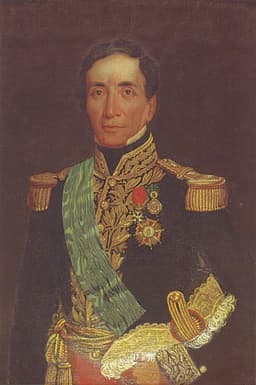
Andres de Santa Cruz
General · Modern
60.5Total
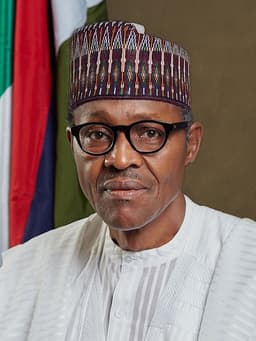
Muhammadu Buhari
General · Modern
51.5Total
Basic Information
Born
1792
1942
Died
1865
—
Era
Modern
Modern
Nationality
Bolivia
Nigeria
Occupation
General
General
Civilization
Western
Other
Score Comparison
Military (10%)
67.5
22.6
Political (20%)
59.3
68.0
Influence (20%)
62.0
53.3
Legacy (20%)
50.0
43.3
Leadership (15%)
68.0
72.0
Strategy (15%)
66.3
41.0
TOTAL
60.5
51.5
Andres de Santa Cruz — Complete Timeline
1823 AD
Battle of ZepitaWar
Santa Cruz commanded Peruvian forces in a victory over Spanish royalists at Zepita during the Peruvian War of Independence. This battle enhanced his military reputation and contributed to the eventual liberation of Peru from Spanish rule.
Peruvian War of IndependenceBattleLiberation
Impact: regional
1826 AD
Presidency of PeruPolitical Action
Santa Cruz served as President of the Council of Government of Peru from 1826 to 1827, effectively ruling the country. His administration focused on centralizing power and organizing the state, but he was overthrown by a rebellion led by Agust
PresidencyPeruCentralization
Impact: national
1829 AD
Presidency of BoliviaPolitical Action◆ Major
Santa Cruz became President of Bolivia in 1829, serving until 1839. He implemented administrative reforms, stabilized the economy, and modernized the military, establishing Bolivia as a more coherent state after the chaos following independence.
PresidencyBoliviaReforms
Impact: nationalconstructive
1836 AD
War of the ConfederationWar◆ Major
Chile and Argentina declared war on the Peru-Bolivia Confederation, viewing it as a threat to the balance of power. Santa Cruz led the confederation's forces in a conflict that lasted until 1839, ultimately resulting in the confederation's defeat.
WarChileArgentinaConfederation
Impact: regional
Creation of the Peru-Bolivia ConfederationPolitical Action
Santa Cruz established the Peru-Bolivia Confederation, uniting Bolivia and Peru into a single state with himself as Supreme Protector. This confederation aimed to create a powerful Andean nation and challenged the regional influence of Chile and Argentina.
ConfederationUnificationAndean Power
Impact: regional
1839 AD
Battle of YungayWar
Santa Cruz's confederation forces were decisively defeated by the Chilean army at the Battle of Yungay. This defeat led to the dissolution of the Peru-Bolivia Confederation and forced Santa Cruz into exile, ending his political project.
BattleDefeatEnd of Confederation
Impact: regionaltragic
Exile and DeathPolitical Action
After the defeat at Yungay, Santa Cruz fled to Ecuador and later to France. He spent the rest of his life in exile, making unsuccessful attempts to return to power. He died in France in 1865, never regaining his former influence.
ExileDeathFailure
Impact: nationaltragic
Muhammadu Buhari — Complete Timeline
1983 AD
1983 Nigerian coup d'étatPolitical Action
Major General Muhammadu Buhari led a military coup that overthrew the civilian government of President Shehu Shagari. Buhari cited corruption and economic mismanagement as justifications, and he became the head of state.
CoupMilitary RuleCorruption
Impact: nationaldestructive
1984 AD
War Against Indiscipline (WAI)Reform◆ Major
Buhari launched the War Against Indiscipline, a campaign to enforce discipline and order in Nigerian society. It included harsh penalties for minor offenses, such as queue-jumping, and was criticized for human rights abuses.
DisciplineSocial PolicyHuman Rights
Impact: nationaldestructive
1985 AD
Overthrow by Ibrahim BabangidaPolitical Action◆ Major
Buhari was overthrown in a palace coup led by his Chief of Army Staff, Ibrahim Babangida. Babangida cited Buhari's authoritarian style and failure to address the economy as reasons for the coup.
CoupOverthrowBabangida
Impact: national
2015 AD
Anti-corruption campaignReform◆ Major
Buhari launched a high-profile anti-corruption campaign, targeting government officials and recovering stolen assets. The campaign was praised internationally but criticized for being selective and politically motivated.
Anti-CorruptionReformGovernance
Impact: nationalconstructive
Election as President of NigeriaPolitical Action
Buhari won the 2015 Nigerian presidential election, defeating incumbent Goodluck Jonathan. This was the first time an opposition candidate had defeated a sitting president in Nigeria's history, marking a democratic milestone.
ElectionDemocracyOpposition Victory
Impact: nationalprogressive
Expert Analysis
Muhammadu Buhari vs Andres de Santa Cruz
### The Confederation and the Coup: Two Generals Who Shaped Their Nations
On a dusty plain in the Peruvian highlands, Andrés de Santa Cruz watched his forces break the Spanish line at the Battle of Zepita in 1823. It was a moment of pure military triumph, the kind that would define his life. A century and a half later, in the chaotic streets of Lagos, Major General Muhammadu Buhari seized a radio station to announce that Nigeria’s civilian government was no more. Both men were soldiers who became rulers. Both believed in order, discipline, and the power of a strong state. Yet one ended his days in a lonely Parisian exile, dreaming of a confederation that had crumbled, while the other returned from political oblivion to win a democratic election and govern his nation for eight years. Why did Santa Cruz’s grand vision shatter, while Buhari’s second act endured? The answer lies not just in their times, but in the very different worlds they sought to command.
### Origins
Andrés de Santa Cruz was born in 1792 in La Paz, a child of the Spanish colonial elite. His father was a Spanish military officer, his mother a descendant of Incan nobility. This dual heritage—European and Andean—shaped his ambition. He fought first for the Spanish crown, then switched sides to join the independence movement, a pragmatic move many South American officers made. He was a man of the 19th century, when nations were being carved from empires and the boundaries of states were still fluid. His world was one of vast, empty spaces, weak institutions, and personal loyalties.
Muhammadu Buhari was born in 1942 in Daura, a town in northern Nigeria, into a Muslim Fulani family. His father was a farmer and local chief. Buhari came of age in the era of decolonization, when Nigeria was a fragile new nation cobbled together from rival ethnic groups. He joined the army, as many ambitious young men did, and trained in Ethiopia, India, and the United Kingdom. His world was one of post-colonial chaos, oil wealth, and military coups. While Santa Cruz dreamed of uniting two nations, Buhari was fighting to keep one from falling apart.
### Rise to Power
Santa Cruz rose through the ranks of the Peruvian army during the wars of independence. His victory at Zepita in 1823 was a personal triumph, but it was not enough to secure lasting power. He became President of the Council of Government of Peru in 1826, effectively ruling the country for a year, but was soon ousted. He then moved to Bolivia, where he became president in 1829. His rise was a story of military prowess and political maneuvering in a world where borders were still being drawn.
Buhari’s rise was swifter and more violent. In 1983, Nigeria was a mess: the civilian government of President Shehu Shagari was corrupt and incompetent, the economy was collapsing, and the military was restless. Buhari led a coup that overthrew Shagari, citing the need to save the nation. He was a general who believed the army could clean up the mess politicians had made. His path to power was a classic military intervention, a pattern repeated across post-colonial Africa.
### Leadership & Governance
Santa Cruz was a reformer and a visionary. As President of Bolivia from 1829 to 1839, he stabilized the economy, reorganized the administration, and promoted education. But his masterstroke was the creation of the Peru-Bolivia Confederation in 1836, a single state uniting Bolivia and Peru under his rule as Supreme Protector. He believed that a larger, stronger state could resist foreign threats and bring prosperity. He was a builder of institutions in a land of chaos.
Buhari, in his first term as military ruler from 1983 to 1985, was a disciplinarian. He launched the “War Against Indiscipline” (WAI), a campaign to enforce order in Nigerian society. People were forced to queue in lines, civil servants were punished for lateness, and public floggings were common. It was harsh, but it was also popular among those tired of the chaos. He also jailed journalists and suppressed dissent. His style was authoritarian, not visionary. He was a fixer, not a founder.
When Buhari returned to power as a democratically elected president in 2015, his approach was different. He launched a high-profile anti-corruption campaign, targeting government officials and recovering stolen assets. He also fought Boko Haram, the Islamist insurgency in the northeast. But his second term was marked by economic stagnation and accusations of nepotism. He was a man of discipline, but not of economic vision.
### Triumph & Tragedy
Santa Cruz’s greatest triumph was the creation of the Peru-Bolivia Confederation. It was a bold, imaginative act that could have reshaped South America. His greatest tragedy was the War of the Confederation, when Chile and Argentina, fearing the new power, declared war. At the Battle of Yungay in 1839, his forces were decisively defeated. The confederation dissolved, and Santa Cruz fled to Ecuador, then to France. He spent the rest of his life in exile, making futile attempts to return. His grand dream was shattered by a coalition of enemies.
Buhari’s greatest triumph was his return to power in 2015, winning a democratic election and peacefully taking office. It was a first for Nigeria, and it gave the nation hope. His greatest tragedy was the failure of his anti-corruption campaign to truly transform the country. The economy faltered, poverty remained, and many of the corrupt elites he targeted were never brought to justice. He was a man who promised order, but could not deliver lasting change.
### Character & Destiny
Santa Cruz was a grand strategist, a man who thought in terms of continents and centuries. He was patient, calculating, and diplomatic. But he was also a man of his time, unable to see that his confederation was a threat to the existing order. His character was one of ambition tempered by patience, but his destiny was to be crushed by forces he could not control.
Buhari was a man of rigid principles. He was known for his honesty and personal integrity, but also for his stubbornness and lack of flexibility. He was a soldier who believed in command and control, not in negotiation or compromise. His destiny was to be a transitional figure, a bridge between the chaotic military rule of the past and the flawed democracy of the present. He was not a visionary, but a stabilizer.
### Legacy
Santa Cruz is remembered as a failed visionary, a man who nearly united two nations but was undone by the very forces he sought to overcome. In Bolivia and Peru, he is a figure of nostalgia, a symbol of what might have been. His legacy is a cautionary tale about the limits of ambition and the power of geopolitics.
Buhari’s legacy is more ambiguous. In Nigeria, he is respected for his integrity and his role in establishing democratic norms. But he is also criticized for his economic failures and his authoritarian tendencies. He will be remembered as a man who tried to impose order on a chaotic nation, but could not transform it.
### Conclusion
Standing at the edge of Lake Titicaca, Santa Cruz once looked out over the waters that divided Bolivia and Peru, dreaming of a single nation. In the dusty streets of Daura, Buhari once looked at a map of Nigeria, wondering how to keep it whole. Both were generals who became rulers, men of discipline in a world of disorder. One failed because his vision was too grand for his time. The other succeeded, in his own limited way, because his vision was small enough to survive. In the end, the difference between them is not just the difference between two men, but between two eras—one of empires and dreams, the other of nations and survival.
Rankings
🥇
Andres de Santa CruzLeader
Mil: 67.5Pol: 59.3Inf: 62.0
60.5
🥈
Muhammadu Buhari
Mil: 22.6Pol: 68.0Inf: 53.3
51.5
+9.0 behind
How This Comparison Works
Algorithm
Each figure is scored on 6 dimensions (0—100 scale) based on structured historical data: Military (10%), Political (20%), Influence (20%), Legacy (20%), Leadership (15%), Strategy (15%). The weighted total produces the final ranking.
Data Sources
Scores are computed from structured sub-indicators in the database. Scale factors adjust for era (Ancient ×0.85, Modern ×1.0) and civilization size (Eastern ×1.05, Other ×0.80) to account for differences in population and military scale.
Maximum 3 Figures
Comparisons are limited to 2—3 figures to ensure readability and statistical meaningfulness.
Error Margins
±5 points per dimension — Sub-scores are derived from historical records with inherent uncertainty. Two figures within 5 points on a dimension should be considered roughly equivalent in that area.
Total Score Accuracy
±3 points overall — The weighted combination of 6 dimensions produces a total score with approximately ±3 points of uncertainty. Differences of less than 3 points are not statistically significant— the figures are effectively tied.
Known Limitations
- Historical records are incomplete and uneven across civilizations
- Figures from oral-tradition societies may be underrepresented
- Occupation labels can misclassify multi-role figures
- Scores measure capability and impact, not moral character
- Quantitative scoring is a comparison tool, not absolute truth
Capability Radar
Military (10%) — Battles & Warfare
Battles
60
10
Win Rate
55
10
Expansion
55
5
Political (20%) — Governance & Reform
Reform
65
30
Diplomacy
60
25
Economy
55
20
Influence (20%) — Cultural & Global Reach
Cultural
45
25
Global
35
25
Legacy (20%) — Historical Impact
Historical
50
30
Longevity
40
20
Leadership (15%) — Power & Stability
Tenure
60
45
Stability
40
15
Strategy (15%) — Tactics & Innovation
Strategy
65
15
Tactics
60
15
Reform
50
20
Similar Comparisons
Comments & Discussion
GeneralissimoVoid6/16/2026
Santa Cruz was a classic 19th-century caudillo, dreaming of a confederation that violated geographic and ethnic realities—like trying to glue the Andes to the Amazon. Buhari, by contrast, ruled a coherent nation-state. Santa Cruz’s Peru-Bolivia Confederation failed because the Chileans literally marched through the desert and dismantled it. Bullets beat ambition. Buhari’s coup gave way to elections—messy democracy trumped fantasies. Santa Cruz died in exile, irrelevant; Buhari died a twice-elect
混沌统计学家6/16/2026
比较两人经济成就?Santa Cruz搞了个联邦,但税收政策导致智利和阿根廷立刻反对,经济上他更像个赌徒。Buhari的尼日利亚倒是统一,可石油收入分配不均,腐败问题在他任内没解决。历史学家吹Santa Cruz是天才,我只看GDP数据——短期内两人都没推动实质增长。别把他们的军事头衔当经济救星。
TheCondottier6/16/2026
Military insight: Santa Cruz won Zepita, but his blunder was overextending—letting Chile unite against him. Buhari, as a officer, understood logistics better; his 1983 coup shut down ports and secured oil revenue. Santa Cruz fought pitched battles with outdated tactics; Buhari crushed a democracy with a radio broadcast and a few tanks. One was a Napoleonic relic, the other a modern dictator. Buhari’s second coming was absurd—voters forgave a coup leader. Santa Cruz never got that chance; exile s
南方阅读者6/16/2026
作为南美历史爱好者,Santa Cruz才被低估。他统治了物流走廊,试图让玻利维亚摆脱内陆诅咒。Buhari呢?2015年当选后,尼日利亚北部被博科圣地搞得一团糟,他连安全都保障不了。Santa Cruz被驱逐是因为外敌入侵,Buhari的失败是内部治理崩盘。别拿民主选举洗白——他1983年废了民选政府,2015年又靠腐败网络回来。这俩都是强人,但一个为理想死,一个为权力活。
PositivistChronos6/16/2026
Both men were products of their eras, but let’s not romanticize: Santa Cruz’s confederation was a feudal project wrapped in patriotic rhetoric, and Buhari’s 2015 win was a referendum on incompetence, not his past coup. The real lesson? Santa Cruz’s star faded because the 19th century punished failed empires; Buhari’s survived because 21st-century democracy tolerates flawed heroes. Buhari died in office, Santa Cruz in exile—that’s the luck of the historical draw, not strategic genius. Neither was