Loading...
Andres de Santa Cruz vs Sengge Rinchen
Andres de Santa Cruz leads by 3.6 pts · 2 figures compared
…
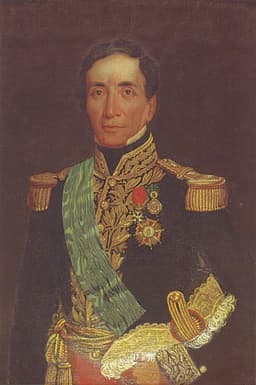
Andres de Santa Cruz
General · Modern
60.5Total
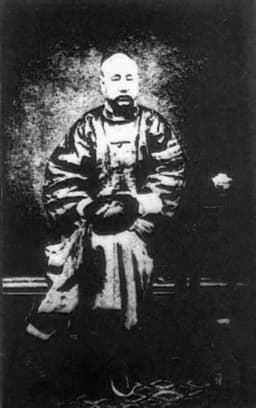
Sengge Rinchen
General · Modern
56.9Total
Basic Information
Born
1792
1811
Died
1865
1865
Era
Modern
Modern
Nationality
Bolivia
China
Occupation
General
General
Civilization
Western
Eastern
Score Comparison
Military (10%)
67.5
70.0
Political (20%)
59.3
43.7
Influence (20%)
62.0
55.0
Legacy (20%)
50.0
54.0
Leadership (15%)
68.0
67.0
Strategy (15%)
66.3
60.7
TOTAL
60.5
56.9
Andres de Santa Cruz — Complete Timeline
1823 AD
Battle of ZepitaWar
Santa Cruz commanded Peruvian forces in a victory over Spanish royalists at Zepita during the Peruvian War of Independence. This battle enhanced his military reputation and contributed to the eventual liberation of Peru from Spanish rule.
Peruvian War of IndependenceBattleLiberation
Impact: regional
1826 AD
Presidency of PeruPolitical Action
Santa Cruz served as President of the Council of Government of Peru from 1826 to 1827, effectively ruling the country. His administration focused on centralizing power and organizing the state, but he was overthrown by a rebellion led by Agust
PresidencyPeruCentralization
Impact: national
1829 AD
Presidency of BoliviaPolitical Action◆ Major
Santa Cruz became President of Bolivia in 1829, serving until 1839. He implemented administrative reforms, stabilized the economy, and modernized the military, establishing Bolivia as a more coherent state after the chaos following independence.
PresidencyBoliviaReforms
Impact: nationalconstructive
1836 AD
War of the ConfederationWar◆ Major
Chile and Argentina declared war on the Peru-Bolivia Confederation, viewing it as a threat to the balance of power. Santa Cruz led the confederation's forces in a conflict that lasted until 1839, ultimately resulting in the confederation's defeat.
WarChileArgentinaConfederation
Impact: regional
Creation of the Peru-Bolivia ConfederationPolitical Action
Santa Cruz established the Peru-Bolivia Confederation, uniting Bolivia and Peru into a single state with himself as Supreme Protector. This confederation aimed to create a powerful Andean nation and challenged the regional influence of Chile and Argentina.
ConfederationUnificationAndean Power
Impact: regional
1839 AD
Battle of YungayWar
Santa Cruz's confederation forces were decisively defeated by the Chilean army at the Battle of Yungay. This defeat led to the dissolution of the Peru-Bolivia Confederation and forced Santa Cruz into exile, ending his political project.
BattleDefeatEnd of Confederation
Impact: regionaltragic
Exile and DeathPolitical Action
After the defeat at Yungay, Santa Cruz fled to Ecuador and later to France. He spent the rest of his life in exile, making unsuccessful attempts to return to power. He died in France in 1865, never regaining his former influence.
ExileDeathFailure
Impact: nationaltragic
Sengge Rinchen — Complete Timeline
1859 AD
Battle of Dagu FortsWar◆ Major
Sengge Rinchen commanded Qing forces defending the Dagu Forts against a British and French naval attack. His forces repelled the assault, sinking several enemy ships and inflicting heavy casualties, a rare Qing victory in the Second Opium War.
Second Opium WarBattleVictory
Impact: regional
1860 AD
Battle of PalikaoWar◆ Major
Sengge Rinchen commanded Qing cavalry at the Battle of Palikao against Anglo-French forces. His forces were decisively defeated by superior firepower, leading to the fall of Beijing and the burning of the Old Summer Palace.
Second Opium WarBattleDefeat
Impact: regionaltragic
1863 AD
Suppression of the Nian RebellionWar◆ Major
Sengge Rinchen led Qing forces against the Nian rebels in northern China. He achieved several victories but was ultimately killed in battle against the Nian in 1865, marking a turning point in the rebellion.
Nian RebellionCampaignDeath
Impact: regionaltragic
Expert Analysis
Andres de Santa Cruz vs Sengge Rinchen
### The Dreamer and the Defender
On a dusty August morning in 1839, Andrés de Santa Cruz watched his grand experiment collapse at the Battle of Yungay. The Peru-Bolivia Confederation, the boldest political creation of his generation, was shattered by Chilean bayonets. Half a world away and a generation later, in 1865, a Mongol prince named Sengge Rinchen would die in a muddy field in northern China, his cavalry cut down by Nian rebels he had spent years chasing. Both men were generals who believed in order, in empire, in the power of a single will to shape history. Both ended their lives in failure. But the nature of their failures—and the dreams that drove them—could not have been more different. Santa Cruz sought to remake nations; Sengge Rinchen sought to defend one. Their stories reveal how two men, born into vastly different worlds, tried to hold back the tides of their times.
### Origins
Andrés de Santa Cruz was born in 1792 in La Paz, Bolivia, to a Spanish father and an indigenous mother. He grew up in the shadow of the Andes, a mestizo in a colonial society that prized pure bloodlines. This dual identity would shape his vision: he believed that the fractured republics of South America could be united, that the indigenous and Spanish worlds could merge into a single, powerful state. The wars of independence against Spain, which he fought in alongside Simón Bolívar, taught him that victory came through coalition-building and political maneuvering as much as through battle.
Sengge Rinchen was born in 1811 on the Mongolian steppe, a prince of the Mongol banners who served the Qing dynasty. His world was one of nomadic tradition, where loyalty to the emperor was absolute and the threat of rebellion was constant. He learned to ride and fight as a boy, inheriting a martial culture that valued cavalry charges and decisive engagements. The Qing Empire he served was ancient, vast, and under siege—from Western powers at its coasts and from rebels in its heartland. Unlike Santa Cruz, who dreamed of building something new, Sengge Rinchen’s purpose was to preserve what already existed.
### Rise to Power
Santa Cruz rose through the chaos of the independence era. In 1823, at the Battle of Zepita, he commanded Peruvian forces in a victory over Spanish royalists, earning a reputation as a capable general. But his true ascent came through politics. In 1826, he became President of the Council of Government of Peru, effectively ruling the country. Three years later, in 1829, he took the presidency of Bolivia. He was now the master of two nations, and he had a vision: merge them into one.
Sengge Rinchen’s path was more direct. As a Mongol prince, his loyalty to the Qing was unquestioned. In the 1850s, as the Taiping Rebellion convulsed southern China and Western gunboats threatened the coast, the emperor turned to him. In 1859, at the Battle of Dagu Forts, he achieved a stunning victory, repelling a British and French naval attack with a combination of fortifications and artillery. It was a rare moment of triumph for the Qing against the West. But the victory was fleeting, and the emperor needed him again—this time against the Nian rebels in the north.
### Leadership & Governance
Santa Cruz was a statesman first, a general second. His political score of 60.2 reflects a man who understood administration better than military tactics. As president of Bolivia, he stabilized the economy, reformed the legal system, and built roads. His masterpiece was the Peru-Bolivia Confederation, created in 1836, which united the two countries under a single government with himself as Supreme Protector. He believed that only a large, centralized state could resist the ambitions of Chile and Argentina. But his vision was fragile: the confederation was a patchwork of rival factions, and his diplomatic skills could not hold it together.
Sengge Rinchen was the opposite—a warrior who led from the front. His military score of 62.1 and strategy score of 71.7 show a man who knew how to fight. At Dagu, he used terrain and fortifications to defeat a modern navy. But his political score of 69.2 reveals a man who understood the limits of his power. He was a servant of the Qing, not a reformer. He did not try to remake China; he tried to defend it. His leadership was personal, based on the loyalty of his Mongol cavalry, not on institutions or laws.
### Triumph & Tragedy
Santa Cruz’s greatest moment was the creation of the Confederation in 1836. For three years, he governed a vast territory, dreaming of a unified Andean nation. But his triumph was built on sand. Chile and Argentina saw the Confederation as a threat, and in 1836 they declared war. Santa Cruz’s forces were outmaneuvered, and at Yungay in 1839, his army was crushed. He fled to Ecuador, then to France, where he died in exile in 1865, a broken man.
Sengge Rinchen’s triumph came at Dagu in 1859, when he humiliated the British and French. But the following year, at the Battle of Palikao, his cavalry was annihilated by Anglo-French infantry armed with rifles and artillery. It was a lesson in the brutal asymmetry of modern warfare. His final years were spent chasing the Nian rebels across the plains of northern China. In 1865, he was ambushed and killed in battle—a warrior’s death, but one that accomplished nothing.
### Character & Destiny
Santa Cruz was a dreamer, a man who believed that political will could overcome geography and history. His mestizo heritage made him sensitive to the divisions of South America, but it also made him an outsider in both Peru and Bolivia. He was too ambitious for the small world of caudillos and republics. His failure was the failure of a visionary who could not build the alliances needed to sustain his vision.
Sengge Rinchen was a loyalist, a man who fought for an empire that was already crumbling. His Mongol identity made him a perfect instrument for the Qing—a warrior from the steppe, willing to die for a dynasty that had ruled for centuries. But he was fighting against the tide of history: the West’s industrial might and China’s internal decay were too powerful. His death was heroic but pointless.
### Legacy
Santa Cruz is remembered as a visionary who nearly succeeded. His legacy score of 68.9 reflects a man whose dream of Andean unity still echoes in Bolivia and Peru. He is a symbol of what might have been, a cautionary tale about the limits of ambition.
Sengge Rinchen is remembered as a defender of the Qing, a symbol of loyalty in an age of betrayal. His legacy score of 65.9 places him in the pantheon of Chinese heroes who fought against foreign aggression. But he is also a reminder of the tragedy of the Qing—a dynasty that could not adapt, no matter how bravely its soldiers fought.
### Conclusion
Two generals, two dreams. Santa Cruz wanted to build a new world; Sengge Rinchen wanted to save an old one. Both failed, but their failures illuminate the forces that shaped the 19th century: the collapse of empires, the rise of nationalism, the clash between tradition and modernity. In the end, they were not so different—both were men who believed that courage and will could defy history. History proved them wrong. But their stories remind us that even in defeat, there is a kind of greatness.
Rankings
🥇
Andres de Santa CruzLeader
Mil: 67.5Pol: 59.3Inf: 62.0
60.5
🥈
Sengge Rinchen
Mil: 70.0Pol: 43.7Inf: 55.0
56.9
+3.6 behind
How This Comparison Works
Algorithm
Each figure is scored on 6 dimensions (0—100 scale) based on structured historical data: Military (10%), Political (20%), Influence (20%), Legacy (20%), Leadership (15%), Strategy (15%). The weighted total produces the final ranking.
Data Sources
Scores are computed from structured sub-indicators in the database. Scale factors adjust for era (Ancient ×0.85, Modern ×1.0) and civilization size (Eastern ×1.05, Other ×0.80) to account for differences in population and military scale.
Maximum 3 Figures
Comparisons are limited to 2—3 figures to ensure readability and statistical meaningfulness.
Error Margins
±5 points per dimension — Sub-scores are derived from historical records with inherent uncertainty. Two figures within 5 points on a dimension should be considered roughly equivalent in that area.
Total Score Accuracy
±3 points overall — The weighted combination of 6 dimensions produces a total score with approximately ±3 points of uncertainty. Differences of less than 3 points are not statistically significant— the figures are effectively tied.
Known Limitations
- Historical records are incomplete and uneven across civilizations
- Figures from oral-tradition societies may be underrepresented
- Occupation labels can misclassify multi-role figures
- Scores measure capability and impact, not moral character
- Quantitative scoring is a comparison tool, not absolute truth
Capability Radar
Military (10%) — Battles & Warfare
Battles
60
75
Win Rate
55
60
Expansion
55
20
Political (20%) — Governance & Reform
Reform
65
20
Diplomacy
60
50
Economy
55
20
Influence (20%) — Cultural & Global Reach
Cultural
45
40
Global
35
35
Legacy (20%) — Historical Impact
Historical
50
55
Longevity
40
30
Leadership (15%) — Power & Stability
Tenure
60
40
Stability
40
30
Strategy (15%) — Tactics & Innovation
Strategy
65
70
Tactics
60
80
Reform
50
30
Similar Comparisons
Comments & Discussion
No comments yet. Be the first to share your thoughts!