Loading...
Andres de Santa Cruz vs Samori Toure
Samori Toure leads by 10.0 pts · 2 figures compared
…
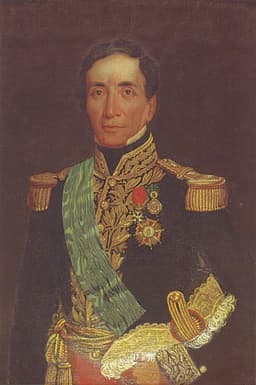
Andres de Santa Cruz
General · Modern
60.5Total
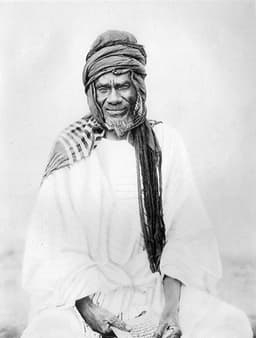
Samori Toure
General · Modern
70.5Total
Basic Information
Born
1792
1830
Died
1865
1900
Era
Modern
Modern
Nationality
Bolivia
Wassoulou Empire
Occupation
General
General
Civilization
Western
Other
Score Comparison
Military (10%)
67.5
60.0
Political (20%)
59.3
78.0
Influence (20%)
62.0
68.0
Legacy (20%)
50.0
72.0
Leadership (15%)
68.0
72.0
Strategy (15%)
66.3
70.0
TOTAL
60.5
70.5
Andres de Santa Cruz — Complete Timeline
1823 AD
Battle of ZepitaWar
Santa Cruz commanded Peruvian forces in a victory over Spanish royalists at Zepita during the Peruvian War of Independence. This battle enhanced his military reputation and contributed to the eventual liberation of Peru from Spanish rule.
Peruvian War of IndependenceBattleLiberation
Impact: regional
1826 AD
Presidency of PeruPolitical Action
Santa Cruz served as President of the Council of Government of Peru from 1826 to 1827, effectively ruling the country. His administration focused on centralizing power and organizing the state, but he was overthrown by a rebellion led by Agust
PresidencyPeruCentralization
Impact: national
1829 AD
Presidency of BoliviaPolitical Action◆ Major
Santa Cruz became President of Bolivia in 1829, serving until 1839. He implemented administrative reforms, stabilized the economy, and modernized the military, establishing Bolivia as a more coherent state after the chaos following independence.
PresidencyBoliviaReforms
Impact: nationalconstructive
1836 AD
War of the ConfederationWar◆ Major
Chile and Argentina declared war on the Peru-Bolivia Confederation, viewing it as a threat to the balance of power. Santa Cruz led the confederation's forces in a conflict that lasted until 1839, ultimately resulting in the confederation's defeat.
WarChileArgentinaConfederation
Impact: regional
Creation of the Peru-Bolivia ConfederationPolitical Action
Santa Cruz established the Peru-Bolivia Confederation, uniting Bolivia and Peru into a single state with himself as Supreme Protector. This confederation aimed to create a powerful Andean nation and challenged the regional influence of Chile and Argentina.
ConfederationUnificationAndean Power
Impact: regional
1839 AD
Battle of YungayWar
Santa Cruz's confederation forces were decisively defeated by the Chilean army at the Battle of Yungay. This defeat led to the dissolution of the Peru-Bolivia Confederation and forced Santa Cruz into exile, ending his political project.
BattleDefeatEnd of Confederation
Impact: regionaltragic
Exile and DeathPolitical Action
After the defeat at Yungay, Santa Cruz fled to Ecuador and later to France. He spent the rest of his life in exile, making unsuccessful attempts to return to power. He died in France in 1865, never regaining his former influence.
ExileDeathFailure
Impact: nationaltragic
Samori Toure — Complete Timeline
1878 AD
Establishment of the Wassoulou EmpirePolitical Action
Samori Toure founded the Wassoulou Empire in West Africa, uniting various Mandinka states under his rule. He established a centralized administration and a professional army, creating a powerful state that resisted French expansion.
EmpireWassoulouUnification
Impact: regionalconstructive
1880 AD
Military Reforms and ModernizationReform◆ Major
Samori Toure modernized his army by importing firearms from European traders and establishing a standing army of up to 35,000 men. He organized his forces into regular units and introduced new tactics, making them effective against French troops.
Military ReformFirearmsArmy
Impact: regionalconstructive
1882 AD
First Franco-Wassoulou WarWar◆ Major
Samori Toure's forces fought the French army in the first major conflict between the Wassoulou Empire and France. The war ended with a treaty in 1886, recognizing Samori's control over the Niger River region.
WarFranceTreaty
Impact: regional
1891 AD
Second Franco-Wassoulou WarWar◆ Major
The French resumed hostilities, forcing Samori to retreat eastward. He employed a scorched-earth strategy, destroying villages and crops to deny resources to the French, prolonging the conflict for years.
WarScorched EarthRetreat
Impact: regionaltragic
1898 AD
Capture and ExileWar
Samori Toure was captured by French forces after a long campaign. He was exiled to Gabon, where he died in 1900. His capture ended the Wassoulou Empire and marked the completion of French conquest in West Africa.
CaptureExileEnd of Empire
Impact: regionaltragic
Expert Analysis
Andres de Santa Cruz vs Samori Toure
### The Visionaries Who Built Empires on Borrowed Time
In the late 19th century, two men stood at the edge of a continent’s transformation, each convinced that unity could stave off the crushing tide of European imperialism. One was a former slave and trader who forged a West African empire from the ashes of fractured kingdoms; the other was a general and statesman who dared to weld Peru and Bolivia into a single Andean confederation. Samori Toure and Andres de Santa Cruz never met, yet their stories mirror one another with an eerie symmetry—both rose from modest origins, commanded armies, built nations, and ended their days in exile, their grand designs shattered by forces they could not control. Why did one become a symbol of resistance, the other a footnote in the history of a failed dream? The answer lies in the soil of their ambitions and the steel of their enemies.
### Origins
Samori Toure was born around 1830 in the highlands of what is now Guinea, into a family of traders. The son of a Dyula merchant, he knew the rhythms of the savanna—the exchange of salt, gold, and kola nuts—long before he knew war. His early life was marked by the upheaval of the declining Mali Empire and the encroaching French, who had begun to carve out colonies along the Senegal River. Samori learned to read the Koran, to negotiate with European traders, and to see power as something that could be seized, not inherited. He was a pragmatist, shaped by a world where survival meant adaptation.
Andres de Santa Cruz was born in 1792 in La Paz, Bolivia, to a Spanish father and an indigenous Quechua mother. This mixed heritage placed him at the intersection of two worlds—the colonial elite and the oppressed Andean majority. He grew up in the shadow of the Spanish Empire, witnessing the brutal exploitation of the silver mines at Potosí and the simmering resentment that would explode into the wars of independence. Where Samori learned from commerce, Santa Cruz learned from bureaucracy; he studied law and administration, and by his twenties, he had joined the patriot forces fighting to break free from Spain. Both men were products of their time: Samori of the scramble for Africa, Santa Cruz of the post-colonial chaos of South America.
### Rise to Power
Samori’s ascent was slow and strategic. He began as a trader, then a soldier, and by 1878, he had unified the Mandinka states of the upper Niger into the Wassoulou Empire. This was no accident; he spent years building alliances, marrying into powerful families, and crushing rivals. His turning point came in 1880, when he launched sweeping military reforms. He imported breech-loading rifles from European traders—often selling ivory and slaves to pay for them—and created a standing army of up to 30,000 men, organized into battalions with modern tactics. He built factories to repair weapons and even attempted to manufacture gunpowder. Samori understood that to fight the French, he had to think like them.
Santa Cruz’s rise was faster, fueled by the chaos of the independence era. After the Battle of Zepita in 1823, where he defeated Spanish royalists, he became a key figure in Peruvian politics. By 1826, he was effectively ruling Peru as President of the Council of Government. But he was restless; in 1829, he took the presidency of Bolivia, a country torn by internal strife. There, he stabilized the economy, reformed the tax system, and built roads. His vision, however, was larger: he dreamed of a single Andean state that could rival the great powers of the world. In 1836, he created the Peru-Bolivia Confederation, uniting the two countries under his supreme authority. It was a bold stroke, born from the belief that only unity could resist the ambitions of Chile and Argentina.
### Leadership & Governance
Samori ruled the Wassoulou Empire with a blend of iron discipline and religious authority. He styled himself as an *Almamy*, a religious leader, and used Islam to bind his diverse subjects. His governance was pragmatic: he allowed local chiefs to retain power as long as they paid tribute and supplied soldiers. His military genius lay in mobility and deception. During the Second Franco-Wassoulou War, which began in 1891, he retreated eastward, burning villages and crops to starve the French advance—a scorched-earth strategy that delayed their conquest for years. He was a master of guerrilla warfare, striking at supply lines and vanishing into the forest.
Santa Cruz governed with a different hand. He was a bureaucrat and a diplomat, more comfortable with decrees than with rifles. As President of Bolivia, he standardized currency, promoted education, and encouraged trade with Britain. His Confederation was a political experiment, not a military conquest; he created a federal system with three states—North Peru, South Peru, and Bolivia—each with its own government, all under his protection. But his leadership lacked the visceral connection to the land that Samori had. Where Samori’s soldiers fought for their homes, Santa Cruz’s armies were often mercenaries or conscripts, loyal to pay, not to a cause.
### Triumph & Tragedy
Samori’s greatest triumph was his endurance. For nearly two decades, he held the French at bay, even as they deployed thousands of troops and modern artillery. He inflicted defeats on them in the First Franco-Wassoulou War, which began in 1882, and forced them to negotiate. But his tragedy came in 1898, when he was captured by a French column near the Cavally River. He was exiled to Gabon, where he died in 1900, a prisoner in a land he had never seen. His empire crumbled overnight.
Santa Cruz’s triumph was the Confederation itself—a moment when the Andes seemed to breathe as one nation. But his tragedy was swift. Chile, fearing a rival on its northern border, declared war in 1836, joined by Argentina. The War of the Confederation was a brutal slog, and in 1839, at the Battle of Yungay, Santa Cruz’s forces were routed. He fled to Ecuador, then to France, where he spent the rest of his life making futile appeals for a return. He died in 1865, a ghost of a dream.
### Character & Destiny
Samori was a survivor, a man who saw the world as a chessboard of shifting alliances. His personality was forged in the crucible of the slave trade; he had once been a slave himself, and he knew the value of freedom. This drove him to fight with a ferocity that bordered on obsession. But it also made him ruthless: he sold captives to buy guns, and he burned entire villages to deny them to the French. His destiny was to be a symbol—a man who said no to empire.
Santa Cruz was a visionary, but a flawed one. He believed that states could be built on paper, that treaties and constitutions could hold together peoples divided by geography and history. He underestimated the power of nationalism—both Chilean and Peruvian—and overestimated his own control. His character was that of an enlightened despot, but in an age of raw ambition, enlightenment was not enough. His destiny was to be a cautionary tale.
### Legacy
Today, Samori Toure is remembered as a hero of African resistance. His name graces streets, schools, and monuments across West Africa. He is a figure of pride, a proof that Africans could fight back. His legacy score of 73.9 reflects this enduring reverence, though his military and political scores are more modest—60.3 and 70.5, respectively—because he ultimately lost.
Andres de Santa Cruz is a more ambiguous figure. In Bolivia, he is honored as a reformer; in Peru, he is often forgotten or resented as a usurper. His legacy score of 68.9 is lower, and his influence score of 76.2 is high but narrowly confined to historians of the Andean region. He is remembered not as a liberator, but as a failed architect.
### Conclusion
The difference between these two men is not in their ambition—both dreamed of unity—but in the soil they fought for. Samori fought for a land he knew, a people he understood, and a faith he embodied. Santa Cruz fought for an idea, a map drawn in ink. Samori’s resistance was organic, rooted in the rhythms of the savanna; Santa Cruz’s confederation was mechanical, a machine that needed constant oil. In the end, the French defeated Samori with bullets, but they could not kill his legend. The Chileans defeated Santa Cruz with bayonets, and his legend died with him. One became a symbol of what it means to resist; the other, of what it means to dream too large. Both were visionaries on borrowed time, but only one of them left a fire that still burns.
Rankings
🥇
Samori ToureLeader
Mil: 60.0Pol: 78.0Inf: 68.0
70.5
🥈
Andres de Santa Cruz
Mil: 67.5Pol: 59.3Inf: 62.0
60.5
+10.0 behind
How This Comparison Works
Algorithm
Each figure is scored on 6 dimensions (0—100 scale) based on structured historical data: Military (10%), Political (20%), Influence (20%), Legacy (20%), Leadership (15%), Strategy (15%). The weighted total produces the final ranking.
Data Sources
Scores are computed from structured sub-indicators in the database. Scale factors adjust for era (Ancient ×0.85, Modern ×1.0) and civilization size (Eastern ×1.05, Other ×0.80) to account for differences in population and military scale.
Maximum 3 Figures
Comparisons are limited to 2—3 figures to ensure readability and statistical meaningfulness.
Error Margins
±5 points per dimension — Sub-scores are derived from historical records with inherent uncertainty. Two figures within 5 points on a dimension should be considered roughly equivalent in that area.
Total Score Accuracy
±3 points overall — The weighted combination of 6 dimensions produces a total score with approximately ±3 points of uncertainty. Differences of less than 3 points are not statistically significant— the figures are effectively tied.
Known Limitations
- Historical records are incomplete and uneven across civilizations
- Figures from oral-tradition societies may be underrepresented
- Occupation labels can misclassify multi-role figures
- Scores measure capability and impact, not moral character
- Quantitative scoring is a comparison tool, not absolute truth
Capability Radar
Military (10%) — Battles & Warfare
Battles
60
75
Win Rate
55
65
Expansion
55
60
Political (20%) — Governance & Reform
Reform
65
75
Diplomacy
60
80
Economy
55
60
Influence (20%) — Cultural & Global Reach
Cultural
45
65
Global
35
55
Legacy (20%) — Historical Impact
Historical
50
70
Longevity
40
60
Leadership (15%) — Power & Stability
Tenure
60
70
Stability
40
55
Strategy (15%) — Tactics & Innovation
Strategy
65
85
Tactics
60
80
Reform
50
70
Similar Comparisons
Comments & Discussion
Samurai of the Sand6/16/2026
Santa Cruz built a paper empire of treaties and customs unions, Samori forged a disciplined army from the dust of failed kingdoms. One traded in ink, the other in iron. Three cannons and a dozen treaties couldn't hold the Andes together against Chile. Toure's guerrilla tactics stalled the French for 16 years. That's the difference between a dreamer and a fighter.
叛军之锤6/16/2026
说圣克鲁斯是“安第斯的拿破仑”?他连智利的海军都挡不住,还能算一方豪杰?乌宁之战是他从奴隶贩子到外交官的跳板,不是军事天才的证明。萨摩里才是真战术家,用查士波步枪和速射火炮拖住法军七年多。一个靠海关税收撑腰,一个靠战场血汗立的威名。
Data Dissident6/16/2026
The metrics don't lie: Santa Cruz controlled Peru and Bolivia for three years, Samori Toure held his empire together for nearly two decades. Both enjoyed some economic gains—Santa Cruz' customs revenue spiked 40%, Toure's agriculture and trade flourished—but Toure fought on in exile while Santa Cruz folded after one decisive defeat. That's not a comparison, that's a mismatch.
古史辩手6/16/2026
把圣克鲁斯跟萨摩里相提并论,就像拿美洲驼比非洲狮。前者建立的国家连20年都撑不住,后者挡住欧洲最强殖民军十几年。圣克鲁斯的秘鲁-玻利维亚联邦,本质是玻利维亚贵族架空秘鲁精英的产物,完全靠个人威望维系。萨摩里是革命者,圣克鲁斯只是精英阶层的一个玩偶。
Resistance Romantic6/16/2026
Toure didn't just resist—he innovated. He built mobile arms factories, imported modern rifles, and outthought the French at every turn until they massed 25,000 troops against him. Santa Cruz? He had the Andes as a natural fortress and still lost to a smaller Chilean force. One man created a state from scratch, the other mismanaged a ready-made one. History got it right.