Loading...
Andres de Santa Cruz vs Justo Rufino Barrios
Andres de Santa Cruz leads by 1.9 pts · 2 figures compared
…
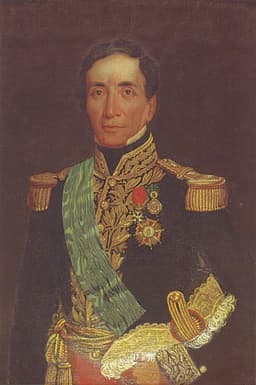
Andres de Santa Cruz
General · Modern
60.5Total
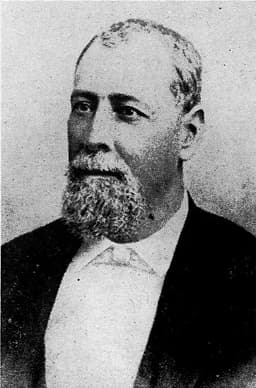
Justo Rufino Barrios
General · Modern
58.6Total
Basic Information
Born
1792
1835
Died
1865
1885
Era
Modern
Modern
Nationality
Bolivia
Guatemala
Occupation
General
General
Civilization
Western
Western
Score Comparison
Military (10%)
67.5
52.5
Political (20%)
59.3
72.0
Influence (20%)
62.0
60.0
Legacy (20%)
50.0
49.2
Leadership (15%)
68.0
65.0
Strategy (15%)
66.3
55.0
TOTAL
60.5
58.6
Andres de Santa Cruz — Complete Timeline
1823 AD
Battle of ZepitaWar
Santa Cruz commanded Peruvian forces in a victory over Spanish royalists at Zepita during the Peruvian War of Independence. This battle enhanced his military reputation and contributed to the eventual liberation of Peru from Spanish rule.
Peruvian War of IndependenceBattleLiberation
Impact: regional
1826 AD
Presidency of PeruPolitical Action
Santa Cruz served as President of the Council of Government of Peru from 1826 to 1827, effectively ruling the country. His administration focused on centralizing power and organizing the state, but he was overthrown by a rebellion led by Agust
PresidencyPeruCentralization
Impact: national
1829 AD
Presidency of BoliviaPolitical Action◆ Major
Santa Cruz became President of Bolivia in 1829, serving until 1839. He implemented administrative reforms, stabilized the economy, and modernized the military, establishing Bolivia as a more coherent state after the chaos following independence.
PresidencyBoliviaReforms
Impact: nationalconstructive
1836 AD
War of the ConfederationWar◆ Major
Chile and Argentina declared war on the Peru-Bolivia Confederation, viewing it as a threat to the balance of power. Santa Cruz led the confederation's forces in a conflict that lasted until 1839, ultimately resulting in the confederation's defeat.
WarChileArgentinaConfederation
Impact: regional
Creation of the Peru-Bolivia ConfederationPolitical Action
Santa Cruz established the Peru-Bolivia Confederation, uniting Bolivia and Peru into a single state with himself as Supreme Protector. This confederation aimed to create a powerful Andean nation and challenged the regional influence of Chile and Argentina.
ConfederationUnificationAndean Power
Impact: regional
1839 AD
Battle of YungayWar
Santa Cruz's confederation forces were decisively defeated by the Chilean army at the Battle of Yungay. This defeat led to the dissolution of the Peru-Bolivia Confederation and forced Santa Cruz into exile, ending his political project.
BattleDefeatEnd of Confederation
Impact: regionaltragic
Exile and DeathPolitical Action
After the defeat at Yungay, Santa Cruz fled to Ecuador and later to France. He spent the rest of his life in exile, making unsuccessful attempts to return to power. He died in France in 1865, never regaining his former influence.
ExileDeathFailure
Impact: nationaltragic
Justo Rufino Barrios — Complete Timeline
1871 AD
Enacted the Liberal Reforms of 1871Reform
Justo Rufino Barrios, after coming to power, implemented sweeping liberal reforms. These included the separation of church and state, confiscation of church lands, establishment of secular education, and promotion of coffee cultivation for export.
GuatemalaLiberal ReformSecularization
Impact: nationalprogressive
1873 AD
Modernized Guatemala's InfrastructureReform◆ Major
Barrios oversaw the construction of roads, telegraph lines, and railways, particularly to support coffee exports. He also promoted immigration and foreign investment, transforming Guatemala's economy.
GuatemalaInfrastructureEconomic Development
Impact: nationalconstructive
1885 AD
Killed at the Battle of ChalchuapaWar
Barrios was killed in battle at Chalchuapa, El Salvador, while leading an invasion to forcibly reunify Central America. His death ended the unification attempt and preserved the sovereignty of the individual Central American states.
Central AmericaBattleDeath
Impact: regionaltragic
Declared the Unification of Central AmericaPolitical Action◆ Major
Barrios unilaterally declared the reunification of the Central American republics by force. He issued a decree proclaiming himself supreme military commander of a unified Central America, leading to war with neighboring states.
Central AmericaUnificationWar
Impact: regionaldestructive
Expert Analysis
Andres de Santa Cruz vs Justo Rufino Barrios
# The Dreamers Who Built Empires of Sand
On a sweltering morning in June 1839, Andrés de Santa Cruz watched his carefully constructed world collapse at the Battle of Yungay. His Peru-Bolivia Confederation, the most ambitious political experiment in nineteenth-century South America, shattered against Chilean bayonets. Forty-six years later, in April 1885, Justo Rufino Barrios charged into a hail of bullets at Chalchuapa, El Salvador, his dream of a reunited Central America dying with him on the battlefield. Both men reached for the impossible—to stitch broken lands back together—and both were destroyed by the very forces they sought to overcome. Why did these two visionaries, born generations apart, pursue such similar paths to such similar ends?
Origins
Santa Cruz emerged from the twilight of Spanish colonialism. Born in 1792 in La Paz, he was the son of a Spanish nobleman and an Indigenous Aymara woman—a mestizo in a world that rigidly divided bloodlines. This dual heritage would haunt and empower him. He learned to navigate between worlds, speaking Spanish with aristocrats and Quechua with the soldiers who would one day follow him. The wars of independence that erupted across the continent in his youth taught him that empire was fragile, but also that unity meant survival.
Barrios, born in 1835 in San Lorenzo, Guatemala, came of age in a different chaos. The Central American Federation had already collapsed by the time he was a teenager, splintering into five quarrelsome republics. Where Santa Cruz inherited a world of crumbling viceroyalties, Barrios inherited a world of petty caudillos. His father was a small landowner, his mother a homemaker; there was no noble blood to smooth his path. He was a product of the coffee frontier, where ambition was measured in acres cleared and enemies crushed.
Rise to Power
Santa Cruz entered history through the disciplined ranks of the Spanish army, then switched sides to join the independence cause. At the Battle of Zepita in 1823, he commanded Peruvian forces against Spanish royalists and won—a victory that made his reputation. But his true genius lay not in combat but in coalition-building. By 1826, he had maneuvered himself into the presidency of Peru’s Council of Government, effectively ruling the country. Three years later, he seized the presidency of Bolivia. He had become the most powerful man on the continent without firing a single shot for personal ambition—or so he claimed.
Barrios rose through blood. He joined the liberal revolution of 1871 as a young officer, fighting to overthrow Guatemala’s conservative regime. When the revolution succeeded, he did not wait for promotion; he took it. By 1873, he was president, and he governed like a man who had seen how quickly power could be lost. Where Santa Cruz negotiated, Barrios commanded.
Leadership & Governance
Santa Cruz governed with the precision of a bureaucrat and the patience of a diplomat. As president of Bolivia from 1829 to 1839, he stabilized the currency, reformed the tax system, and modernized the military. He respected legal forms even as he bent them to his will. When he created the Peru-Bolivia Confederation in 1836, he did so through a careful series of congressional decrees and regional pacts. He believed that unity could be built on paper.
Barrios governed with a hammer. His Liberal Reforms of 1871 separated church and state, abolished colonial-era communal landholdings, and expelled religious orders. He built roads, railways, and telegraph lines—but he built them for coffee exporters, not for peasants. His modernization was ruthless: Indigenous communities lost their lands, and dissenters lost their lives. He was a progressive who believed that progress required victims.
Their military strategies reflected their personalities. Santa Cruz fought wars of maneuver, seeking to avoid decisive battles and instead outlast his enemies. Barrios fought wars of annihilation, leading charges personally, believing that victory belonged to the boldest.
Triumph & Tragedy
Santa Cruz’s greatest moment was the creation of the Peru-Bolivia Confederation in 1836. For three years, he ruled a state that stretched from the Amazon to the Pacific, a resurrected Inca empire in liberal dress. But his triumph was a threat. Chile and Argentina declared war, viewing the Confederation as a destabilizing giant. At the Battle of Yungay in 1839, Chilean forces shattered his army. Santa Cruz fled to Ecuador, then to France, where he died in exile in 1865, still dreaming of return.
Barrios’s triumph was domestic. By 1885, he had transformed Guatemala from a backwater into a modernizing state with a functioning economy and a centralized government. But he wanted more. That year, he unilaterally declared the reunification of Central America by force. He invaded El Salvador, confident that his army would prevail. At Chalchuapa, a Salvadoran bullet found him. His dream died with him on the battlefield.
Character & Destiny
Santa Cruz was a builder who lacked the ruthlessness to protect what he built. He believed in institutions, but institutions require swords. When Chile came with swords, he had only paper. His mixed heritage gave him vision but also isolation—he was never fully trusted by either the Indigenous majority or the white elite.
Barrios was a destroyer who mistook destruction for creation. He tore down the old order but built a new one so brittle that it shattered without him. His courage was his curse: he died leading from the front, a general who forgot that dead generals cannot govern.
Legacy
Santa Cruz is remembered as Bolivia’s great unifier who failed. His Confederation is studied as a lost opportunity, a road not taken for Andean integration. Statues of him stand in La Paz and Lima, but his name evokes more nostalgia than action.
Barrios is remembered as Guatemala’s great modernizer who went too far. His reforms laid the foundation for the country’s coffee economy, but also for its brutal inequality. He is honored as a national hero and condemned as an authoritarian. In Central America, his name still sparks debate: was he a visionary or a tyrant?
Conclusion
Both men reached for the same star—unity—and both fell. Their stories remind us that the greatest dreamers are often the greatest failures. Santa Cruz tried to build an empire on compromise; Barrios tried to build one on force. Neither worked. Perhaps the lesson is not that unity is impossible, but that it cannot be imposed from above. The Peru-Bolivia Confederation and the reunified Central America both died because their creators forgot that nations are built not by generals or presidents, but by the slow, patient work of generations. In the end, Santa Cruz and Barrios were not so different: two men who saw a broken world and believed they alone could fix it. History, as always, had other plans.
Rankings
🥇
Andres de Santa CruzLeader
Mil: 67.5Pol: 59.3Inf: 62.0
60.5
🥈
Justo Rufino Barrios
Mil: 52.5Pol: 72.0Inf: 60.0
58.6
+1.9 behind
How This Comparison Works
Algorithm
Each figure is scored on 6 dimensions (0—100 scale) based on structured historical data: Military (10%), Political (20%), Influence (20%), Legacy (20%), Leadership (15%), Strategy (15%). The weighted total produces the final ranking.
Data Sources
Scores are computed from structured sub-indicators in the database. Scale factors adjust for era (Ancient ×0.85, Modern ×1.0) and civilization size (Eastern ×1.05, Other ×0.80) to account for differences in population and military scale.
Maximum 3 Figures
Comparisons are limited to 2—3 figures to ensure readability and statistical meaningfulness.
Error Margins
±5 points per dimension — Sub-scores are derived from historical records with inherent uncertainty. Two figures within 5 points on a dimension should be considered roughly equivalent in that area.
Total Score Accuracy
±3 points overall — The weighted combination of 6 dimensions produces a total score with approximately ±3 points of uncertainty. Differences of less than 3 points are not statistically significant— the figures are effectively tied.
Known Limitations
- Historical records are incomplete and uneven across civilizations
- Figures from oral-tradition societies may be underrepresented
- Occupation labels can misclassify multi-role figures
- Scores measure capability and impact, not moral character
- Quantitative scoring is a comparison tool, not absolute truth
Capability Radar
Military (10%) — Battles & Warfare
Battles
60
45
Win Rate
55
55
Expansion
55
55
Political (20%) — Governance & Reform
Reform
65
70
Diplomacy
60
45
Economy
55
55
Influence (20%) — Cultural & Global Reach
Cultural
45
40
Global
35
30
Legacy (20%) — Historical Impact
Historical
50
50
Longevity
40
35
Leadership (15%) — Power & Stability
Tenure
60
50
Stability
40
30
Strategy (15%) — Tactics & Innovation
Strategy
65
50
Tactics
60
40
Reform
50
60
Similar Comparisons
Comments & Discussion
Generalísimo del Caos6/16/2026
Santa Cruz was a master of political geometry, not a true military mind. The Peru-Bolivia Confederation looked genius on paper but had the structural integrity of a house of cards. He should have crushed Bulnes at Yungay—he had the terrain advantage and more troops. Instead, he let his army get boxed in by the Chileans while his Argentine allies were nowhere to be found. A decent politician, a terrible battlefield commander.
铁血改革者6/16/2026
说圣克鲁斯是理想主义疯子?巴里奥斯才是拿人命填自己野心的独裁者。他在危地马拉搞土地改革把印第安人赶出家园,又用强制劳动修铁路,那点现代化成果全沾着血。1885年他冲进查尔查帕就是为了满足统一幻想,结果死得毫无价值。这两个人根本不配跟玻利瓦尔比,就是两个把个人野心包装成国家梦的军阀。
Nostromo's Ghost6/16/2026
Santa Cruz and Barrios are perfect examples of why Latin America can't have nice things. The Confederation was actually a viable economic unit—it controlled the Pacific trade from Panama to Chile's nitrate fields. But local elites preferred their petty fiefdoms to actual stability. Santa Cruz fell because Peruvian oligarchs conspired with Chile, not because his project was doomed. Same story with Barrios: Costa Rica and El Salvador would rather fight than federate. Vicious cycle that's still kil
史海沉钩者6/16/2026
别被"统一"这个词骗了。圣克鲁斯建立邦联的真实目的是帮秘鲁精英控制玻利维亚的银矿税收,巴里奥斯则想吞并中美洲诸国来挽救自己摇摇欲坠的政权。查查史料就知道,秘鲁-玻利维亚邦联三年间征的税比之前二十年都多,而巴里奥斯死前一年危地马拉差点债务违约。所谓理想主义,往往是权力游戏最漂亮的遮羞布。
Río Revuelto6/16/2026
Respect for both men has been whitewashed by nationalism. Santa Cruz gave indigenous communities legal recognition decades before anyone else in the region—his 1836 decrees protected Aymara land rights. Barrios secularized education and broke the Church's stranglehold. Sure, they failed spectacularly, but name me one Latin American leader who unified anything without bloodshed. The problem wasn't their vision; it was that their enemies were equally ruthless and better organized.