Loading...
Andres de Santa Cruz vs Jung Bahadur Rana
Jung Bahadur Rana leads by 0.9 pts · 2 figures compared
…
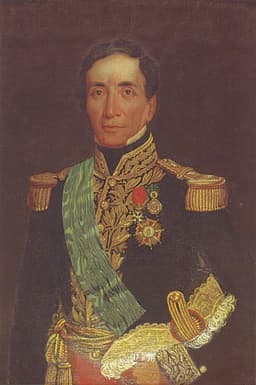
Andres de Santa Cruz
General · Modern
60.5Total
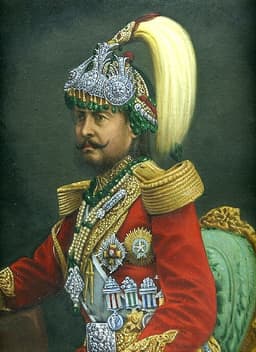
Jung Bahadur Rana
General · Modern
61.4Total
Basic Information
Born
1792
1817
Died
1865
1877
Era
Modern
Modern
Nationality
Bolivia
Nepal
Occupation
General
General
Civilization
Western
Indian
Score Comparison
Military (10%)
67.5
55.0
Political (20%)
59.3
72.0
Influence (20%)
62.0
56.7
Legacy (20%)
50.0
55.0
Leadership (15%)
68.0
78.0
Strategy (15%)
66.3
55.0
TOTAL
60.5
61.4
Andres de Santa Cruz — Complete Timeline
1823 AD
Battle of ZepitaWar
Santa Cruz commanded Peruvian forces in a victory over Spanish royalists at Zepita during the Peruvian War of Independence. This battle enhanced his military reputation and contributed to the eventual liberation of Peru from Spanish rule.
Peruvian War of IndependenceBattleLiberation
Impact: regional
1826 AD
Presidency of PeruPolitical Action
Santa Cruz served as President of the Council of Government of Peru from 1826 to 1827, effectively ruling the country. His administration focused on centralizing power and organizing the state, but he was overthrown by a rebellion led by Agust
PresidencyPeruCentralization
Impact: national
1829 AD
Presidency of BoliviaPolitical Action◆ Major
Santa Cruz became President of Bolivia in 1829, serving until 1839. He implemented administrative reforms, stabilized the economy, and modernized the military, establishing Bolivia as a more coherent state after the chaos following independence.
PresidencyBoliviaReforms
Impact: nationalconstructive
1836 AD
War of the ConfederationWar◆ Major
Chile and Argentina declared war on the Peru-Bolivia Confederation, viewing it as a threat to the balance of power. Santa Cruz led the confederation's forces in a conflict that lasted until 1839, ultimately resulting in the confederation's defeat.
WarChileArgentinaConfederation
Impact: regional
Creation of the Peru-Bolivia ConfederationPolitical Action
Santa Cruz established the Peru-Bolivia Confederation, uniting Bolivia and Peru into a single state with himself as Supreme Protector. This confederation aimed to create a powerful Andean nation and challenged the regional influence of Chile and Argentina.
ConfederationUnificationAndean Power
Impact: regional
1839 AD
Battle of YungayWar
Santa Cruz's confederation forces were decisively defeated by the Chilean army at the Battle of Yungay. This defeat led to the dissolution of the Peru-Bolivia Confederation and forced Santa Cruz into exile, ending his political project.
BattleDefeatEnd of Confederation
Impact: regionaltragic
Exile and DeathPolitical Action
After the defeat at Yungay, Santa Cruz fled to Ecuador and later to France. He spent the rest of his life in exile, making unsuccessful attempts to return to power. He died in France in 1865, never regaining his former influence.
ExileDeathFailure
Impact: nationaltragic
Jung Bahadur Rana — Complete Timeline
1846 AD
Kot MassacrePolitical Action
Jung Bahadur Runa orchestrated the Kot Massacre in Kathmandu, where dozens of nobles and courtiers were killed. This event eliminated his political rivals and allowed him to seize effective control of the Nepalese government, establishing the hereditary Rana prime ministership.
CoupMassacreRana Dynasty
Impact: nationaldestructive
Establishment of Rana DynastyPolitical Action◆ Major
Following the Kot Massacre, Jung Bahadur Rana appointed himself prime minister and commander-in-chief. He made the position hereditary, founding the Rana dynasty that ruled Nepal for over a century, reducing the Shah monarchs to figureheads.
DynastyGovernmentNepal
Impact: national
1850 AD
Visit to EuropeCultural
Jung Bahadur Rana traveled to Britain and France, becoming the first South Asian ruler to visit Europe. He observed Western military and industrial technology, which influenced his modernization efforts in Nepal, including army reforms.
DiplomacyModernizationTravel
Impact: nationalconstructive
1856 AD
Nepal-Tibet War and Treaty of ThapathaliWar◆ Major
Jung Bahadur Rana led a Nepalese military campaign into Tibet. The conflict ended with the Treaty of Thapathali, which secured Nepalese territorial claims and established a tributary relationship with Tibet, enhancing Nepal's regional influence.
WarTreatyTibet
Impact: regional
Expert Analysis
Andres de Santa Cruz vs Jung Bahadur Rana
### The Confederation Dreamer and the Court's Butcher
On a winter morning in 1846, the courtyard of Kathmandu’s royal palace ran red. Jung Bahadur Rana, a young general with cold eyes, watched as his rivals were hacked to pieces. Across the ocean, in the Andean highlands, another general, Andres de Santa Cruz, was dreaming of a different kind of power—not of blood, but of borders. He wanted to erase them. One man built a dynasty on a massacre; the other built a nation on a map. Both rose from the wreckage of empire, but their paths diverged like the rivers of their homelands: one flowing toward a sea of ambition, the other into a desert of exile.
### Origins
Andres de Santa Cruz was born in 1792 in La Paz, Bolivia, the son of a Spanish officer and an indigenous Aymara noblewoman. He straddled two worlds—the colonial elite and the native majority—and this dual identity would shape his vision of a unified Andean state. Educated in Spanish military academies, he absorbed Enlightenment ideas of order and progress, yet he never forgot the faces of the oppressed. His era was one of revolutionary upheaval: Simón Bolívar’s wars of independence were tearing apart the Spanish Empire. Santa Cruz joined the fight, first for the royalists, then switching sides to the patriots. He was a pragmatist, not a zealot.
Jung Bahadur Rana, born in 1817 in Kathmandu, came from a different world—a Hindu kingdom squeezed between the British Raj and Qing China. His family, the Kunwars, were minor nobles in a court rife with intrigue. Nepal had just lost a humiliating war to the British East India Company (1814–1816), and the Shah monarchy was weak, its power fractured by feuding clans. Jung Bahadur grew up watching his father, a military officer, navigate this snake pit. He learned early that loyalty was a currency, and violence, a tool.
### Rise to Power
Santa Cruz’s rise was slow, earned through campaigns. In 1823, at the Battle of Zepita, he commanded Peruvian forces against Spanish royalists and won. But his real ascent came through politics. By 1826, he was effectively ruling Peru as President of the Council of Government. Yet Peru was unstable, and he was forced out within a year. He retreated to Bolivia, where in 1829, he became president. There, he found his canvas: a poor, fractured nation he could mold.
Jung Bahadur’s rise was sudden, brutal, and calculated. In 1846, Nepal’s queen was embroiled in a power struggle with a powerful noble, Gagan Singh. When Singh was mysteriously murdered, the queen summoned the court to the palace armory—the Kot. Jung Bahadur arrived with his soldiers. In the chaos that followed, dozens of nobles were slaughtered. The Kot Massacre was not a battle; it was a purge. Within hours, Jung Bahadur was prime minister and commander-in-chief. He made the position hereditary, founding the Rana dynasty. He did not ask for power; he took it.
### Leadership & Governance
Santa Cruz governed as a reformer. He stabilized Bolivia’s economy, reorganized its finances, and built roads and schools. He was a builder of institutions, not a destroyer of men. His grandest stroke came in 1836: the creation of the Peru-Bolivia Confederation. He united two countries under a single state, with himself as Supreme Protector. It was a visionary idea—a powerful Andean bloc that could resist foreign influence. He even designed a new flag, a constellation of stars.
Jung Bahadur governed as a survivor. He crushed internal rivals with the Kot Massacre and later executed any who threatened his rule. But he was no mere thug. He modernized Nepal’s army, reformed its legal code, and kept the British at bay through diplomacy. In 1850, he became the first South Asian ruler to visit Europe, touring Britain and France. He studied Western military technology and industrial methods, but he imported only what served his absolute power. He was a conservative modernizer: he wanted trains, not revolutions.
### Triumph & Tragedy
Santa Cruz’s triumph was the Confederation. For three years, it seemed to work. Trade flourished, and the state was recognized by major powers. But its neighbors—Chile and Argentina—saw it as a monster. In 1836, they declared war. Santa Cruz, a competent administrator, was a mediocre general. His strategy relied on diplomacy and attrition, but Chile was relentless. In 1839, at the Battle of Yungay, his forces were routed. The Confederation collapsed. Santa Cruz fled to Ecuador, then to France, where he died in 1865, a lonely exile.
Jung Bahadur’s triumph was survival. In 1856, he led a campaign into Tibet, winning the Treaty of Thapathali, which secured favorable trade terms and tribute. He kept Nepal independent while the British swallowed India. His tragedy was his legacy: a dynasty that ruled for 104 years, but at the cost of Nepal’s development. The Ranas hoarded power, blocked education, and isolated the country. Jung Bahadur died in 1877, in bed, surrounded by his sons. He had succeeded too well.
### Character & Destiny
Santa Cruz was a dreamer with a bureaucrat’s soul. He believed in order, unity, and progress—but he lacked the ruthlessness to enforce them. When Chile attacked, he hesitated. He tried to negotiate while his enemies marched. His personality—measured, intellectual, inclusive—was ill-suited for war. He wanted to build a nation by consensus, but history rewarded the sword.
Jung Bahadur was a predator with a politician’s mind. He understood that power was a zero-sum game. His massacre of the Kot was not an act of madness but of cold calculation. He eliminated every rival in one stroke. He was cruel, but he was also shrewd. He knew when to bow to the British and when to stand firm. His character—pragmatic, ruthless, patient—was perfectly calibrated for his time.
### Legacy
Santa Cruz is remembered as a visionary who failed. In Bolivia, he is a national hero; in Peru, a footnote. The Confederation is studied as a “what if” of Latin American history. His scores in history’s ledger—military 60.2, political 60.2, leadership 79.0—reflect a man who was competent but not great. His influence (76.2) and legacy (68.9) show that his dream outlived him.
Jung Bahadur Rana is remembered as a tyrant who succeeded. In Nepal, his name is both revered and reviled. The Rana dynasty he founded ruled until 1951, but it left Nepal poor and isolated. His military score (63.6) and political score (68.3) are higher than Santa Cruz’s, and his legacy score (80.0) is the highest of all—a testament to the durability of his dynasty. Yet his leadership (78.4) is almost identical to Santa Cruz’s, suggesting that both men, in their own ways, were masters of their domains.
### Conclusion
One man drew a line around two countries and called it a nation. The other drew a line around a palace and called it a dynasty. Santa Cruz wanted to unite; Jung Bahadur wanted to control. Both succeeded, and both failed. The Confederation lasted three years; the Rana dynasty, a century. But Santa Cruz’s dream of an Andean union still echoes in modern calls for integration, while Jung Bahadur’s legacy of autocracy is a cautionary tale. In the end, the question is not who was stronger, but who planted seeds that could grow. And that, perhaps, is the cruelest judge of all.
Rankings
🥇
Jung Bahadur RanaLeader
Mil: 55.0Pol: 72.0Inf: 56.7
61.4
🥈
Andres de Santa Cruz
Mil: 67.5Pol: 59.3Inf: 62.0
60.5
+0.9 behind
How This Comparison Works
Algorithm
Each figure is scored on 6 dimensions (0—100 scale) based on structured historical data: Military (10%), Political (20%), Influence (20%), Legacy (20%), Leadership (15%), Strategy (15%). The weighted total produces the final ranking.
Data Sources
Scores are computed from structured sub-indicators in the database. Scale factors adjust for era (Ancient ×0.85, Modern ×1.0) and civilization size (Eastern ×1.05, Other ×0.80) to account for differences in population and military scale.
Maximum 3 Figures
Comparisons are limited to 2—3 figures to ensure readability and statistical meaningfulness.
Error Margins
±5 points per dimension — Sub-scores are derived from historical records with inherent uncertainty. Two figures within 5 points on a dimension should be considered roughly equivalent in that area.
Total Score Accuracy
±3 points overall — The weighted combination of 6 dimensions produces a total score with approximately ±3 points of uncertainty. Differences of less than 3 points are not statistically significant— the figures are effectively tied.
Known Limitations
- Historical records are incomplete and uneven across civilizations
- Figures from oral-tradition societies may be underrepresented
- Occupation labels can misclassify multi-role figures
- Scores measure capability and impact, not moral character
- Quantitative scoring is a comparison tool, not absolute truth
Capability Radar
Military (10%) — Battles & Warfare
Battles
60
45
Win Rate
55
50
Expansion
55
40
Political (20%) — Governance & Reform
Reform
65
75
Diplomacy
60
70
Economy
55
65
Influence (20%) — Cultural & Global Reach
Cultural
45
55
Global
35
40
Legacy (20%) — Historical Impact
Historical
50
65
Longevity
40
60
Leadership (15%) — Power & Stability
Tenure
60
80
Stability
40
60
Strategy (15%) — Tactics & Innovation
Strategy
65
60
Tactics
60
55
Reform
50
70
Similar Comparisons
Comments & Discussion
门徒炼金术士6/16/2026
若论残酷的实用主义,荣格·巴哈杜尔远比圣克鲁斯高明。柯特大屠杀不是疯子的暴行,而是精算后的权力重组——一晚砍掉几十个政敌的头,换来拉纳家族百年的世袭统治。圣克鲁斯那个秘鲁-玻利维亚联盟呢?四年就土崩瓦解,被智利和秘鲁反对派联手碾碎。理想主义者输给能屠夫,历史就是这么直白。
泥沼叙事师6/16/2026
你把两人都放在“帝国废墟”里,但废墟完全不同。圣克鲁斯面对的是两百年独立战争的烂摊子,整个安第斯地区都像流沙;荣格·巴哈杜尔接手的却是一个已有五百年王权传统的国家,只需一次政变就能稳定。建立新国家与控制旧王朝的难度差距,就像在安第斯山上修堡垒和在开阔平地搭帐篷。比较时别忘了重力。
Historian7956/16/2026
Santa Cruz's fatal mistake was assuming borders meant nothing to Chile and Argentina. The Confederation controlled the Pacific trade routes from Callao to Arica—that alone guaranteed its destruction. Jung Bahadur understood geography better: Nepal was a buffer state, so he played the British off against the Chinese, kept his country sovereign without fighting a war. Santa Cruz dreamed big, but Jung Bahadur played smart.
Historian1466/16/2026
The analysis romanticizes Santa Cruz as a "dreamer" and Jung Bahadur as a "butcher," but Santa Cruz's Confederation was enforced by bloody campaigns too, like the 1836 invasion of Peru. Meanwhile, Jung Bahadur's 1846 coup was followed by legal reforms and a Postal Act of 1870. The moral framing is too neat—both men used violence to build or secure states. Santa Cruz's "maps" were written in blood just as much as Kot's stones.
Chronicler92026/16/2026
Santa Cruz is the only South American leader who tried to build a real indigenous- mestizo state, not just a criollo copy of Europe. The Peru-Bolivia Confederation was a genuine multiethnic experiment, killed by jealous neighbors and liberal dogmatists. Jung Bahadur just copied British colonial methods for his own dynasty. One tried to rewrite history; the other just wanted to freeze it in amber for his family.