Loading...
Andres de Santa Cruz vs J. B. M. Hertzog
Andres de Santa Cruz leads by 4.4 pts · 2 figures compared
…
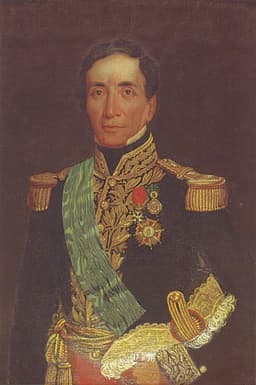
Andres de Santa Cruz
General · Modern
60.5Total
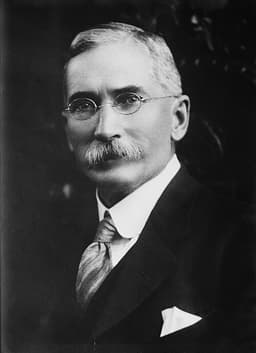
J. B. M. Hertzog
General · Modern
56.1Total
Basic Information
Born
1792
1866
Died
1865
1942
Era
Modern
Modern
Nationality
Bolivia
South Africa
Occupation
General
General
Civilization
Western
Other
Score Comparison
Military (10%)
67.5
25.0
Political (20%)
59.3
60.0
Influence (20%)
62.0
56.7
Legacy (20%)
50.0
50.0
Leadership (15%)
68.0
79.8
Strategy (15%)
66.3
60.0
TOTAL
60.5
56.1
Andres de Santa Cruz — Complete Timeline
1823 AD
Battle of ZepitaWar
Santa Cruz commanded Peruvian forces in a victory over Spanish royalists at Zepita during the Peruvian War of Independence. This battle enhanced his military reputation and contributed to the eventual liberation of Peru from Spanish rule.
Peruvian War of IndependenceBattleLiberation
Impact: regional
1826 AD
Presidency of PeruPolitical Action
Santa Cruz served as President of the Council of Government of Peru from 1826 to 1827, effectively ruling the country. His administration focused on centralizing power and organizing the state, but he was overthrown by a rebellion led by Agust
PresidencyPeruCentralization
Impact: national
1829 AD
Presidency of BoliviaPolitical Action◆ Major
Santa Cruz became President of Bolivia in 1829, serving until 1839. He implemented administrative reforms, stabilized the economy, and modernized the military, establishing Bolivia as a more coherent state after the chaos following independence.
PresidencyBoliviaReforms
Impact: nationalconstructive
1836 AD
War of the ConfederationWar◆ Major
Chile and Argentina declared war on the Peru-Bolivia Confederation, viewing it as a threat to the balance of power. Santa Cruz led the confederation's forces in a conflict that lasted until 1839, ultimately resulting in the confederation's defeat.
WarChileArgentinaConfederation
Impact: regional
Creation of the Peru-Bolivia ConfederationPolitical Action
Santa Cruz established the Peru-Bolivia Confederation, uniting Bolivia and Peru into a single state with himself as Supreme Protector. This confederation aimed to create a powerful Andean nation and challenged the regional influence of Chile and Argentina.
ConfederationUnificationAndean Power
Impact: regional
1839 AD
Battle of YungayWar
Santa Cruz's confederation forces were decisively defeated by the Chilean army at the Battle of Yungay. This defeat led to the dissolution of the Peru-Bolivia Confederation and forced Santa Cruz into exile, ending his political project.
BattleDefeatEnd of Confederation
Impact: regionaltragic
Exile and DeathPolitical Action
After the defeat at Yungay, Santa Cruz fled to Ecuador and later to France. He spent the rest of his life in exile, making unsuccessful attempts to return to power. He died in France in 1865, never regaining his former influence.
ExileDeathFailure
Impact: nationaltragic
J. B. M. Hertzog — Complete Timeline
1899 AD
Boer War GeneralWar◆ Major
Hertzog served as a Boer general in the Second Boer War, commanding forces in the Orange Free State. He participated in several battles and became a prominent Afrikaner military leader.
Second Boer WarGeneralMilitary
Impact: regional
1914 AD
Founded the National PartyPolitical Action
Hertzog broke away from the South African Party and founded the National Party, which championed Afrikaner nationalism and opposed British imperial influence. The party would later implement apartheid.
National PartyAfrikaner NationalismFounding
Impact: nationalconstructive
1924 AD
Prime Minister of South AfricaPolitical Action◆ Major
Hertzog became Prime Minister after his National Party won the general election in coalition with the Labour Party. His government implemented policies to protect white workers and promote Afrikaner interests, including the 'civilized labour' policy.
Prime MinisterAfrikaner RightsLabour Policy
Impact: national
1934 AD
Merged with Smuts to Form United PartyPolitical Action◆ Major
Hertzog merged his National Party with Jan Smuts' South African Party to form the United Party. The coalition aimed to address the economic crisis of the Great Depression and promote national unity, but it alienated hardline Afrikaner nationalists.
United PartyCoalitionNational Unity
Impact: nationalconstructive
1936 AD
Passed the Representation of Natives ActReform◆ Major
Hertzog's government passed the Representation of Natives Act, which removed Black voters from the common voters' roll in the Cape Province and allowed them to elect white representatives instead. This further entrenched racial segregation.
SegregationDisenfranchisementLegislation
Impact: nationaldestructive
1939 AD
Resigned Over Neutrality in WWIIPolitical Action◆ Major
Hertzog advocated for South African neutrality in World War II, but his cabinet voted to enter the war on the Allied side. He resigned as Prime Minister and was succeeded by Jan Smuts, splitting the United Party.
World War IINeutralityResignation
Impact: national
Expert Analysis
J. B. M. Hertzog vs Andres de Santa Cruz
### The Dreamer and the Defender: Two Paths to a Broken Continent
On a crisp morning in 1839, the army of the Peru-Bolivia Confederation shattered on the slopes of Yungay, and with it, the grandest vision of South American unity since Bolívar. Almost exactly a century later, in 1939, a different kind of defeat unfolded in a Cape Town cabinet room: a prime minister resigned, his dream of a white-led, neutral South Africa crushed by the very system he had helped build. Andrés de Santa Cruz and J. B. M. Hertzog never met, but they were bound by the same tragic ambition—to forge a nation from the fragments of a colonial past. One dreamed of a vast Andean federation; the other of a permanent Afrikaner republic. Both failed, and their failures reshaped two continents.
### Origins
Santa Cruz was born in 1792 in La Paz, the son of a Spanish nobleman and a Quechua *cacique’s* daughter. He straddled two worlds: the colonial elite and the indigenous majority. This duality gave him a rare perspective—he saw the Andes not as separate nations, but as a single, natural economic unit. The chaos of the Wars of Independence, which he joined as a young officer, only deepened his conviction that only a powerful, centralized state could prevent the region from collapsing into petty caudillos.
Hertzog, born in 1866 in the Cape Colony, belonged to a different frontier. His family were *Voortrekkers* who had fled British rule, carrying the bitter memory of the Great Trek. He grew up speaking Afrikaans, a language the British dismissed as a kitchen dialect. For Hertzog, the enemy was not Spain but the British Empire, and the prize was not union but separation—the right of the Afrikaner people to rule themselves, free from English domination. Where Santa Cruz saw fusion, Hertzog saw purity.
### Rise to Power
Santa Cruz’s military career was swift and strategic. At the Battle of Zepita in 1823, he commanded Peruvian forces to a rare victory over Spanish royalists, earning the reputation of a reliable, if not brilliant, commander. But his true genius lay in politics. By 1826, he was effectively ruling Peru as President of the Council of Government. Two years later, he was elected President of Bolivia. He had not seized power; he had maneuvered into it, using the chaos of the post-independence era as his ladder.
Hertzog’s rise was slower, harder, and more ideological. He was a Boer general in the Second Boer War (1899–1902), a conflict that burned the humiliation of British concentration camps into his soul. After the war, he entered politics, and in 1914, he broke from the conciliatory South African Party to found the National Party. His platform was simple: protect the Afrikaner from British cultural and economic domination. It was a message of defiance, not unity.
### Leadership & Governance
As President of Bolivia from 1829 to 1839, Santa Cruz was a reformer of startling energy. He stabilized the currency, reformed the tax system, modernized the army, and reopened the silver mines. His greatest stroke was the 1836 creation of the Peru-Bolivia Confederation, a single state uniting Bolivia and Peru under his title of Supreme Protector. He believed that only a large, economically integrated state could resist the ambitions of Chile and Argentina. His governance was rational, centralized, and visionary—but it was also fragile, resting entirely on his personal authority.
Hertzog, as Prime Minister from 1924, governed through coalition and compromise. He passed labor laws protecting white workers, promoted Afrikaans as an official language, and in 1934 merged his National Party with Jan Smuts’ South African Party to form the United Party—a grand coalition meant to heal the rift between Boer and Briton. But his most fateful act was the 1936 Representation of Natives Act, which removed Black voters from the common roll in the Cape. For Hertzog, Afrikaner unity required racial exclusion. He was not a fanatic; he was a pragmatist of prejudice.
### Triumph & Tragedy
Santa Cruz’s triumph was the Confederation itself—a moment when the map of South America seemed to be redrawn by a single, bold hand. But the tragedy followed quickly. Chile and Argentina, fearing a powerful neighbor, declared war in 1836. The resulting War of the Confederation exposed Santa Cruz’s fatal weakness: he was a brilliant administrator, not a battlefield commander. At the Battle of Yungay in 1839, his forces were decisively crushed by the Chilean army. The Confederation dissolved overnight. Santa Cruz fled to Ecuador, then to France, where he died in exile in 1865—a ghost of a nation that never was.
Hertzog’s triumph was the 1924 election victory, which finally gave Afrikaners political power in their own land. His tragedy came in 1939, when World War II broke out. Hertzog believed South Africa should remain neutral, as it had no quarrel with Germany. But his cabinet voted to enter the war on the Allied side. Rather than betray his principles, he resigned. He had spent his life building a political home for the Afrikaner, only to find himself homeless in it.
### Character & Destiny
Santa Cruz was a man of grand designs and cold patience. His leadership score of 79.0 reflects a steady hand, but his military score of 60.2 reveals the gap between vision and execution. He could imagine a new world but could not fight for it. His character was that of a builder, not a warrior—and in the violent Andes of the 1830s, that was a fatal flaw.
Hertzog, with a leadership score of 79.9 and a political score of 73.0, was the opposite: a fighter who became a politician. He was stubborn, principled, and deeply parochial. He could defend his people but could not see beyond them. His legacy score of 66.8 reflects a mixed judgment: he saved Afrikaner culture but laid the legal groundwork for apartheid. His destiny was to be the father of a nation he would not have recognized thirty years later.
### Legacy
Santa Cruz is remembered in Bolivia and Peru as a visionary who almost succeeded. His confederation is studied as a lost alternative—a path not taken that might have changed the balance of South American power. But his name is also a cautionary tale: the dream of unity, when imposed from above, shatters on the hard rocks of national jealousy.
Hertzog’s legacy is darker and more complex. He is honored by Afrikaner nationalists as a founding father, but condemned by historians for entrenching racial segregation. His statue in Bloemfontein was defaced in 2020. He represents the tragedy of a leader who fought for one people’s freedom by denying another’s.
### Conclusion
Two men, two continents, one pattern. Santa Cruz dreamed of a union that erased borders; Hertzog dreamed of a nation that defended them. Both were undone by forces they could not control—Chilean bayonets and British alliances, the ambition of neighbors and the weight of history. Their stories remind us that leadership is not just about vision, but about timing. And that the most dangerous dream of all is the one that comes true only in exile.
Rankings
🥇
Andres de Santa CruzLeader
Mil: 67.5Pol: 59.3Inf: 62.0
60.5
🥈
J. B. M. Hertzog
Mil: 25.0Pol: 60.0Inf: 56.7
56.1
+4.4 behind
How This Comparison Works
Algorithm
Each figure is scored on 6 dimensions (0—100 scale) based on structured historical data: Military (10%), Political (20%), Influence (20%), Legacy (20%), Leadership (15%), Strategy (15%). The weighted total produces the final ranking.
Data Sources
Scores are computed from structured sub-indicators in the database. Scale factors adjust for era (Ancient ×0.85, Modern ×1.0) and civilization size (Eastern ×1.05, Other ×0.80) to account for differences in population and military scale.
Maximum 3 Figures
Comparisons are limited to 2—3 figures to ensure readability and statistical meaningfulness.
Error Margins
±5 points per dimension — Sub-scores are derived from historical records with inherent uncertainty. Two figures within 5 points on a dimension should be considered roughly equivalent in that area.
Total Score Accuracy
±3 points overall — The weighted combination of 6 dimensions produces a total score with approximately ±3 points of uncertainty. Differences of less than 3 points are not statistically significant— the figures are effectively tied.
Known Limitations
- Historical records are incomplete and uneven across civilizations
- Figures from oral-tradition societies may be underrepresented
- Occupation labels can misclassify multi-role figures
- Scores measure capability and impact, not moral character
- Quantitative scoring is a comparison tool, not absolute truth
Capability Radar
Military (10%) — Battles & Warfare
Battles
60
45
Win Rate
55
40
Expansion
55
20
Political (20%) — Governance & Reform
Reform
65
60
Diplomacy
60
55
Economy
55
50
Influence (20%) — Cultural & Global Reach
Cultural
45
50
Global
35
45
Legacy (20%) — Historical Impact
Historical
50
55
Longevity
40
40
Leadership (15%) — Power & Stability
Tenure
60
65
Stability
40
45
Strategy (15%) — Tactics & Innovation
Strategy
65
50
Tactics
60
45
Reform
50
30
Similar Comparisons
Comments & Discussion
No comments yet. Be the first to share your thoughts!