Loading...
Afonso de Albuquerque vs Andres de Santa Cruz
Afonso de Albuquerque leads by 19.1 pts · 2 figures compared
…
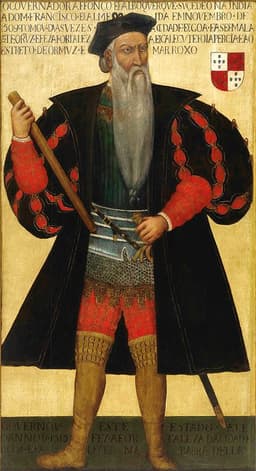
Afonso de Albuquerque
General · Medieval
79.6Total
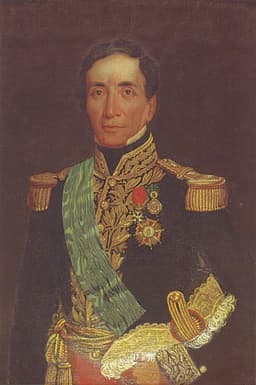
Andres de Santa Cruz
General · Modern
60.5Total
Basic Information
Born
1453
1792
Died
1515
1865
Era
Medieval
Modern
Nationality
Portugal
Bolivia
Occupation
General
General
Civilization
Western
Western
Score Comparison
Military (10%)
77.5
67.5
Political (20%)
88.0
59.3
Influence (20%)
80.0
62.0
Legacy (20%)
75.0
50.0
Leadership (15%)
78.0
68.0
Strategy (15%)
82.0
66.3
TOTAL
79.6
60.5
Afonso de Albuquerque — Complete Timeline
1503 AD
First voyage to IndiaWar◆ Major
Afonso de Albuquerque led a fleet to India, establishing the first Portuguese fort at Cochin. This voyage laid the foundation for Portuguese control of the Indian Ocean trade.
ExplorationColonialismIndia
Impact: global
1510 AD
Conquest of GoaWar◆ Major
Albuquerque captured Goa from the Sultan of Bijapur. He made Goa the capital of Portuguese India, a position it held for over 400 years.
ConquestColonialismIndia
Impact: regional
1511 AD
Conquest of MalaccaWar◆ Major
Albuquerque led a Portuguese fleet to capture the strategic port of Malacca. This gave Portugal control of the spice trade route between the Indian Ocean and the Pacific.
ConquestSpice TradeSoutheast Asia
Impact: global
1513 AD
Siege of AdenWar
Albuquerque attempted to capture Aden in Yemen but failed. This failure prevented Portugal from controlling the entrance to the Red Sea and limited their influence in the region.
SiegeFailureRed Sea
Impact: regional
1515 AD
Death at seaOther◆ Major
Afonso de Albuquerque died at sea off the coast of Goa, possibly from illness or poison. His death left the Portuguese Empire in the Indian Ocean without its most capable leader.
DeathLeadershipEmpire
Impact: regionaltragic
Andres de Santa Cruz — Complete Timeline
1823 AD
Battle of ZepitaWar
Santa Cruz commanded Peruvian forces in a victory over Spanish royalists at Zepita during the Peruvian War of Independence. This battle enhanced his military reputation and contributed to the eventual liberation of Peru from Spanish rule.
Peruvian War of IndependenceBattleLiberation
Impact: regional
1826 AD
Presidency of PeruPolitical Action
Santa Cruz served as President of the Council of Government of Peru from 1826 to 1827, effectively ruling the country. His administration focused on centralizing power and organizing the state, but he was overthrown by a rebellion led by Agust
PresidencyPeruCentralization
Impact: national
1829 AD
Presidency of BoliviaPolitical Action◆ Major
Santa Cruz became President of Bolivia in 1829, serving until 1839. He implemented administrative reforms, stabilized the economy, and modernized the military, establishing Bolivia as a more coherent state after the chaos following independence.
PresidencyBoliviaReforms
Impact: nationalconstructive
1836 AD
War of the ConfederationWar◆ Major
Chile and Argentina declared war on the Peru-Bolivia Confederation, viewing it as a threat to the balance of power. Santa Cruz led the confederation's forces in a conflict that lasted until 1839, ultimately resulting in the confederation's defeat.
WarChileArgentinaConfederation
Impact: regional
Creation of the Peru-Bolivia ConfederationPolitical Action
Santa Cruz established the Peru-Bolivia Confederation, uniting Bolivia and Peru into a single state with himself as Supreme Protector. This confederation aimed to create a powerful Andean nation and challenged the regional influence of Chile and Argentina.
ConfederationUnificationAndean Power
Impact: regional
1839 AD
Battle of YungayWar
Santa Cruz's confederation forces were decisively defeated by the Chilean army at the Battle of Yungay. This defeat led to the dissolution of the Peru-Bolivia Confederation and forced Santa Cruz into exile, ending his political project.
BattleDefeatEnd of Confederation
Impact: regionaltragic
Exile and DeathPolitical Action
After the defeat at Yungay, Santa Cruz fled to Ecuador and later to France. He spent the rest of his life in exile, making unsuccessful attempts to return to power. He died in France in 1865, never regaining his former influence.
ExileDeathFailure
Impact: nationaltragic
Expert Analysis
Afonso de Albuquerque vs Andres de Santa Cruz
### The Visionary and the Conqueror: Two Paths to Empire
On a winter morning in 1839, Andrés de Santa Cruz watched his grand dream collapse in the dust of Yungay, Peru. His Peru-Bolivia Confederation, a state that had promised to reshape South America, was shattered by Chilean bayonets. Three centuries earlier, in 1511, Afonso de Albuquerque stood on the walls of Malacca, watching the smoke rise from a city he had just seized for Portugal. The spice routes of Asia were now his. Both men were builders of empires, yet one died in exile, his creation erased, while the other’s conquests endured for centuries. What made the difference?
### Origins
Santa Cruz was born in 1792 in La Paz, Bolivia, into a world of colonial twilight and revolutionary dawn. His father was a Spanish officer, his mother a Quechua noblewoman. This mestizo heritage gave him a foot in two worlds but a home in neither—a tension that would define his political vision. He grew up in the chaos of the Wars of Independence, where loyalties shifted like sand.
Albuquerque, born in 1453 near Lisbon, came from a different crucible. Portugal was a small, unified kingdom on the edge of Europe, driven by a single obsession: breaking the Venetian monopoly on Asian spices. Unlike Santa Cruz’s fractured, post-colonial world, Albuquerque’s Portugal was a nation with clear purpose and royal support. He was a son of the aristocracy, trained for war and command from boyhood.
### Rise to Power
Santa Cruz entered history through the battlefield. At the Battle of Zepita in 1823, he commanded Peruvian forces against Spanish royalists and won. This success propelled him into politics. By 1826, he was effectively ruling Peru as President of the Council of Government. But his rise was a tightrope walk over the chasms of regional rivalries, where every ally was a potential enemy.
Albuquerque’s path was more direct. In 1503, he led his first fleet to India, establishing a fort at Cochin. This was not a political climb but a military campaign, backed by the full resources of the Portuguese crown. His king, Manuel I, gave him a clear mandate: seize control of the Indian Ocean trade. There was no parliament to appease, no factions to balance.
### Leadership & Governance
Santa Cruz was a political architect. When he became President of Bolivia in 1829, he stabilized the economy, reformed the administration, and built roads. His greatest stroke was the Peru-Bolivia Confederation in 1836, uniting two nations under a single state. He believed that only a large, integrated entity could resist the ambitions of Argentina and Chile. His governance was visionary but fragile—a paper empire held together by treaties and his own authority.
Albuquerque was a conqueror first, a governor second. After capturing Goa in 1510, he made it the capital of Portuguese India, fortifying it against Muslim sultanates. In 1511, he took Malacca, the gateway to the Spice Islands. He did not seek to unite peoples; he sought to dominate trade routes. His method was force, not federation. He burned cities, sank fleets, and installed Portuguese garrisons. Where Santa Cruz tried to build consensus, Albuquerque imposed control.
### Triumph & Tragedy
Santa Cruz’s triumph was the Confederation itself—a moment when it seemed the Andes might produce a great power. But his tragedy came at Yungay in 1839. Chile, fearing the Confederation’s strength, allied with Peruvian dissidents and crushed his army. He fled to Ecuador, then to France, where he died in 1865, a ghost of what might have been.
Albuquerque’s greatest victory was Malacca, which gave Portugal a chokehold on the spice trade for a century. But his tragedy was the Siege of Aden in 1513, where he failed to capture the Red Sea port. This failure allowed the Ottoman Empire to retain a foothold in the Indian Ocean. Worse, he died at sea in 1515, possibly poisoned, just as his empire needed him most. Yet his conquests outlived him.
### Character & Destiny
Santa Cruz was a dreamer with a diplomat’s patience. He believed that unity could overcome the divisions of race and region that plagued South America. But he underestimated the raw power of nationalism—Chile’s fear of a rival, Peru’s resentment of Bolivian rule. His character was cautious, his strategy defensive. He tried to build an empire through treaties, not terror.
Albuquerque was ruthless and decisive. He understood that in the Indian Ocean, power came from the barrel of a cannon. His strategy was offensive, always striking first. He did not hesitate to massacre or enslave. This brutality secured his conquests but also created enemies that would eventually erode Portuguese dominance. Yet his empire was anchored by forts and fleets, not fragile alliances.
### Legacy
Santa Cruz is remembered in Bolivia as a visionary, but his Confederation is a footnote. His legacy is a lesson in the limits of political idealism in a world of competing powers. He is honored, not feared.
Albuquerque is remembered as the founder of the Portuguese Empire in Asia. Goa remained Portuguese until 1961. Malacca’s capture reshaped global trade. His legacy is stone and steel—forts that still stand, routes that still carry goods. He is celebrated as a builder, not a dreamer.
### Conclusion
Standing at Yungay, Santa Cruz must have wondered if his vision was too grand for his time. Albuquerque, dying on a ship, likely had no such doubts. The difference between them was not talent or courage, but the soil in which they planted their empires. Santa Cruz tried to grow an oak in sand; Albuquerque planted iron in rock. One built a dream that vanished with the wind; the other built a machine that outlasted him. History rewards the builder of machines, not the weaver of dreams.
Rankings
🥇
Afonso de AlbuquerqueLeader
Mil: 77.5Pol: 88.0Inf: 80.0
79.6
🥈
Andres de Santa Cruz
Mil: 67.5Pol: 59.3Inf: 62.0
60.5
+19.1 behind
How This Comparison Works
Algorithm
Each figure is scored on 6 dimensions (0—100 scale) based on structured historical data: Military (10%), Political (20%), Influence (20%), Legacy (20%), Leadership (15%), Strategy (15%). The weighted total produces the final ranking.
Data Sources
Scores are computed from structured sub-indicators in the database. Scale factors adjust for era (Ancient ×0.85, Modern ×1.0) and civilization size (Eastern ×1.05, Other ×0.80) to account for differences in population and military scale.
Maximum 3 Figures
Comparisons are limited to 2—3 figures to ensure readability and statistical meaningfulness.
Error Margins
±5 points per dimension — Sub-scores are derived from historical records with inherent uncertainty. Two figures within 5 points on a dimension should be considered roughly equivalent in that area.
Total Score Accuracy
±3 points overall — The weighted combination of 6 dimensions produces a total score with approximately ±3 points of uncertainty. Differences of less than 3 points are not statistically significant— the figures are effectively tied.
Known Limitations
- Historical records are incomplete and uneven across civilizations
- Figures from oral-tradition societies may be underrepresented
- Occupation labels can misclassify multi-role figures
- Scores measure capability and impact, not moral character
- Quantitative scoring is a comparison tool, not absolute truth
Capability Radar
Military (10%) — Battles & Warfare
Battles
85
60
Win Rate
80
55
Expansion
95
55
Political (20%) — Governance & Reform
Reform
80
65
Diplomacy
85
60
Economy
80
55
Influence (20%) — Cultural & Global Reach
Cultural
70
45
Global
85
35
Legacy (20%) — Historical Impact
Historical
85
50
Longevity
80
40
Leadership (15%) — Power & Stability
Tenure
70
60
Stability
65
40
Strategy (15%) — Tactics & Innovation
Strategy
95
65
Tactics
90
60
Reform
75
50
Similar Comparisons
Comments & Discussion
No comments yet. Be the first to share your thoughts!