Loading...
Andres de Santa Cruz vs John Lambert
Andres de Santa Cruz leads by 3.8 pts · 2 figures compared
…
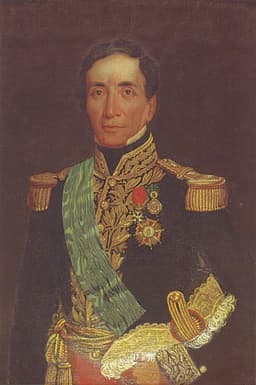
Andres de Santa Cruz
General · Modern
60.5Total
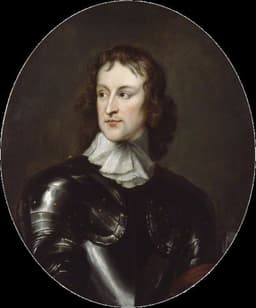
John Lambert
General · Modern
56.7Total
Basic Information
Born
1792
1619
Died
1865
1684
Era
Modern
Modern
Nationality
Bolivia
England
Occupation
General
General
Civilization
Western
Western
Score Comparison
Military (10%)
67.5
70.0
Political (20%)
59.3
45.0
Influence (20%)
62.0
59.0
Legacy (20%)
50.0
50.0
Leadership (15%)
68.0
68.0
Strategy (15%)
66.3
55.0
TOTAL
60.5
56.7
Andres de Santa Cruz — Complete Timeline
1823 AD
Battle of ZepitaWar
Santa Cruz commanded Peruvian forces in a victory over Spanish royalists at Zepita during the Peruvian War of Independence. This battle enhanced his military reputation and contributed to the eventual liberation of Peru from Spanish rule.
Peruvian War of IndependenceBattleLiberation
Impact: regional
1826 AD
Presidency of PeruPolitical Action
Santa Cruz served as President of the Council of Government of Peru from 1826 to 1827, effectively ruling the country. His administration focused on centralizing power and organizing the state, but he was overthrown by a rebellion led by Agust
PresidencyPeruCentralization
Impact: national
1829 AD
Presidency of BoliviaPolitical Action◆ Major
Santa Cruz became President of Bolivia in 1829, serving until 1839. He implemented administrative reforms, stabilized the economy, and modernized the military, establishing Bolivia as a more coherent state after the chaos following independence.
PresidencyBoliviaReforms
Impact: nationalconstructive
1836 AD
War of the ConfederationWar◆ Major
Chile and Argentina declared war on the Peru-Bolivia Confederation, viewing it as a threat to the balance of power. Santa Cruz led the confederation's forces in a conflict that lasted until 1839, ultimately resulting in the confederation's defeat.
WarChileArgentinaConfederation
Impact: regional
Creation of the Peru-Bolivia ConfederationPolitical Action
Santa Cruz established the Peru-Bolivia Confederation, uniting Bolivia and Peru into a single state with himself as Supreme Protector. This confederation aimed to create a powerful Andean nation and challenged the regional influence of Chile and Argentina.
ConfederationUnificationAndean Power
Impact: regional
1839 AD
Battle of YungayWar
Santa Cruz's confederation forces were decisively defeated by the Chilean army at the Battle of Yungay. This defeat led to the dissolution of the Peru-Bolivia Confederation and forced Santa Cruz into exile, ending his political project.
BattleDefeatEnd of Confederation
Impact: regionaltragic
Exile and DeathPolitical Action
After the defeat at Yungay, Santa Cruz fled to Ecuador and later to France. He spent the rest of his life in exile, making unsuccessful attempts to return to power. He died in France in 1865, never regaining his former influence.
ExileDeathFailure
Impact: nationaltragic
John Lambert — Complete Timeline
1648 AD
Battle of PrestonWar◆ Major
John Lambert commanded parliamentary forces at the Battle of Preston, defeating a Scottish royalist army. The victory helped secure the parliamentary cause in the Second English Civil War.
BattleEnglish Civil WarParliament
Impact: national
1653 AD
Drafted the Instrument of GovernmentPolitical Action◆ Major
John Lambert was the principal author of the Instrument of Government, the written constitution that established the Protectorate under Oliver Cromwell. The document created a Lord Protector and a Council of State, but was never fully implemented.
ConstitutionProtectorateCromwell
Impact: nationalconstructive
1662 AD
Exiled to GuernseyPolitical Action◆ Major
After the Restoration, John Lambert was tried for treason and exiled to the island of Guernsey. He spent the remainder of his life in captivity, never regaining political influence.
ExileRestorationPunishment
Impact: nationaltragic
Expert Analysis
Andres de Santa Cruz vs John Lambert
The Dreamer and the Architect
History is littered with men who reached for the stars, only to have their fingers burned by the sun. Two such figures, separated by two centuries and an ocean, are Andrés de Santa Cruz, the Bolivian general who stitched together a short-lived Andean superstate, and John Lambert, the English parliamentary general who helped forge a revolutionary constitution but ended his days a forgotten prisoner. Both were men of immense ambition and strategic vision, yet their paths diverged into triumph and tragedy. Why did one fall from the heights of power into exile, while the other was simply erased from the stage? The answer lies not in their dreams, but in the soil from which they grew.
Origins
Andrés de Santa Cruz was born in 1792 in La Paz, the son of a Spanish nobleman and an indigenous Aymara woman. This mixed heritage placed him at the fault line of a colonial society cracking under the strain of revolution. He was a man of two worlds, fluent in the languages of both the conqueror and the conquered. His era was one of violent creation: the Spanish Empire was collapsing, and from its ruins, new nations were being forged in blood and fire. Santa Cruz absorbed this chaos as a young officer, learning that power was a prize to be seized, not inherited. His ambition was not merely personal; it was continental.
John Lambert, born in 1619 in Yorkshire, was the son of a modest gentleman. His England was a kingdom tearing itself apart over religion, law, and the divine right of kings. Unlike Santa Cruz, Lambert was a man of the Puritan north, raised in a world where God’s will was debated in every sermon and the King’s authority was a question, not a given. He came of age in a society where the old order was being dismantled by men who believed they were building a new Jerusalem. His ambition was not territorial but constitutional; he dreamed of a republic governed by law, not by a single man.
Rise to Power
Santa Cruz’s ascent was forged in the crucible of war. In 1823, at the Battle of Zepita, he commanded Peruvian forces to a decisive victory over Spanish royalists, earning a reputation as a capable and ruthless commander. This battlefield success opened the door to politics. By 1826, he was effectively ruling Peru as President of the Council of Government, although his tenure was brief. His true chance came in 1829, when he became President of Bolivia. Here, he was no mere soldier; he was a reformer. He stabilized the economy, reorganized the administration, and, most audaciously, began to dream of reuniting the fractured Andean republics.
Lambert’s path was different. He rose not through a single victory but through a series of masterful campaigns. At the Battle of Preston in 1648, he commanded Parliament’s forces and crushed a Scottish royalist army, cementing his reputation as Oliver Cromwell’s most trusted lieutenant. But Lambert was more than a sword. He was a political architect. In 1653, he was the principal author of the Instrument of Government, the first written constitution in English history. This document established the Protectorate, placing Cromwell at its head but also limiting his power through a council and a parliament. Lambert believed he was building a republic that would outlast any single ruler.
Leadership & Governance
Santa Cruz governed as a visionary autocrat. He saw the Andes not as a collection of squabbling republics but as a natural unity. In 1836, he created the Peru-Bolivia Confederation, a single state with himself as Supreme Protector. He imposed order, standardized currency, and opened trade routes. His military strategy was sound, his political wisdom flawed. He failed to understand that his neighbors—Chile and Argentina—would view his confederation as a mortal threat. They declared war in 1836, and Santa Cruz found himself isolated, his grand design resting on a fragile army.
Lambert, by contrast, governed as a republican idealist. He believed in the supremacy of law over men. His Instrument of Government was a masterpiece of political engineering, but it was also a compromise that satisfied no one. The army wanted a strongman; the parliament wanted power. Lambert was caught between the two. He was a brilliant tactician but a poor politician in the brutal arena of personal loyalty. When Cromwell died and his son Richard proved weak, the Protectorate crumbled. Lambert tried to hold the pieces together, but he had no army of his own, only a constitution that no one would defend.
Triumph & Tragedy
Santa Cruz’s greatest moment was the creation of the Confederation in 1836. For three years, he ruled a state that stretched from the Amazon to the Pacific, a dream of Andean unity that had eluded Bolívar. But his tragedy came swiftly. At the Battle of Yungay in 1839, his forces were shattered by the Chilean army. He fled to Ecuador, then to France, where he spent the rest of his life in exile, making fruitless appeals for a return that never came. He died in 1865, a ghost of a vanished empire.
Lambert’s triumph was the Instrument of Government itself, a document that foreshadowed modern constitutionalism. But his tragedy was the Restoration. In 1660, Charles II returned to the throne, and the republic Lambert had built was erased overnight. He was tried for treason and, in 1662, exiled to the bleak island of Guernsey. Unlike Santa Cruz, he did not even have the dignity of a public life; he was simply forgotten, a prisoner of a king who had no use for architects of a failed republic. He died in 1684, alone and obscure.
Character & Destiny
Santa Cruz was a dreamer who believed that geography and history could be bent to his will. His mixed heritage gave him a unique perspective, but it also made him an outsider to the very nations he tried to unite. He was a man of grand vision but poor execution, unable to secure the alliances or the military force needed to sustain his creation. His character was that of a builder who refused to see the cracks in his foundation.
Lambert was an idealist who believed that law could replace the sword. He was a man of principle, but his principles were too rigid for the brutal world of the Restoration. He failed to see that a constitution is only as strong as the men who enforce it. His character was that of an architect who designed a cathedral but forgot to hire a congregation.
Legacy
Santa Cruz is remembered in Bolivia and Peru as a flawed but visionary leader. The Peru-Bolivia Confederation is a footnote in history, but it remains a symbol of what might have been. His legacy is one of ambition, a reminder that even failed dreams can shape the boundaries of nations.
Lambert’s legacy is quieter but more profound. The Instrument of Government was a failure, but it planted the seeds of constitutional government in England. His ideas about written constitutions, separation of powers, and the rule of law would echo through the centuries, influencing the American Founders and the architects of modern democracies. He is barely remembered, but his ghost haunts every parliamentary debate.
Conclusion
Santa Cruz and Lambert were both men who reached too far, but their failures were of different kinds. Santa Cruz tried to build an empire in a world that wanted nations; Lambert tried to build a republic in a world that wanted a king. One died in exile, dreaming of a return; the other died in prison, forgotten by the very revolution he had helped to create. Their stories are a reminder that history is not kind to those who defy its currents. But they also remind us that the greatest visions are often the ones that fail—and that failure, in the end, is the price of dreaming.
Rankings
🥇
Andres de Santa CruzLeader
Mil: 67.5Pol: 59.3Inf: 62.0
60.5
🥈
John Lambert
Mil: 70.0Pol: 45.0Inf: 59.0
56.7
+3.8 behind
How This Comparison Works
Algorithm
Each figure is scored on 6 dimensions (0—100 scale) based on structured historical data: Military (10%), Political (20%), Influence (20%), Legacy (20%), Leadership (15%), Strategy (15%). The weighted total produces the final ranking.
Data Sources
Scores are computed from structured sub-indicators in the database. Scale factors adjust for era (Ancient ×0.85, Modern ×1.0) and civilization size (Eastern ×1.05, Other ×0.80) to account for differences in population and military scale.
Maximum 3 Figures
Comparisons are limited to 2—3 figures to ensure readability and statistical meaningfulness.
Error Margins
±5 points per dimension — Sub-scores are derived from historical records with inherent uncertainty. Two figures within 5 points on a dimension should be considered roughly equivalent in that area.
Total Score Accuracy
±3 points overall — The weighted combination of 6 dimensions produces a total score with approximately ±3 points of uncertainty. Differences of less than 3 points are not statistically significant— the figures are effectively tied.
Known Limitations
- Historical records are incomplete and uneven across civilizations
- Figures from oral-tradition societies may be underrepresented
- Occupation labels can misclassify multi-role figures
- Scores measure capability and impact, not moral character
- Quantitative scoring is a comparison tool, not absolute truth
Capability Radar
Military (10%) — Battles & Warfare
Battles
60
65
Win Rate
55
60
Expansion
55
40
Political (20%) — Governance & Reform
Reform
65
55
Diplomacy
60
50
Economy
55
45
Influence (20%) — Cultural & Global Reach
Cultural
45
35
Global
35
30
Legacy (20%) — Historical Impact
Historical
50
50
Longevity
40
40
Leadership (15%) — Power & Stability
Tenure
60
60
Stability
40
40
Strategy (15%) — Tactics & Innovation
Strategy
65
65
Tactics
60
70
Reform
50
55
Similar Comparisons
Comments & Discussion
El Libertador's Shadow6/16/2026
Santa Cruz wasn't just a dreamer—he was a geopolitical genius who nearly made the Andean Federation work. His 1836 creation lasted three years against all odds. Lambert? A footnote who wrote a constitution that got ignored. Santa Cruz commanded armies and forged nations; Lambert never even won a major battle independently. One shaped South America's destiny, the other got erased. Easy choice.
数据拆解师6/16/2026
说Santa Cruz是“大陆梦想家”?他那个秘鲁-玻利维亚联邦只撑了三年,然后就被智利和阿根廷联手踩碎。人口统计上,联邦内原住民占比超60%,他却基本没给这些人实际权力,全靠西班牙裔精英撑场面。这叫什么战略家?本质上就是个行政泡沫,数据不会撒谎。
Constitutional Ghost6/16/2026
Lambert's real tragedy isn't that he failed—it's that he succeeded too quietly. His 1653 Instrument of Government was the first written constitution in the English-speaking world, separating executive and legislative powers. Cromwell gets the credit, but Lambert was the architect. Santa Cruz had an empire that vanished within a decade. Lambert's ideas shaped how we govern today. Who's really forgotten?
冷兵器狂人6/16/2026
军事上和Lambert没得比。Santa Cruz指挥的Yungay之战(1839)直接葬送了他的联邦,而Lambert在Worcester战役(1651)率部横扫保王党精锐,战术执行干净利落。Santa Cruz的军队装备落后、纪律松散,靠的是原住民人数硬撑;Lambert则是新模范军的顶尖战术家,用骑兵机动碾压对手。战场上的成就,Lambert完胜。
Two-Bridge Builder6/16/2026
The real difference: Santa Cruz tried to bridge Spanish and indigenous worlds but ended up crushed between them. Lambert tried to bridge royalists and parliamentarians and got erased by both. Both men were too moderate for their violent ages. Santa Cruz's downfall was Chile's cannons; Lambert's was Cromwell's paranoia and then the Restoration's revenge. They're mirror images—ambitious unifiers who made everyone their enemy.