Loading...
Andres de Santa Cruz vs Hyder Ali
Hyder Ali leads by 8.9 pts · 2 figures compared
…
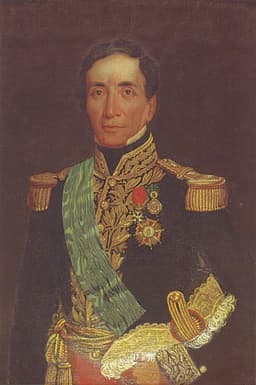
Andres de Santa Cruz
General · Modern
60.5Total
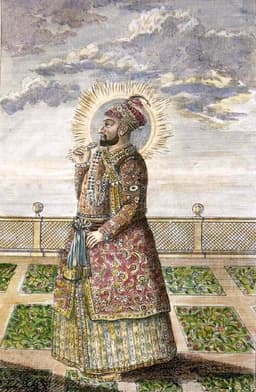
Hyder Ali
General · Modern
69.4Total
Basic Information
Born
1792
1720
Died
1865
1782
Era
Modern
Modern
Nationality
Bolivia
India
Occupation
General
General
Civilization
Western
Indian
Score Comparison
Military (10%)
67.5
80.0
Political (20%)
59.3
65.7
Influence (20%)
62.0
82.0
Legacy (20%)
50.0
56.0
Leadership (15%)
68.0
68.0
Strategy (15%)
66.3
68.0
TOTAL
60.5
69.4
Andres de Santa Cruz — Complete Timeline
1823 AD
Battle of ZepitaWar
Santa Cruz commanded Peruvian forces in a victory over Spanish royalists at Zepita during the Peruvian War of Independence. This battle enhanced his military reputation and contributed to the eventual liberation of Peru from Spanish rule.
Peruvian War of IndependenceBattleLiberation
Impact: regional
1826 AD
Presidency of PeruPolitical Action
Santa Cruz served as President of the Council of Government of Peru from 1826 to 1827, effectively ruling the country. His administration focused on centralizing power and organizing the state, but he was overthrown by a rebellion led by Agust
PresidencyPeruCentralization
Impact: national
1829 AD
Presidency of BoliviaPolitical Action◆ Major
Santa Cruz became President of Bolivia in 1829, serving until 1839. He implemented administrative reforms, stabilized the economy, and modernized the military, establishing Bolivia as a more coherent state after the chaos following independence.
PresidencyBoliviaReforms
Impact: nationalconstructive
1836 AD
War of the ConfederationWar◆ Major
Chile and Argentina declared war on the Peru-Bolivia Confederation, viewing it as a threat to the balance of power. Santa Cruz led the confederation's forces in a conflict that lasted until 1839, ultimately resulting in the confederation's defeat.
WarChileArgentinaConfederation
Impact: regional
Creation of the Peru-Bolivia ConfederationPolitical Action
Santa Cruz established the Peru-Bolivia Confederation, uniting Bolivia and Peru into a single state with himself as Supreme Protector. This confederation aimed to create a powerful Andean nation and challenged the regional influence of Chile and Argentina.
ConfederationUnificationAndean Power
Impact: regional
1839 AD
Battle of YungayWar
Santa Cruz's confederation forces were decisively defeated by the Chilean army at the Battle of Yungay. This defeat led to the dissolution of the Peru-Bolivia Confederation and forced Santa Cruz into exile, ending his political project.
BattleDefeatEnd of Confederation
Impact: regionaltragic
Exile and DeathPolitical Action
After the defeat at Yungay, Santa Cruz fled to Ecuador and later to France. He spent the rest of his life in exile, making unsuccessful attempts to return to power. He died in France in 1865, never regaining his former influence.
ExileDeathFailure
Impact: nationaltragic
Hyder Ali — Complete Timeline
1757 AD
Battle of PlasseyWar◆ Major
Hyder Ali, as a commander under the Wodeyar dynasty, participated in the Battle of Plassey indirectly by supporting the French against the British. However, his major role came later. This battle marked the beginning of British dominance in Bengal, which Hyder Ali would later challenge in the Carnatic Wars.
Carnatic WarsBritish East India CompanyMysore
Impact: regional
1761 AD
Capture of the throne of MysorePolitical Action◆ Major
Hyder Ali, a military commander, overthrew the Wodeyar ruler Krishnaraja Wodeyar II and established himself as the de facto ruler of Mysore. He imprisoned the maharaja and assumed full control, transforming Mysore into a powerful state through military reforms and expansion.
CoupMysore KingdomWodeyar Dynasty
Impact: regionaldestructive
1767 AD
First Anglo-Mysore WarWar◆ Major
Hyder Ali led Mysore against the British East India Company in the First Anglo-Mysore War. He formed alliances with the Nizam of Hyderabad and the Marathas. The war ended with the Treaty of Madras in 1769, which restored conquered territories and established a defensive alliance between Mysore and the British.
Anglo-Mysore WarsTreaty of MadrasBritish India
Impact: regional
1780 AD
Second Anglo-Mysore WarWar◆ Major
Hyder Ali launched the Second Anglo-Mysore War, attacking British territories in the Carnatic. He captured Arcot and defeated British forces at Pollilur. The war continued after his death in 1782, with his son Tipu Sultan taking command. The conflict ended with the Treaty of Mangalore in 1784.
Anglo-Mysore WarsBattle of PollilurTipu Sultan
Impact: regional
Expert Analysis
Andres de Santa Cruz vs Hyder Ali
### The Confederation and the Sultan: Two Visions of Resistance in an Age of Empire
In the high, thin air of the Andes, a general in a crisp uniform dreamed of a single, mighty state that would unite the lands of the Incas. In the sweltering heat of southern India, a soldier who had risen from the ranks forged a kingdom that would become the most formidable native obstacle to British expansion. Andrés de Santa Cruz and Hyder Ali never met, yet their stories echo each other in a profound way. Both were outsiders who seized history by the throat, both built empires on the battlefield and in the council chamber, and both were ultimately broken by forces they could not control. Why did one leave behind a nation, while the other left only a legend?
### Origins: The Bastard and the Mercenary
Santa Cruz was born in 1792 in La Paz, Bolivia, the illegitimate son of a Spanish colonel and a Quechua noblewoman. He was a *mestizo* in a world where bloodlines dictated destiny, a man caught between the colonial ruling class and the indigenous majority. This duality would become the engine of his ambition: he could understand both worlds, but he belonged fully to neither. His education was military, his path forged in the chaos of the Spanish American wars of independence, where he fought first for the royalists and then, pragmatically, for the patriots.
Hyder Ali, born in 1720 in the kingdom of Mysore, was a man of even humbler beginnings. He was a *nayaka*, a military commander of no particular lineage, who rose through sheer competence in an era of collapsing Mughal authority and rising European power. He learned war in the bloody school of the Deccan, watching the French and British use disciplined infantry and artillery to shatter traditional Indian armies. Unlike Santa Cruz, who inherited a revolutionary ideology, Hyder Ali inherited only a sword and a tactical mind.
### Rise to Power: From Command to Crown
Santa Cruz’s rise was a slow, strategic climb. He commanded a Peruvian division at the Battle of Zepita in 1823, a victory over Spanish royalists that earned him a reputation. By 1826, he was effectively ruling Peru as President of the Council of Government. But Peru was unstable, a cauldron of caudillos. In 1829, he took the presidency of his native Bolivia, where he found a more pliable canvas. He was not a revolutionary; he was a builder.
Hyder Ali’s ascent was a coup d’état. In 1761, he simply overthrew the Wodeyar king of Mysore and installed himself as the *de facto* ruler. He did not bother with ideology or constitutions. He saw a power vacuum, and he filled it. His legitimacy came from the army he commanded, not from any abstract notion of the people. He was a warlord who became a king, and he ruled with the iron hand that had won his throne.
### Leadership & Governance: The Administrator and the Warrior
Santa Cruz governed like a 19th-century technocrat. He stabilized Bolivia’s chaotic finances, streamlined the bureaucracy, and promoted education and infrastructure. His masterpiece was the Peru-Bolivia Confederation, created in 1836. It was a grand geopolitical scheme: by uniting the two countries, he hoped to create a strong, independent state that could resist the ambitions of Argentina, Chile, and even the distant great powers. He saw himself as a statesman-architect, laying the foundations for a new Andean nation.
Hyder Ali governed like a 18th-century sultan. He was a brilliant military innovator, equipping his army with French-trained infantry and modern rockets. But his statecraft was personal and ruthless. He expanded Mysore’s borders through relentless warfare, extracting tribute and crushing rivals. He was a master of diplomacy, forming alliances with the Marathas and the Nizam of Hyderabad against the British. But his rule was a constant state of war, and his kingdom was a war machine.
### Triumph & Tragedy: The Confederation and the Sultanate
Santa Cruz’s triumph was the Confederation itself. For a few years in the late 1830s, it was a reality. He was the Supreme Protector, a title that echoed the Inca emperors. But his tragedy was that his creation was seen as a threat by his neighbors. Chile, fearing a dominant power on its flank, and Argentina, fearing a rival for influence in the region, declared war. At the Battle of Yungay in 1839, the Chilean army shattered Santa Cruz’s forces. The Confederation dissolved overnight, and Santa Cruz fled into exile, never to return.
Hyder Ali’s triumph was his defiance of the British. In the First Anglo-Mysore War (1767-1769), he humiliated the East India Company, forcing them to sign a treaty on his terms. In the Second Anglo-Mysore War (1780-1782), he captured Arcot and ravaged the Carnatic, proving that an Indian ruler could match the European military machine. His tragedy was that he died in 1782, at the height of his power, of a sudden illness. He never saw the final war, which his son Tipu Sultan would lose. His kingdom burned, but he never tasted defeat.
### Character & Destiny: The Visionary and the Pragmatist
Santa Cruz was a visionary, but a brittle one. His Confederation was a work of political genius, but it was built on shifting sands. He lacked the ruthlessness to crush his enemies before they could unite against him. He believed in institutions and treaties, and that faith proved his undoing. He was a man of the 19th century, trying to build a nation-state, but the forces of nationalism and caudillismo were stronger than his paper constitution.
Hyder Ali was a pragmatist, a survivor. He knew that power came from the barrel of a gun, and he never forgot it. He was a master of the battlefield and the negotiating table, but he was also a prisoner of his own success. His kingdom was a military despotism, and when he died, his son lacked his political acumen. He left no stable institutions, only a legacy of resistance that would inspire others but could not save his dynasty.
### Legacy: The Nation and the Memory
Santa Cruz is remembered as a founding father of Bolivia, a man who gave the country its first taste of stable governance. His Confederation is a footnote in history, a “what if” that haunts the Andean imagination. He is a figure of national pride, a symbol of what might have been.
Hyder Ali is remembered as a hero of Indian resistance, a precursor to the great rebellion of 1857. He is a figure of legend, a warrior king who defied the British when few dared. His son Tipu Sultan is more famous, but Hyder was the architect of Mysore’s power.
### Conclusion: Two Paths to the Same End
Santa Cruz and Hyder Ali were both men who tried to reshape their worlds, and both were broken by the forces of history. Santa Cruz built a state that collapsed; Hyder Ali built an army that died with him. One left a nation, the other left a memory. In the end, their stories remind us that the great game of empire is played not only on battlefields but in the hearts of men. The visionary and the warrior, the administrator and the sultan—both were swept away by the tides of change, leaving behind only the echoes of their ambition.
Rankings
🥇
Hyder AliLeader
Mil: 80.0Pol: 65.7Inf: 82.0
69.4
🥈
Andres de Santa Cruz
Mil: 67.5Pol: 59.3Inf: 62.0
60.5
+8.9 behind
How This Comparison Works
Algorithm
Each figure is scored on 6 dimensions (0—100 scale) based on structured historical data: Military (10%), Political (20%), Influence (20%), Legacy (20%), Leadership (15%), Strategy (15%). The weighted total produces the final ranking.
Data Sources
Scores are computed from structured sub-indicators in the database. Scale factors adjust for era (Ancient ×0.85, Modern ×1.0) and civilization size (Eastern ×1.05, Other ×0.80) to account for differences in population and military scale.
Maximum 3 Figures
Comparisons are limited to 2—3 figures to ensure readability and statistical meaningfulness.
Error Margins
±5 points per dimension — Sub-scores are derived from historical records with inherent uncertainty. Two figures within 5 points on a dimension should be considered roughly equivalent in that area.
Total Score Accuracy
±3 points overall — The weighted combination of 6 dimensions produces a total score with approximately ±3 points of uncertainty. Differences of less than 3 points are not statistically significant— the figures are effectively tied.
Known Limitations
- Historical records are incomplete and uneven across civilizations
- Figures from oral-tradition societies may be underrepresented
- Occupation labels can misclassify multi-role figures
- Scores measure capability and impact, not moral character
- Quantitative scoring is a comparison tool, not absolute truth
Capability Radar
Military (10%) — Battles & Warfare
Battles
60
78
Win Rate
55
72
Expansion
55
70
Political (20%) — Governance & Reform
Reform
65
70
Diplomacy
60
68
Economy
55
60
Influence (20%) — Cultural & Global Reach
Cultural
45
50
Global
35
50
Legacy (20%) — Historical Impact
Historical
50
55
Longevity
40
45
Leadership (15%) — Power & Stability
Tenure
60
65
Stability
40
55
Strategy (15%) — Tactics & Innovation
Strategy
65
80
Tactics
60
85
Reform
50
75
Similar Comparisons
Comments & Discussion
AndesMestizo6/16/2026
Santa Cruz is overrated. A paper-pusher in uniform, not a true empire builder. His Peru-Bolivia Confederation was a fragile house of cards propped up by personal ambition, not structural reality. Hyder Ali actually built a cohesive military state that terrified the British for decades. Santa Cruz couldn't even hold his own generals' loyalty. Nickname stands: one was a tactician, the other a bureaucrat playing dress-up.
历史解剖师6/16/2026
拿圣克鲁斯和海德尔·阿里比?简直就是把茶杯和炮弹放到一起称重。圣克鲁斯那所谓的“邦联”连十年都没撑过,甚至没能在安第斯山上建立一套可持续的税收体系。而海德尔·阿里在迈索尔搞的是火箭炮、铁甲骑兵和行政改革三合一——英国人恨他入骨是有原因的。圣克鲁斯留下的只是名字,海德尔留下的是恐惧。
BayonetScholar6/16/2026
Any military historian worth their salt knows Hyder Ali changed the game. He pioneered the use of iron-cased rockets against British formations decades before Congreve "invented" them. Meanwhile Santa Cruz's greatest achievement was a customs union that fell apart as soon as Chile sneezed. Let's be honest: one man terrified an empire, the other negotiated a treaty that nobody enforced. Case closed.
数据猎人6/16/2026
从纯数据角度看,这场比较毫无悬念。海德尔·阿里的迈索尔在一场战役中能调动近10万人的正规军,并配备了最早期的工业化武器生产线。圣克鲁斯呢?他的邦联总人口才800万,军队大部分还是临时征召的印第安民兵。一个是成熟的重商主义军事经济体,一个是靠个人威望堆砌的简陋联盟。数字从不撒谎。
ClassicsConquistador6/16/2026
Fascinating comparison but the conclusion is wrong. Santa Cruz's vision was more profound precisely because it failed. He tried to synthesize indigenous sovereignty with modern statecraft, creating a third path between colonialism and fragmentation. Hyder Ali's Mysore, impressive as it was, merely replicated Mughal-style despotism with better artillery. Santa Cruz aimed higher and paid the price. That's what makes him the more interesting historical figure.