Loading...
Andres de Santa Cruz vs Huang Xing
Andres de Santa Cruz leads by 3.0 pts · 2 figures compared
…
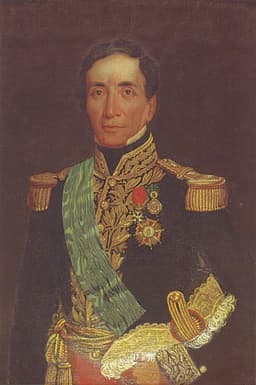
Andres de Santa Cruz
General · Modern
60.5Total
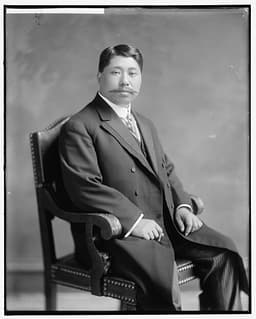
Huang Xing
General · Modern
57.5Total
Basic Information
Born
1792
1874
Died
1865
1916
Era
Modern
Modern
Nationality
Bolivia
China
Occupation
General
General
Civilization
Western
Eastern
Score Comparison
Military (10%)
67.5
46.7
Political (20%)
59.3
53.8
Influence (20%)
62.0
62.0
Legacy (20%)
50.0
56.0
Leadership (15%)
68.0
62.0
Strategy (15%)
66.3
60.0
TOTAL
60.5
57.5
Andres de Santa Cruz — Complete Timeline
1823 AD
Battle of ZepitaWar
Santa Cruz commanded Peruvian forces in a victory over Spanish royalists at Zepita during the Peruvian War of Independence. This battle enhanced his military reputation and contributed to the eventual liberation of Peru from Spanish rule.
Peruvian War of IndependenceBattleLiberation
Impact: regional
1826 AD
Presidency of PeruPolitical Action
Santa Cruz served as President of the Council of Government of Peru from 1826 to 1827, effectively ruling the country. His administration focused on centralizing power and organizing the state, but he was overthrown by a rebellion led by Agust
PresidencyPeruCentralization
Impact: national
1829 AD
Presidency of BoliviaPolitical Action◆ Major
Santa Cruz became President of Bolivia in 1829, serving until 1839. He implemented administrative reforms, stabilized the economy, and modernized the military, establishing Bolivia as a more coherent state after the chaos following independence.
PresidencyBoliviaReforms
Impact: nationalconstructive
1836 AD
War of the ConfederationWar◆ Major
Chile and Argentina declared war on the Peru-Bolivia Confederation, viewing it as a threat to the balance of power. Santa Cruz led the confederation's forces in a conflict that lasted until 1839, ultimately resulting in the confederation's defeat.
WarChileArgentinaConfederation
Impact: regional
Creation of the Peru-Bolivia ConfederationPolitical Action
Santa Cruz established the Peru-Bolivia Confederation, uniting Bolivia and Peru into a single state with himself as Supreme Protector. This confederation aimed to create a powerful Andean nation and challenged the regional influence of Chile and Argentina.
ConfederationUnificationAndean Power
Impact: regional
1839 AD
Battle of YungayWar
Santa Cruz's confederation forces were decisively defeated by the Chilean army at the Battle of Yungay. This defeat led to the dissolution of the Peru-Bolivia Confederation and forced Santa Cruz into exile, ending his political project.
BattleDefeatEnd of Confederation
Impact: regionaltragic
Exile and DeathPolitical Action
After the defeat at Yungay, Santa Cruz fled to Ecuador and later to France. He spent the rest of his life in exile, making unsuccessful attempts to return to power. He died in France in 1865, never regaining his former influence.
ExileDeathFailure
Impact: nationaltragic
Huang Xing — Complete Timeline
1905 AD
Co-founded the TongmenghuiPolitical Action◆ Major
Huang Xing co-founded the Tongmenghui (Revolutionary Alliance) in Tokyo with Sun Yat-sen. He became its military leader, organizing armed uprisings against the Qing dynasty.
TongmenghuiRevolutionMilitary
Impact: nationalconstructive
1911 AD
Led the Wuchang UprisingWar
Huang Xing led the Wuchang Uprising, which sparked the Xinhai Revolution. He commanded revolutionary forces against Qing troops, securing initial victories that led to the dynasty's collapse.
Xinhai RevolutionUprisingMilitary
Impact: nationalconstructive
1912 AD
Served as Minister of War in the RepublicPolitical Action◆ Major
Huang Xing served as Minister of War in the provisional government of the Republic of China. He worked to organize a national army and defend the republic against counter-revolutionary forces.
GovernmentMilitaryRepublic
Impact: nationalconstructive
1913 AD
Led the Second Revolution Against Yuan ShikaiWar◆ Major
Huang Xing led the Second Revolution, an armed uprising against President Yuan Shikai's authoritarian rule. The rebellion failed due to lack of coordination and military inferiority, forcing Huang into exile.
Second RevolutionYuan ShikaiExile
Impact: nationaltragic
1916 AD
Died in Exile in ShanghaiPolitical Action
Huang Xing died in Shanghai after returning from exile in Japan and the United States. His death marked the loss of a key military leader of the Chinese revolution, though his legacy endured.
DeathExileRevolution
Impact: nationaltragic
Expert Analysis
Huang Xing vs Andres de Santa Cruz
# The Dreamers of Union and the Architects of Collapse
On a chill October morning in 1839, Andrés de Santa Cruz watched from a hillside as his grand vision crumbled at the Battle of Yungay. The Peru-Bolivia Confederation, his masterpiece of statecraft and ambition, was being torn apart by Chilean bayonets. Half a world away and seventy-five years later, Huang Xing stood in the wreckage of another dream: the Chinese Republic he had helped birth was already dying, strangled by the very men who had sworn to protect it. Two generals, two federations, two failures—yet their stories reveal profoundly different lessons about power, timing, and the cruel arithmetic of history.
Origins
Santa Cruz was born in 1792 in La Paz, the son of a Spanish colonel and an indigenous Aymara mother. This mixed heritage would define his life: he moved between worlds, fluent in both Spanish and Quechua, comfortable in neither. The Spanish Empire was his inheritance, but its collapse in the Napoleonic Wars opened a door he would walk through with calculating ambition. Huang Xing, born in 1874 in Hunan province, inherited a different kind of crumbling empire. The Qing Dynasty, ancient and brittle, was being carved up by foreign powers. Where Santa Cruz grew up among the certainties of colonial hierarchy, Huang came of age in an era of humiliation, when China’s scholars and soldiers alike felt the sting of national impotence. The Manchu court that Huang would fight against was not his ancestral enemy—his family had served it for generations—but by his twenties, he saw it as a rotting corpse that must be burned.
Rise to Power
Santa Cruz’s path was military and methodical. He fought for Spain against the Argentine rebels, then switched sides to join the patriot cause. By 1823, at the Battle of Zepita, he commanded Peruvian forces in a victory over Spanish royalists that established his reputation. But Santa Cruz was never just a soldier; he was a political animal who understood that in the chaos of post-independence South America, the man who controlled the bureaucracy controlled the future. He served as President of the Council of Government of Peru from 1826 to 1827, effectively ruling the country, then returned to Bolivia to claim its presidency in 1829.
Huang Xing’s rise was more clandestine and explosive. He was a revolutionary by conviction, not convenience. In 1905, in Tokyo, he co-founded the Tongmenghui with Sun Yat-sen, becoming its military chief. Where Santa Cruz worked within existing power structures, Huang built a shadow army of students, exiles, and secret societies. When the Wuchang Uprising erupted in 1911, Huang rushed to lead it, not as a general commanding a professional army, but as a revolutionary throwing himself into the breach. The Qing Dynasty fell, and Huang became Minister of War in the new Republic—a position he held not through political maneuvering but through the sheer force of his revolutionary credentials.
Leadership & Governance
Santa Cruz governed like a European enlightened despot dropped into the Andes. As President of Bolivia from 1829 to 1839, he stabilized the currency, reformed the tax system, and modernized the army. He built roads, encouraged mining, and invited foreign investment. His greatest achievement—the Peru-Bolivia Confederation of 1836—was a geopolitical masterstroke that united the two countries under his protection. But Santa Cruz ruled through decree, not consensus. He saw himself as the necessary strongman who would impose order on chaos, and he was probably right. Yet this very success made him a threat. Chile and Argentina declared war on the Confederation in 1836, not because Santa Cruz was a tyrant, but because his union was too strong.
Huang Xing’s leadership was the opposite: collaborative, idealistic, and ultimately fragile. He was the military arm of a movement that never fully agreed on its direction. Sun Yat-sen provided the vision; Huang provided the guns. When the Republic was established in 1912, Huang worked tirelessly to organize a national army, but he was fighting against centuries of regional warlordism and a political culture that had no tradition of civilian control. The Second Revolution of 1913, his armed uprising against President Yuan Shikai’s authoritarian turn, was doomed from the start. Huang was a brilliant organizer of rebellions but a poor strategist of conventional war. Where Santa Cruz built institutions, Huang built networks—and networks can be cut.
Triumph & Tragedy
Santa Cruz’s triumph was the Confederation itself, a state that briefly gave the Andes a single government and a unified economy. His tragedy was that he could not keep it. The Battle of Yungay in 1839 was not just a military defeat; it was the collapse of a political vision that had no backup plan. Santa Cruz fled to Ecuador, then to France, where he spent his remaining decades as a gentleman exile, writing memos that no one read.
Huang Xing’s triumph was the Xinhai Revolution itself. He had helped topple a dynasty that had ruled for 268 years. His tragedy was that the Republic he fought for never really existed. Yuan Shikai dismantled it from within, and Huang died in exile in Shanghai in 1916, at only forty-two, worn out by failure and tuberculosis. Unlike Santa Cruz, who lived to see his legacy debated, Huang died when the fight was still unwon.
Character & Destiny
Santa Cruz was a pragmatist who believed in order above all. His mixed heritage gave him a unique perspective but also made him suspect to both sides. He was cold, calculating, and patient—qualities that served him well in building a state but failed him when he needed to inspire loyalty. Huang Xing was a man of fire, not ice. He was generous to a fault, brave to the point of recklessness, and utterly incapable of the kind of cynical maneuvering that might have saved his revolution. Santa Cruz’s downfall came from being too successful; Huang’s from being too pure.
Legacy
Santa Cruz is remembered in Bolivia as a great modernizer and in Peru as a failed conqueror. His Confederation is studied as a brilliant but doomed experiment in Andean unity. Huang Xing is honored as a founding father of the Chinese Republic, but his name is overshadowed by Sun Yat-sen’s. In mainland China, he is a footnote; in Taiwan, a hero. Both men built structures that collapsed, but their failures reveal different truths. Santa Cruz’s dream died because it was too strong for its neighbors to tolerate. Huang Xing’s died because it was too weak for its enemies to fear.
Conclusion
What drives a man to build a nation? For Santa Cruz, it was the vision of a unified Andean state that could stand with the great powers. For Huang Xing, it was the dream of a China free from foreign domination and imperial decay. Both failed, but their failures were not equal. Santa Cruz’s Confederation was destroyed by external enemies; Huang Xing’s Republic was devoured by internal ones. One fell to Chilean steel; the other to Chinese ambition. In the end, the difference between them is not in their goals but in the worlds they inhabited. Santa Cruz lived in a time when a strong man could still reshape borders. Huang Xing lived in a time when the old world was dying and the new one had not yet been born. Both were architects of futures that never arrived. But their blueprints remain, waiting for builders who might yet succeed where they could not.
Rankings
🥇
Andres de Santa CruzLeader
Mil: 67.5Pol: 59.3Inf: 62.0
60.5
🥈
Huang Xing
Mil: 46.7Pol: 53.8Inf: 62.0
57.5
+3.0 behind
How This Comparison Works
Algorithm
Each figure is scored on 6 dimensions (0—100 scale) based on structured historical data: Military (10%), Political (20%), Influence (20%), Legacy (20%), Leadership (15%), Strategy (15%). The weighted total produces the final ranking.
Data Sources
Scores are computed from structured sub-indicators in the database. Scale factors adjust for era (Ancient ×0.85, Modern ×1.0) and civilization size (Eastern ×1.05, Other ×0.80) to account for differences in population and military scale.
Maximum 3 Figures
Comparisons are limited to 2—3 figures to ensure readability and statistical meaningfulness.
Error Margins
±5 points per dimension — Sub-scores are derived from historical records with inherent uncertainty. Two figures within 5 points on a dimension should be considered roughly equivalent in that area.
Total Score Accuracy
±3 points overall — The weighted combination of 6 dimensions produces a total score with approximately ±3 points of uncertainty. Differences of less than 3 points are not statistically significant— the figures are effectively tied.
Known Limitations
- Historical records are incomplete and uneven across civilizations
- Figures from oral-tradition societies may be underrepresented
- Occupation labels can misclassify multi-role figures
- Scores measure capability and impact, not moral character
- Quantitative scoring is a comparison tool, not absolute truth
Capability Radar
Military (10%) — Battles & Warfare
Battles
60
35
Win Rate
55
30
Expansion
55
20
Political (20%) — Governance & Reform
Reform
65
60
Diplomacy
60
55
Economy
55
30
Influence (20%) — Cultural & Global Reach
Cultural
45
40
Global
35
40
Legacy (20%) — Historical Impact
Historical
50
55
Longevity
40
45
Leadership (15%) — Power & Stability
Tenure
60
40
Stability
40
25
Strategy (15%) — Tactics & Innovation
Strategy
65
45
Tactics
60
40
Reform
50
50
Similar Comparisons
Comments & Discussion
TheScholar's Lament6/16/2026
Huang Xing saw what Santa Cruz never could: that union requires shared identity, not just shared borders. The Peru-Bolivia Confederation collapsed because its citizens had no emotional stake in it. But Huang's Republic died for the opposite reason—too many competing visions of what China should be. Santa Cruz failed because he built upward without building inward. Huang failed because he built outward without building upward. Both misunderstood that nations aren't assembled; they're cultivated.
楚河汉界观察者6/16/2026
黄兴与圣克鲁斯一样,都是被历史选中的失败者。但区别在于:圣克鲁斯在扬盖战役失败后流亡欧洲,靠法国养老金了此残生,而黄兴至少死在了自己祖国的土地上。圣克鲁斯的秘鲁-玻利维亚联邦连三年都没撑过,黄兴参与的辛亥革命却终结了两千年的帝制。失败也有等级之分——一个是被彻底遗忘的边陲军阀梦,另一个是虽败犹荣的国父之路。你们史学家爱谈共同点,但我看到的只有天壤之别。
TheDataSkeptic6/16/2026
Let's talk numbers. Santa Cruz commanded roughly 5,000-6,000 troops at Yungay against a Chilean-Restoration Army of similar size. Huang Xing led the Second Revolution with perhaps 30,000 men across multiple provinces. Santa Cruz lost his confederation in one decisive battle; Huang watched his republic dissolve over months of political attrition. Santa Cruz's failure was military and immediate; Huang's was political and lingering. Which is worse? Getting your throat cut in one stroke or bleeding
乱世浮生6/16/2026
我读《黄兴集》时注意到一个细节:1913年二次革命失败后,他给孙中山写信说"吾辈革命,十死九生"。圣克鲁斯可没写出这样的句子。前者是明知不可为而为之的书生血性,后者是精于算计的混血贵族在帝国废墟上投机。圣克鲁斯投降后能在厄瓜多尔当上大使,黄兴亡命日本时只能靠朋友接济。论个人悲剧性,黄兴远胜——他最后穷困潦倒,因胃病死在异乡,年仅42岁。圣克鲁斯活到73岁,死在法国庄园里,还写了一本自辩书。输家的待遇,天差地别。
TheIronyMachine6/16/2026
Here's what gets me: Santa Cruz actually succeeded in creating his confederation. It existed, functioned