Loading...
Andres de Santa Cruz vs Feng Guozhang
Andres de Santa Cruz leads by 11.4 pts · 2 figures compared
…
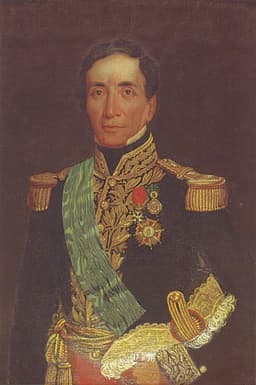
Andres de Santa Cruz
General · Modern
60.5Total
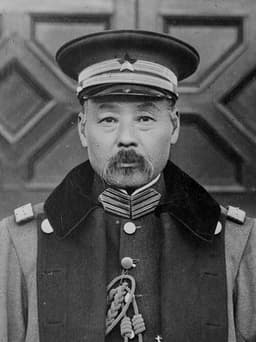
Feng Guozhang
General · Modern
49.1Total
Basic Information
Born
1792
1859
Died
1865
1919
Era
Modern
Modern
Nationality
Bolivia
China
Occupation
General
General
Civilization
Western
Eastern
Score Comparison
Military (10%)
67.5
30.0
Political (20%)
59.3
61.3
Influence (20%)
62.0
54.9
Legacy (20%)
50.0
45.8
Leadership (15%)
68.0
40.0
Strategy (15%)
66.3
57.5
TOTAL
60.5
49.1
Andres de Santa Cruz — Complete Timeline
1823 AD
Battle of ZepitaWar
Santa Cruz commanded Peruvian forces in a victory over Spanish royalists at Zepita during the Peruvian War of Independence. This battle enhanced his military reputation and contributed to the eventual liberation of Peru from Spanish rule.
Peruvian War of IndependenceBattleLiberation
Impact: regional
1826 AD
Presidency of PeruPolitical Action
Santa Cruz served as President of the Council of Government of Peru from 1826 to 1827, effectively ruling the country. His administration focused on centralizing power and organizing the state, but he was overthrown by a rebellion led by Agust
PresidencyPeruCentralization
Impact: national
1829 AD
Presidency of BoliviaPolitical Action◆ Major
Santa Cruz became President of Bolivia in 1829, serving until 1839. He implemented administrative reforms, stabilized the economy, and modernized the military, establishing Bolivia as a more coherent state after the chaos following independence.
PresidencyBoliviaReforms
Impact: nationalconstructive
1836 AD
War of the ConfederationWar◆ Major
Chile and Argentina declared war on the Peru-Bolivia Confederation, viewing it as a threat to the balance of power. Santa Cruz led the confederation's forces in a conflict that lasted until 1839, ultimately resulting in the confederation's defeat.
WarChileArgentinaConfederation
Impact: regional
Creation of the Peru-Bolivia ConfederationPolitical Action
Santa Cruz established the Peru-Bolivia Confederation, uniting Bolivia and Peru into a single state with himself as Supreme Protector. This confederation aimed to create a powerful Andean nation and challenged the regional influence of Chile and Argentina.
ConfederationUnificationAndean Power
Impact: regional
1839 AD
Battle of YungayWar
Santa Cruz's confederation forces were decisively defeated by the Chilean army at the Battle of Yungay. This defeat led to the dissolution of the Peru-Bolivia Confederation and forced Santa Cruz into exile, ending his political project.
BattleDefeatEnd of Confederation
Impact: regionaltragic
Exile and DeathPolitical Action
After the defeat at Yungay, Santa Cruz fled to Ecuador and later to France. He spent the rest of his life in exile, making unsuccessful attempts to return to power. He died in France in 1865, never regaining his former influence.
ExileDeathFailure
Impact: nationaltragic
Feng Guozhang — Complete Timeline
1912 AD
Command of the Beiyang ArmyPolitical Action◆ Major
Feng Guozhang became a key commander of the Beiyang Army under Yuan Shikai. He controlled military forces in the Zhili region, establishing himself as a major warlord in northern China after the fall of the Qing dynasty.
Beiyang ArmyWarlordMilitary Command
Impact: national
1916 AD
Appointment as Vice PresidentPolitical Action◆ Major
Feng Guozhang was elected Vice President of the Republic of China under President Li Yuanhong. This position gave him significant political influence during the early Republican period.
Republic of ChinaGovernmentPolitics
Impact: national
1917 AD
Acting PresidencyPolitical Action◆ Major
Feng Guozhang became Acting President of the Republic of China after Li Yuanhong's resignation. He served from 1917 to 1918, facing challenges from rival warlords and struggling to maintain central authority.
Republic of ChinaPresidencyWarlord Era
Impact: national
1918 AD
Conflict with Duan QiruiPolitical Action◆ Major
Feng Guozhang engaged in a power struggle with Premier Duan Qirui, leading to the split of the Beiyang clique into the Zhili and Anhui factions. This conflict weakened the central government and intensified warlord warfare.
Beiyang CliquePower StruggleWarlord Era
Impact: nationaldestructive
Expert Analysis
Andres de Santa Cruz vs Feng Guozhang
### Two Men Who Dreamed of Unity, and Lost Everything
On a winter morning in 1839, a defeated Andrés de Santa Cruz fled across the Andes, his grand vision of a united Peru and Bolivia collapsing behind him. Half a world away and eighty years later, Feng Guozhang sat in a Beijing study, stripped of power, watching the Republic of China he had briefly led disintegrate into warlord chaos. Both were soldiers who reached the pinnacle of political power. Both tried to forge unity from fractured nations. Both ended their days in exile or obscurity. Their parallel rises and falls raise a haunting question: why do some leaders who attempt to build something new end up buried by the very forces they tried to control?
### Origins: Two Worlds Apart
Andrés de Santa Cruz was born in 1792 in La Paz, Bolivia, to a Spanish father and an indigenous Quechua mother. This mixed heritage shaped his life. In the rigid caste system of Spanish America, he was a *mestizo*—neither fully accepted by the European elite nor fully part of the indigenous world. He learned early to navigate between worlds, and this skill would later become both his greatest asset and his fatal flaw. Educated in Lima and trained in the Spanish army, he fought for the royalists before switching sides to the patriots in 1820. His world was the volatile, newborn republics of South America, where borders were still wet ink on maps and the dream of a continent-spanning federation lingered like a ghost.
Feng Guozhang, born in 1859 in Hebei province, China, emerged from a very different crucible. The son of a minor scholar-official, he entered the military academy at Baoding, a new institution created to modernize China’s armies after the humiliation of the Opium Wars. Feng rose through the ranks of the Beiyang Army, the most modernized force in China, under the tutelage of Yuan Shikai. His China was an ancient empire gasping its last breaths, torn between Confucian tradition and the brutal demands of modernity. Where Santa Cruz fought against Spanish colonialism, Feng fought in the shadow of collapsing imperial order.
### Rise to Power: Different Paths, Same Ambition
Santa Cruz’s ascent was forged in battle. At the Battle of Zepita in 1823, he led Peruvian forces to a decisive victory over Spanish royalists, cementing his reputation as a capable commander. By 1826, he was effectively ruling Peru as President of the Council of Government. But his real opportunity came in 1829, when he became President of Bolivia. For ten years, he stabilized the economy, reformed the administration, and built a professional army. Then, in 1836, he made his boldest move: he created the Peru-Bolivia Confederation, uniting the two nations under his supreme authority. It was a breathtaking gamble—a single state that would dominate the Andean region.
Feng Guozhang rose not through battlefield glory but through political maneuvering. In 1912, after the fall of the Qing dynasty, he became a key commander of the Beiyang Army under Yuan Shikai. When Yuan died in 1916, the fragile republic fractured. Feng was elected Vice President under Li Yuanhong, and in 1917, after Li’s resignation, he became Acting President. His power rested on his control of the Zhili military clique and his ability to balance the ambitions of rival warlords—especially the fierce Premier Duan Qirui. Where Santa Cruz conquered, Feng negotiated.
### Leadership & Governance: The Builder and the Balancer
Santa Cruz governed like a reforming emperor. In Bolivia, he standardized taxes, promoted education, and encouraged trade with the Pacific. He built roads and ports, and his administration was widely seen as competent and honest. The Confederation, however, required constant diplomacy. He had to appease Peruvian elites who resented Bolivian dominance, while fending off the hostility of Chile and Argentina, who saw his new state as a mortal threat to the regional balance of power. Santa Cruz was a strategic genius, but his vision exceeded his political reach. He believed unity could be imposed from above, by force of will and military strength.
Feng Guozhang was a balancer, not a builder. As Acting President from 1917 to 1918, he tried to hold together a republic that existed only on paper. His power was constrained by Duan Qirui, who controlled the Beiyang Army and the premiership. Feng’s leadership style was cautious and conciliatory—he sought compromise, not conquest. He tried to mediate between the northern warlords and the southern revolutionary government in Guangzhou. But in the chaos of warlord China, moderation was weakness. His political score of 81.7 reflects his skill at maneuvering, but his inability to impose his will ultimately doomed his presidency.
### Triumph & Tragedy: The Moment That Broke Them
Santa Cruz’s greatest triumph was also the seed of his destruction. The Peru-Bolivia Confederation, created in 1836, was a geopolitical masterstroke. For three years, it thrived. But Chile, fearing a powerful rival on its northern border, declared war in 1836. Argentina joined. The War of the Confederation was a desperate struggle. Santa Cruz fought brilliantly, but his forces were overstretched. The turning point came at the Battle of Yungay on January 20, 1839. The Chilean army, led by General Manuel Bulnes, crushed Santa Cruz’s forces. The Confederation dissolved overnight. Santa Cruz fled to Ecuador, then to France, where he died in 1865, a broken exile.
Feng Guozhang’s tragedy was quieter but no less complete. His greatest moment was his presidency, but it was a hollow crown. In 1918, his conflict with Duan Qirui reached a breaking point. The Beiyang clique split into the Zhili and Anhui factions, and Feng was forced to resign. He spent his final year in political obscurity, dying in 1919 at the age of sixty. He had tried to save the republic, but he had neither the military force to crush his rivals nor the political vision to unite them. His legacy score of 64.4 reflects a man who was remembered, but not revered.
### Character & Destiny: The Visionary and the Warden
Santa Cruz was a visionary who believed in grand designs. His mixed heritage gave him a unique perspective—he saw the Andes not as separate nations but as a single cultural and economic zone. But his ambition outstripped his resources. He underestimated the fierce nationalism of Chile and the resentment of Peruvian elites. He was a brilliant administrator and a capable general, but he lacked the subtlety to build lasting alliances. His leadership score of 79.0 suggests a strong hand, but also a rigid one.
Feng Guozhang was a warden of a crumbling house. He was not a visionary; he was a pragmatist who tried to hold together what remained. His military score of 62.6 is modest, but his political score of 81.7 reveals a man who understood power, even if he could not wield it decisively. He was loyal to the republic as an idea, but he lacked the ruthlessness to impose order. In a time that demanded iron, he offered compromise.
### Legacy: Two Shadows
Santa Cruz is remembered in Bolivia as a great reformer and a tragic figure—the man who almost united the Andes. His legacy is debated: some see him as a visionary, others as a power-hungry dictator who destabilized the region. His influence score of 76.2 reflects his enduring presence in South American historiography. Feng Guozhang, by contrast, is a footnote in Chinese history. He is remembered as one of many warlords who failed to save the republic. His legacy is overshadowed by the rise of the Communist Party and the Nationalists.
### Conclusion: The Weight of Unity
Both men faced the same impossible task: to forge unity from chaos. Santa Cruz tried to build a new nation by conquest and administration; Feng tried to preserve an old one by negotiation and balance. Both failed because their worlds were not ready for the unity they imagined. The Peru-Bolivia Confederation was crushed by the forces of nationalism and geopolitics; the Chinese Republic was torn apart by warlords and foreign powers. Their stories remind us that even the most brilliant leaders are prisoners of their time. Santa Cruz and Feng Guozhang were not failures—they were men who tried to build something larger than themselves, and the world broke them for it.
Rankings
🥇
Andres de Santa CruzLeader
Mil: 67.5Pol: 59.3Inf: 62.0
60.5
🥈
Feng Guozhang
Mil: 30.0Pol: 61.3Inf: 54.9
49.1
+11.4 behind
How This Comparison Works
Algorithm
Each figure is scored on 6 dimensions (0—100 scale) based on structured historical data: Military (10%), Political (20%), Influence (20%), Legacy (20%), Leadership (15%), Strategy (15%). The weighted total produces the final ranking.
Data Sources
Scores are computed from structured sub-indicators in the database. Scale factors adjust for era (Ancient ×0.85, Modern ×1.0) and civilization size (Eastern ×1.05, Other ×0.80) to account for differences in population and military scale.
Maximum 3 Figures
Comparisons are limited to 2—3 figures to ensure readability and statistical meaningfulness.
Error Margins
±5 points per dimension — Sub-scores are derived from historical records with inherent uncertainty. Two figures within 5 points on a dimension should be considered roughly equivalent in that area.
Total Score Accuracy
±3 points overall — The weighted combination of 6 dimensions produces a total score with approximately ±3 points of uncertainty. Differences of less than 3 points are not statistically significant— the figures are effectively tied.
Known Limitations
- Historical records are incomplete and uneven across civilizations
- Figures from oral-tradition societies may be underrepresented
- Occupation labels can misclassify multi-role figures
- Scores measure capability and impact, not moral character
- Quantitative scoring is a comparison tool, not absolute truth
Capability Radar
Military (10%) — Battles & Warfare
Battles
60
45
Win Rate
55
40
Expansion
55
35
Political (20%) — Governance & Reform
Reform
65
30
Diplomacy
60
45
Economy
55
25
Influence (20%) — Cultural & Global Reach
Cultural
45
30
Global
35
20
Legacy (20%) — Historical Impact
Historical
50
40
Longevity
40
25
Leadership (15%) — Power & Stability
Tenure
60
55
Stability
40
20
Strategy (15%) — Tactics & Innovation
Strategy
65
55
Tactics
60
50
Reform
50
40
Similar Comparisons
Comments & Discussion
北洋祭酒6/16/2026
北洋遗风看了直摇头。冯国璋啊冯国璋,堂堂直系军阀首领,干的事儿怎么就跟唱戏似的?袁世凯死后你代理总统,就知道收编小站旧部、扩编陆军,可你见过哪个靠枪杆子能镇住中国撕成碎片的局面?湖北督军时你居然默许日本卖鸦片过境——这叫什么统一之道?边疆不打、列强不攘,反跟皖系争权夺功,最后回了河间老家还是晚节不保。这种半吊子“统一梦”,还不如老段做个稳健的北方寡头来得实在。
AndeanCaesar6/16/2026
Santa Cruz was a textbook case of overreach disguised as statesmanship. Yes, he united Peru and Bolivia for four years—but his “Peru–Bolivia Confederation” was less a stable union than a fragile personal empire propped up by imported Chilean arms and vendidos in Lima’s elite. The moment Chilean nationalists under Portales smelled weakness, they destroyed the whole house of cards at Yungay (1839). Compare that to Feng Guozhang, who at least understood the limits of his Yuan Shikai–style warlord b
蜀道散人6/16/2026
按我川人眼光,冯国璋是个典型的“保守型枭雄”——权力巅峰时不敢改制度、不敢打内战、不敢废青楼禁烟,三不敢配上北洋系撕咬,河南佬那点中兴梦自然如柳絮坠井。反观南美鬼才圣克鲁斯,人家是混血子弟敢搞跨民族联邦,印加旗一扛就是五年,连玻利瓦尔遗老都不得不服。再看冯大爷唯一能跟洋人谈的“缓行统一案”,居然是被桂系白崇禧一句“你那是满清总督思维”怼得哑口无言。两位都败在胆子太小——一个太杂合、一个太守旧。
CaroleanAAR6/16/2026
If we’re judging by cold metrics—how long did either change anything? Feng held nominal power for about two years (1917–1918), but the Beiyang clique was already fracturing before he took the VP seat. Santa Cruz actually forged a functional confederal state with its own currency, customs union, and even diplomatic recognition from France until 1838. That’s more institutional achievement than Feng’s entire "military governor" tenure. Feng’s legacy? He minted the infamous “Feng face” coins, but th