Loading...
Andres de Santa Cruz vs Enomoto Takeaki
Andres de Santa Cruz leads by 8.9 pts · 2 figures compared
…
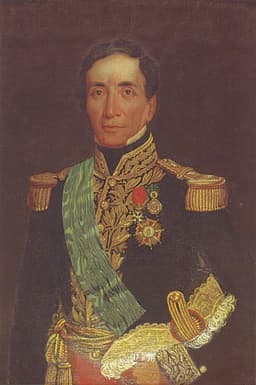
Andres de Santa Cruz
General · Modern
60.5Total
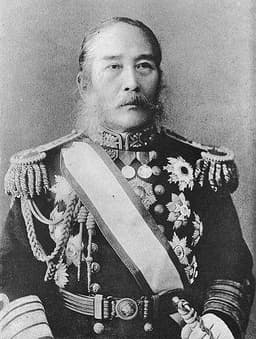
Enomoto Takeaki
General · Modern
51.6Total
Basic Information
Born
1792
1836
Died
1865
1908
Era
Modern
Modern
Nationality
Bolivia
Japan
Occupation
General
General
Civilization
Western
Eastern
Score Comparison
Military (10%)
67.5
25.0
Political (20%)
59.3
54.7
Influence (20%)
62.0
54.1
Legacy (20%)
50.0
46.7
Leadership (15%)
68.0
68.0
Strategy (15%)
66.3
55.0
TOTAL
60.5
51.6
Andres de Santa Cruz — Complete Timeline
1823 AD
Battle of ZepitaWar
Santa Cruz commanded Peruvian forces in a victory over Spanish royalists at Zepita during the Peruvian War of Independence. This battle enhanced his military reputation and contributed to the eventual liberation of Peru from Spanish rule.
Peruvian War of IndependenceBattleLiberation
Impact: regional
1826 AD
Presidency of PeruPolitical Action
Santa Cruz served as President of the Council of Government of Peru from 1826 to 1827, effectively ruling the country. His administration focused on centralizing power and organizing the state, but he was overthrown by a rebellion led by Agust
PresidencyPeruCentralization
Impact: national
1829 AD
Presidency of BoliviaPolitical Action◆ Major
Santa Cruz became President of Bolivia in 1829, serving until 1839. He implemented administrative reforms, stabilized the economy, and modernized the military, establishing Bolivia as a more coherent state after the chaos following independence.
PresidencyBoliviaReforms
Impact: nationalconstructive
1836 AD
War of the ConfederationWar◆ Major
Chile and Argentina declared war on the Peru-Bolivia Confederation, viewing it as a threat to the balance of power. Santa Cruz led the confederation's forces in a conflict that lasted until 1839, ultimately resulting in the confederation's defeat.
WarChileArgentinaConfederation
Impact: regional
Creation of the Peru-Bolivia ConfederationPolitical Action
Santa Cruz established the Peru-Bolivia Confederation, uniting Bolivia and Peru into a single state with himself as Supreme Protector. This confederation aimed to create a powerful Andean nation and challenged the regional influence of Chile and Argentina.
ConfederationUnificationAndean Power
Impact: regional
1839 AD
Battle of YungayWar
Santa Cruz's confederation forces were decisively defeated by the Chilean army at the Battle of Yungay. This defeat led to the dissolution of the Peru-Bolivia Confederation and forced Santa Cruz into exile, ending his political project.
BattleDefeatEnd of Confederation
Impact: regionaltragic
Exile and DeathPolitical Action
After the defeat at Yungay, Santa Cruz fled to Ecuador and later to France. He spent the rest of his life in exile, making unsuccessful attempts to return to power. He died in France in 1865, never regaining his former influence.
ExileDeathFailure
Impact: nationaltragic
Enomoto Takeaki — Complete Timeline
1868 AD
Led the Shogunate Fleet to HokkaidoWar
Enomoto commanded the shogunate's remaining naval forces, including eight warships, and sailed to Hokkaido. This fleet formed the core of the Republic of Ezo's military and allowed the loyalists to establish a base.
Naval CommandBoshin WarShogunate Loyalist
Impact: regional
Founded the Republic of EzoPolitical Action
After the shogunate's defeat, Enomoto led loyalist forces to Hokkaido and established the Republic of Ezo, an independent state with a Western-style government. He was elected president and organized a defense against imperial forces.
Boshin WarSeparatist StateShogunate Loyalist
Impact: national
1869 AD
Surrendered at the Battle of HakodateWar◆ Major
Enomoto's forces were defeated by the imperial army at the Battle of Hakodate. He surrendered the Republic of Ezo and was taken prisoner, ending the last organized resistance to the Meiji Restoration.
Boshin WarDefeatEnd of Resistance
Impact: nationaltragic
1885 AD
Served as Minister of Foreign Affairs in the Meiji GovernmentPolitical Action◆ Major
After being pardoned, Enomoto served as Japan's Minister of Foreign Affairs. He negotiated treaties with Western powers and worked to revise the unequal treaties imposed on Japan, contributing to Japan's diplomatic modernization.
DiplomacyTreaty RevisionMeiji Government
Impact: nationalconstructive
Expert Analysis
Andres de Santa Cruz vs Enomoto Takeaki
### The Visionary and the Loyalist: Two Paths from the Ashes of Empire
On the high, cold plains of Bolivia in 1839, a dream died. Andrés de Santa Cruz, the Supreme Protector of the Peru-Bolivia Confederation, watched his grand experiment in Andean unity shatter at the Battle of Yungay. Three decades later, on the northern island of Hokkaido, another man faced his own final defeat. Enomoto Takeaki, the last admiral of the Tokugawa shogunate, surrendered his Republic of Ezo to the imperial forces of a restored Emperor. Both men were builders of lost nations, yet their fates diverged like the rivers of their homelands. One fled into permanent exile, a ghost of a forgotten union. The other, pardoned, rose to guide the very empire that had crushed him. Why did the visionary die in obscurity while the loyalist found a second act?
### Origins
Santa Cruz was born in 1792 in La Paz, a *mestizo* — the son of a Spanish colonel and an indigenous Aymara noblewoman. This dual heritage placed him between two worlds, a position that would define his political philosophy. He was a child of the Enlightenment and the late Spanish Empire, educated in the rigid hierarchies of colonial rule, yet acutely aware of the indigenous majority who formed the backbone of the continent. His era was one of revolutionary chaos, as Bolívar and San Martín tore down the old order.
Enomoto Takeaki, born in 1836 in Edo (Tokyo), was a child of a different kind of twilight. He was a samurai of the shogunate, a member of a warrior caste whose purpose was fading in a Japan forced open by Western gunboats. His education was in Dutch studies and naval science, a pragmatic preparation for a world of steam-powered warships and unequal treaties. Where Santa Cruz saw a fractured continent to be united, Enomoto saw a feudal system to be defended.
### Rise to Power
Santa Cruz’s path was forged in battle. At the Battle of Zepita in 1823, he commanded Peruvian forces against the last Spanish royalists, a victory that marked him as a capable general. His military score of 60.2 reflects a competent, not brilliant, commander. But his political instincts were sharper. He maneuvered through the chaotic early republics, serving as President of the Council of Government of Peru in 1826, then returning to his native Bolivia to seize the presidency in 1829. He stabilized the economy, reformed the bureaucracy, and built a disciplined army.
Enomoto’s rise was more technical. As a naval officer, he studied in the Netherlands and returned to command the shogunate’s fleet. He was not a field general; his military score of 28.1 is low, but his leadership score of 84.7 reveals a man who could inspire loyalty. When the Meiji Restoration began in 1868, the shogunate collapsed. Rather than surrender, Enomoto did the unthinkable: he gathered eight warships and 2,000 loyalists, sailed north, and founded the Republic of Ezo on Hokkaido. It was an act of defiant imagination.
### Leadership & Governance
Santa Cruz’s great achievement was the Peru-Bolivia Confederation, established in 1836. He believed that the fractured Andean states were too weak to survive alone. His vision was a single, powerful nation that could resist the influence of Chile and Argentina. He ruled as Supreme Protector, implementing a liberal constitution, abolishing slavery, and promoting trade. But his governance was a delicate balance of regional interests that ultimately required military force to maintain. His political score of 60.2 suggests he was a capable administrator, but not a master of consensus.
Enomoto’s Republic of Ezo was a miniature samurai state, complete with elections and a president — Enomoto himself. It was a curious hybrid: a feudal military government with a modern, Western-style constitution. He attempted to negotiate with the imperial court, offering to develop Hokkaido as a buffer against Russia. But the Meiji government saw only rebellion. Enomoto’s political score of 72.4 is higher than Santa Cruz’s, reflecting his ability to create a functioning state from nothing, even if it was doomed.
### Triumph & Tragedy
Santa Cruz’s triumph was the Confederation itself — a moment when the Andes seemed to unite. His tragedy was Yungay in 1839, where the Chilean army, backed by Peruvian dissidents, crushed his forces. The Confederation dissolved overnight. He fled to Ecuador, then to France, a perpetual exile who never returned to the land he sought to remake.
Enomoto’s tragedy was the Battle of Hakodate in 1869, where imperial troops overwhelmed his fortress. He surrendered, expecting execution. Instead, he was imprisoned, then pardoned. His triumph came later: in 1885, he served as Japan’s Minister of Foreign Affairs, negotiating treaties with the Western powers he had once studied under. He ended his career as a viscount and a privy councillor, a samurai who helped build the Meiji state.
### Character & Destiny
Santa Cruz was a visionary who lacked the flexibility to survive defeat. His *mestizo* identity gave him a unique perspective, but also made him suspect to both the white elite and the indigenous poor. He believed in a grand design, but could not adapt when it failed. Exile was his only option.
Enomoto was a pragmatist beneath the samurai armor. He fought for a lost cause, but when it was truly lost, he accepted the new order. His loyalty was to Japan, not just the shogunate. The Meiji government, needing skilled administrators, recognized his talent. His character allowed him to serve the nation that had defeated him.
### Legacy
Santa Cruz’s legacy is a footnote in South American history, a “what if” of Andean unity. His influence score of 76.2 suggests he is remembered, but his Confederation is a cautionary tale. Bolivia and Peru remain separate, and his name is invoked mainly by federalists and indigenous rights activists.
Enomoto’s legacy is more complex. In Japan, he is a symbol of the samurai spirit, but also of the Meiji reconciliation. His Republic of Ezo is a curiosity, but his service as a minister is a testament to the nation-building that followed. His total score of 68.8 is nearly identical to Santa Cruz’s 67.8, yet their fates could not be more different.
### Conclusion
The difference between Santa Cruz and Enomoto lies not in their dreams, but in their endings. One dreamed of a new nation and was destroyed by its failure. The other dreamed of an old nation and was redeemed by its transformation. Santa Cruz’s vision was too large for his time; Enomoto’s loyalty was flexible enough for a new age. In the end, history rewards not just the dreamer, but the one who can survive the waking.
Rankings
🥇
Andres de Santa CruzLeader
Mil: 67.5Pol: 59.3Inf: 62.0
60.5
🥈
Enomoto Takeaki
Mil: 25.0Pol: 54.7Inf: 54.1
51.6
+8.9 behind
How This Comparison Works
Algorithm
Each figure is scored on 6 dimensions (0—100 scale) based on structured historical data: Military (10%), Political (20%), Influence (20%), Legacy (20%), Leadership (15%), Strategy (15%). The weighted total produces the final ranking.
Data Sources
Scores are computed from structured sub-indicators in the database. Scale factors adjust for era (Ancient ×0.85, Modern ×1.0) and civilization size (Eastern ×1.05, Other ×0.80) to account for differences in population and military scale.
Maximum 3 Figures
Comparisons are limited to 2—3 figures to ensure readability and statistical meaningfulness.
Error Margins
±5 points per dimension — Sub-scores are derived from historical records with inherent uncertainty. Two figures within 5 points on a dimension should be considered roughly equivalent in that area.
Total Score Accuracy
±3 points overall — The weighted combination of 6 dimensions produces a total score with approximately ±3 points of uncertainty. Differences of less than 3 points are not statistically significant— the figures are effectively tied.
Known Limitations
- Historical records are incomplete and uneven across civilizations
- Figures from oral-tradition societies may be underrepresented
- Occupation labels can misclassify multi-role figures
- Scores measure capability and impact, not moral character
- Quantitative scoring is a comparison tool, not absolute truth
Capability Radar
Military (10%) — Battles & Warfare
Battles
60
40
Win Rate
55
35
Expansion
55
30
Political (20%) — Governance & Reform
Reform
65
30
Diplomacy
60
40
Economy
55
25
Influence (20%) — Cultural & Global Reach
Cultural
45
25
Global
35
20
Legacy (20%) — Historical Impact
Historical
50
40
Longevity
40
30
Leadership (15%) — Power & Stability
Tenure
60
35
Stability
40
20
Strategy (15%) — Tactics & Innovation
Strategy
65
50
Tactics
60
55
Reform
50
45
Similar Comparisons
Comments & Discussion
No comments yet. Be the first to share your thoughts!