Loading...
Andres de Santa Cruz vs Ehud Barak
Andres de Santa Cruz leads by 0.6 pts · 2 figures compared
…
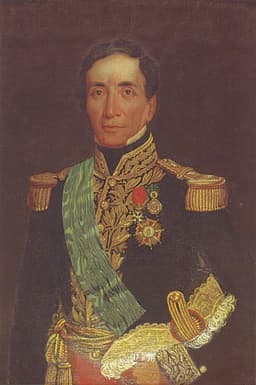
Andres de Santa Cruz
General · Modern
60.5Total
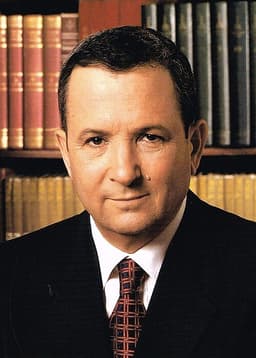
Ehud Barak
General · Modern
59.9Total
Basic Information
Born
1792
1942
Died
1865
—
Era
Modern
Modern
Nationality
Bolivia
Israel
Occupation
General
General
Civilization
Western
Middle Eastern
Score Comparison
Military (10%)
67.5
63.3
Political (20%)
59.3
72.0
Influence (20%)
62.0
55.0
Legacy (20%)
50.0
52.0
Leadership (15%)
68.0
66.0
Strategy (15%)
66.3
61.2
TOTAL
60.5
59.9
Andres de Santa Cruz — Complete Timeline
1823 AD
Battle of ZepitaWar
Santa Cruz commanded Peruvian forces in a victory over Spanish royalists at Zepita during the Peruvian War of Independence. This battle enhanced his military reputation and contributed to the eventual liberation of Peru from Spanish rule.
Peruvian War of IndependenceBattleLiberation
Impact: regional
1826 AD
Presidency of PeruPolitical Action
Santa Cruz served as President of the Council of Government of Peru from 1826 to 1827, effectively ruling the country. His administration focused on centralizing power and organizing the state, but he was overthrown by a rebellion led by Agust
PresidencyPeruCentralization
Impact: national
1829 AD
Presidency of BoliviaPolitical Action◆ Major
Santa Cruz became President of Bolivia in 1829, serving until 1839. He implemented administrative reforms, stabilized the economy, and modernized the military, establishing Bolivia as a more coherent state after the chaos following independence.
PresidencyBoliviaReforms
Impact: nationalconstructive
1836 AD
War of the ConfederationWar◆ Major
Chile and Argentina declared war on the Peru-Bolivia Confederation, viewing it as a threat to the balance of power. Santa Cruz led the confederation's forces in a conflict that lasted until 1839, ultimately resulting in the confederation's defeat.
WarChileArgentinaConfederation
Impact: regional
Creation of the Peru-Bolivia ConfederationPolitical Action
Santa Cruz established the Peru-Bolivia Confederation, uniting Bolivia and Peru into a single state with himself as Supreme Protector. This confederation aimed to create a powerful Andean nation and challenged the regional influence of Chile and Argentina.
ConfederationUnificationAndean Power
Impact: regional
1839 AD
Battle of YungayWar
Santa Cruz's confederation forces were decisively defeated by the Chilean army at the Battle of Yungay. This defeat led to the dissolution of the Peru-Bolivia Confederation and forced Santa Cruz into exile, ending his political project.
BattleDefeatEnd of Confederation
Impact: regionaltragic
Exile and DeathPolitical Action
After the defeat at Yungay, Santa Cruz fled to Ecuador and later to France. He spent the rest of his life in exile, making unsuccessful attempts to return to power. He died in France in 1865, never regaining his former influence.
ExileDeathFailure
Impact: nationaltragic
Ehud Barak — Complete Timeline
1973 AD
Awarded Medal of Distinguished ServiceOther
Barak received the Medal of Distinguished Service, Israel's highest military decoration, for his actions during the Yom Kippur War. He led a commando raid deep into Egyptian territory, destroying radar installations. This was part of a broader operation to open a supply route.
Military DecorationYom Kippur War
Impact: nationalconstructive
1976 AD
Led Operation Thunderbolt (Entebbe Raid)War◆ Major
As Chief of Staff, Barak planned and oversaw the Entebbe raid, a rescue of hostages hijacked by Palestinian and German militants in Uganda. Israeli commandos rescued 102 hostages. The operation was a major military success and boosted Israeli morale and international standing.
EntebbeHostage RescueCounterterrorism
Impact: globalconstructive
1991 AD
Appointed Chief of Staff of the IDFPolitical Action◆ Major
Barak was appointed the 14th Chief of Staff of the Israel Defense Forces. He served until 1995, overseeing military operations during the First Intifada and the Oslo Accords period. His tenure included the 1993 Operation Accountability in Lebanon.
Military CommandIDF
Impact: national
1999 AD
Elected Prime Minister of IsraelPolitical Action◆ Major
Barak was elected Prime Minister of Israel, defeating incumbent Benjamin Netanyahu. He campaigned on a platform of peace negotiations and domestic reform. His government pursued the Camp David Summit with Palestinians and withdrew from southern Lebanon.
ElectionPeace Process
Impact: regionalconstructive
2000 AD
Camp David Summit with ArafatPolitical Action
Barak participated in the Camp David Summit with Palestinian leader Yasser Arafat and U.S. President Bill Clinton. The summit aimed to reach a final status agreement but failed. Barak offered territorial concessions that were rejected. The failure contributed to the Second Intifada.
Peace NegotiationsCamp DavidIsraeli-Palestinian Conflict
Impact: global
Withdrew from Southern LebanonPolitical Action◆ Major
Barak ordered the unilateral withdrawal of Israeli forces from the security zone in southern Lebanon, ending 18 years of occupation. The withdrawal was completed in May 2000. Hezbollah claimed victory, and the move was criticized by some as a retreat under fire.
WithdrawalLebanonHezbollah
Impact: regional
Expert Analysis
Andres de Santa Cruz vs Ehud Barak
# The Dreamer and the Pragmatist
On a December morning in 1839, Andrés de Santa Cruz watched his grand confederation shatter on the field of Yungay, the Chilean army cutting through his forces like a blade through silk. He had once held two nations in his hands. Now he would spend the rest of his life in exile, a ghost haunting the edges of maps he had redrawn. One hundred sixty years later, Ehud Barak stood at Camp David with Yasser Arafat and Bill Clinton, holding not a sword but a map of his own—a vision of two states, side by side. That map, too, would crumble. Both men were generals who became statesmen, dreamers who reached for the impossible. But the chasm between their fates tells us something profound about the difference between building a nation and saving one.
Origins
Santa Cruz was born in 1792 in La Paz, the son of a Spanish colonel and a Quechua noblewoman. He grew up in a world where the Spanish Empire was still the only reality, but his mixed blood placed him at the margins. This duality shaped him: he understood both the power of the colonial order and the grievances of those it crushed. When the wars of independence erupted across South America, he chose the patriot cause—not out of revolutionary fervor, but because he saw an opening. His education at the University of Cuzco gave him a classical mind, but his heart belonged to the Andes, to the high plains and silver mines that had once sustained the Inca Empire.
Barak, born in 1942 on a kibbutz in British Mandate Palestine, came from a world that had no past—only a future. His parents were Holocaust survivors who had carved a home from desert rock. There was no mixed blood here, no colonial ambiguity. Israel was a project of survival, and Barak absorbed that ethos from infancy. He studied physics at Hebrew University, trained as an elite commando, and by his twenties had already become a legend. Where Santa Cruz looked backward to empires that had fallen, Barak looked forward to a nation that had barely begun.
Rise to Power
Santa Cruz’s path was forged in battle. In 1823, at the Battle of Zepita, he commanded Peruvian forces against Spanish royalists and won a victory that marked him as a leader of consequence. But the real prize came through politics. In 1826, he became President of the Council of Government of Peru, effectively ruling the country. Two years later, he was elected President of Bolivia. His rise was not swift—it was methodical, a slow climb through the wreckage of post-independence chaos. He understood that military glory alone could not hold a nation together.
Barak’s rise was faster and more spectacular. In 1973, he received the Medal of Distinguished Service, Israel’s highest military decoration, for his actions during the Yom Kippur War. In 1976, as Chief of Staff, he planned and oversaw Operation Thunderbolt—the Entebbe raid—a hostage rescue that stunned the world. By 1991, he was Chief of Staff of the IDF, and by 1999, Prime Minister. His ascent was a rocket launch, fueled by the sheer urgency of a nation that could not afford to wait.
Leadership & Governance
Santa Cruz governed Bolivia with a steady hand from 1829 to 1839. He stabilized the economy, reformed the administration, and brought order to a country that had known only chaos. But his ambition was larger. In 1836, he created the Peru-Bolivia Confederation, uniting two nations under his rule as Supreme Protector. It was a vision of Andean unity—a revival, in some sense, of the Inca realm. He believed that only a larger, stronger state could resist the ambitions of Chile and Argentina.
Barak governed Israel with the same intensity he had brought to the battlefield. He withdrew Israeli forces from southern Lebanon in 2000, ending eighteen years of occupation. But his defining moment came at Camp David, where he offered Arafat a Palestinian state on nearly all of the West Bank and Gaza. It was a gambler’s move—bold, risky, and ultimately rejected. Where Santa Cruz built a confederation with armies and decrees, Barak tried to build peace with maps and concessions.
Triumph & Tragedy
Santa Cruz’s triumph was the Confederation itself—a moment when the Andes seemed to rise again. But his tragedy was Yungay. In 1839, Chilean forces crushed his army, and the Confederation dissolved. He fled to Ecuador, then to France, and died in 1865, a man without a country.
Barak’s triumph was Entebbe—a raid that proved Israel could reach across continents to save its own. But his tragedy was Camp David. The summit failed, the Second Intifada erupted, and his political career never recovered. He left office in 2001, a peacemaker who had run out of time.
Character & Destiny
Santa Cruz was a dreamer of empires. He saw unity as the answer to weakness, but he underestimated the fear he inspired in his neighbors. His mixed heritage gave him a vision of inclusion, but it also made him a target—neither fully Spanish nor fully indigenous, he belonged nowhere completely.
Barak was a pragmatist of survival. He saw peace as the answer to isolation, but he overestimated the willingness of his enemies to compromise. His kibbutz upbringing gave him a relentless work ethic, but it also made him impatient with the slow, messy work of politics. Both men were brilliant, but their brilliance was their undoing: they saw possibilities that others could not see, and they could not make others see them.
Legacy
Santa Cruz is remembered in Bolivia as a reformer who might have been a unifier. His confederation is studied as a lost opportunity, a path not taken. His total score of 67.8 reflects a leader of considerable ability who failed at the critical moment. Barak’s score of 68.9 is similar, but his legacy is more contested. In Israel, he is both a hero of Entebbe and the man who withdrew from Lebanon and failed at Camp David. His political career ended in disappointment, but his military record remains untarnished.
Conclusion
Santa Cruz and Barak were separated by a century and a half, by geography, by culture. But they shared a tragic symmetry: both were generals who believed they could reshape the world with a single stroke. Santa Cruz tried to build a new empire; Barak tried to end an old conflict. Both failed, not because they were weak, but because they were too strong in their convictions. Their stories remind us that history is not kind to those who reach too far—but it is also not kind to those who reach too little. Perhaps the real lesson is that the greatest leaders are not those who succeed, but those who try, and in trying, reveal the shape of what might have been.
Rankings
🥇
Andres de Santa CruzLeader
Mil: 67.5Pol: 59.3Inf: 62.0
60.5
🥈
Ehud Barak
Mil: 63.3Pol: 72.0Inf: 55.0
59.9
+0.6 behind
How This Comparison Works
Algorithm
Each figure is scored on 6 dimensions (0—100 scale) based on structured historical data: Military (10%), Political (20%), Influence (20%), Legacy (20%), Leadership (15%), Strategy (15%). The weighted total produces the final ranking.
Data Sources
Scores are computed from structured sub-indicators in the database. Scale factors adjust for era (Ancient ×0.85, Modern ×1.0) and civilization size (Eastern ×1.05, Other ×0.80) to account for differences in population and military scale.
Maximum 3 Figures
Comparisons are limited to 2—3 figures to ensure readability and statistical meaningfulness.
Error Margins
±5 points per dimension — Sub-scores are derived from historical records with inherent uncertainty. Two figures within 5 points on a dimension should be considered roughly equivalent in that area.
Total Score Accuracy
±3 points overall — The weighted combination of 6 dimensions produces a total score with approximately ±3 points of uncertainty. Differences of less than 3 points are not statistically significant— the figures are effectively tied.
Known Limitations
- Historical records are incomplete and uneven across civilizations
- Figures from oral-tradition societies may be underrepresented
- Occupation labels can misclassify multi-role figures
- Scores measure capability and impact, not moral character
- Quantitative scoring is a comparison tool, not absolute truth
Capability Radar
Military (10%) — Battles & Warfare
Battles
60
65
Win Rate
55
70
Expansion
55
55
Political (20%) — Governance & Reform
Reform
65
50
Diplomacy
60
60
Economy
55
45
Influence (20%) — Cultural & Global Reach
Cultural
45
50
Global
35
55
Legacy (20%) — Historical Impact
Historical
50
55
Longevity
40
45
Leadership (15%) — Power & Stability
Tenure
60
55
Stability
40
40
Strategy (15%) — Tactics & Innovation
Strategy
65
70
Tactics
60
75
Reform
50
60
Similar Comparisons
Comments & Discussion
**双面镜:印加与基布兹**6/16/2026
一个混血儿想拼回印加碎镜,一个基布兹佬想拼出两国方案——都是逆天而行。圣克鲁斯的致命错误是低估了“认同”的成本:秘鲁沿海派宁愿要智利的自由港,也不要高原的“兄弟联盟”。巴拉克则高估了“理性”,以为一份详细的安全安排能让拉马拉忘却阿克萨清真寺的哭声。历史专杀那种“我替你幸福”的爹味英雄。
**The Continentalist Ghost**6/16/2026
Santa Cruz’s Peru-Bolivian Confederation wasn’t just ambitious—it was a rational response to *geography*. While Bolivians romanticize it as a lost golden age, the brutal fact is that he tried to revive the Inca economic zone without the Inca social glue. His experiment failed because Chile’s navy could blockade his coast, and his own elites preferred local power to grand integration. Barak at least understood that a map means nothing without a navy or an army to defend it.
**Map-Maker's Mirage**6/16/2026
Let’s cut the romanticism: both men were *cartographic narcissists*. Santa Cruz drew his confederation across the altiplano, ignoring that Arequipa hated Lima and Chile wanted the Pacific trade routes. Barak’s 2000 Camp David map assumed a technocratic peace could paper over the fact that Jerusalem’s sovereignty was non-negotiable for both sides. A map is a tool, not a spell. Neither man understood that real borders are born from blood, not ink.
**砒霜与糖果**6/16/2026
圣克鲁斯的失败很纯粹——他以为经济互补能粘合两个国家,就像用古柯叶糊裂缝。但他忘了,玻利维亚和秘鲁的精英互相看不上,而智利人最懂一个道理:谁控制港口,谁就掐住安第斯山脉的喉咙。巴拉克呢?他递给阿拉法特的地图画着漂亮的“安全分离”,但东耶路撒冷的每一块石头都在喊“主权”。别把地图当和平,它只是砒霜裹了糖衣。
**The Exile's Arithmetic**6/16/2026
Santa Cruz died in Versailles, dreaming of a return that never came. Barak is still alive, watching his Camp David map rot into walls and rockets. Both learned the same lesson: to build a confederation, you need shared enemies, not just shared mines; for a two-state solution, you need a partner who can actually deliver—and Arafat couldn’t. Santa Cruz had Bolívar’s ghost to contend with; Barak had the ghost of 1948. One failed trying to make the Andes flat; the other failed trying to make Palesti