Loading...
This comparison has not been analyzed yet.
One-time AI generation (~1 minute). Scores and timeline are already available below.
Almazbek Atambayev vs Winston Churchill
Winston Churchill leads by 28.1 pts · 2 figures compared
…
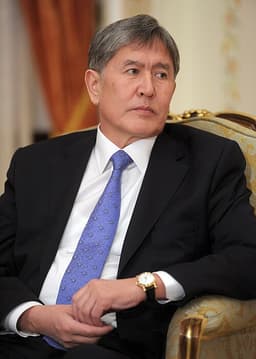
Almazbek Atambayev
Politician · Modern
43.7Total
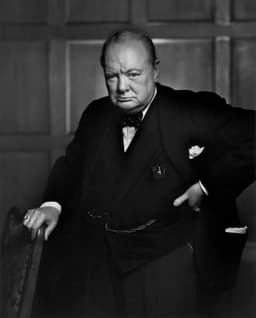
Winston Churchill
Politician · Modern
71.8Total
Basic Information
Born
1956
1874
Died
—
1965
Era
Modern
Modern
Nationality
Kyrgyzstan
United Kingdom
Occupation
Politician
Politician
Civilization
Eastern
Western
Score Comparison
Military (10%)
10.0
55.0
Political (20%)
48.0
78.0
Influence (20%)
49.4
75.0
Legacy (20%)
40.0
68.0
Leadership (15%)
64.0
82.0
Strategy (15%)
35.5
65.0
TOTAL
43.7
71.8
Almazbek Atambayev — Complete Timeline
2010 AD
Appointed Prime Minister of KyrgyzstanPolitical Action
Atambayev was appointed Prime Minister of Kyrgyzstan under President Roza Otunbayeva. He led the government during the post-revolution period, focusing on economic recovery and constitutional reforms. His tenure was marked by efforts to stabilize the country after ethnic violence.
Prime MinisterPost-RevolutionStabilization
Impact: nationalconstructive
2011 AD
Elected President of KyrgyzstanPolitical Action◆ Major
Atambayev was elected President of Kyrgyzstan in a democratic election, winning 63% of the vote. He succeeded Roza Otunbayeva. His presidency focused on economic development, infrastructure projects, and strengthening ties with Russia. He promised to combat corruption.
Presidential ElectionDemocracyKyrgyzstan
Impact: nationalconstructive
2015 AD
Oversaw Kyrgyzstan's Entry into Eurasian Economic UnionPolitical Action◆ Major
Atambayev signed the treaty for Kyrgyzstan to join the Eurasian Economic Union, a Russian-led economic bloc. The move deepened economic integration with Russia, Kazakhstan, and other post-Soviet states. It was controversial among nationalists who feared loss of sovereignty.
Eurasian Economic UnionIntegrationRussia
Impact: regional
2020 AD
Arrested and Imprisoned After Leaving OfficePolitical Action◆ Major
After leaving office, Atambayev was arrested on charges of corruption and abuse of power. He was sentenced to 11 years in prison in 2020. His prosecution was widely seen as politically motivated by his successor, Sadyr Japarov. The case highlighted political vendettas in Kyrgyzstan.
ImprisonmentPolitical RepressionCorruption
Impact: nationaldestructive
2021 AD
Sentenced to Additional Prison TimePolitical Action
Atambayev was sentenced to an additional 10 years in prison for organizing mass unrest and attempting to seize power. The charges stemmed from a 2019 incident where his supporters clashed with police. His total sentence reached 21 years. Human rights groups criticized the trial.
TrialPolitical PrisonerHuman Rights
Impact: nationaldestructive
Winston Churchill — Complete Timeline
1940 AD
Appointed Prime Minister of the United KingdomPolitical Action◆ Major
On May 10, 1940, Winston Churchill became Prime Minister of the United Kingdom, replacing Neville Chamberlain. His appointment came as Nazi Germany invaded France and the Low Countries, and Churchill formed a coalition government to lead Britain through World War II.
World War IILeadershipCoalition Government
Impact: globalconstructive
Delivered the 'We Shall Fight on the Beaches' SpeechOther◆ Major
On June 4, 1940, Churchill delivered a speech to the House of Commons following the evacuation of British forces from Dunkirk. He declared that Britain would fight on the beaches, landing grounds, fields, streets, and hills, and never surrender, rallying British morale during the darkest days of World War II.
World War IIOratoryMorale
Impact: nationalconstructive
1941 AD
Signed the Atlantic CharterOther◆ Major
On August 14, 1941, Churchill and U.S. President Franklin D. Roosevelt signed the Atlantic Charter aboard HMS Prince of Wales. This joint declaration outlined post-war goals including self-determination, disarmament, and free trade, and became a foundational document for the Allied war aims and the United Nations.
World War IIAllied CooperationPost-war Planning
Impact: globalconstructive
1945 AD
Attended the Yalta ConferenceOther◆ Major
In February 1945, Churchill attended the Yalta Conference with Roosevelt and Stalin to discuss the post-war reorganization of Europe. The conference agreed on the division of Germany, the establishment of the United Nations, and the fate of Eastern Europe, though Churchill later expressed regret over concessions to Stalin.
World War IIPost-war SettlementBig Three
Impact: global
1946 AD
Delivered the 'Iron Curtain' SpeechOther◆ Major
On March 5, 1946, Churchill delivered a speech at Westminster College in Fulton, Missouri, where he stated that an 'iron curtain' had descended across Europe from Stettin to Trieste. This speech is widely regarded as marking the beginning of the Cold War, as it highlighted the division between Soviet-controlled Eastern Europe and the West.
Cold WarSoviet UnionDivision of Europe
Impact: globaldestructive
1953 AD
Awarded the Nobel Prize in LiteratureOther◆ Major
In 1953, Churchill was awarded the Nobel Prize in Literature for his historical writings, particularly 'The Second World War' and 'A History of the English-Speaking Peoples'. The Nobel committee cited his mastery of historical and biographical description as well as his brilliant oratory in defending human values.
LiteratureNobel PrizeHistorical Writing
Impact: nationalconstructive
This comparison has not been analyzed yet.
One-time AI generation (~1 minute). Scores and timeline are already available below.
Rankings
🥇
Winston ChurchillLeader
Mil: 55.0Pol: 78.0Inf: 75.0
71.8
🥈
Almazbek Atambayev
Mil: 10.0Pol: 48.0Inf: 49.4
43.7
+28.1 behind
How This Comparison Works
Algorithm
Each figure is scored on 6 dimensions (0—100 scale) based on structured historical data: Military (10%), Political (20%), Influence (20%), Legacy (20%), Leadership (15%), Strategy (15%). The weighted total produces the final ranking.
Data Sources
Scores are computed from structured sub-indicators in the database. Scale factors adjust for era (Ancient ×0.85, Modern ×1.0) and civilization size (Eastern ×1.05, Other ×0.80) to account for differences in population and military scale.
Maximum 3 Figures
Comparisons are limited to 2—3 figures to ensure readability and statistical meaningfulness.
Error Margins
±5 points per dimension — Sub-scores are derived from historical records with inherent uncertainty. Two figures within 5 points on a dimension should be considered roughly equivalent in that area.
Total Score Accuracy
±3 points overall — The weighted combination of 6 dimensions produces a total score with approximately ±3 points of uncertainty. Differences of less than 3 points are not statistically significant— the figures are effectively tied.
Known Limitations
- Historical records are incomplete and uneven across civilizations
- Figures from oral-tradition societies may be underrepresented
- Occupation labels can misclassify multi-role figures
- Scores measure capability and impact, not moral character
- Quantitative scoring is a comparison tool, not absolute truth
Capability Radar
Military (10%) — Battles & Warfare
Battles
17
55
Win Rate
20
60
Expansion
19
40
Political (20%) — Governance & Reform
Reform
40
70
Diplomacy
45
85
Economy
35
60
Influence (20%) — Cultural & Global Reach
Cultural
20
85
Global
15
85
Legacy (20%) — Historical Impact
Historical
25
90
Longevity
15
80
Leadership (15%) — Power & Stability
Tenure
55
75
Stability
20
70
Strategy (15%) — Tactics & Innovation
Strategy
24
85
Tactics
25
65
Reform
29
70
Similar Comparisons
Comments & Discussion
No comments yet. Be the first to share your thoughts!