Loading...
Alexander the Great vs Fu Jian
Alexander the Great leads by 20.8 pts · 2 figures compared
…
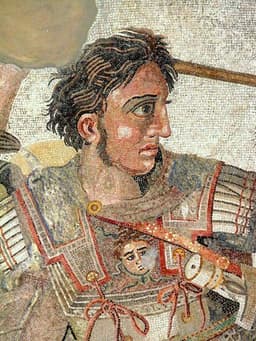
Alexander the Great
General · Ancient
85.2Total
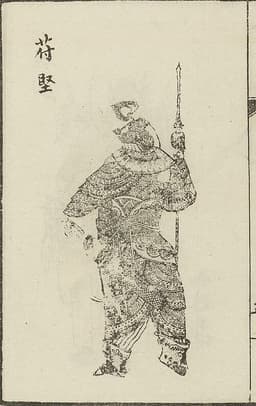
Fu Jian
Emperor · Ancient
64.4Total
Basic Information
Born
-356
338
Died
-323
385
Era
Ancient
Ancient
Nationality
Macedon
China
Occupation
General
Emperor
Civilization
Western
Eastern
Score Comparison
Military (10%)
95.0
78.0
Political (20%)
60.0
72.0
Influence (20%)
92.0
59.0
Legacy (20%)
90.0
50.0
Leadership (15%)
80.0
85.0
Strategy (15%)
92.0
58.0
TOTAL
85.2
64.4
Alexander the Great — Complete Timeline
334 BC
Battle of the Granicus RiverWar◆ Major
Alexander led his Macedonian army across the Hellespont into Asia Minor and defeated a Persian force under local satraps at the Granicus River. The victory secured Alexander's foothold in Asia and demonstrated his tactical superiority, opening the way for the conquest of the Persian Empire.
Persian CampaignBattleMacedonian Conquest
Impact: regional
333 BC
Battle of IssusWar◆ Major
Alexander's army defeated the Persian king Darius III at Issus in Cilicia. Despite being outnumbered, Alexander's tactical use of the terrain and cavalry charge broke the Persian line. Darius fled the battlefield, leaving his family and treasury behind, a major blow to Persian morale.
Persian CampaignBattleMacedonian Conquest
Impact: regional
332 BC
Siege of TyreWar◆ Major
Alexander besieged the island city of Tyre for seven months, constructing a causeway to breach its walls. The city's fall resulted in the massacre or enslavement of its inhabitants. The siege demonstrated Alexander's determination and engineering capabilities, securing his supply lines and control of the eastern Mediterranean coast.
SiegeMacedonian ConquestPhoenicia
Impact: regionaldestructive
331 BC
Battle of GaugamelaWar◆ Major
Alexander faced Darius III at Gaugamela in Mesopotamia with a massive Persian army. Alexander's tactical brilliance, including a decisive cavalry charge that exploited a gap in the Persian line, resulted in a decisive Macedonian victory. Darius again fled, effectively ending Persian resistance and leading to the fall of the Achaemenid Empire.
Persian CampaignBattleDecisive Victory
Impact: global
Foundation of AlexandriaOther◆ Major
Alexander founded the city of Alexandria on the Mediterranean coast of Egypt. He personally selected the site and oversaw the initial planning. Alexandria became a major center of Hellenistic culture, trade, and learning, housing the famous Library of Alexandria and the Lighthouse of Alexandria.
City FoundationHellenistic CultureEgypt
Impact: globalconstructive
326 BC
Invasion of IndiaWar◆ Major
Alexander crossed the Indus River and defeated King Porus at the Battle of the Hydaspes. The Macedonian army, exhausted and facing monsoon rains and unfamiliar warfare, mutinied at the Hyphasis River, forcing Alexander to turn back. This campaign marked the easternmost extent of his conquests.
Indian CampaignBattleMutiny
Impact: regional
Fu Jian — Complete Timeline
370 AD
Conquest of Former YanWar◆ Major
Fu Jian's Former Qin forces conquered the Former Yan state, annexing its territory in northern China. This victory significantly expanded Former Qin's power and territory, bringing Fu Jian closer to unifying the north.
ConquestExpansion
Impact: regionalconstructive
376 AD
Conquest of Former LiangWar◆ Major
Fu Jian's forces conquered the Former Liang state in the northwest, incorporating its territory into Former Qin. This further consolidated his control over northern China.
ConquestExpansion
Impact: regionalconstructive
Conquest of DaiWar
Fu Jian's army conquered the Dai state, a Xianbei confederation in the north. This eliminated a rival and extended Former Qin's influence into the steppe region.
ConquestExpansion
Impact: regionalconstructive
379 AD
Capture of XiangyangWar
Fu Jian's forces captured the strategic city of Xiangyang from the Eastern Jin dynasty. This victory gave Former Qin a foothold south of the Huai River, setting the stage for the invasion that led to the Battle of Fei River.
ConquestCampaign
Impact: regionalconstructive
383 AD
Battle of Fei RiverWar
Fu Jian led a massive Former Qin army against the Eastern Jin dynasty at the Fei River. The Jin forces defeated the Qin army, causing a catastrophic rout. This defeat shattered Fu Jian's unification efforts and led to the collapse of Former Qin.
BattleUnificationDefeat
Impact: regionaltragic
Expert Analysis
Alexander the Great vs Fu Jian: Historical Comparison
Alexander the Great, the Macedonian king who forged an empire from Greece to India, and Fu Jian, the Former Qin emperor who briefly unified northern China, represent two ancient conquerors whose ambitions outpaced their political foundations. While Alexander’s military brilliance created a lasting cultural legacy, Fu Jian’s administrative acumen was undermined by strategic overreach.
Dimension Analysis
**Military: Alexander the Great 96 / Fu Jian 77**
Alexander’s tactical innovations—the phalanx, combined arms, and siege mastery—crushed numerically superior foes at Gaugamela and Issus. Fu Jian’s 870,000-strong army was shattered at the Fei River by a smaller Jin force, revealing critical command weaknesses and poor coordination.
**Political: Alexander the Great 65 / Fu Jian 86**
Fu Jian excelled in consolidating diverse tribes through meritocratic appointments and religious tolerance, stabilizing northern China for decades. Alexander’s Persian integration policies faced constant Macedonian resistance, leading to mutinies and a fragmented succession.
**Influence: Alexander the Great 90 / Fu Jian 77**
Alexander’s conquests spread Hellenistic culture across three continents, shaping art, science, and governance for centuries. Fu Jian’s influence was largely regional, accelerating Buddhist transmission but failing to create enduring cross-cultural institutions.
**Legacy: Alexander the Great 90 / Fu Jian 72**
Alexander became the archetype of the western conqueror, inspiring Caesar, Napoleon, and modern strategic thought. Fu Jian’s empire collapsed within a decade of his death, remembered mainly as a cautionary tale of hubris in Chinese historiography.
**Leadership: Alexander the Great 82 / Fu Jian 76**
Alexander led from the front, sharing hardships and inspiring legendary loyalty despite occasional cruelty. Fu Jian’s magnanimous rule earned initial trust but his indecision at the Fei River and failure to delegate proved fatal.
Verdict
Alexander the Great leads decisively due to his superior military innovation and lasting global influence, despite Fu Jian’s stronger political foundations.
FAQ
Q: Who ranks higher? A: Alexander the Great ranks higher overall, driven by his unmatched military genius and transformative legacy.
Rankings
🥇
Alexander the GreatLeader
Mil: 95.0Pol: 60.0Inf: 92.0
85.2
🥈
Fu Jian
Mil: 78.0Pol: 72.0Inf: 59.0
64.4
+20.8 behind
How This Comparison Works
Algorithm
Each figure is scored on 6 dimensions (0—100 scale) based on structured historical data: Military (10%), Political (20%), Influence (20%), Legacy (20%), Leadership (15%), Strategy (15%). The weighted total produces the final ranking.
Data Sources
Scores are computed from structured sub-indicators in the database. Scale factors adjust for era (Ancient ×0.85, Modern ×1.0) and civilization size (Eastern ×1.05, Other ×0.80) to account for differences in population and military scale.
Maximum 3 Figures
Comparisons are limited to 2—3 figures to ensure readability and statistical meaningfulness.
Error Margins
±5 points per dimension — Sub-scores are derived from historical records with inherent uncertainty. Two figures within 5 points on a dimension should be considered roughly equivalent in that area.
Total Score Accuracy
±3 points overall — The weighted combination of 6 dimensions produces a total score with approximately ±3 points of uncertainty. Differences of less than 3 points are not statistically significant— the figures are effectively tied.
Known Limitations
- Historical records are incomplete and uneven across civilizations
- Figures from oral-tradition societies may be underrepresented
- Occupation labels can misclassify multi-role figures
- Scores measure capability and impact, not moral character
- Quantitative scoring is a comparison tool, not absolute truth
Capability Radar
Military (10%) — Battles & Warfare
Battles
98
75
Win Rate
99
70
Expansion
99
80
Political (20%) — Governance & Reform
Reform
75
70
Diplomacy
80
60
Economy
70
65
Influence (20%) — Cultural & Global Reach
Cultural
95
50
Global
95
45
Legacy (20%) — Historical Impact
Historical
98
60
Longevity
95
40
Leadership (15%) — Power & Stability
Tenure
60
65
Stability
55
55
Strategy (15%) — Tactics & Innovation
Strategy
98
70
Tactics
99
65
Reform
85
60
Similar Comparisons
Comments & Discussion
BattlefieldScholar6/16/2026
The military scoring here is interesting but I think Fu Jian’s 77 is generous given the Fei River disaster. Alexander’s 96 is justified—his victory at Gaugamela with 47,000 against Darius’s 100,000+ demonstrated operational genius: he used the phalanx as an anvil while Companion cavalry delivered the decisive hammer blow. Fu Jian by contrast had 870,000 troops at Fei River but couldn’t coordinate them. The Jin army under Xie Xuan exploited his overextension by feigning retreat, then struck before Fu Jian’s entire force could cross. That’s a basic tactical failure—you never commit to a river crossing without securing the far bank. Alexander would have never made that mistake. However, Fu Jian’s earlier campaigns against Former Yan and Dai show competence; he just lacked the strategic judgment to consolidate before expanding. If we’re grading purely on military execution, Alexander wins, but Fu Jian’s political integration skills arguably made him more effective as a ruler in the long term.
OldChronicler536/16/2026
看了这个评分,我忍不住要算一笔账。亚历山大军事96分,政治65分,总分84.7;苻坚军事77分,政治86分,总分72.1。这明显是军事权重被拉满了。如果按中国史书对帝王的评价体系——比如《晋书》对苻坚的描述——政治稳定和内部治理的权重至少占40%以上。苻坚在王猛辅佐下推行均田、兴修水利、缓和民族矛盾,二十年北方无大战。而亚历山大死后帝国立刻四分五裂,继业者打了四十年代。按这种算法,苻坚的总分至少该上80。还有,苻坚淝水之战虽败,但之前的灭前燕、平代国都是实打实的军事胜利,77分太低了。这评分标准明显西方中心。
GrandScribe986/16/2026
把亚历山大和苻坚放在一起比较,挺有意思。亚历山大很像中国历史上的项羽——所向披靡但不懂治理。苻坚更像刘秀或赵匡胤,能收拢人心、整合各方势力。苻坚对待鲜卑、羌、氐等民族的政策,其实比亚历山大对待波斯人的手段更成熟,他任命王猛这个汉人做丞相,就显示了胸怀。可惜苻坚在淝水之战中犯了和曹操赤壁之战类似的错误——轻敌和指挥混乱。亚历山大的波斯政策虽然开放,但马其顿贵族始终不满,最后导致内乱。从文化影响力看,亚历山大影响了西方,苻坚加速了佛教东传,只是中国史学强调“成王败寇”,苻坚的功绩被忽视了。西方评分的“影响力”维度,对东方人物太不公平。