Loading...
Fu Jian vs Muhammadu Buhari
Fu Jian leads by 12.9 pts · 2 figures compared
…
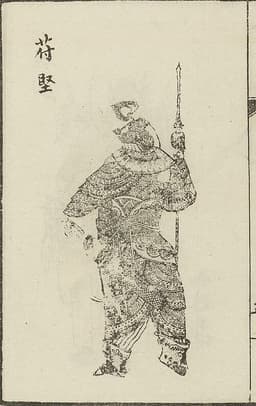
Fu Jian
Emperor · Ancient
64.4Total
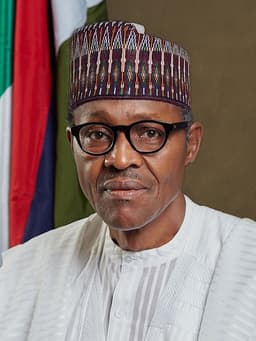
Muhammadu Buhari
General · Modern
51.5Total
Basic Information
Born
338
1942
Died
385
—
Era
Ancient
Modern
Nationality
China
Nigeria
Occupation
Emperor
General
Civilization
Eastern
Other
Score Comparison
Military (10%)
78.0
22.6
Political (20%)
72.0
68.0
Influence (20%)
59.0
53.3
Legacy (20%)
50.0
43.3
Leadership (15%)
85.0
72.0
Strategy (15%)
58.0
41.0
TOTAL
64.4
51.5
Fu Jian — Complete Timeline
370 AD
Conquest of Former YanWar◆ Major
Fu Jian's Former Qin forces conquered the Former Yan state, annexing its territory in northern China. This victory significantly expanded Former Qin's power and territory, bringing Fu Jian closer to unifying the north.
ConquestExpansion
Impact: regionalconstructive
376 AD
Conquest of Former LiangWar◆ Major
Fu Jian's forces conquered the Former Liang state in the northwest, incorporating its territory into Former Qin. This further consolidated his control over northern China.
ConquestExpansion
Impact: regionalconstructive
Conquest of DaiWar
Fu Jian's army conquered the Dai state, a Xianbei confederation in the north. This eliminated a rival and extended Former Qin's influence into the steppe region.
ConquestExpansion
Impact: regionalconstructive
379 AD
Capture of XiangyangWar
Fu Jian's forces captured the strategic city of Xiangyang from the Eastern Jin dynasty. This victory gave Former Qin a foothold south of the Huai River, setting the stage for the invasion that led to the Battle of Fei River.
ConquestCampaign
Impact: regionalconstructive
383 AD
Battle of Fei RiverWar
Fu Jian led a massive Former Qin army against the Eastern Jin dynasty at the Fei River. The Jin forces defeated the Qin army, causing a catastrophic rout. This defeat shattered Fu Jian's unification efforts and led to the collapse of Former Qin.
BattleUnificationDefeat
Impact: regionaltragic
Muhammadu Buhari — Complete Timeline
1983 AD
1983 Nigerian coup d'étatPolitical Action
Major General Muhammadu Buhari led a military coup that overthrew the civilian government of President Shehu Shagari. Buhari cited corruption and economic mismanagement as justifications, and he became the head of state.
CoupMilitary RuleCorruption
Impact: nationaldestructive
1984 AD
War Against Indiscipline (WAI)Reform◆ Major
Buhari launched the War Against Indiscipline, a campaign to enforce discipline and order in Nigerian society. It included harsh penalties for minor offenses, such as queue-jumping, and was criticized for human rights abuses.
DisciplineSocial PolicyHuman Rights
Impact: nationaldestructive
1985 AD
Overthrow by Ibrahim BabangidaPolitical Action◆ Major
Buhari was overthrown in a palace coup led by his Chief of Army Staff, Ibrahim Babangida. Babangida cited Buhari's authoritarian style and failure to address the economy as reasons for the coup.
CoupOverthrowBabangida
Impact: national
2015 AD
Anti-corruption campaignReform◆ Major
Buhari launched a high-profile anti-corruption campaign, targeting government officials and recovering stolen assets. The campaign was praised internationally but criticized for being selective and politically motivated.
Anti-CorruptionReformGovernance
Impact: nationalconstructive
Election as President of NigeriaPolitical Action
Buhari won the 2015 Nigerian presidential election, defeating incumbent Goodluck Jonathan. This was the first time an opposition candidate had defeated a sitting president in Nigeria's history, marking a democratic milestone.
ElectionDemocracyOpposition Victory
Impact: nationalprogressive
Expert Analysis
Fu Jian vs Muhammadu Buhari
# The Weight of a Dream: Fu Jian and Muhammadu Buhari
In the autumn of 383, on the banks of the Fei River in southern China, Fu Jian watched his army—perhaps the largest force ever assembled in East Asia—begin to retreat. It was meant to be a simple tactical maneuver, a brief withdrawal to let the enemy cross before crushing them. Instead, it became a rout. Panic spread through the ranks like wildfire, and within hours, the dream of a unified China under Former Qin lay shattered. More than sixteen centuries later, in December 1983, another general seized power in a distant land. Muhammadu Buhari, a lean and stern-faced soldier, marched into the Nigerian capital of Lagos and announced the end of civilian rule. He promised discipline, order, and a cleansing of corruption. Both men believed they were saviors. Both would learn that history judges saviors harshly.
Origins
Fu Jian was born in 338 into the Di people, a minority group in northern China that had carved out a small state amid the chaos of the Sixteen Kingdoms period. His grandfather had founded Former Qin, but the young prince grew up not in luxury but in a world of constant warfare, where survival depended on ruthless pragmatism. Unlike many warlords of his era, Fu Jian was deeply influenced by Chinese Confucian ideals. He surrounded himself with Han Chinese advisors, studied classical texts, and dreamed of restoring the unity that had been lost after the fall of the Western Jin dynasty.
Muhammadu Buhari, born in 1942 in Daura, northern Nigeria, came from a different kind of periphery. His father was a farmer, and his people were Fulani—a pastoralist group with a long history of Islamic scholarship and resistance to colonial rule. Nigeria, then still under British control, was a patchwork of ethnicities and religions, held together by administrative convenience. Buhari’s education was military: he trained in Britain, India, and the United States, learning the craft of war in an age of Cold War proxy conflicts. Where Fu Jian sought to revive an ancient civilization, Buhari sought to stabilize a fragile modern state.
Rise to Power
Fu Jian’s path to power was swift and bloody. In 357, at age nineteen, he staged a coup against his tyrannical cousin, the reigning emperor, and took the throne. He was young, ambitious, and possessed a rare gift: the ability to inspire loyalty among conquered peoples. Over the next two decades, he methodically destroyed his rivals. In 370, his armies conquered Former Yan, absorbing its vast territory. In 376, he swallowed Former Liang and the Dai confederation. By 379, when his forces captured the strategic city of Xiangyang from the Eastern Jin dynasty, Fu Jian controlled nearly all of northern China. He ruled not as a tribal chieftain but as a Chinese-style emperor, adopting titles, rituals, and a bureaucracy that mirrored the Han dynasties he admired.
Buhari’s rise was more compressed. On December 31, 1983, he led a coup against President Shehu Shagari, whom he accused of corruption and economic mismanagement. Nigeria was drowning in oil revenue theft, inflation was rampant, and the civilian government seemed paralyzed. Buhari acted with the speed of a soldier, not the deliberation of a statesman. Within hours, he was the head of state. Unlike Fu Jian, who spent decades building an empire, Buhari inherited one that was already falling apart.
Leadership & Governance
Their styles of rule could not have been more different. Fu Jian governed with a magnanimity that astonished his contemporaries. He appointed former enemies to high office, granted autonomy to conquered peoples, and promoted trade and scholarship. His court was a mosaic of Chinese, Xianbei, Di, and Qiang officials. He believed that cultural unity could be achieved through persuasion rather than force—a radical idea in an age of massacres and forced migrations.
Buhari, by contrast, governed through fear. In 1984, he launched the War Against Indiscipline, a campaign that punished lateness, littering, and other minor offenses with public humiliation and long prison sentences. Civil servants were forced to stand in queues and sing the national anthem. Journalists were arrested. Strikes were banned. Buhari saw discipline as the cure for Nigeria’s ills, but his cure was a poison: it crushed dissent without addressing the underlying rot. His anti-corruption efforts, while genuine, were selective and often arbitrary.
Triumph & Tragedy
Fu Jian’s greatest triumph was also his greatest tragedy. By 382, he had united the north and stood at the gates of the Eastern Jin dynasty, the last obstacle to a unified China. His generals warned against invasion, citing the morale and skill of the Jin navy. Fu Jian dismissed them with a famous boast: “If I throw my whips into the river, its flow will be stopped.” In 383, he marched south with an army that chroniclers claimed numbered nearly a million men—likely a vast exaggeration, but still enormous. At the Fei River, the Jin commander offered a truce: let the Qin forces withdraw slightly, so the Jin could cross and fight on open ground. Fu Jian agreed. The withdrawal turned into a panic. His army collapsed, and with it, his empire.
Buhari’s triumph came decades later, in 2015, when he was elected president of Nigeria. It was a stunning comeback: the first time an opposition candidate had defeated an incumbent in Nigerian history. He won on a platform of anti-corruption and security, promising to crush the Boko Haram insurgency. Yet his presidency was marked by economic recession, a falling currency, and a growing perception that his anti-corruption war targeted political rivals more than systemic rot. By the time he left office in 2023, his approval had cratered. His tragedy was not a single battle but a slow erosion of hope.
Character & Destiny
Fu Jian was a man of grand visions but poor execution. He trusted too easily, believed too deeply in his own righteousness, and refused to listen to caution. His defeat at Fei River was not a failure of courage but of judgment—a fatal underestimation of his enemy and an overestimation of his own control. Buhari, by contrast, was a man of rigid discipline but narrow imagination. He saw Nigeria’s problems as moral failures rather than structural ones, and his solutions—crackdowns, decrees, arrests—reflected a soldier’s instinct, not a politician’s craft.
Legacy
Fu Jian is remembered as a tragic hero in Chinese history: the man who almost unified China but fell because of one mistake. His Former Qin dynasty collapsed after his death, and the north descended into renewed war. Yet his dream of unity outlived him, inspiring later dynasties like the Sui and Tang. Buhari’s legacy is more ambiguous. He is praised for restoring democracy in 2015 but criticized for his authoritarian tendencies. His anti-corruption campaign recovered billions of naira but failed to transform Nigeria’s political culture. In the end, both men were prisoners of their own virtues: Fu Jian’s magnanimity made him blind to danger, and Buhari’s discipline made him deaf to dissent.
Conclusion
Standing on the banks of the Fei River, Fu Jian could not have imagined that his defeat would echo across centuries. He died in 385, abandoned by his own generals, a broken emperor in a crumbling palace. Muhammadu Buhari, still alive as of this writing, has seen his own reputation decline from savior to symbol of stagnation. Both men teach the same lesson: the distance between a dream and its fulfillment is not measured in armies or decrees, but in the humility to see the world as it is, not as we wish it to be.
Rankings
🥇
Fu JianLeader
Mil: 78.0Pol: 72.0Inf: 59.0
64.4
🥈
Muhammadu Buhari
Mil: 22.6Pol: 68.0Inf: 53.3
51.5
+12.9 behind
How This Comparison Works
Algorithm
Each figure is scored on 6 dimensions (0—100 scale) based on structured historical data: Military (10%), Political (20%), Influence (20%), Legacy (20%), Leadership (15%), Strategy (15%). The weighted total produces the final ranking.
Data Sources
Scores are computed from structured sub-indicators in the database. Scale factors adjust for era (Ancient ×0.85, Modern ×1.0) and civilization size (Eastern ×1.05, Other ×0.80) to account for differences in population and military scale.
Maximum 3 Figures
Comparisons are limited to 2—3 figures to ensure readability and statistical meaningfulness.
Error Margins
±5 points per dimension — Sub-scores are derived from historical records with inherent uncertainty. Two figures within 5 points on a dimension should be considered roughly equivalent in that area.
Total Score Accuracy
±3 points overall — The weighted combination of 6 dimensions produces a total score with approximately ±3 points of uncertainty. Differences of less than 3 points are not statistically significant— the figures are effectively tied.
Known Limitations
- Historical records are incomplete and uneven across civilizations
- Figures from oral-tradition societies may be underrepresented
- Occupation labels can misclassify multi-role figures
- Scores measure capability and impact, not moral character
- Quantitative scoring is a comparison tool, not absolute truth
Capability Radar
Military (10%) — Battles & Warfare
Battles
75
10
Win Rate
70
10
Expansion
80
5
Political (20%) — Governance & Reform
Reform
70
30
Diplomacy
60
25
Economy
65
20
Influence (20%) — Cultural & Global Reach
Cultural
50
25
Global
45
25
Legacy (20%) — Historical Impact
Historical
60
30
Longevity
40
20
Leadership (15%) — Power & Stability
Tenure
65
45
Stability
55
15
Strategy (15%) — Tactics & Innovation
Strategy
70
15
Tactics
65
15
Reform
60
20
Similar Comparisons
Comments & Discussion
FuChemist6/16/2026
Fascinating comparison, but it’s apples and oranges. Fu Jian was a military genius undone by catastrophic overreach at Fei River—his hubris in deploying a multi-ethnic army that panicked before a single arrow flew. Buhari, by contrast, never had such a decisive failure; his coups and elections were about corruption, not battle. Apples and oranges, I say! One’s a tactical implosion, the other’s political stagnation.
历史精准手6/16/2026
说战术,符坚是输在指挥混乱,军队撤退变溃败,这不光彩。但布哈里呢?他1983年政变后,经济政策像拴了脚的鸡,连石油价格都搞不定。我不偏袒任何一方,但符坚至少有一场经典败仗,布哈里简直是个经济扶贫的瞎指挥。
古典学者6/16/2026
符坚之败,非兵不利,战不善,弊在‘王猛死而谋断疏’。《资治通鉴》载其临阵时‘诸军悉溃,唯慕容垂一军独全’,可见军心已裂。布哈里则‘文理苟且’,学幕府旧制而失时民。两人皆以‘清君侧’或‘洗贪腐’为号,终成镜花水月——太在乎形象,忘了治天下靠细节。
Chronicler59926/16/2026
Fu Jian was an idealist who couldn’t handle the logistics of ruling a multi-ethnic empire; his Former Qin crumbled like paper in rain. Buhari, meanwhile, was a stubborn moralist who preached discipline but couldn’t fix Nigeria’s oil dependency or ethnic cracks. Both believed in a ‘purifying’ mission—but the Fei River shows that unity without real integration is just a march into a swamp.
ColdScribe116/16/2026
Numbers don’t lie: Fu Jian’s army, per Sima Guang, was 870,000 strong (including non-combatants), yet routed at Fei River by 80,000 Jin troops. That’s a slaughter ratio. Buhari’s Nigeria under his first regime saw GDP barely move (1984: -1.8% growth). Both failed, but one’s a statistical disaster of overreach, the other a slog of mediocrity. The data screams ‘overhyped saviors’ to me.