Loading...
Francisco Morazan vs Fu Jian
Fu Jian leads by 6.4 pts · 2 figures compared
…
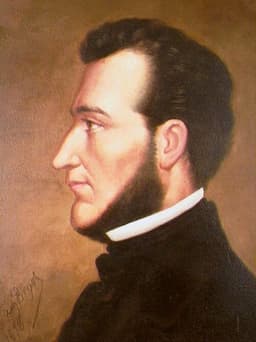
Francisco Morazan
General · Modern
58.0Total
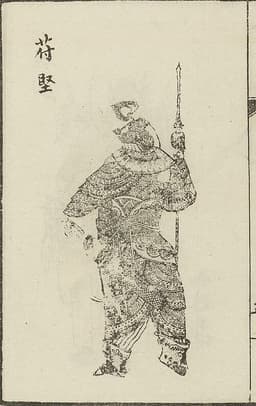
Fu Jian
Emperor · Ancient
64.4Total
Basic Information
Born
1792
338
Died
1842
385
Era
Modern
Ancient
Nationality
Honduras
China
Occupation
General
Emperor
Civilization
Western
Eastern
Score Comparison
Military (10%)
52.5
78.0
Political (20%)
60.0
72.0
Influence (20%)
62.0
59.0
Legacy (20%)
50.0
50.0
Leadership (15%)
68.0
85.0
Strategy (15%)
55.0
58.0
TOTAL
58.0
64.4
Francisco Morazan — Complete Timeline
1824 AD
Abolition of slavery in Central AmericaReform◆ Major
As a key leader in the liberal movement, Moraz
AbolitionSlaveryLiberal Reform
Impact: regionalprogressive
1827 AD
Battle of La TrinidadWar◆ Major
Morazán led a liberal army to victory against conservative forces at La Trinidad, Honduras. This battle was a key turning point in the Central American civil war, allowing Morazán to consolidate power and eventually become president of the federation.
BattleLiberal VictoryCivil War
Impact: regional
1830 AD
Presidency of the Federal Republic of Central AmericaPolitical Action
Morazán was elected president of the Federal Republic of Central America, a union of Guatemala, El Salvador, Honduras, Nicaragua, and Costa Rica. He pursued liberal reforms including separation of church and state, free trade, and land reform, facing opposition from conservatives.
Federal RepublicLiberal ReformsCentral America
Impact: regionalconstructive
1842 AD
Execution by firing squadPolitical Action
After a failed attempt to restore the Federal Republic, Moraz
ExecutionEnd of FederationLiberal Defeat
Impact: regionaltragic
Fu Jian — Complete Timeline
370 AD
Conquest of Former YanWar◆ Major
Fu Jian's Former Qin forces conquered the Former Yan state, annexing its territory in northern China. This victory significantly expanded Former Qin's power and territory, bringing Fu Jian closer to unifying the north.
ConquestExpansion
Impact: regionalconstructive
376 AD
Conquest of Former LiangWar◆ Major
Fu Jian's forces conquered the Former Liang state in the northwest, incorporating its territory into Former Qin. This further consolidated his control over northern China.
ConquestExpansion
Impact: regionalconstructive
Conquest of DaiWar
Fu Jian's army conquered the Dai state, a Xianbei confederation in the north. This eliminated a rival and extended Former Qin's influence into the steppe region.
ConquestExpansion
Impact: regionalconstructive
379 AD
Capture of XiangyangWar
Fu Jian's forces captured the strategic city of Xiangyang from the Eastern Jin dynasty. This victory gave Former Qin a foothold south of the Huai River, setting the stage for the invasion that led to the Battle of Fei River.
ConquestCampaign
Impact: regionalconstructive
383 AD
Battle of Fei RiverWar
Fu Jian led a massive Former Qin army against the Eastern Jin dynasty at the Fei River. The Jin forces defeated the Qin army, causing a catastrophic rout. This defeat shattered Fu Jian's unification efforts and led to the collapse of Former Qin.
BattleUnificationDefeat
Impact: regionaltragic
Expert Analysis
Fu Jian vs Francisco Morazan
# The Dream of Unity: Fu Jian and Francisco Morazán
On a autumn day in 383 AD, the banks of the Fei River in southern China witnessed one of history’s most spectacular military disasters. Emperor Fu Jian of the Former Qin dynasty stood atop a hill, gazing at his army—perhaps the largest ever assembled in ancient China—stretching across the horizon like an endless sea. He believed the Eastern Jin dynasty would crumble at the mere sight of his forces. Hours later, his empire lay in ruins, shattered by a smaller, more disciplined enemy. A millennium and a half later, on a dusty plaza in San José, Costa Rica, another visionary faced his own moment of reckoning. Francisco Morazán, the liberal general who had once united Central America under a single flag, knelt before a firing squad. Both men had dreamed of unity; both had seen their dreams collapse into blood and fire. Why did these two figures, separated by centuries and continents, share such similar fates?
Origins
Fu Jian was born into the turbulent Sixteen Kingdoms period, an era when northern China had fragmented into a patchwork of warring states after the fall of the Western Jin dynasty. His grandfather was a chieftain of the Di people, a semi-nomadic group that had carved out a small kingdom in the northwest. Fu Jian grew up in a world where power was measured in cavalry charges and shifting alliances, where survival demanded both ruthlessness and cunning. He was educated by a Chinese scholar, learning the Confucian classics and the art of governance, but his soul remained that of a warrior.
Francisco Morazán, born in 1792 in Tegucigalpa, Honduras, came of age in a very different but equally chaotic world. The Spanish Empire was crumbling, and the Americas were convulsing with wars of independence. Morazán’s family were criollos—people of Spanish descent born in the colonies—who had prospered through trade and landownership. He received a liberal education, reading the works of Enlightenment thinkers like Rousseau and Montesquieu, and came to believe in republicanism, secularism, and the abolition of slavery. While Fu Jian inherited a tradition of imperial conquest, Morazán inherited a vision of revolutionary reform.
Rise to Power
Fu Jian’s path to power was swift and brutal. In 357, at the age of nineteen, he staged a coup against his tyrannical cousin, the reigning emperor of Former Qin, and seized the throne. He proved to be an able administrator, surrounding himself with talented advisors like the brilliant Han Chinese prime minister Wang Meng. Under their guidance, Former Qin grew into a formidable state. Fu Jian’s military campaigns were relentless: in 370, he conquered the Former Yan state, annexing its vast territories in northern China. Six years later, he crushed the Former Liang in the northwest and subjugated the Dai confederation of the Xianbei nomads. By 379, his forces had captured the strategic city of Xiangyang from the Eastern Jin dynasty. At his peak, Fu Jian controlled nearly all of northern China, and his ambition turned southward.
Morazán’s rise was slower and more contested. He entered politics as a liberal reformer in the Federal Republic of Central America, a fragile union of Guatemala, El Salvador, Honduras, Nicaragua, and Costa Rica formed after independence from Spain. In 1824, he helped push through the abolition of slavery—a radical act that earned him the enmity of conservative landowners and the Catholic Church. The conservatives struck back, and by 1827, civil war had erupted. Morazán, though not a professional soldier, proved to be a gifted military commander. At the Battle of La Trinidad in 1827, he led a liberal army to a stunning victory over conservative forces, turning the tide of the war. In 1830, he was elected president of the Federal Republic, and he set about implementing his vision: secular education, land reform, separation of church and state, and encouragement of foreign trade.
Leadership & Governance
Fu Jian ruled as an emperor in the traditional Chinese mold, but with a distinctive magnanimity. He treated conquered peoples with surprising leniency, incorporating their leaders into his court and allowing them to retain their customs. His political wisdom, reflected in a score of 72.0, lay in his ability to build a multi-ethnic coalition—Chinese, Di, Xianbei, Qiang, and others all served under his banner. Yet his military score of 66.2 and strategy score of 72.0 reveal a leader who relied more on overwhelming force than tactical brilliance. He was a conqueror, not a strategist, and his greatest flaw was overconfidence.
Morazán governed as a liberal reformer in a deeply conservative society. His political score of 72.0 matches Fu Jian’s, but his leadership score of 76.7 surpasses the emperor’s 75.1, reflecting his ability to inspire loyalty among a small band of followers. He was a man of ideas, but his strategy score of 55.6 is notably low—a weakness that would prove fatal. Morazán believed that reason and enlightenment could overcome entrenched interests, but he underestimated the raw power of the Catholic Church and the landed aristocracy. He tried to impose reforms from the top down, without building the grassroots support necessary to sustain them.
Triumph & Tragedy
Fu Jian’s greatest triumph was the unification of northern China under a single rule, a feat that had eluded his predecessors for decades. His greatest tragedy was the Battle of the Fei River in 383. Leading an army that may have numbered over 800,000 men—though modern historians consider this an exaggeration—he marched south to crush the Eastern Jin. The Jin forces, commanded by the brilliant general Xie Xuan, lured the Qin army into a trap. Feigning retreat, they caused chaos in the Qin ranks, and the massive army collapsed into a panicked rout. Fu Jian watched his dream of a united China dissolve in the mud and blood of the Fei River. He was wounded, barely escaping with his life. Within two years, his empire fragmented, and he was killed by a former ally.
Morazán’s greatest triumph was the creation of the Federal Republic of Central America, a noble experiment in democratic governance. His greatest tragedy was its collapse. By 1838, the union had disintegrated into warring states, torn apart by regional rivalries and conservative backlash. Morazán fought on, leading a desperate campaign to restore the federation. In 1842, he invaded Costa Rica with a small force, hoping to spark a popular uprising. Instead, he was captured and executed by firing squad. His last words, according to legend, were: “I die with the conviction that my death will serve the cause of Central American unity.”
Character & Destiny
Fu Jian was a man of grand visions but poor judgment. His magnanimity, while admirable, blinded him to the dangers of incorporating hostile tribes into his army. At the Fei River, his multi-ethnic coalition proved to be a liability—many of his soldiers were disloyal and fled at the first sign of trouble. His overconfidence, born of a decade of victories, led him to underestimate the Eastern Jin. He was a conqueror who lacked the caution of a survivor.
Morazán was a man of principle but limited pragmatism. He believed in the power of ideas to reshape society, but he failed to understand that ideas alone cannot overcome the inertia of tradition and the violence of vested interests. His liberalism was ahead of its time in a region dominated by conservative landowners and a powerful clergy. He was a reformer who lacked the patience of a politician.
Legacy
Fu Jian’s legacy is complex. He is remembered as a near-unifier of China, a figure who came tantalizingly close to ending the chaos of the Sixteen Kingdoms. His defeat at the Fei River became a cautionary tale about the dangers of hubris, immortalized in Chinese proverbs and literature. His total score of 72.1 reflects a figure of considerable historical importance, but one who ultimately failed. Today, he is studied as a lesson in the limits of military power.
Morazán’s legacy is more enduring in Central America. He is revered as a hero by liberals and reformers, a symbol of the dream of Central American unity that still flickers today. His execution made him a martyr, and his ideas—secularism, education, abolition—eventually triumphed, though long after his death. His total score of 69.8 is slightly lower than Fu Jian’s, but his influence, scored at 76.2, is arguably greater relative to his region. He is remembered not just as a general but as a visionary.
Conclusion
Fu Jian and Francisco Morazán were men who reached for the impossible. One tried to unite China through conquest; the other tried to unite Central America through reform. Both succeeded for a time, and both saw their achievements crumble before their eyes. Their stories remind us that the arc of history bends not only toward justice, but also toward chaos. The dream of unity is perhaps the most seductive and most dangerous of all human ambitions, for it asks us to believe that we can overcome the forces of division that have shaped our world since the dawn of civilization. Fu Jian’s army scattered on the banks of the Fei River; Morazán’s body fell in a Costa Rican plaza. But the questions they raised—about the price of unity, the nature of power, and the limits of vision—remain unanswered, echoing across the centuries.
Rankings
🥇
Fu JianLeader
Mil: 78.0Pol: 72.0Inf: 59.0
64.4
🥈
Francisco Morazan
Mil: 52.5Pol: 60.0Inf: 62.0
58.0
+6.4 behind
How This Comparison Works
Algorithm
Each figure is scored on 6 dimensions (0—100 scale) based on structured historical data: Military (10%), Political (20%), Influence (20%), Legacy (20%), Leadership (15%), Strategy (15%). The weighted total produces the final ranking.
Data Sources
Scores are computed from structured sub-indicators in the database. Scale factors adjust for era (Ancient ×0.85, Modern ×1.0) and civilization size (Eastern ×1.05, Other ×0.80) to account for differences in population and military scale.
Maximum 3 Figures
Comparisons are limited to 2—3 figures to ensure readability and statistical meaningfulness.
Error Margins
±5 points per dimension — Sub-scores are derived from historical records with inherent uncertainty. Two figures within 5 points on a dimension should be considered roughly equivalent in that area.
Total Score Accuracy
±3 points overall — The weighted combination of 6 dimensions produces a total score with approximately ±3 points of uncertainty. Differences of less than 3 points are not statistically significant— the figures are effectively tied.
Known Limitations
- Historical records are incomplete and uneven across civilizations
- Figures from oral-tradition societies may be underrepresented
- Occupation labels can misclassify multi-role figures
- Scores measure capability and impact, not moral character
- Quantitative scoring is a comparison tool, not absolute truth
Capability Radar
Military (10%) — Battles & Warfare
Battles
55
75
Win Rate
60
70
Expansion
40
80
Political (20%) — Governance & Reform
Reform
70
70
Diplomacy
45
60
Economy
50
65
Influence (20%) — Cultural & Global Reach
Cultural
45
50
Global
35
45
Legacy (20%) — Historical Impact
Historical
50
60
Longevity
40
40
Leadership (15%) — Power & Stability
Tenure
55
65
Stability
30
55
Strategy (15%) — Tactics & Innovation
Strategy
55
70
Tactics
50
65
Reform
45
60
Similar Comparisons
Comments & Discussion
FiercePhoenix6/16/2026
As a military historian, I can't help but laugh at Fu Jian's hubris. Assembling an army of 870,000 men—that's not strategy, that's a logistical nightmare waiting to happen. He let his soldiers' morale collapse with a single retreat order, while Morazán at least knew how to lead disciplined troops in guerrilla warfare. Fu Jian's downfall is a textbook example of why bigger numbers don't win battles; Morazán lost because of political betrayal, not incompetence. Give me a commander who can manage a
铁骑书生6/16/2026
你拿一个前秦蛮族帝王和一个中美洲共和将军比?傅坚根本是"以力服人"的暴发户,靠屠城和强制移民来统一北方,简直是草原匪徒作风。莫拉桑至少推崇自由主义,废除奴隶制,推动教育改革。傅坚淝水战败后,整个北方重新四分五裂,死伤百万,莫拉桑被枪决后,中美洲联邦还能苟延残喘几年。一个毁于愚昧,一个亡于理想,高下立判。
DataSkeptic6/16/2026
Let's get real: this comparison is ahistorical clickbait. Fu Jian's army size is pure myth—ancient Chinese records routinely inflated numbers by a factor of ten for propaganda. We're probably talking 80,000 men, not 870,000. Meanwhile, Morazán's "union" of Central America barely held 50,000 square kilometers and lasted 15 years. Different scales, different centuries, different metrics. The only thing they share is a narrative convenience for historians who love dramatic parallels. Stop romantici
南国老朽6/16/2026
作为一个读过《晋书》的老古董,我告诉你傅坚可比莫拉桑有趣多了。他夜访王猛的故事,像极了刘备三顾茅庐;他宽待俘虏的仁政,连敌将都感动得投降。莫拉桑就是个失败的政客,流亡三次,还被人暗算处决。傅坚至少死在自己儿子的手,死得像个英雄,莫拉桑连个像样的传记都没有。要我说,历史对失败者从来不公平—傅坚成了典故,莫拉桑成了脚注。
RevisionistCritic6/16/2026
You've bought into the nationalist myth. Both men weren't "unifiers"—they were conquerors who failed to consolidate power. Fu Jian's empire was a fragile coalition of conquered tribes who deserted him at Fei River; Morazán's federal project was rejected by local elites who preferred their own fiefdoms. The real lesson? Top-down unity never works without grassroots consent. These guys were just pre-modern empire builders with PR problems. Don't confuse ambition with legacy.