Loading...
Fu Jian vs Sitiveni Rabuka
Fu Jian leads by 12.7 pts · 2 figures compared
…
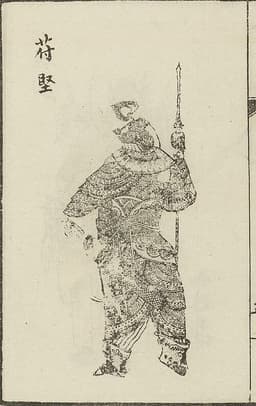
Fu Jian
Emperor · Ancient
64.4Total

Sitiveni Rabuka
General · Modern
51.7Total
Basic Information
Born
338
1948
Died
385
—
Era
Ancient
Modern
Nationality
China
Fiji
Occupation
Emperor
General
Civilization
Eastern
Other
Score Comparison
Military (10%)
78.0
10.2
Political (20%)
72.0
60.0
Influence (20%)
59.0
53.3
Legacy (20%)
50.0
46.7
Leadership (15%)
85.0
85.0
Strategy (15%)
58.0
39.6
TOTAL
64.4
51.7
Fu Jian — Complete Timeline
370 AD
Conquest of Former YanWar◆ Major
Fu Jian's Former Qin forces conquered the Former Yan state, annexing its territory in northern China. This victory significantly expanded Former Qin's power and territory, bringing Fu Jian closer to unifying the north.
ConquestExpansion
Impact: regionalconstructive
376 AD
Conquest of Former LiangWar◆ Major
Fu Jian's forces conquered the Former Liang state in the northwest, incorporating its territory into Former Qin. This further consolidated his control over northern China.
ConquestExpansion
Impact: regionalconstructive
Conquest of DaiWar
Fu Jian's army conquered the Dai state, a Xianbei confederation in the north. This eliminated a rival and extended Former Qin's influence into the steppe region.
ConquestExpansion
Impact: regionalconstructive
379 AD
Capture of XiangyangWar
Fu Jian's forces captured the strategic city of Xiangyang from the Eastern Jin dynasty. This victory gave Former Qin a foothold south of the Huai River, setting the stage for the invasion that led to the Battle of Fei River.
ConquestCampaign
Impact: regionalconstructive
383 AD
Battle of Fei RiverWar
Fu Jian led a massive Former Qin army against the Eastern Jin dynasty at the Fei River. The Jin forces defeated the Qin army, causing a catastrophic rout. This defeat shattered Fu Jian's unification efforts and led to the collapse of Former Qin.
BattleUnificationDefeat
Impact: regionaltragic
Sitiveni Rabuka — Complete Timeline
1987 AD
1987 Fijian Coup d'étatPolitical Action
Rabuka, as a colonel in the Fijian military, led a coup overthrowing the elected government of Timoci Bavadra. The coup was motivated by ethnic Fijian opposition to Indo-Fijian political influence. Rabuka declared Fiji a republic.
CoupMilitary InterventionEthnic Tension
Impact: nationaldestructive
1992 AD
1992 Election as Prime MinisterPolitical Action◆ Major
Rabuka transitioned from military leader to civilian politician, winning the 1992 general election as leader of the Fijian Political Party. He became Prime Minister, serving until 1999.
ElectionCivilian GovernmentPolitical Transition
Impact: national
1997 AD
1997 Constitution ReformReform◆ Major
Rabuka's government oversaw the adoption of a new constitution that removed ethnic-based voting and provided for a multi-ethnic government. The constitution aimed to reduce ethnic tensions and promote national unity.
ConstitutionReformEthnic Reconciliation
Impact: nationalconstructive
1999 AD
1999 General Election DefeatPolitical Action◆ Major
Rabuka's government was defeated in the general election by the Labour Party led by Mahendra Chaudhry. Rabuka stepped down as Prime Minister, marking the end of his first period in power.
Election DefeatGovernment ChangeChaudhry
Impact: national
2022 AD
2022 Return as Prime MinisterPolitical Action◆ Major
Rabuka led the People's Alliance to victory in the 2022 general election, forming a coalition government. He became Prime Minister again, 23 years after his previous tenure, promising democratic reforms.
ElectionReturn to PowerCoalition Government
Impact: national
Expert Analysis
Fu Jian vs Sitiveni Rabuka
# The Conqueror and the Coup-Maker: Two Visions of Power Across Time
On a September morning in 383 AD, Fu Jian stood atop a hill overlooking the Fei River in southern China, his army stretching across the plain like a sea of silk and steel. He was forty-five, at the peak of his power, commanding perhaps 300,000 men—one of the largest forces ever assembled in the ancient world. Across the river, a smaller Eastern Jin army waited, outnumbered but defiant. Fu Jian was confident. He had conquered almost all of northern China. One more victory, and he would be the first man in three centuries to unite the entire realm. He gave the order to advance.
Sixteen centuries later, on a humid May night in 1987, a thirty-nine-year-old Fijian colonel named Sitiveni Rabuka slipped through the darkened streets of Suva with a squad of masked soldiers. He was not commanding an empire; he was seizing a government. The prime minister, Timoci Bavadra, had been elected only a month earlier, and his coalition included Indo-Fijian politicians whom indigenous Fijians feared would dominate the nation. Rabuka, a rugby player turned soldier, believed he was saving his people. By dawn, Bavadra was in custody, and Fiji’s fragile democracy lay in ruins.
Two men, two worlds apart, yet each driven by the same elemental force: the conviction that they alone could shape history. Why did one end in tragedy and the other in redemption?
Origins
Fu Jian was born in 338 into the Di people, a semi-nomadic group in northern China, during the chaos of the Sixteen Kingdoms period. His grandfather had founded the Former Qin state, a patchwork of tribes and Chinese peasants. Fu Jian grew up surrounded by violence and ambition, but he was also tutored by a Chinese scholar, Wang Meng, who taught him Confucian ideals of benevolent rule. This dual identity—barbarian warrior and Chinese sage—would define his reign. He was a man of immense physical courage, known to lead charges personally, yet he dreamed of a unified empire governed by law and virtue.
Sitiveni Rabuka was born in 1948 in a small village on Vanua Levu, Fiji’s second-largest island. His father was a farmer, his mother a homemaker. Fiji was then a British colony, a sugar-producing outpost where ethnic Fijians and indentured Indian laborers coexisted uneasily. Rabuka attended a Methodist school, joined the army, and rose through the ranks. Unlike Fu Jian, he was not raised to rule. He was a product of mid-century decolonization—a world where small nations suddenly had to govern themselves, and where ethnic tensions could explode overnight.
Rise to Power
Fu Jian’s path was one of conquest. In 357, at nineteen, he overthrew his tyrannical cousin and became emperor. He then spent the next two decades methodically swallowing rival states: Former Yan in 370, Former Liang in 376, the Dai confederation in 376. Each victory added territory and soldiers to his growing empire. His general, Wang Meng, was the architect of these campaigns, combining military brilliance with political cunning. By 379, when Fu Jian captured the strategic city of Xiangyang from the Eastern Jin, he controlled nearly all of northern China. He was, by any measure, the most powerful man in East Asia.
Rabuka’s rise was swifter and more brutal. In 1987, he was a colonel, not a king. The coup was not a master plan but a reaction—a response to an election that had brought an Indo-Fijian-dominated government to power. Rabuka acted on impulse, with only a few dozen soldiers. He later admitted he had not thought through the consequences. But the coup succeeded, and Rabuka found himself, almost by accident, the ruler of a nation. He was a reluctant dictator, uncomfortable with power yet unwilling to let it go.
Leadership & Governance
Fu Jian ruled as a Confucian emperor. He built schools, reduced taxes, and promoted officials based on merit, not ethnicity. He welcomed Chinese scholars and Buddhist monks into his court, hoping to create a multicultural empire where Di, Han, Xianbei, and others could coexist. But his tolerance had limits: he trusted former enemies too easily, appointing them to high posts without ensuring their loyalty. His military campaigns were brilliant but overstretched. After Wang Meng died in 375, Fu Jian lost his wisest advisor. He began to believe his own propaganda—that his army was invincible, his destiny manifest.
Rabuka’s governance was a study in contradiction. After the 1987 coup, he declared Fiji a republic, alienating the British monarchy and the international community. He initially imposed a constitution that enshrined indigenous Fijian dominance. But then he surprised everyone. In 1992, he transformed himself from general to prime minister, winning an election. In 1997, he oversaw a new constitution that removed ethnic voting and created a multiracial democracy. It was a stunning reversal—a coup leader becoming a democrat. Yet his motives were mixed: part genuine contrition, part political survival.
Triumph & Tragedy
Fu Jian’s greatest triumph was also his greatest tragedy: the Battle of Fei River in 383. He led his massive army south, expecting a quick victory. But the Jin forces used deception and terrain to their advantage. When Fu Jian ordered a retreat to let the Jin cross the river, his army—a polyglot force of conquered peoples with little loyalty—panicked. The retreat became a rout. Fu Jian watched from the hill as his empire dissolved. He fled north, wounded and humiliated. Two years later, he was killed by a former ally. The Former Qin collapsed into chaos.
Rabuka’s tragedy was less dramatic but equally profound. His 1987 coup destroyed Fiji’s reputation as a model of racial harmony. It triggered economic sanctions, a brain drain, and decades of political instability. Yet his redemption came slowly. After losing the 1999 election, he stepped down peacefully—a rarity among coup leaders. He remained in politics, returned as prime minister in 2022, and spent his final years trying to heal the wounds he had opened. He died not in battle but in office, a man who had seen both sides of power.
Character & Destiny
Fu Jian was a visionary who lacked pragmatism. He believed that size and will could overcome any obstacle. He was generous to a fault, forgiving enemies who later betrayed him. His personality—bold, idealistic, overconfident—shaped his destiny. He could not imagine failure, and so he failed catastrophically.
Rabuka was a pragmatist who lacked vision. He acted first and rationalized later. His coup was impulsive, but his later reforms were calculated. He was not a great thinker but a survivor. His personality—cautious, adaptable, guilty—allowed him to evolve. He could imagine failure, and so he avoided it.
Legacy
Fu Jian is remembered as a tragic figure—a man who almost united China but broke his dream on the rocks of hubris. His name is synonymous with overreach. Historians give him a total score of 72.1, with high marks for leadership and strategy but lower for military execution. The Battle of Fei River remains a cautionary tale.
Rabuka’s legacy is more ambiguous. He is both the man who shattered Fiji’s democracy and the man who rebuilt it. His total score is 61.0—lower than Fu Jian’s in military terms, but higher in political adaptability. He is remembered not for a single battle but for a long, uneven journey from coup-maker to elder statesman.
Conclusion
Two men, two centuries, two outcomes. Fu Jian tried to conquer the world and lost everything. Rabuka tried to seize a country and ended up giving it back. The difference lies not in ambition but in humility. Fu Jian could not learn from his mistakes; Rabuka, painfully and slowly, did. History rewards not the grandest dreams but the most flexible minds. In the end, the emperor who commanded 300,000 men died a fugitive, while the colonel who commanded thirty lived to lead again.
Rankings
🥇
Fu JianLeader
Mil: 78.0Pol: 72.0Inf: 59.0
64.4
🥈
Sitiveni Rabuka
Mil: 10.2Pol: 60.0Inf: 53.3
51.7
+12.7 behind
How This Comparison Works
Algorithm
Each figure is scored on 6 dimensions (0—100 scale) based on structured historical data: Military (10%), Political (20%), Influence (20%), Legacy (20%), Leadership (15%), Strategy (15%). The weighted total produces the final ranking.
Data Sources
Scores are computed from structured sub-indicators in the database. Scale factors adjust for era (Ancient ×0.85, Modern ×1.0) and civilization size (Eastern ×1.05, Other ×0.80) to account for differences in population and military scale.
Maximum 3 Figures
Comparisons are limited to 2—3 figures to ensure readability and statistical meaningfulness.
Error Margins
±5 points per dimension — Sub-scores are derived from historical records with inherent uncertainty. Two figures within 5 points on a dimension should be considered roughly equivalent in that area.
Total Score Accuracy
±3 points overall — The weighted combination of 6 dimensions produces a total score with approximately ±3 points of uncertainty. Differences of less than 3 points are not statistically significant— the figures are effectively tied.
Known Limitations
- Historical records are incomplete and uneven across civilizations
- Figures from oral-tradition societies may be underrepresented
- Occupation labels can misclassify multi-role figures
- Scores measure capability and impact, not moral character
- Quantitative scoring is a comparison tool, not absolute truth
Capability Radar
Military (10%) — Battles & Warfare
Battles
75
5
Win Rate
70
5
Expansion
80
5
Political (20%) — Governance & Reform
Reform
70
50
Diplomacy
60
45
Economy
65
40
Influence (20%) — Cultural & Global Reach
Cultural
50
30
Global
45
20
Legacy (20%) — Historical Impact
Historical
60
40
Longevity
40
30
Leadership (15%) — Power & Stability
Tenure
65
55
Stability
55
35
Strategy (15%) — Tactics & Innovation
Strategy
70
10
Tactics
65
10
Reform
60
5
Similar Comparisons
Comments & Discussion
WarElephant6/16/2026
The difference between these two is the difference between a flood and a fire. Fu Jian commanded 300,000 men and lost because he couldn't control them—his army was a bureaucracy of conquest, not a force of will. Rabuka only needed a dozen masked men to pull off his coup. Raw numbers mean nothing; what matters is nerve. Fu Jian hesitated before the Fei River; Rabuka didn't.
北方铁骑6/16/2026
拿苻坚对比兰布卡?这就像拿黄河对比一条小溪。苻坚的败仗不是输给对手,是输给了一个根本没法指挥的大杂烩军队,三百万人里面一半是俘虏和降兵。兰布卡那点小打小闹,也就是一个殖民岛国的内部操弄。要是苻坚的军队有兰布卡的效率,早就把东晋碾平了。
RugbyRebel6/16/2026
Rabuka called his coup "an act of God" and later claimed he was just a "young colonel" caught up in events. That's revisionist garbage. He planned it for weeks, and he knew exactly what he was doing. The difference with Fu Jian is that Rabuka had a second act—he reinvented himself as a statesman, apologized, and became PM again. Fu Jian never got redemption; he was strangled by his own general.
历史考古迷6/16/2026
我翻了《晋书》才发现,苻坚其实是被他自己的仁慈害死的。淝水之战前他俘虏了前燕的慕容垂还让他带兵,结果慕容垂在战败后直接反水。反观兰布卡,政变完就把对手关起来,从不讲什么宽容。苻坚要是学兰布卡那样铁腕,统一中国的就是前秦了。
CanonBuilder6/16/2026
The real tragedy here is how these stories get twisted to fit a moral. Fu Jian is remembered as a fool who overreached, but he built the only stable multi-ethnic empire in northern China during the Sixteen Kingdoms period. Rabuka gets called a "flawed democrat" now that he's rehabilitated. But let's be clear: one was a visionary undone by fortune, the other a political thug who reinvented himself.