Loading...
Fu Jian vs J. B. M. Hertzog
Fu Jian leads by 8.3 pts · 2 figures compared
…
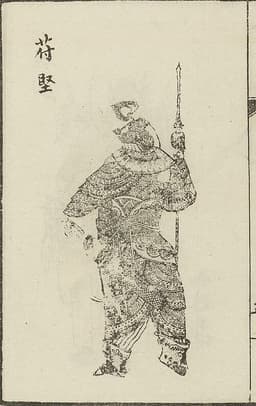
Fu Jian
Emperor · Ancient
64.4Total
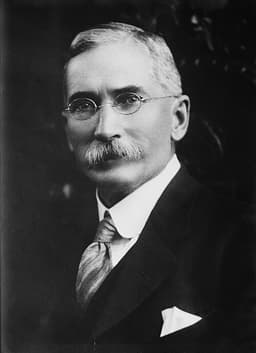
J. B. M. Hertzog
General · Modern
56.1Total
Basic Information
Born
338
1866
Died
385
1942
Era
Ancient
Modern
Nationality
China
South Africa
Occupation
Emperor
General
Civilization
Eastern
Other
Score Comparison
Military (10%)
78.0
25.0
Political (20%)
72.0
60.0
Influence (20%)
59.0
56.7
Legacy (20%)
50.0
50.0
Leadership (15%)
85.0
79.8
Strategy (15%)
58.0
60.0
TOTAL
64.4
56.1
Fu Jian — Complete Timeline
370 AD
Conquest of Former YanWar◆ Major
Fu Jian's Former Qin forces conquered the Former Yan state, annexing its territory in northern China. This victory significantly expanded Former Qin's power and territory, bringing Fu Jian closer to unifying the north.
ConquestExpansion
Impact: regionalconstructive
376 AD
Conquest of Former LiangWar◆ Major
Fu Jian's forces conquered the Former Liang state in the northwest, incorporating its territory into Former Qin. This further consolidated his control over northern China.
ConquestExpansion
Impact: regionalconstructive
Conquest of DaiWar
Fu Jian's army conquered the Dai state, a Xianbei confederation in the north. This eliminated a rival and extended Former Qin's influence into the steppe region.
ConquestExpansion
Impact: regionalconstructive
379 AD
Capture of XiangyangWar
Fu Jian's forces captured the strategic city of Xiangyang from the Eastern Jin dynasty. This victory gave Former Qin a foothold south of the Huai River, setting the stage for the invasion that led to the Battle of Fei River.
ConquestCampaign
Impact: regionalconstructive
383 AD
Battle of Fei RiverWar
Fu Jian led a massive Former Qin army against the Eastern Jin dynasty at the Fei River. The Jin forces defeated the Qin army, causing a catastrophic rout. This defeat shattered Fu Jian's unification efforts and led to the collapse of Former Qin.
BattleUnificationDefeat
Impact: regionaltragic
J. B. M. Hertzog — Complete Timeline
1899 AD
Boer War GeneralWar◆ Major
Hertzog served as a Boer general in the Second Boer War, commanding forces in the Orange Free State. He participated in several battles and became a prominent Afrikaner military leader.
Second Boer WarGeneralMilitary
Impact: regional
1914 AD
Founded the National PartyPolitical Action
Hertzog broke away from the South African Party and founded the National Party, which championed Afrikaner nationalism and opposed British imperial influence. The party would later implement apartheid.
National PartyAfrikaner NationalismFounding
Impact: nationalconstructive
1924 AD
Prime Minister of South AfricaPolitical Action◆ Major
Hertzog became Prime Minister after his National Party won the general election in coalition with the Labour Party. His government implemented policies to protect white workers and promote Afrikaner interests, including the 'civilized labour' policy.
Prime MinisterAfrikaner RightsLabour Policy
Impact: national
1934 AD
Merged with Smuts to Form United PartyPolitical Action◆ Major
Hertzog merged his National Party with Jan Smuts' South African Party to form the United Party. The coalition aimed to address the economic crisis of the Great Depression and promote national unity, but it alienated hardline Afrikaner nationalists.
United PartyCoalitionNational Unity
Impact: nationalconstructive
1936 AD
Passed the Representation of Natives ActReform◆ Major
Hertzog's government passed the Representation of Natives Act, which removed Black voters from the common voters' roll in the Cape Province and allowed them to elect white representatives instead. This further entrenched racial segregation.
SegregationDisenfranchisementLegislation
Impact: nationaldestructive
1939 AD
Resigned Over Neutrality in WWIIPolitical Action◆ Major
Hertzog advocated for South African neutrality in World War II, but his cabinet voted to enter the war on the Allied side. He resigned as Prime Minister and was succeeded by Jan Smuts, splitting the United Party.
World War IINeutralityResignation
Impact: national
Expert Analysis
Fu Jian vs J. B. M. Hertzog
### The Conqueror and the General: Two Paths to Power, Two Lessons in Hubris
History rarely offers a stage for two such different men to play the same part. One was an emperor of the fourth century, a warrior who dreamed of uniting all of China under a single banner, only to see his empire shatter in a single afternoon. The other was a general turned prime minister of the twentieth century, a man who fought for his people’s rights but ended his career by choosing the wrong side in a global war. Fu Jian of the Former Qin and J. B. M. Hertzog of South Africa never shared a continent, let alone a century. Yet their lives pose the same haunting question: What drives a leader to build a towering legacy, only to watch it crumble in a single, irreversible decision?
### Origins
Fu Jian was born in 338, into the turbulent chaos of the Sixteen Kingdoms period, when northern China was a patchwork of warring states. His people, the Di, were a minority group of semi-nomadic herders, and his family were minor chieftains. From childhood, he was groomed for war, learning to ride and shoot before he could read. His uncle, the former emperor, had seized power through assassination, and the court was a nest of conspiracies. Fu Jian grew up in a world where trust was a luxury and violence the only currency.
Hertzog, by contrast, was born in 1866 on a farm in the Cape Colony, a world of rolling hills and settled order. His family were Boers—descendants of Dutch settlers who had carved out a life on the southern tip of Africa. He studied law in the Netherlands and became a judge, a man of the courtroom rather than the battlefield. Yet the Boer republics were under constant pressure from British imperialism, and when war came in 1899, Hertzog shed his robes for a general’s uniform. He was forty-three years old, a latecomer to war, but he fought with a ferocity born of conviction.
### Rise to Power
Fu Jian’s path to power was swift and brutal. In 357, at the age of nineteen, he led a coup against his tyrannical cousin, the emperor, and seized the throne. He was young, ambitious, and ruthless. Over the next two decades, he built the Former Qin into a military juggernaut. In 370, he conquered the Former Yan, annexing its vast territories in the east. In 376, he crushed the Former Liang in the northwest and the Dai confederation in the north. By 379, his armies had even captured Xiangyang, a strategic city held by the Eastern Jin dynasty in the south. Fu Jian had done what no other warlord had managed: he had unified almost all of northern China under a single rule.
Hertzog’s rise was slower, more political. After the Boer War ended in defeat for his people in 1902, he turned to the ballot box. In 1914, he broke from the South African Party and founded the National Party, a vehicle for Afrikaner nationalism. He campaigned on a platform of protecting the language, culture, and rights of the Boer people, who felt marginalized by English-speaking elites. Ten years later, in 1924, he became Prime Minister, leading a coalition with the Labour Party. He was not a conqueror like Fu Jian; he was a builder, a man who used laws and speeches instead of swords.
### Leadership & Governance
Fu Jian ruled as a traditional Chinese emperor, but with a remarkable twist. He was unusually tolerant of other cultures and religions, appointing men from conquered states to high office—including a Xianbei prince named Murong Chui, who would later betray him. He promoted Buddhism and Confucianism, built schools, and tried to create a unified administration. His military genius was undeniable: his campaigns were swift, his logistics efficient, and his soldiers fiercely loyal. But his political wisdom was flawed. He trusted too easily, and he believed that sheer force could erase the deep ethnic and regional divisions within his empire.
Hertzog’s governance was defined by a single, obsessive goal: the advancement of Afrikaner rights. He passed laws to protect Afrikaans as an official language, promoted Afrikaner businesses, and expanded welfare programs for poor whites. But his vision was narrow and exclusionary. In 1936, his government passed the Representation of Natives Act, which removed Black South Africans from the common voters’ roll—a direct precursor to the apartheid system. He was a champion of his own people, but at the cost of justice for everyone else. His political skill was immense—he merged his National Party with Jan Smuts’ South African Party in 1934 to form the United Party, a grand coalition that seemed to promise unity—but his moral compass was broken.
### Triumph & Tragedy
Fu Jian’s greatest moment came in 383, when he assembled the largest army northern China had ever seen—perhaps 800,000 men, by some accounts—and marched south to crush the Eastern Jin dynasty once and for all. He stood on the banks of the Fei River, looking across at the smaller Jin forces, and uttered a famous boast: “Even my whips thrown into the river would be enough to block its flow.” He was confident, almost arrogant, in his power.
Then came the disaster. The Jin generals offered to let his army cross the river so they could fight a proper battle. Fu Jian agreed—a fatal error. As his troops began to cross, a unit of Xianbei soldiers in his own army mutinied, shouting that the Jin had won. Panic spread. The massive army collapsed into a chaotic retreat, and Fu Jian watched his empire dissolve in a single afternoon. He was wounded, his army destroyed, and within two years, his former allies had rebelled and carved up his kingdom. He was killed by a subordinate in 385, a broken man.
Hertzog’s tragedy was quieter, but no less decisive. In 1939, as World War II erupted in Europe, he faced a choice: join the Allies, as most of his cabinet and country wanted, or remain neutral, as he believed was in South Africa’s interest. He was deeply anti-British, still bitter from the Boer War, and he feared that entering the war would drag South Africa into another imperial conflict. But his cabinet voted against him, 11 to 8. He resigned as Prime Minister, his career ended not by a battlefield defeat but by a parliamentary vote. He died in 1942, a lonely figure, remembered by some as a patriot and by others as a man who had chosen the wrong side of history.
### Character & Destiny
Fu Jian’s personality was a paradox: a brilliant strategist who made catastrophic tactical errors, a generous ruler who trusted his enemies, a conqueror who could not hold what he had won. His tragedy was not that he failed, but that he succeeded so completely before failing. He had unified the north, built an empire, and then threw it all away on a single, arrogant gamble. His destiny was written by his own hubris.
Hertzog’s character was more stubborn than grandiose. He was a man of principle, but his principles were narrow and inflexible. He fought for his people, but he could not see beyond them. His tragedy was that he built a political movement that would later harden into apartheid, a system he might not have fully intended but certainly enabled. His destiny was to be a stepping stone to something darker.
### Legacy
Fu Jian is remembered today as a cautionary tale. The Battle of Fei River became a byword for overconfidence, a lesson in how even the mightiest army can be undone by a single mistake. His legacy score of 67.9 reflects a figure who is studied but not celebrated, a conqueror who nearly unified China but failed at the last moment.
Hertzog’s legacy is more contested. His legacy score of 66.8 is similar, but for different reasons. He is honored by some Afrikaners as a founding father of their nation, but condemned by others as a racist who laid the groundwork for apartheid. His face appears on stamps and statues, but his name is also associated with oppression. He is a man remembered for what he built—and for what he destroyed.
### Conclusion
Both men rose to power through skill and determination, and both fell because of a single, defining mistake. Fu Jian trusted his army’s size; Hertzog trusted his own judgment. One was destroyed by a battle, the other by a vote. But the lesson is the same: power is fragile, and the line between triumph and tragedy is thinner than any river. Their stories remind us that history does not judge by intentions, but by outcomes—and that the most dangerous moment for any leader is the moment they believe they cannot lose.
Rankings
🥇
Fu JianLeader
Mil: 78.0Pol: 72.0Inf: 59.0
64.4
🥈
J. B. M. Hertzog
Mil: 25.0Pol: 60.0Inf: 56.7
56.1
+8.3 behind
How This Comparison Works
Algorithm
Each figure is scored on 6 dimensions (0—100 scale) based on structured historical data: Military (10%), Political (20%), Influence (20%), Legacy (20%), Leadership (15%), Strategy (15%). The weighted total produces the final ranking.
Data Sources
Scores are computed from structured sub-indicators in the database. Scale factors adjust for era (Ancient ×0.85, Modern ×1.0) and civilization size (Eastern ×1.05, Other ×0.80) to account for differences in population and military scale.
Maximum 3 Figures
Comparisons are limited to 2—3 figures to ensure readability and statistical meaningfulness.
Error Margins
±5 points per dimension — Sub-scores are derived from historical records with inherent uncertainty. Two figures within 5 points on a dimension should be considered roughly equivalent in that area.
Total Score Accuracy
±3 points overall — The weighted combination of 6 dimensions produces a total score with approximately ±3 points of uncertainty. Differences of less than 3 points are not statistically significant— the figures are effectively tied.
Known Limitations
- Historical records are incomplete and uneven across civilizations
- Figures from oral-tradition societies may be underrepresented
- Occupation labels can misclassify multi-role figures
- Scores measure capability and impact, not moral character
- Quantitative scoring is a comparison tool, not absolute truth
Capability Radar
Military (10%) — Battles & Warfare
Battles
75
45
Win Rate
70
40
Expansion
80
20
Political (20%) — Governance & Reform
Reform
70
60
Diplomacy
60
55
Economy
65
50
Influence (20%) — Cultural & Global Reach
Cultural
50
50
Global
45
45
Legacy (20%) — Historical Impact
Historical
60
55
Longevity
40
40
Leadership (15%) — Power & Stability
Tenure
65
65
Stability
55
45
Strategy (15%) — Tactics & Innovation
Strategy
70
50
Tactics
65
45
Reform
60
30
Similar Comparisons
Comments & Discussion
WarElephant6/16/2026
Fu Jian wasn’t some naïve dreamer—he was a military genius who crushed rival states for two decades. The real lesson isn’t about hubris at Fei River, but logistics. His 870,000-strong army was a supply chain nightmare, not a cohesive force. Hertzog’s mistake was political isolation, not battlefield tactics. Stop romanticizing collapse as karma; it’s about practical limits. The conqueror beat odds until terrain and numbers betrayed him—pure military reality.
古今刀客6/16/2026
苻坚输在太“汉化”了,忘了自己是个氐族军阀。淝水之战前,他重用王猛搞儒化,结果汉族士族心里还当他是蛮夷。赫佐格的悲剧相反,他太执着阿非利卡人认同,1939年站在希特勒那边,连自己内阁都反他。一个想当天下共主却丢了本族根基,一个死守部落情结而错判大局。这两种极端都是政治自杀,别扯什么“文明冲突”,根本是身份政治玩崩了。
SkepticalScrivener6/16/2026
This comparison reeks of cherry-picked parallels. Fu Jian’s empire collapsed after one battle—Hertzog governed South Africa for 15 years and shaped apartheid policy for decades. One lost everything; the other lost an election and faded. The “single irreversible decision” framing ignores that Hertzog’s pro-neutrality stance in WWII was rational for a country split by Anglo-Boer resentments. You’re forcing a narrative where China’s fourth-century chaos mirrors 20th-century parliamentary politics.
帝国史料癖6/16/2026
把苻坚和赫佐格搁一起,就像拿馒头比牛排——都是主食但完全两码事。苻坚是乱世枭雄,五胡十六国里他做到了一统北方,赫佐格不过是个殖民地政客,靠排挤黑人上位的种族主义者。淝水之战败了,但前秦的根基是氐族部曲,不是汉人官僚体系,崩溃是早晚的。赫佐格呢?他留下的种族隔离制度害了南非五十年。别拔高他,他不配和苻坚平起平坐。
HistorysHammer6/16/2026
You’ve got the wrong Hertzog focus. The real turning point wasn’t WWII—it was 1914 when he backed the Maritz Rebellion against South Africa’s entry into WWI. Fu Jian’s fatal flaw was overcentralization, expecting diverse tribes to fight as one. Hertzog’s was clinging to a romanticized Boer identity that couldn’t adapt. Both men understood power as personal loyalty networks, not institutions. That’s the universal lesson: when your system relies on your charisma, one wrong move unravels everything