Loading...
Fu Jian vs Yitzhak Rabin
Yitzhak Rabin leads by 2.0 pts · 2 figures compared
…
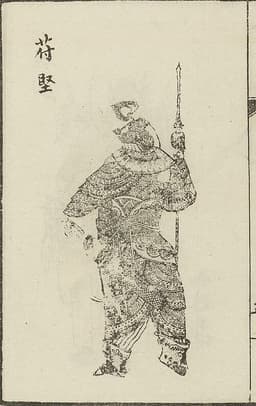
Fu Jian
Emperor · Ancient
64.4Total
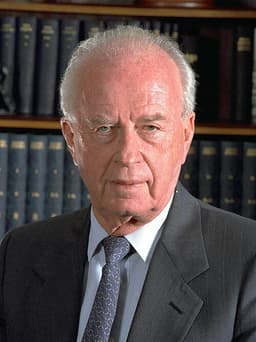
Yitzhak Rabin
General · Modern
66.4Total
Basic Information
Born
338
1922
Died
385
—
Era
Ancient
Modern
Nationality
China
Israel
Occupation
Emperor
General
Civilization
Eastern
Middle Eastern
Score Comparison
Military (10%)
78.0
61.7
Political (20%)
72.0
82.0
Influence (20%)
59.0
68.0
Legacy (20%)
50.0
55.0
Leadership (15%)
85.0
78.0
Strategy (15%)
58.0
55.0
TOTAL
64.4
66.4
Fu Jian — Complete Timeline
370 AD
Conquest of Former YanWar◆ Major
Fu Jian's Former Qin forces conquered the Former Yan state, annexing its territory in northern China. This victory significantly expanded Former Qin's power and territory, bringing Fu Jian closer to unifying the north.
ConquestExpansion
Impact: regionalconstructive
376 AD
Conquest of Former LiangWar◆ Major
Fu Jian's forces conquered the Former Liang state in the northwest, incorporating its territory into Former Qin. This further consolidated his control over northern China.
ConquestExpansion
Impact: regionalconstructive
Conquest of DaiWar
Fu Jian's army conquered the Dai state, a Xianbei confederation in the north. This eliminated a rival and extended Former Qin's influence into the steppe region.
ConquestExpansion
Impact: regionalconstructive
379 AD
Capture of XiangyangWar
Fu Jian's forces captured the strategic city of Xiangyang from the Eastern Jin dynasty. This victory gave Former Qin a foothold south of the Huai River, setting the stage for the invasion that led to the Battle of Fei River.
ConquestCampaign
Impact: regionalconstructive
383 AD
Battle of Fei RiverWar
Fu Jian led a massive Former Qin army against the Eastern Jin dynasty at the Fei River. The Jin forces defeated the Qin army, causing a catastrophic rout. This defeat shattered Fu Jian's unification efforts and led to the collapse of Former Qin.
BattleUnificationDefeat
Impact: regionaltragic
Yitzhak Rabin — Complete Timeline
1967 AD
Chief of Staff during the Six-Day WarWar
As Chief of Staff of the Israel Defense Forces, Rabin commanded the Israeli military during the Six-Day War against Egypt, Jordan, and Syria. Israel captured the Sinai Peninsula, Gaza Strip, West Bank, East Jerusalem, and Golan Heights, reshaping the region.
Six-Day WarTerritorial ExpansionMilitary Victory
Impact: global
1993 AD
Signing of the Oslo AccordsPolitical Action
As prime minister, Rabin signed the Oslo Accords with PLO Chairman Yasser Arafat on the White House lawn. The agreement established the Palestinian Authority and set a framework for Palestinian self-governance in the West Bank and Gaza Strip.
Peace ProcessPalestiniansOslo
Impact: globalconstructive
1995 AD
Assassination at Peace RallyPolitical Action
Rabin was assassinated by Israeli extremist Yigal Amir after a peace rally in Tel Aviv. The assassination shocked Israel and the world, derailing the Oslo peace process and leading to a period of political instability.
AssassinationPeace ProcessPolitical Violence
Impact: globaltragic
Expert Analysis
Fu Jian vs Yitzhak Rabin
# The Conqueror and the Peacemaker
On a November evening in 1995, Yitzhak Rabin folded a sheet of paper—the lyrics to “Song for Peace”—and placed it in his breast pocket, just moments before a gunshot would end his life. Thirteen centuries earlier and half a world away, Fu Jian watched his empire crumble at the Fei River, his dreams of unification sinking into the muddy waters of the Yangtze. Two men, each at the apex of power, each undone by a single moment that history would never let them forget. One sought to conquer; the other sought to reconcile. Both learned that the hardest battles are not against enemies, but against the forces that men cannot control.
Origins
Fu Jian was born in 338, a nephew of the founding emperor of Former Qin, a Di-ruled state that emerged from the chaos of the Sixteen Kingdoms period. His people were semi-nomadic, their power built on horseback and steel. He grew up in a world where survival meant expansion, where a ruler who did not conquer was soon conquered. By contrast, Yitzhak Rabin entered the world in 1922 in Jerusalem, then part of the British Mandate of Palestine. His parents were Labor Zionists, idealists who believed that Jews could build a homeland through hard work and collective effort. Rabin was not born into a royal lineage but into a movement—one that would demand not just military courage but political vision.
The eras shaped them profoundly. Fu Jian lived in an age of fragmentation, when northern China was a patchwork of warring states and the dream of reunification seemed a fantasy. Rabin came of age in the twentieth century, when nationalism and colonialism were reshaping the Middle East, and the Jewish people were fighting for a state that did not yet exist.
Rise to Power
Fu Jian ascended the throne of Former Qin in 357 at the age of nineteen, after a coup that removed his tyrannical cousin. He was young, ambitious, and surrounded by capable advisors—most notably Wang Meng, a brilliant prime minister who tempered the emperor’s grandiosity with pragmatism. Together, they transformed Former Qin into a military machine. In 370, Fu Jian conquered Former Yan, absorbing its vast territories. In 376, he swallowed Former Liang and the Dai confederation in quick succession. By 379, his forces had captured the strategic city of Xiangyang from the Eastern Jin dynasty. He seemed unstoppable.
Rabin’s rise was slower, forged in the crucible of war. He joined the Palmach, the elite strike force of the Jewish underground, and fought in Israel’s War of Independence in 1948. He rose through the ranks of the Israel Defense Forces, earning a reputation for coolness under fire. In 1967, as Chief of Staff, he commanded the IDF during the Six-Day War—a swift, devastating campaign that captured the Sinai, the Golan Heights, the West Bank, and East Jerusalem. The victory made him a national hero, but it also planted the seeds of a conflict that would define the rest of his life.
Leadership & Governance
Fu Jian ruled with a blend of generosity and naivety. He treated conquered enemies with leniency, incorporating their leaders into his court and allowing their peoples to retain their customs. He believed that benevolence could bind an empire together. But his magnanimity masked a strategic weakness: he failed to build a unified administrative system, relying instead on the loyalty of former rivals. When Wang Meng died in 375, Fu Jian lost his anchor. He began to listen to sycophants who told him what he wanted to hear—that his destiny was to conquer the south and unite all of China.
Rabin’s leadership was the opposite: cautious, analytical, and deeply aware of limits. As prime minister, he was not a charismatic speaker but a steady hand. He understood that Israel could not rule millions of Palestinians forever without losing its democratic soul. The Oslo Accords, signed in 1993 on the White House lawn, were his gamble—a bold attempt to trade land for peace. He shook hands with Yasser Arafat, a man he had once called an enemy, and the world watched in disbelief. Rabin knew the risks; he had spent his life calculating them. But he also knew that some risks are necessary.
Triumph & Tragedy
Fu Jian’s greatest triumph was also his undoing. In 383, he led an army of perhaps 300,000 men—some say more—south to crush the Eastern Jin dynasty. The two forces met at the Fei River. The Jin commander, Xie Xuan, proposed that the Qin army withdraw slightly to allow the Jin forces to cross and fight on open ground. Fu Jian agreed, seeing an opportunity to crush his enemy in a single blow. But the retreat turned into a rout. The Qin soldiers, many of them conscripts from conquered states, panicked. A rumor spread that the front had collapsed. The army dissolved into chaos, and Fu Jian fled, wounded in body and spirit. His empire unraveled within years.
Rabin’s triumph was the Oslo Accords, but his tragedy came two years later. On November 4, 1995, after a peace rally in Tel Aviv, a Jewish extremist named Yigal Amir stepped from the shadows and shot him three times. Rabin died on the operating table, the bloodstained song lyrics still in his pocket. The man who had led Israel to its greatest military victory was killed not by an Arab enemy, but by a fellow Jew who saw peace as betrayal.
Character & Destiny
Fu Jian was a dreamer in an age that demanded a realist. He believed that his personal virtue could overcome the fractures of his empire, that conquered peoples would love him if he were kind enough. But history does not reward sentimentality. His leniency bred contempt; his trust invited betrayal. He was a man who could win battles but not understand the forces he had unleashed.
Rabin was a realist who learned to dream. He had spent decades as a soldier, calculating odds and preparing for the worst. But the weight of command changed him. He came to see that security could not be achieved through walls and guns alone. His assassination was not just a political murder; it was a collision between two visions of Israel—one that saw peace as surrender, and one that saw it as survival.
Legacy
Fu Jian is remembered as a cautionary tale—a brilliant conqueror who reached too far and lost everything. His name appears in Chinese histories as a warning against arrogance and overreach. Yet his dream of unification did not die with him. Within two centuries, the Sui and Tang dynasties would achieve what he could not, and China would be whole again.
Rabin’s legacy is more ambiguous. He is revered as a martyr for peace, his name etched into the memory of Israelis who still sing “Song for Peace” at rallies. But the peace he sought remains elusive. The Oslo Accords did not bring a final settlement; they were followed by more violence, more mistrust, more bloodshed. Rabin’s assassination shattered the Israeli left and empowered the right, leading to years of stagnation and conflict.
Conclusion
Two men, two dreams, two falls. Fu Jian tried to unite China with an army; Rabin tried to reconcile Israelis and Palestinians with a handshake. Both failed, but their failures illuminate something essential about history: that the greatest leaders are often undone by their own virtues. Fu Jian’s generosity became his blindness; Rabin’s courage became his vulnerability. In the end, what remains is not the empire or the treaty, but the question that haunts every age: Can men ever overcome the forces they set in motion? The answer, written in the blood of conquerors and peacemakers alike, is never simple.
Rankings
🥇
Yitzhak RabinLeader
Mil: 61.7Pol: 82.0Inf: 68.0
66.4
🥈
Fu Jian
Mil: 78.0Pol: 72.0Inf: 59.0
64.4
+2.0 behind
How This Comparison Works
Algorithm
Each figure is scored on 6 dimensions (0—100 scale) based on structured historical data: Military (10%), Political (20%), Influence (20%), Legacy (20%), Leadership (15%), Strategy (15%). The weighted total produces the final ranking.
Data Sources
Scores are computed from structured sub-indicators in the database. Scale factors adjust for era (Ancient ×0.85, Modern ×1.0) and civilization size (Eastern ×1.05, Other ×0.80) to account for differences in population and military scale.
Maximum 3 Figures
Comparisons are limited to 2—3 figures to ensure readability and statistical meaningfulness.
Error Margins
±5 points per dimension — Sub-scores are derived from historical records with inherent uncertainty. Two figures within 5 points on a dimension should be considered roughly equivalent in that area.
Total Score Accuracy
±3 points overall — The weighted combination of 6 dimensions produces a total score with approximately ±3 points of uncertainty. Differences of less than 3 points are not statistically significant— the figures are effectively tied.
Known Limitations
- Historical records are incomplete and uneven across civilizations
- Figures from oral-tradition societies may be underrepresented
- Occupation labels can misclassify multi-role figures
- Scores measure capability and impact, not moral character
- Quantitative scoring is a comparison tool, not absolute truth
Capability Radar
Military (10%) — Battles & Warfare
Battles
75
65
Win Rate
70
70
Expansion
80
50
Political (20%) — Governance & Reform
Reform
70
65
Diplomacy
60
85
Economy
65
60
Influence (20%) — Cultural & Global Reach
Cultural
50
55
Global
45
70
Legacy (20%) — Historical Impact
Historical
60
75
Longevity
40
60
Leadership (15%) — Power & Stability
Tenure
65
70
Stability
55
40
Strategy (15%) — Tactics & Innovation
Strategy
70
75
Tactics
65
60
Reform
60
55
Similar Comparisons
Comments & Discussion
历史侦探6/16/2026
符坚是个被高估的军阀。淝水之战前,他灭前燕、吞前凉,看着威风,但军队全是杂牌军——鲜卑、羌人、氐族将领各怀鬼胎。他以为草原骑兵能淹死东晋,却忘了人心不齐。反观拉宾,他1967年六日战争中指挥以军闪电战,那是真本事;后来转身搞和平,更是胆识。符坚只会用刀剑,拉宾会用脑子。一征服,一和解,高下立判。
Peacemonger6/16/2026
Let’s be real: Fu Jian’s empire was a house of cards. He conquered by force, but his Former Qin was a mash-up of tribes that hated each other—no loyalty, just fear. At Fei River, his own general, Murong Chui, secretly plotted rebellion. Rabin, on the other hand, built peace on trust, not terror. He shook hands with Arafat on the White House lawn in 1993, risking his life for a ceasefire. Fu Jian’s fall was inevitable; Rabin’s assassination was a tragedy. One failed because he ignored human natur
经典迷弟6/16/2026
拿拉宾这种现代政治家跟十六国枭雄比?别搞笑了。符坚统一北方时,拉宾的祖宗还在欧洲流浪呢。淝水之战失败是战略失误,但前秦在低谷时治理得不错——他实行文教,推广儒学,比同时代暴君强多了。拉宾呢?他任内扩大定居点,压榨巴勒斯坦人,所谓和平就是个幌子。符坚至少敢直面敌人,而拉宾只敢谈条件。我站符坚,真汉子,不乱甩锅。
Revisionist Vibe6/16/2026
Everyone romanticizes Rabin as a saint, but he was a military hawk first. As IDF chief, he crushed Palestinian resistance in ’67 and later ordered “break their bones” tactics in the First Intifada. His turn to peace in the ’90s was pragmatic, not moral—Israel couldn’t win forever. Fu Jian? Same
Chronicler28086/16/2026
Fu Jian was a fool who thought numbers alone win wars. At Fei River, he had 870,000 men against 80,000—that’s a 10-to-1 advantage, and he still lost. He ordered a retreat to lure the enemy across, but his army panicked, routed by rumors. Compare that to Rabin, who understood that true strength is knowing when not to fight. Rabin signed the Oslo Accords, cutting deals with his enemies. Fu Jian? He just crushed everything in his path… until it crushed him. History’s lesson? Brains beat brawn.