Loading...
Al-Mustansir vs Zhu Wen
Al-Mustansir leads by 5.3 pts · 2 figures compared
…
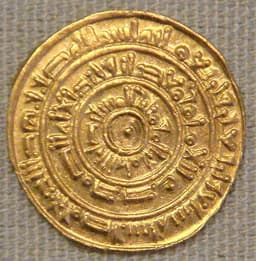
Al-Mustansir
Emperor · Medieval
55.6Total
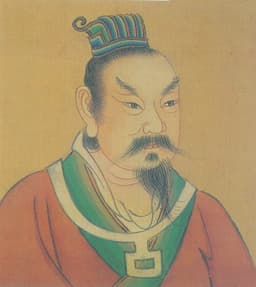
Zhu Wen
Emperor · Medieval
50.3Total
Basic Information
Born
1192
852
Died
1242
912
Era
Medieval
Medieval
Nationality
Abbasid Caliphate
China
Occupation
Emperor
Emperor
Civilization
Middle Eastern
Eastern
Score Comparison
Military (10%)
20.0
72.5
Political (20%)
68.0
35.1
Influence (20%)
55.0
53.3
Legacy (20%)
58.0
45.8
Leadership (15%)
71.0
48.4
Strategy (15%)
45.0
57.5
TOTAL
55.6
50.3
Al-Mustansir — Complete Timeline
1227 AD
Foundation of the Mustansiriya MadrasaCultural◆ Major
Al-Mustansir established the Mustansiriya Madrasa in Baghdad, a major educational institution that taught Islamic law, medicine, mathematics, and literature. It became one of the most prominent centers of learning in the medieval Islamic world, operating for centuries.
Impact: regionalconstructive
Zhu Wen — Complete Timeline
881 AD
Rebellion against TangWar◆ Major
Zhu Wen, originally a rebel under Huang Chao, defected to the Tang dynasty in 882. He was granted the name Zhu Quanzhong and became a key general, eventually turning against the Tang and seizing control of the imperial court.
Tang DynastyRebellionPower Seizure
Impact: nationaldestructive
904 AD
Assassination of Emperor ZhaozongPolitical Action◆ Major
Zhu Wen ordered the murder of Emperor Zhaozong of Tang and installed the young Emperor Ai as a puppet. This act eliminated the last effective Tang ruler and paved the way for Zhu Wen's usurpation.
Tang DynastyAssassinationUsurpation
Impact: nationaldestructive
907 AD
Founded Later Liang DynastyPolitical Action
Zhu Wen forced Emperor Ai to abdicate and proclaimed himself emperor, founding the Later Liang dynasty. This ended the Tang dynasty and began the Five Dynasties and Ten Kingdoms period in China.
Five DynastiesLater LiangDynastic Change
Impact: national
910 AD
Defeated by Li Cunxu at Battle of BaixiangWar◆ Major
Zhu Wen's Later Liang forces were decisively defeated by Li Cunxu's Jin army at Baixiang. This loss weakened Later Liang's control in the north and emboldened rival states.
Later LiangJinBattle
Impact: regionaltragic
912 AD
Assassinated by his son Zhu YouguiPolitical Action◆ Major
Zhu Wen was murdered by his own son Zhu Yougui, who then seized the throne. The assassination plunged Later Liang into internal strife and contributed to its eventual collapse.
Later LiangAssassinationDynastic Crisis
Impact: nationaltragic
Expert Analysis
Al-Mustansir vs Zhu Wen
### The Emperor Who Ended an Age, and the Caliph Who Built a School
In the year 907, a warlord named Zhu Wen forced a child emperor to abdicate, extinguishing the Tang dynasty after nearly three centuries of glory. In the same century, across the Islamic world, a caliph named Al-Mustansir laid the foundation stone of a madrasa that would become the intellectual heart of Baghdad. One man tore down an empire; the other built a school. Their stories, unfolding in the same medieval era, ask a haunting question: what makes a ruler choose destruction over creation?
**Origins**
Zhu Wen was born in 852 into a world already fraying. The Tang dynasty, once the most powerful empire on earth, was rotting from within—corrupt eunuchs, rebellious generals, and a peasantry crushed by taxes. Zhu Wen himself was a peasant, illiterate, rough-edged, and hungry. When the great rebel Huang Chao swept through China, Zhu Wen joined him, not out of ideology but survival. He was a man of the campfire and the sword, not the scholar’s hall.
Al-Mustansir, born in 1192, was a prince of the Abbasid dynasty, a lineage that claimed descent from the Prophet’s uncle. He grew up in a Baghdad that was still the fabled "City of Peace," though the caliphate’s political power had long been eclipsed by the Seljuks and other warlords. The Abbasid caliphs were no longer conquerors; they were spiritual figureheads, patrons of culture, and guardians of orthodoxy. Al-Mustansir was groomed for ceremony, not conquest.
**Rise to Power**
Zhu Wen’s path was soaked in blood. In 881, he was a rebel under Huang Chao, but by 882 he defected to the Tang, sensing that the rebel cause was doomed. The Tang court, desperate for any loyal general, granted him the new name "Zhu Quanzhong"—"Loyalty Personified." It was a bitter irony. He used the Tang’s trust to crush other rebels, then to eliminate rival generals, and finally to control the imperial court. By 904, he ordered the assassination of Emperor Zhaozong, replacing him with a child puppet. In 907, he forced that child to abdicate and declared himself emperor of the Later Liang dynasty. The Tang dynasty ended not with a bang, but with a strangled whisper.
Al-Mustansir’s rise was quiet by comparison. He became caliph in 1226, inheriting a throne that was more symbolic than sovereign. He did not conquer armies; he presided over them. His power was limited to Baghdad and its environs, and his greatest weapon was not a sword but a decree. Yet within this narrow sphere, he chose to act.
**Leadership & Governance**
Zhu Wen ruled as a soldier-emperor. He was ruthless, pragmatic, and suspicious. He purged the old Tang aristocracy, replacing them with his own military cronies. He tried to restore order after decades of chaos, repairing canals and granaries. But his regime was brittle. His Later Liang dynasty faced constant war from the Shatuo Turks under Li Cunxu, a rival who claimed to restore the Tang. In 910, Zhu Wen suffered a crushing defeat at the Battle of Baixiang. His military genius, once his greatest asset, began to fail him. He grew paranoid, alienated his sons, and trusted no one.
Al-Mustansir governed as a patron. In 1227, he founded the Mustansiriya Madrasa in Baghdad, an institution that taught not only Islamic law but also medicine, mathematics, and literature. It was one of the first universities in the world, with a library, a hospital, and an endowment that supported students and teachers. He did not fight wars; he funded scholarship. His political wisdom lay in understanding that the caliphate’s real power was cultural and religious, not military. He built a legacy that outlasted armies.
**Triumph & Tragedy**
Zhu Wen’s triumph was his destruction of the Tang—a feat that had eluded rebels for decades. But it was a hollow victory. His dynasty lasted only sixteen years. His tragedy came in 912, when his own son Zhu Yougui, fearing disinheritance, assassinated him in the palace. The man who had murdered emperors was murdered by his own blood. The Later Liang collapsed into civil war, and within a decade, it was gone.
Al-Mustansir’s triumph was the Madrasa, which became a beacon of learning for centuries. But his tragedy was the shadow of what was to come. In 1258, just sixteen years after his death, the Mongols sacked Baghdad. The Mustansiriya Madrasa was burned, its library thrown into the Tigris, the ink of centuries flowing like blood. Yet even in destruction, the school’s reputation survived. It was rebuilt, and its model influenced madrasas across the Islamic world.
**Character & Destiny**
Zhu Wen was a man shaped by scarcity and betrayal. He rose from nothing and trusted no one. His paranoia was his downfall; he could not build a stable succession because he could not trust his own sons. His character was forged in war, and war consumed him. Al-Mustansir, by contrast, was a man of privilege and piety. He did not need to fight for survival, so he could afford to think beyond the next battle. His destiny was to preserve, not to destroy. One man’s ambition ended an age; the other’s ambition built a monument to learning.
**Legacy**
Zhu Wen is remembered as the usurper who ended the Tang, a figure of ambition and tragedy. His Later Liang is a footnote in Chinese history, a brief, bloody interlude before the Song dynasty reunified the land. Al-Mustansir is remembered as a builder, a caliph who chose knowledge over power. The Mustansiriya Madrasa still stands in Baghdad, rebuilt and restored, a testament to what a ruler can achieve when he builds rather than burns.
**Conclusion**
History remembers the destroyers and the builders, but it judges them differently. Zhu Wen broke an empire that had lasted three centuries, only to see his own dynasty crumble in a decade. Al-Mustansir built a school that, though burned, was rebuilt and remembered. One man’s legacy is a dynasty that failed; the other’s is an idea that endured. Perhaps the deepest lesson is not about power, but about purpose. The caliph who chose to build left a mark on the world that the emperor who chose to destroy could never match. In the end, the school outlasted the sword.
Rankings
🥇
Al-MustansirLeader
Mil: 20.0Pol: 68.0Inf: 55.0
55.6
🥈
Zhu Wen
Mil: 72.5Pol: 35.1Inf: 53.3
50.3
+5.3 behind
How This Comparison Works
Algorithm
Each figure is scored on 6 dimensions (0—100 scale) based on structured historical data: Military (10%), Political (20%), Influence (20%), Legacy (20%), Leadership (15%), Strategy (15%). The weighted total produces the final ranking.
Data Sources
Scores are computed from structured sub-indicators in the database. Scale factors adjust for era (Ancient ×0.85, Modern ×1.0) and civilization size (Eastern ×1.05, Other ×0.80) to account for differences in population and military scale.
Maximum 3 Figures
Comparisons are limited to 2—3 figures to ensure readability and statistical meaningfulness.
Error Margins
±5 points per dimension — Sub-scores are derived from historical records with inherent uncertainty. Two figures within 5 points on a dimension should be considered roughly equivalent in that area.
Total Score Accuracy
±3 points overall — The weighted combination of 6 dimensions produces a total score with approximately ±3 points of uncertainty. Differences of less than 3 points are not statistically significant— the figures are effectively tied.
Known Limitations
- Historical records are incomplete and uneven across civilizations
- Figures from oral-tradition societies may be underrepresented
- Occupation labels can misclassify multi-role figures
- Scores measure capability and impact, not moral character
- Quantitative scoring is a comparison tool, not absolute truth
Capability Radar
Military (10%) — Battles & Warfare
Battles
5
65
Win Rate
5
60
Expansion
5
55
Political (20%) — Governance & Reform
Reform
70
25
Diplomacy
40
35
Economy
50
30
Influence (20%) — Cultural & Global Reach
Cultural
70
25
Global
50
15
Legacy (20%) — Historical Impact
Historical
65
45
Longevity
60
20
Leadership (15%) — Power & Stability
Tenure
60
40
Stability
30
20
Strategy (15%) — Tactics & Innovation
Strategy
5
60
Tactics
5
55
Reform
5
30
Similar Comparisons
Comments & Discussion
SwordAndScorchedEarth6/16/2026
Zhu Wen wasn't just a destroyer—he was a survivor who understood power's ugly mechanics. Tang China was a corpse, rotting from within, and he merely gave it a burial. Meanwhile, Al-Mustansir built his Madrasa while Baghdad's political walls were already crumbling. Give me the peasant warlord any day: at least he had the guts to admit civilization runs on force, not libraries. The Caliph was polishing brass on a sinking ship.