Loading...
Al-Mustansir vs Napoleon Bonaparte
Napoleon Bonaparte leads by 15.3 pts · 2 figures compared
…
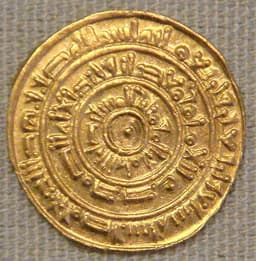
Al-Mustansir
Emperor · Medieval
55.6Total

Napoleon Bonaparte
General · Modern
70.9Total
Basic Information
Born
1192
1769
Died
1242
1821
Era
Medieval
Modern
Nationality
Abbasid Caliphate
France
Occupation
Emperor
General
Civilization
Middle Eastern
Western
Score Comparison
Military (10%)
20.0
94.0
Political (20%)
68.0
72.0
Influence (20%)
55.0
40.0
Legacy (20%)
58.0
80.0
Leadership (15%)
71.0
78.0
Strategy (15%)
45.0
90.0
TOTAL
55.6
70.9
Al-Mustansir — Complete Timeline
1227 AD
Foundation of the Mustansiriya MadrasaCultural◆ Major
Al-Mustansir established the Mustansiriya Madrasa in Baghdad, a major educational institution that taught Islamic law, medicine, mathematics, and literature. It became one of the most prominent centers of learning in the medieval Islamic world, operating for centuries.
Impact: regionalconstructive
Napoleon Bonaparte — Complete Timeline
1799 AD
Coup of 18 BrumaireOther◆ Major
Napoleon Bonaparte, with support from his brother Lucien and key political figures, overthrew the Directory in a bloodless coup. He established the Consulate with himself as First Consul, effectively becoming the ruler of France. This event ended the French Revolution's most unstable period.
French RevolutionCoupRise to Power
Impact: regional
1804 AD
Promulgation of the Napoleonic CodeOther◆ Major
Napoleon enacted the Civil Code of the French, known as the Napoleonic Code, a comprehensive set of laws that replaced the fragmented feudal legal systems. The code established legal equality, protected property rights, and secularized law. It became the basis for legal systems in many European and world countries.
Legal ReformNapoleonic CodeCivil Law
Impact: globalconstructive
1805 AD
Battle of AusterlitzWar◆ Major
Napoleon's Grande Arm
Napoleonic WarsBattleDecisive Victory
Impact: global
1812 AD
Invasion of RussiaWar◆ Major
Napoleon led the Grande Arm
Napoleonic WarsInvasionDisaster
Impact: globaldestructive
1815 AD
Battle of WaterlooWar◆ Major
Napoleon's French army was defeated by the combined forces of the Duke of Wellington's Anglo-Allied army and Gebhard Leberecht von Bl
Napoleonic WarsBattleFinal Defeat
Impact: globaldestructive
Expert Analysis
Napoleon Bonaparte vs Al-Mustansir
# The Emperor and the Scholar: Two Visions of Power
In the winter of 1227, as Baghdad’s scholars gathered beneath the soaring arches of a newly built madrasa, a very different kind of drama was unfolding on the other side of the world. Al-Mustansir, the Abbasid caliph, stood at the dedication of his greatest creation—the Mustansiriya Madrasa, a temple of learning that would house students of law, medicine, and theology. Across the centuries and continents, Napoleon Bonaparte would one day stand before the Pyramids, telling his army that forty centuries looked down upon them. One man built an empire of books and ideas; the other built an empire of blood and iron. What drove these two leaders to such radically different paths?
Origins
Napoleon Bonaparte was born in 1769 on the island of Corsica, a place that had only recently become French. His family was minor nobility, but they were poor, and their accent marked them as outsiders in the French mainland. This sense of being an outsider would fuel a ferocious ambition. The French Revolution, erupting when Napoleon was just twenty, shattered the old order and opened doors that had been bolted shut for centuries. A young artillery officer with talent and hunger could rise faster than ever before.
Al-Mustansir was born in 1192 into the Abbasid Caliphate, a dynasty that had ruled the Islamic world for nearly five centuries. But by his time, the caliphate was a shadow of its former glory. The Mongols were gathering on the eastern horizon, and the caliphs had long since lost their temporal power to warlords and sultans. Al-Mustansir inherited a title that was more symbolic than real—he was the spiritual leader of Sunni Islam, but his actual authority barely extended beyond Baghdad’s walls. His world was one of decline and fragility, not revolution and opportunity.
Rise to Power
Napoleon’s ascent was a masterclass in seizing the moment. By his mid-twenties, he had already distinguished himself at the Siege of Toulon in 1793, where his artillery tactics broke a British siege. Then came the Italian campaign of 1796, where he transformed a ragged French army into a conquering force, winning battle after battle against the Austrians. Each victory was a stepping stone. By 1799, he was confident enough to stage a coup d’état, declaring himself First Consul. The man who would crown himself emperor in 1804 had climbed the ladder of revolution and pulled it up behind him.
Al-Mustansir’s path was quieter. He became caliph in 1226, inheriting a position that had been negotiated and constrained for generations. His power came not from conquest but from tradition and religious legitimacy. Where Napoleon fought his way to the top, Al-Mustansir was born into the top, only to find it curiously empty. His one great act of assertion was the founding of the Mustansiriya Madrasa in 1227, a decision that reflected his understanding that in a world of crumbling walls, the only true fortress was knowledge.
Leadership & Governance
Napoleon governed with the energy of a man who believed he could reshape the world by sheer will. His Napoleonic Code, introduced in 1804, standardized French law and became a model for legal systems across Europe and beyond. He reformed education, built roads, and centralized the state. But his genius was military. With a strategic score of 93, he was one of history’s greatest commanders, winning spectacular victories at Austerlitz in 1805 and Jena in 1806. He understood terrain, timing, and the psychology of his enemies. Yet his political score of 75 reflects a fatal flaw: he could conquer but could not consolidate. His governance was a one-man show, and when the star stumbled, the whole edifice collapsed.
Al-Mustansir’s leadership was entirely different. With a military score of just 37, he was no general. But his political score of 66.6 and leadership score of 74.4 suggest a ruler who understood the long game. The Mustansiriya Madrasa was not just a school; it was a statement. In an age of war and chaos, Al-Mustansir invested in the mind. The madrasa taught four major schools of Islamic law, as well as medicine, mathematics, and literature. It attracted scholars from across the Islamic world and became a beacon of intellectual life. Al-Mustansir governed through patronage and piety, not through conquest. His legacy was built on foundations of ink, not blood.
Triumph & Tragedy
Napoleon’s greatest triumph was Austerlitz, where he crushed the combined armies of Russia and Austria in a single day. His greatest tragedy was the invasion of Russia in 1812. He marched with half a million men; he returned with fewer than a hundred thousand. The Russian winter, the vast distances, and his own overconfidence destroyed the Grand Army. Exiled to Elba in 1814, he returned for a hundred days, only to meet final defeat at Waterloo in 1815. His tragedy was the tragedy of hubris—the man who could not stop.
Al-Mustansir’s triumph was quieter but more enduring. The Mustansiriya Madrasa stood for centuries, surviving the Mongol sack of Baghdad in 1258—though Al-Mustansir himself did not live to see that catastrophe. He died in 1242, his life a calm interlude between storms. His tragedy was that his vision of a learned, stable caliphate could not withstand the Mongol horde. Within sixteen years of his death, Baghdad would be destroyed, and the Abbasid Caliphate would fall.
Character & Destiny
Napoleon’s character was forged in the fires of ambition and insecurity. He was brilliant, ruthless, and relentlessly driven. “Impossible is a word to be found only in the dictionary of fools,” he once said. His destiny was to rise higher than any man of his age, and to fall further. His personality shaped every decision: the need to prove himself, the refusal to share power, the belief that he was the master of fate. In the end, fate proved otherwise.
Al-Mustansir’s character was shaped by his inheritance. He was a caretaker of a dying institution, and he knew it. His choice to build a madrasa rather than an army suggests a man who valued permanence over power. He understood that ideas outlast empires. Where Napoleon sought to conquer the world, Al-Mustansir sought to educate it.
Legacy
Napoleon’s legacy is written in law codes, national borders, and the very concept of modern warfare. He is remembered as a military genius and a tyrant, a reformer and a destroyer. His influence score of 82 and legacy score of 78 reflect a man who changed the world, for better and for worse.
Al-Mustansir’s legacy is more subtle but no less real. The Mustansiriya Madrasa became a model for universities across the Islamic world and beyond. His influence score of 72.3 and legacy score of 68.5 are modest by Napoleon’s standards, but they measure a different kind of greatness. He built something that lasted, not through conquest, but through cultivation.
Conclusion
Standing before the ruins of the Mustansiriya Madrasa today, or walking through the streets of Paris that Napoleon rebuilt, one feels the weight of two different answers to the same question: What does it mean to lead? Napoleon answered with the sword, Al-Mustansir with the book. One conquered nations, the other conquered ignorance. In the end, the madrasa outlasted the empire, and the scholar’s quiet vision may have done more for humanity than the general’s thunderous ambition. The question remains: Which kind of power endures?
Rankings
🥇
Napoleon BonaparteLeader
Mil: 94.0Pol: 72.0Inf: 40.0
70.9
🥈
Al-Mustansir
Mil: 20.0Pol: 68.0Inf: 55.0
55.6
+15.3 behind
How This Comparison Works
Algorithm
Each figure is scored on 6 dimensions (0—100 scale) based on structured historical data: Military (10%), Political (20%), Influence (20%), Legacy (20%), Leadership (15%), Strategy (15%). The weighted total produces the final ranking.
Data Sources
Scores are computed from structured sub-indicators in the database. Scale factors adjust for era (Ancient ×0.85, Modern ×1.0) and civilization size (Eastern ×1.05, Other ×0.80) to account for differences in population and military scale.
Maximum 3 Figures
Comparisons are limited to 2—3 figures to ensure readability and statistical meaningfulness.
Error Margins
±5 points per dimension — Sub-scores are derived from historical records with inherent uncertainty. Two figures within 5 points on a dimension should be considered roughly equivalent in that area.
Total Score Accuracy
±3 points overall — The weighted combination of 6 dimensions produces a total score with approximately ±3 points of uncertainty. Differences of less than 3 points are not statistically significant— the figures are effectively tied.
Known Limitations
- Historical records are incomplete and uneven across civilizations
- Figures from oral-tradition societies may be underrepresented
- Occupation labels can misclassify multi-role figures
- Scores measure capability and impact, not moral character
- Quantitative scoring is a comparison tool, not absolute truth
Capability Radar
Military (10%) — Battles & Warfare
Battles
5
95
Win Rate
5
90
Expansion
5
95
Political (20%) — Governance & Reform
Reform
70
95
Diplomacy
40
80
Economy
50
85
Influence (20%) — Cultural & Global Reach
Cultural
70
85
Global
50
90
Legacy (20%) — Historical Impact
Historical
65
95
Longevity
60
90
Leadership (15%) — Power & Stability
Tenure
60
85
Stability
30
70
Strategy (15%) — Tactics & Innovation
Strategy
5
95
Tactics
5
98
Reform
5
92
Similar Comparisons
Comments & Discussion
TheIronLegion6/16/2026
Let’s be honest, comparing Napoleon to Al-Mustansir is like comparing a thunderstorm to a library. Napoleon reshaped Europe’s political map with cannon and code, sparking nationalism and legal reform that outlived his empire. Al-Mustansir built a school. A beautiful school, sure, but when the Mongols sacked Baghdad in 1258, that madrasa burned with everything else. Napoleon’s impact—the Napoleonic Code, the sold-out French bureaucracy—still runs the West today. Give me the blood-and-iron emperor
数据之眼6/16/2026
拿数据说话:拿破仑在位约15年,直接参与超过60场战役,控制了欧洲大陆超70万平方公里的领土,改变了法国的法律、教育和行政体系。而穆斯坦绥尔在位33年,留下的最大遗产居然是一所只能容纳几百学生的学校,且其哈里发国在30年后就被彻底灭掉。如果你要比较历史影响力,拿破仑的“命中率”和“范围”完全碾压对手。这位“学者”君主在位时间更长,产出却极为有限——这不是偏爱战争,而是尊重历史数据。
MarengoMemoirs6/16/2026
Napoleon wasn’t just a conqueror—he was a ruthless reformer who weaponized meritocracy. Born an outsider Corsican with a funny accent, he crashed through French aristocracy’s doors by sheer talent and audacity. He didn’t just win battles; he standardized laws, created the Legion of Honor, and forced a continent to adopt modern administration. Al-Mustansir, by contrast, inherited a fading dynasty and built a madrasa that, however impressive, was more a monument to decline than a vibrant scholarly
纸老虎批判家6/16/2026
少来美化“学者哈里发”形象。穆斯坦绥尔所谓的“文化繁荣”不过是回光返照——他的巴格达当时已四分五裂,地方军阀割据,他这个哈里发连薪水都发不全,建一所跟风式的神学院就能叫“文明”?别忘了,他统治期间还发生了著名的“黑云旗事件”,穆斯林内部自相残杀。相比之下,拿破仑虽然侵略成性,但他把法国革命的火种传遍欧洲,打破了封建枷锁。一个守着空壳王朝建了一所学校的统治者,和一个从零创建现代国家的帝王,有什么可比性?