Loading...
Al-Mustansir vs Pachacuti
Pachacuti leads by 13.8 pts · 2 figures compared
…
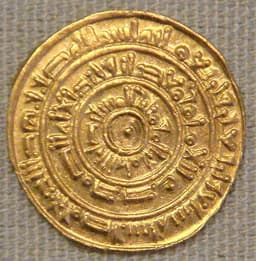
Al-Mustansir
Emperor · Medieval
55.6Total
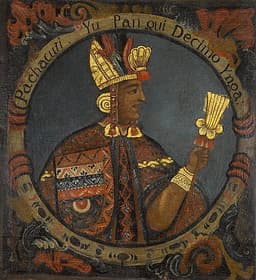
Pachacuti
Emperor · Medieval
69.4Total
Basic Information
Born
1192
1418
Died
1242
1472
Era
Medieval
Medieval
Nationality
Abbasid Caliphate
Inca Empire
Occupation
Emperor
Emperor
Civilization
Middle Eastern
Other
Score Comparison
Military (10%)
20.0
78.5
Political (20%)
68.0
58.1
Influence (20%)
55.0
65.0
Legacy (20%)
58.0
72.0
Leadership (15%)
71.0
78.0
Strategy (15%)
45.0
69.2
TOTAL
55.6
69.4
Al-Mustansir — Complete Timeline
1227 AD
Foundation of the Mustansiriya MadrasaCultural◆ Major
Al-Mustansir established the Mustansiriya Madrasa in Baghdad, a major educational institution that taught Islamic law, medicine, mathematics, and literature. It became one of the most prominent centers of learning in the medieval Islamic world, operating for centuries.
Impact: regionalconstructive
Pachacuti — Complete Timeline
1438 AD
Conquest of the Chanka KingdomWar
Pachacuti led the Inca army to defeat the Chanka, a powerful rival, in a decisive battle near Cusco. This victory secured his position as Sapa Inca and initiated a period of rapid expansion, transforming the Inca from a small kingdom into a vast empire.
ConquestInca ExpansionChanka
Impact: regional
1440 AD
Reconstruction of CuscoCultural◆ Major
Pachacuti rebuilt Cusco as the imperial capital, designing it in the shape of a puma and constructing massive stone structures like Sacsayhuam
Urban PlanningArchitectureInca Empire
Impact: regionalconstructive
1450 AD
Initiation of Machu Picchu's ConstructionCultural◆ Major
Pachacuti ordered the construction of Machu Picchu, a royal estate and ceremonial site high in the Andes. The complex featured sophisticated dry-stone masonry and terraced agriculture, serving as a symbol of Inca engineering and a retreat for the emperor.
ArchitectureRoyal EstateInca Engineering
Impact: regionalconstructive
Expert Analysis
Pachacuti vs Al-Mustansir
The Builder and the Scholar
In the high Andes, a warrior-king reshapes mountains into monuments. In the heart of Baghdad, a caliph builds libraries that will outlast his dynasty. One man’s legacy is carved in stone and blood; the other’s is written in ink and ideas. Pachacuti Inca Yupanqui and Al-Mustansir, both medieval rulers, faced the same fundamental question: How does a leader leave a mark that outlives his reign? Their answers could not have been more different, and the reasons lie deep in the worlds they inherited.
Origins
Pachacuti was born in 1418 into a world of stone and sky. The Inca were then a small kingdom in the Cusco Valley, surrounded by powerful rivals like the Chanka. He was not the eldest son, nor the expected heir. His name, meaning “he who shakes the earth,” was prophetic. The Inca world was one of harsh geography, constant warfare, and a belief that the Sapa Inca was a living god, the son of Inti, the sun. Survival demanded strength, cunning, and the willingness to spill blood.
Al-Mustansir, born in 1192, entered a very different world. The Abbasid Caliphate, once the center of the Islamic world, was a shadow of its former glory. The caliphs in Baghdad were figureheads, their power hollowed out by centuries of Turkic warlords and the rise of the Ayyubids and Seljuks. The caliphate’s true strength lay not in armies but in its legacy as the seat of learning, law, and religious authority. To be a caliph in the 13th century was to preside over a memory, not an empire.
Rise to Power
Pachacuti’s rise was born of crisis. In 1438, when he was a prince, the Chanka Kingdom attacked Cusco. His father, the Sapa Inca Viracocha, fled the city with his chosen heir. Pachacuti refused to retreat. Gathering what warriors remained, he led a desperate defense. The chroniclers say he fought with such fury that the Chanka were routed. The victory was total, and it transformed him. He returned not as a prince but as the new Sapa Inca. The old order had failed; the new one would be built on his will.
Al-Mustansir’s path was quieter. He became caliph in 1226, inheriting a throne that had been reduced to a religious and ceremonial role. His power was not won on a battlefield but through the careful politics of succession and the tacit acceptance of the surrounding powers. He was a ruler who had to govern through influence, not force.
Leadership & Governance
Pachacuti was a military genius and an administrative revolutionary. His strategy was not merely to conquer but to incorporate. After defeating a tribe, he would offer them a choice: submit and become part of the Inca system, with its roads, storehouses, and state religion, or face annihilation. He rebuilt Cusco in the shape of a puma, a sacred animal, and initiated the construction of Machu Picchu around 1450 as a royal estate high in the Andes. His reforms were total: he imposed Quechua as the official language, created a system of tribute, and organized the empire into four provinces. His leadership score of 84.5 reflects a ruler who commanded absolute loyalty through a mixture of terror and reward.
Al-Mustansir ruled through a different kind of power. His military score of 37.0 is a stark contrast. He was not a conqueror. But his political score of 66.6 and leadership score of 74.4 show a man who understood the power of institutions. In 1227, he founded the Mustansiriya Madrasa in Baghdad. This was not just a school; it was a university that taught law, medicine, mathematics, and astronomy. It was open to all, regardless of sect. In an age of fragmentation, Al-Mustansir built a house of knowledge that would outlast the caliphate itself.
Triumph & Tragedy
Pachacuti’s greatest triumph was the transformation of a small kingdom into the largest empire in the pre-Columbian Americas. He conquered the Chanka, the Colla, and the Lupaca, extending Inca control from modern-day Ecuador to Chile. His tragedy was that he could not stop time. He died in 1472, leaving a vast, centralized state that would, within a century, collapse under the weight of civil war and Spanish invasion. His empire was a monument to his will, but it was brittle.
Al-Mustansir’s triumph was the Mustansiriya Madrasa. It became a beacon of learning that attracted scholars from across the Islamic world. His tragedy was that he could not stop the Mongols. In 1258, just sixteen years after his death, Hulagu Khan’s armies sacked Baghdad. The caliphate was extinguished. The Mustansiriya Madrasa was damaged but not destroyed. It survived the Mongol sack, a testament to the power of knowledge over brute force.
Character & Destiny
Pachacuti was a man of action, driven by a belief in his own divinity and destiny. He saw the world as something to be shaped, conquered, and ordered. His character was that of a relentless builder, both of stone and of systems. He was ruthless, visionary, and utterly pragmatic. His destiny was to create an empire that would be remembered for its engineering, its roads, and its tragedy.
Al-Mustansir was a man of preservation. He understood that in a world of shifting power, the only true legacy was knowledge. His character was that of a scholar-king, patient and far-sighted. He built not for the immediate glory of conquest but for the slow, enduring glory of learning. His destiny was to create an institution that would survive the apocalypse of his own civilization.
Legacy
Pachacuti is remembered as the father of the Inca Empire. Machu Picchu, Cusco’s stone walls, and the vast network of Inca roads are his monuments. His legacy score of 66.1 reflects a ruler whose works are still visited and marveled at, but whose empire was destroyed.
Al-Mustansir’s legacy is quieter but perhaps deeper. The Mustansiriya Madrasa is considered a precursor to modern universities. It influenced the development of education in the Islamic world and, through it, the European Renaissance. His legacy score of 68.5 is a testament to the power of ideas.
Conclusion
Pachacuti and Al-Mustansir represent two faces of leadership. One built an empire of stone and blood that crumbled within a century. The other built a house of learning that survived the Mongol horde. Their differences were not just personal but civilizational. Pachacuti ruled a world where the only way to survive was to conquer. Al-Mustansir ruled a world where the only way to endure was to teach. In the end, the scholar’s legacy outlasted the warrior’s. The stones of Machu Picchu are silent, but the ideas taught in the Mustansiriya Madrasa still echo.
Rankings
🥇
PachacutiLeader
Mil: 78.5Pol: 58.1Inf: 65.0
69.4
🥈
Al-Mustansir
Mil: 20.0Pol: 68.0Inf: 55.0
55.6
+13.8 behind
How This Comparison Works
Algorithm
Each figure is scored on 6 dimensions (0—100 scale) based on structured historical data: Military (10%), Political (20%), Influence (20%), Legacy (20%), Leadership (15%), Strategy (15%). The weighted total produces the final ranking.
Data Sources
Scores are computed from structured sub-indicators in the database. Scale factors adjust for era (Ancient ×0.85, Modern ×1.0) and civilization size (Eastern ×1.05, Other ×0.80) to account for differences in population and military scale.
Maximum 3 Figures
Comparisons are limited to 2—3 figures to ensure readability and statistical meaningfulness.
Error Margins
±5 points per dimension — Sub-scores are derived from historical records with inherent uncertainty. Two figures within 5 points on a dimension should be considered roughly equivalent in that area.
Total Score Accuracy
±3 points overall — The weighted combination of 6 dimensions produces a total score with approximately ±3 points of uncertainty. Differences of less than 3 points are not statistically significant— the figures are effectively tied.
Known Limitations
- Historical records are incomplete and uneven across civilizations
- Figures from oral-tradition societies may be underrepresented
- Occupation labels can misclassify multi-role figures
- Scores measure capability and impact, not moral character
- Quantitative scoring is a comparison tool, not absolute truth
Capability Radar
Military (10%) — Battles & Warfare
Battles
5
85
Win Rate
5
90
Expansion
5
90
Political (20%) — Governance & Reform
Reform
70
92
Diplomacy
40
75
Economy
50
80
Influence (20%) — Cultural & Global Reach
Cultural
70
85
Global
50
65
Legacy (20%) — Historical Impact
Historical
65
80
Longevity
60
70
Leadership (15%) — Power & Stability
Tenure
60
85
Stability
30
82
Strategy (15%) — Tactics & Innovation
Strategy
5
88
Tactics
5
80
Reform
5
85
Similar Comparisons
Comments & Discussion
PACHAMANIAC6/16/2026
Pachacuti wasn’t just a builder, he was a geopolitical genius who turned the Inca from a Cusco city-state into an empire spanning 2,500 miles. But let’s be real: his terraces and roads were built on forced labor—mit’a system wasn’t volunteer work. Al-Mustansir built a house of wisdom, sure, but his library burned in 1258 when the Mongols sacked Baghdad. Who’s legacy survives now? Pachacuti’s Machu Picchu draws tourists; Mustansir’s books are ash. Stone beats paper every time.
图书馆之魂6/16/2026
阿巴斯王朝后期那个叫穆斯坦绥尔的,就是典型的书呆子统治者。他建立的穆斯坦绥里耶学校当时很牛,但问题来了:蒙古人打过来的时候,这些学者除了抄书还能干什么?印加人帕查库蒂就不一样,他用军事改革和梯田系统实打实地养活了一个帝国。一个靠修建灌溉系统巩固政权,一个靠修图书馆自我安慰,哪个更实在还用说?伊拉克那些古籍现在都变成灰了,而马丘比丘还在那儿站着。血与铁比墨水靠谱。