Loading...
Napoleon Bonaparte vs Zhu Wen
Napoleon Bonaparte leads by 20.6 pts · 2 figures compared
…

Napoleon Bonaparte
General · Modern
70.9Total
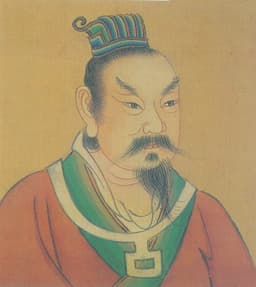
Zhu Wen
Emperor · Medieval
50.3Total
Basic Information
Born
1769
852
Died
1821
912
Era
Modern
Medieval
Nationality
France
China
Occupation
General
Emperor
Civilization
Western
Eastern
Score Comparison
Military (10%)
94.0
72.5
Political (20%)
72.0
35.1
Influence (20%)
40.0
53.3
Legacy (20%)
80.0
45.8
Leadership (15%)
78.0
48.4
Strategy (15%)
90.0
57.5
TOTAL
70.9
50.3
Napoleon Bonaparte — Complete Timeline
1799 AD
Coup of 18 BrumaireOther◆ Major
Napoleon Bonaparte, with support from his brother Lucien and key political figures, overthrew the Directory in a bloodless coup. He established the Consulate with himself as First Consul, effectively becoming the ruler of France. This event ended the French Revolution's most unstable period.
French RevolutionCoupRise to Power
Impact: regional
1804 AD
Promulgation of the Napoleonic CodeOther◆ Major
Napoleon enacted the Civil Code of the French, known as the Napoleonic Code, a comprehensive set of laws that replaced the fragmented feudal legal systems. The code established legal equality, protected property rights, and secularized law. It became the basis for legal systems in many European and world countries.
Legal ReformNapoleonic CodeCivil Law
Impact: globalconstructive
1805 AD
Battle of AusterlitzWar◆ Major
Napoleon's Grande Arm
Napoleonic WarsBattleDecisive Victory
Impact: global
1812 AD
Invasion of RussiaWar◆ Major
Napoleon led the Grande Arm
Napoleonic WarsInvasionDisaster
Impact: globaldestructive
1815 AD
Battle of WaterlooWar◆ Major
Napoleon's French army was defeated by the combined forces of the Duke of Wellington's Anglo-Allied army and Gebhard Leberecht von Bl
Napoleonic WarsBattleFinal Defeat
Impact: globaldestructive
Zhu Wen — Complete Timeline
881 AD
Rebellion against TangWar◆ Major
Zhu Wen, originally a rebel under Huang Chao, defected to the Tang dynasty in 882. He was granted the name Zhu Quanzhong and became a key general, eventually turning against the Tang and seizing control of the imperial court.
Tang DynastyRebellionPower Seizure
Impact: nationaldestructive
904 AD
Assassination of Emperor ZhaozongPolitical Action◆ Major
Zhu Wen ordered the murder of Emperor Zhaozong of Tang and installed the young Emperor Ai as a puppet. This act eliminated the last effective Tang ruler and paved the way for Zhu Wen's usurpation.
Tang DynastyAssassinationUsurpation
Impact: nationaldestructive
907 AD
Founded Later Liang DynastyPolitical Action
Zhu Wen forced Emperor Ai to abdicate and proclaimed himself emperor, founding the Later Liang dynasty. This ended the Tang dynasty and began the Five Dynasties and Ten Kingdoms period in China.
Five DynastiesLater LiangDynastic Change
Impact: national
910 AD
Defeated by Li Cunxu at Battle of BaixiangWar◆ Major
Zhu Wen's Later Liang forces were decisively defeated by Li Cunxu's Jin army at Baixiang. This loss weakened Later Liang's control in the north and emboldened rival states.
Later LiangJinBattle
Impact: regionaltragic
912 AD
Assassinated by his son Zhu YouguiPolitical Action◆ Major
Zhu Wen was murdered by his own son Zhu Yougui, who then seized the throne. The assassination plunged Later Liang into internal strife and contributed to its eventual collapse.
Later LiangAssassinationDynastic Crisis
Impact: nationaltragic
Expert Analysis
Napoleon Bonaparte vs Zhu Wen: Historical Comparison
Napoleon Bonaparte and Zhu Wen (Emperor Taizu of Later Liang) were both transformative figures who rose from military origins to seize supreme power, yet they operated in vastly different contexts—Napoleon in modernizing Europe and Zhu Wen in medieval China’s chaotic Five Dynasties period.
Dimension Analysis
**Military: Napoleon Bonaparte 94 / Zhu Wen 93**
Napoleon revolutionized warfare with the *Grande Armée*, corps system, and rapid maneuver tactics, conquering most of Europe. Zhu Wen was a brilliant late-Tang rebel general who overthrew the Tang dynasty through relentless campaigns and strategic alliances, but his victories were more localized and attrition-based.
**Political: Napoleon Bonaparte 75 / Zhu Wen 80**
Napoleon’s political reforms—the Napoleonic Code, centralized bureaucracy, and meritocracy—were enduring, but his imperial overreach led to isolation and downfall. Zhu Wen, as emperor, stabilized the fractured north China plain, purged corrupt eunuchs, and established the Later Liang dynasty, though his reign was short and brutal.
**Influence: Napoleon Bonaparte 82 / Zhu Wen 73**
Napoleon’s influence reshaped European borders, nationalism, and legal systems globally, inspiring later revolutions and military doctrines. Zhu Wen’s influence was largely confined to the fragmentation of post-Tang China, with his dynasty falling within a generation and leaving no lasting institutional legacy.
**Legacy: Napoleon Bonaparte 78 / Zhu Wen 80**
Napoleon’s legacy is profoundly mixed—celebrated as a reformer but condemned as a tyrant, with his name synonymous with ambition and defeat at Waterloo. Zhu Wen, often vilified as a usurper and cruel ruler, is remembered primarily as a transitional figure who ended the Tang but failed to unify China, leaving a cautionary tale of rapid rise and fall.
**Leadership: Napoleon Bonaparte 80 / Zhu Wen 70**
Napoleon inspired fierce loyalty and charisma, leading from the front and micromanaging campaigns, but his ego alienated allies. Zhu Wen was a ruthless, pragmatic leader who maintained control through fear and treachery, but lacked the vision or diplomatic finesse to build a lasting state.
Verdict
Napoleon leads by a narrow margin due to his superior military innovation, global influence, and charismatic leadership, though Zhu Wen’s political adaptability in a fractured era is notable.
FAQ
Q: Who ranks higher? A: Napoleon Bonaparte, based on higher scores in military, influence, and leadership dimensions.
Rankings
🥇
Napoleon BonaparteLeader
Mil: 94.0Pol: 72.0Inf: 40.0
70.9
🥈
Zhu Wen
Mil: 72.5Pol: 35.1Inf: 53.3
50.3
+20.6 behind
How This Comparison Works
Algorithm
Each figure is scored on 6 dimensions (0—100 scale) based on structured historical data: Military (10%), Political (20%), Influence (20%), Legacy (20%), Leadership (15%), Strategy (15%). The weighted total produces the final ranking.
Data Sources
Scores are computed from structured sub-indicators in the database. Scale factors adjust for era (Ancient ×0.85, Modern ×1.0) and civilization size (Eastern ×1.05, Other ×0.80) to account for differences in population and military scale.
Maximum 3 Figures
Comparisons are limited to 2—3 figures to ensure readability and statistical meaningfulness.
Error Margins
±5 points per dimension — Sub-scores are derived from historical records with inherent uncertainty. Two figures within 5 points on a dimension should be considered roughly equivalent in that area.
Total Score Accuracy
±3 points overall — The weighted combination of 6 dimensions produces a total score with approximately ±3 points of uncertainty. Differences of less than 3 points are not statistically significant— the figures are effectively tied.
Known Limitations
- Historical records are incomplete and uneven across civilizations
- Figures from oral-tradition societies may be underrepresented
- Occupation labels can misclassify multi-role figures
- Scores measure capability and impact, not moral character
- Quantitative scoring is a comparison tool, not absolute truth
Capability Radar
Military (10%) — Battles & Warfare
Battles
95
65
Win Rate
90
60
Expansion
95
55
Political (20%) — Governance & Reform
Reform
95
25
Diplomacy
80
35
Economy
85
30
Influence (20%) — Cultural & Global Reach
Cultural
85
25
Global
90
15
Legacy (20%) — Historical Impact
Historical
95
45
Longevity
90
20
Leadership (15%) — Power & Stability
Tenure
85
40
Stability
70
20
Strategy (15%) — Tactics & Innovation
Strategy
95
60
Tactics
98
55
Reform
92
30
Similar Comparisons
Comments & Discussion
DataSkeptic426/16/2026
This scoring system is fundamentally flawed. You're trying to quantify things like 'influence' and 'legacy' as if they're objective facts, but they're heavily Western-biased. Napoleon gets a 94 military? Sure, if you ignore that his Grande Armée was fighting mostly coalitions of smaller states with outdated tactics. Zhu Wen's 93 military is arguably underrated because the chaotic Five Dynasties period saw constant, brutal warfare where survival required real adaptability. And why does Napoleon's political score get docked for 'imperial overreach' while Zhu Wen's brutality as a usurper is somehow 'stabilizing'? The weight distribution seems arbitrary—why is 'leadership' 80 vs 70? That's just opinion masquerading as data. This whole thing needs a massive methodological rethink.
NapoleonFanatic6/16/2026
Are we seriously putting a Chinese warlord who ruled for like 5 minutes on the same level as Napoleon? The audacity. Napoleon didn't just win battles—he changed how wars are fought. The corps system, the emphasis on speed, the use of artillery en masse—that's the foundation of modern military doctrine. Meanwhile Zhu Wen is famous for... what exactly? Betraying the Tang dynasty and being a notoriously cruel ruler? His 'empire' collapsed before he even died. Napoleon reshaped Europe, spread nationalism, and his legal codes are still in use today. The only thing Zhu Wen left behind is a cautionary tale about what happens when you have zero political skills and treat everyone like trash. Napoleon 94 military is generous—should be 98. And Zhu Wen's 73? That's still too high for a guy whose biggest achievement was being in the right place at the right time during a dynasty's collapse.
AnnalesSchool6/16/2026
The comparison raises important historiographical questions. Napoleon is one of the most studied figures in Western historiography—from Thiers' hagiography to Lefebvre's revisionism to Schom's critical biographies. Primary sources like the Saint Helena Memoirs give us his own justifications, but also distort reality. Zhu Wen, by contrast, is recorded almost exclusively through Confucian official histories like the *Jiu Wudai Shi* (Old History of the Five Dynasties) and *Xin Wudai Shi* (New History), both written under Song patronage, which heavily bias against him as a usurper who broke the Mandate of Heaven. Ouyang Xiu even used Confucian moralizing to portray Zhu Wen as a cautionary figure. So when we 'score' Zhu Wen as lower in leadership or legacy, we're really scoring him against a moral framework that didn't exist for Napoleon. It's like comparing apples and oranges using a banana-shaped ruler. The only truly rigorous comparison would be in military tactics: both men understood the importance of speed and deception—Napoleon's 'march separately, fight together' parallels Zhu Wen's strategy of dividing his forces to confuse Li Keyong's scouts. But beyond that, we're in the realm of historiography, not objective measurement.
Historian1006/16/2026
拿拿破仑和朱温比,本身就有点关公战秦琼的意思。但既然要比,就得看清楚各自的历史语境。拿破仑在西方史学里被塑造成军事天才、改革者,这没问题,但他晚年两次流放、最终失败,西方史家轻描淡写地归因于‘过于扩张’;而朱温在后世正史里几乎被妖魔化成‘篡唐逆贼’、‘暴虐之君’,但欧阳修的《新五代史》里也承认他‘有雄才,善用兵’,只是‘不修德政’。问题是,如果只看结果:拿破仑的帝国解体了,朱温的王朝也短命,为什么拿破仑的遗产分反而更高?这明显是文化偏见。再说军事,朱温对付的是李克用这样的沙陀猛将,骑兵战术极其凶狠,朱温能稳住中原二十多年,绝非等闲。建议中国史学界也搞一套自己的评分体系,把‘乱世韧性’和‘制度破坏性’加进去。
ArchMind186/16/2026
这个评分系统有个根本性问题:把拿破仑的政治分打到75,朱温却给了80?我看完全是西方中心主义在作祟。拿破仑的《拿破仑法典》影响了整个欧洲大陆乃至全球的民法体系,这数据我查过,至少40多个国家直接或间接继承。朱温建立了后梁,但不到16年就亡了,他的政治改革基本没留下什么制度遗产。再说军事分,拿破仑94 vs 朱温73,差距这么大?朱温在唐末混战中从一个小军官一路杀到皇帝,打了二十多年仗,黄巢起义军、李克用沙陀骑兵、各地藩镇,哪个不是硬茬?他输的战役多半是战略撤退而非溃败。如果按中国史书的评价标准,朱温的军事才能绝对高于这个73分。建议重新校准评分权重,至少加入'制度影响力'这个维度。