Loading...
Pachacuti vs Zhu Wen
Pachacuti leads by 19.1 pts · 2 figures compared
…
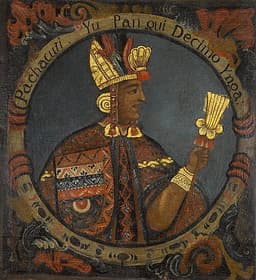
Pachacuti
Emperor · Medieval
69.4Total
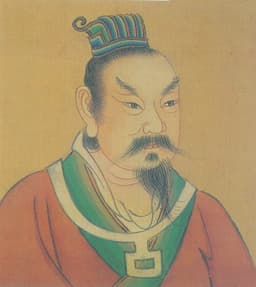
Zhu Wen
Emperor · Medieval
50.3Total
Basic Information
Born
1418
852
Died
1472
912
Era
Medieval
Medieval
Nationality
Inca Empire
China
Occupation
Emperor
Emperor
Civilization
Other
Eastern
Score Comparison
Military (10%)
78.5
72.5
Political (20%)
58.1
35.1
Influence (20%)
65.0
53.3
Legacy (20%)
72.0
45.8
Leadership (15%)
78.0
48.4
Strategy (15%)
69.2
57.5
TOTAL
69.4
50.3
Pachacuti — Complete Timeline
1438 AD
Conquest of the Chanka KingdomWar
Pachacuti led the Inca army to defeat the Chanka, a powerful rival, in a decisive battle near Cusco. This victory secured his position as Sapa Inca and initiated a period of rapid expansion, transforming the Inca from a small kingdom into a vast empire.
ConquestInca ExpansionChanka
Impact: regional
1440 AD
Reconstruction of CuscoCultural◆ Major
Pachacuti rebuilt Cusco as the imperial capital, designing it in the shape of a puma and constructing massive stone structures like Sacsayhuam
Urban PlanningArchitectureInca Empire
Impact: regionalconstructive
1450 AD
Initiation of Machu Picchu's ConstructionCultural◆ Major
Pachacuti ordered the construction of Machu Picchu, a royal estate and ceremonial site high in the Andes. The complex featured sophisticated dry-stone masonry and terraced agriculture, serving as a symbol of Inca engineering and a retreat for the emperor.
ArchitectureRoyal EstateInca Engineering
Impact: regionalconstructive
Zhu Wen — Complete Timeline
881 AD
Rebellion against TangWar◆ Major
Zhu Wen, originally a rebel under Huang Chao, defected to the Tang dynasty in 882. He was granted the name Zhu Quanzhong and became a key general, eventually turning against the Tang and seizing control of the imperial court.
Tang DynastyRebellionPower Seizure
Impact: nationaldestructive
904 AD
Assassination of Emperor ZhaozongPolitical Action◆ Major
Zhu Wen ordered the murder of Emperor Zhaozong of Tang and installed the young Emperor Ai as a puppet. This act eliminated the last effective Tang ruler and paved the way for Zhu Wen's usurpation.
Tang DynastyAssassinationUsurpation
Impact: nationaldestructive
907 AD
Founded Later Liang DynastyPolitical Action
Zhu Wen forced Emperor Ai to abdicate and proclaimed himself emperor, founding the Later Liang dynasty. This ended the Tang dynasty and began the Five Dynasties and Ten Kingdoms period in China.
Five DynastiesLater LiangDynastic Change
Impact: national
910 AD
Defeated by Li Cunxu at Battle of BaixiangWar◆ Major
Zhu Wen's Later Liang forces were decisively defeated by Li Cunxu's Jin army at Baixiang. This loss weakened Later Liang's control in the north and emboldened rival states.
Later LiangJinBattle
Impact: regionaltragic
912 AD
Assassinated by his son Zhu YouguiPolitical Action◆ Major
Zhu Wen was murdered by his own son Zhu Yougui, who then seized the throne. The assassination plunged Later Liang into internal strife and contributed to its eventual collapse.
Later LiangAssassinationDynastic Crisis
Impact: nationaltragic
Expert Analysis
Pachacuti vs Zhu Wen
### The Builder and the Destroyer
In the high Andes, a ruler reshapes a city in the image of a puma, its stone walls so perfectly fitted that a knife blade cannot slip between them. On the North China Plain, another ruler forces a child emperor to abdicate, then has him poisoned to erase the last shadow of a dynasty that had stood for nearly three centuries. One man’s name becomes synonymous with golden age; the other’s, with the collapse of a civilization. How did two medieval emperors—Pachacuti of the Inca and Zhu Wen of the Later Liang—take such divergent paths from similar ambitions? The answer lies not in their goals, but in the worlds that shaped them.
### Origins
Pachacuti was born in 1418 into a world of stone and sky. The Inca were then a modest kingdom in the Cusco Valley, surrounded by hostile neighbors like the Chanka. His father, the Sapa Inca Viracocha, had ruled competently but left the kingdom vulnerable. Pachacuti’s name, meaning “earth-shaker” or “cataclysm,” was earned, not inherited. He was not the designated heir, but a prince who watched his people nearly annihilated.
Zhu Wen, born in 852, emerged from a world of mud and blood. The Tang dynasty, once the most sophisticated empire on earth, was rotting from within—corrupt, faction-ridden, and wracked by famine and rebellion. Zhu Wen grew up poor, the son of a scholar who died young, and he drifted into banditry. He joined the massive rebellion of Huang Chao, a salt smuggler who dreamed of becoming emperor. For Zhu Wen, survival was the only law.
### Rise to Power
In 1438, the Chanka attacked Cusco. Viracocha and his chosen heir fled, but Pachacuti—then named Cusi Yupanqui—refused to retreat. With a handful of warriors, he rallied the city’s defenders and, in a desperate battle, routed the Chanka army. The victory was so total that the Chanka never recovered. Pachacuti’s father reluctantly acknowledged him as the new Sapa Inca. The turning point was a single, heroic stand.
Zhu Wen’s rise was more cynical. In 881, he was a rebel under Huang Chao, but when the rebellion stalled, he defected to the Tang. The Tang court, desperate for loyal generals, showered him with titles and a new name: Zhu Quanzhong, “Zhu the Loyal.” He repaid them by systematically eliminating rivals, then his imperial patrons. In 904, he ordered the murder of Emperor Zhaozong and installed a child puppet. Three years later, in 907, he forced the child to abdicate and proclaimed himself emperor of the Later Liang. The Tang dynasty, which had lasted 289 years, ended not with a bang but with a poisoned cup.
### Leadership & Governance
Pachacuti governed like a master architect. He rebuilt Cusco as a sacred city in the shape of a puma, with massive stone walls that still stand. He established a system of state granaries, road networks, and the *mita* labor tax that bound the empire together. Around 1450, he ordered the construction of Machu Picchu—a royal estate and ceremonial center perched between two peaks. His military campaigns were strategic, absorbing conquered peoples through diplomacy and religious integration. He was ruthless but methodical, a builder who understood that an empire is made of roads, not just battles.
Zhu Wen governed like a warlord. His Later Liang dynasty controlled only a fragment of China; the rest was carved up by rival kingdoms. He relied on military force and terror, but his political reforms were shallow. He tried to curb the power of eunuchs and military governors, but his own regime was plagued by the same corruption. His greatest failure was strategic: in 910, his forces were crushed by the Jin army under Li Cunxu at the Battle of Baixiang. The defeat exposed the fragility of his rule.
### Triumph & Tragedy
Pachacuti’s greatest triumph was the transformation of the Inca from a petty kingdom into the largest empire in the pre-Columbian Americas. His tragedy was personal: he outlived his chosen heir, and the succession crisis that followed would eventually contribute to the empire’s vulnerability to Spanish conquest. Yet he died in 1472, having seen his vision made real.
Zhu Wen’s triumph was ending a dynasty that had outlived its time. His tragedy was that he built nothing to replace it. In 912, he fell ill and proposed to name his adopted son as heir. His biological son, Zhu Yougui, enraged, burst into his father’s bedchamber and stabbed him to death. The assassin then seized the throne, but his reign lasted only months. The Later Liang collapsed into civil war.
### Character & Destiny
Pachacuti was a visionary who saw the future in stone. His decisions were shaped by a belief that the Inca were destined for greatness, and he instilled that faith in his people. Zhu Wen was a survivor who saw only the present. His decisions were shaped by a desperate need to hold power, and he trusted no one—not even his sons. One man’s character built an empire; the other’s destroyed a dynasty.
### Legacy
Pachacuti is remembered as the “Napoleon of the Andes,” the founder of an imperial system that still awes visitors to Machu Picchu and Cusco. His legacy is carved in granite and sky. Zhu Wen is remembered, if at all, as the man who killed the Tang. His legacy is a footnote in a period of chaos known as the Five Dynasties and Ten Kingdoms. One built a world; the other ended one.
### Conclusion
History judges by what is built, not by what is destroyed. Pachacuti and Zhu Wen both seized power through violence, but Pachacuti used that power to create an order that outlasted him, while Zhu Wen used it to consume everything around him. In the end, the earth-shaker built a mountain; the emperor-builder dug a grave. The difference was not in their ambition, but in their vision of what an emperor should be: a creator or a destroyer.
Rankings
🥇
PachacutiLeader
Mil: 78.5Pol: 58.1Inf: 65.0
69.4
🥈
Zhu Wen
Mil: 72.5Pol: 35.1Inf: 53.3
50.3
+19.1 behind
How This Comparison Works
Algorithm
Each figure is scored on 6 dimensions (0—100 scale) based on structured historical data: Military (10%), Political (20%), Influence (20%), Legacy (20%), Leadership (15%), Strategy (15%). The weighted total produces the final ranking.
Data Sources
Scores are computed from structured sub-indicators in the database. Scale factors adjust for era (Ancient ×0.85, Modern ×1.0) and civilization size (Eastern ×1.05, Other ×0.80) to account for differences in population and military scale.
Maximum 3 Figures
Comparisons are limited to 2—3 figures to ensure readability and statistical meaningfulness.
Error Margins
±5 points per dimension — Sub-scores are derived from historical records with inherent uncertainty. Two figures within 5 points on a dimension should be considered roughly equivalent in that area.
Total Score Accuracy
±3 points overall — The weighted combination of 6 dimensions produces a total score with approximately ±3 points of uncertainty. Differences of less than 3 points are not statistically significant— the figures are effectively tied.
Known Limitations
- Historical records are incomplete and uneven across civilizations
- Figures from oral-tradition societies may be underrepresented
- Occupation labels can misclassify multi-role figures
- Scores measure capability and impact, not moral character
- Quantitative scoring is a comparison tool, not absolute truth
Capability Radar
Military (10%) — Battles & Warfare
Battles
85
65
Win Rate
90
60
Expansion
90
55
Political (20%) — Governance & Reform
Reform
92
25
Diplomacy
75
35
Economy
80
30
Influence (20%) — Cultural & Global Reach
Cultural
85
25
Global
65
15
Legacy (20%) — Historical Impact
Historical
80
45
Longevity
70
20
Leadership (15%) — Power & Stability
Tenure
85
40
Stability
82
20
Strategy (15%) — Tactics & Innovation
Strategy
88
60
Tactics
80
55
Reform
85
30
Similar Comparisons
Comments & Discussion
Stone-Cutter King6/16/2026
Pachacuti's Quechua name literally means "cataclysm," yet he's remembered for building Machu Picchu. Zhu Wen's given name meant "refined," and he's remembered only as a usurper who poisoned a child emperor. The irony cuts deep. Pachacuti reshaped an entire civilization's understanding of stone and space; Zhu Wen was just another warlord who got lucky for a few years before his own son turned on him. One built eternity; the other bought a few seasons of power with blood money. Give me the builder
兵马俑粉碎机6/16/2026
朱温当上皇帝后干了啥?他逼着13岁的唐哀帝禅位,转年就派人灌毒酒灭口。这都不算完,他自己宫里头搞乱伦,儿子们互相残杀,最后被亲儿子朱友珪一刀捅死。这种人凭什么跟帕查库蒂比?人家印加王打退昌卡人之后,修了库斯科城、建了马丘比丘、搞了梯田水利,留下一整套帝国体系。朱温留下的只有一具尸体和五代十国的烂摊子。
Skeptical Sifter6/16/2026
I question the framing here. Yes, Pachacuti built impressive stonework, but Inca "golden age" narratives were largely constructed by Spanish chroniclers looking to romanticize a conquered civilization. Meanwhile, Zhu Wen is painted as pure destroyer, yet he actually implemented land reforms and tried to restore Confucian examinations. The difference? Pachacuti got better PR. History isn't written by the builders or destroyers—it's written by those who survive to tell the story, and in this compa
天可汗的对手6/16/2026
唐朝末年的天下早就烂透了,朱温不过是拿到最后一块多米诺骨牌的人。黄巢起义之后的北方,白骨露野、千里无鸡鸣,什么科举制度、什么礼教传统全是空谈。他出身盗匪,却能在乱世里稳住河南几十年,这要比帕查库蒂在安第斯山窝里打几个部落难得多。印加帝国再厉害也是封闭系统,五代十国可是直接继承了大唐的烂摊子——朱温不是破坏者,他是那个时代的合格清道夫。
Manco's Revenge6/16/2026
As someone who studies the Tawantinsuyu, I find this comparison fundamentally flawed. Pachacuti didn't just build—he reorganized the entire Andean world, creating a system of mit'a labor, state storage, and standardized roads that fed millions. Zhu Wen conquered by opportunism, ruled by terror, and left nothing but civil war. The Inca's agrarian infrastructure and quipu record-keeping survived to baffle Spanish conquistadors; what did