Loading...
Al-Mustansir vs Charles de Gaulle
Charles de Gaulle leads by 12.6 pts · 2 figures compared
…
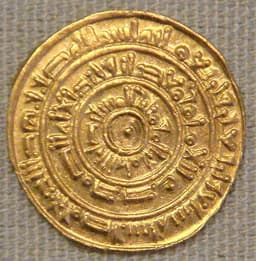
Al-Mustansir
Emperor · Medieval
55.6Total
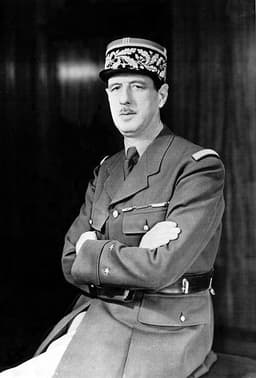
Charles de Gaulle
Politician · Modern
68.2Total
Basic Information
Born
1192
1890
Died
1242
1970
Era
Medieval
Modern
Nationality
Abbasid Caliphate
France
Occupation
Emperor
Politician
Civilization
Middle Eastern
Western
Score Comparison
Military (10%)
20.0
55.0
Political (20%)
68.0
75.0
Influence (20%)
55.0
65.0
Legacy (20%)
58.0
68.0
Leadership (15%)
71.0
78.0
Strategy (15%)
45.0
65.0
TOTAL
55.6
68.2
Al-Mustansir — Complete Timeline
1227 AD
Foundation of the Mustansiriya MadrasaCultural◆ Major
Al-Mustansir established the Mustansiriya Madrasa in Baghdad, a major educational institution that taught Islamic law, medicine, mathematics, and literature. It became one of the most prominent centers of learning in the medieval Islamic world, operating for centuries.
Impact: regionalconstructive
Charles de Gaulle — Complete Timeline
1940 AD
Appeal of 18 June 1940Political Action
From London, de Gaulle broadcast a radio appeal urging French resistance against Nazi occupation. He called on French soldiers and citizens to continue the fight, founding the Free French Forces and becoming the symbol of French defiance.
World War IIResistanceLeadership
Impact: nationalconstructive
1958 AD
Founding of the Fifth RepublicPolitical Action
De Gaulle returned to power during the Algerian crisis and oversaw the drafting of a new constitution. The Fifth Republic established a strong executive presidency, replacing the unstable parliamentary system of the Fourth Republic.
ConstitutionGovernment ReformPolitical System
Impact: nationalconstructive
1962 AD
End of the Algerian WarPolitical Action◆ Major
De Gaulle negotiated the
DecolonizationPeace TreatyAlgeria
Impact: regionalconstructive
1968 AD
May 1968 CrisisPolitical Action◆ Major
Mass student protests and general strikes paralyzed France, challenging de Gaulle's government. De Gaulle briefly fled to Germany, then returned to dissolve the National Assembly and call elections, which his party won, but his authority was weakened.
ProtestPolitical CrisisSocial Unrest
Impact: nationaldestructive
1969 AD
Resignation as PresidentPolitical Action
De Gaulle resigned after losing a referendum on regional reform and Senate restructuring. The defeat marked the end of his political career, as he withdrew from public life and died the following year.
ResignationPolitical DefeatReferendum
Impact: nationaltragic
Expert Analysis
Charles de Gaulle vs Al-Mustansir
# The Weight of a Name: Charles de Gaulle and Al-Mustansir
On a June evening in 1940, a tall, awkward French general stood before a microphone in a London studio and spoke words that would define a nation’s soul. Across the English Channel, his country lay broken, its government capitulating to Nazi Germany. Charles de Gaulle’s voice crackled through the airwaves, a solitary cry of defiance: “France has lost a battle, but France has not lost the war.” Seven centuries earlier, in the heart of Baghdad, another leader sat in a vast library, surrounded by scholars debating the finer points of Islamic jurisprudence. Al-Mustansir, the thirty-sixth Abbasid caliph, had just completed his greatest work—not a military campaign, but a school. The Mustansiriya Madrasa would outlast his dynasty, his city, and his empire. Two rulers, worlds apart, both staking their legacies on something intangible: one on the idea of a nation, the other on the preservation of knowledge. What drove such different paths?
Origins
Charles de Gaulle was born in 1890 into a devoutly Catholic, nationalist family in Lille, northern France. His father taught philosophy and history, instilling in the young Charles a sense of destiny and a romantic vision of France as a beacon of civilization. The humiliation of France’s defeat in the Franco-Prussian War (1870–1871) hung over his childhood like a cloud. De Gaulle grew up believing that France must reclaim its grandeur—or cease to be France at all. This was not ambition; it was duty.
Al-Mustansir, born in 1192, inherited a very different burden. The Abbasid Caliphate, once the heart of the Islamic Golden Age, had shrunk to little more than Baghdad and its environs. The Mongol hordes were gathering on the eastern horizon, and the caliphate’s power was more symbolic than real. Al-Mustansir’s father, al-Zahir, had ruled briefly, and his grandfather, al-Nasir, had spent decades trying to revive caliphal authority through alliances with Sufi orders and military adventurers. Al-Mustansir understood that the sword was not enough. His realm needed ideas.
Rise to Power
De Gaulle’s path to power was forged in war and exile. A decorated officer in World War I, he was captured at Verdun and spent years as a prisoner of war, writing and planning. By 1940, he was a junior general—barely known—when France collapsed. His Appeal of 18 June 1940 was a gamble: a man with no army, no territory, and no legitimacy calling on a nation to resist. The BBC gave him a microphone; history gave him a chance. He became the personification of Free France, a government-in-exile that existed only in his will.
Al-Mustansir ascended the throne in 1226 through the normal channels of Abbasid succession. There was no dramatic radio broadcast, no desperate flight. He was thirty-four years old, the son of a caliph, and his authority was accepted—if limited. The caliphate was a ceremonial and religious office, overshadowed by the military power of the Seljuk Turks and the looming Mongol threat. Al-Mustansir’s rise was quiet, but his vision was not.
Leadership & Governance
De Gaulle governed through personality and principle. He believed in a strong executive, a France that stood independent of American and British domination. When the Algerian crisis threatened to tear the country apart in 1958, he returned from political retirement to found the Fifth Republic, a constitution designed around his own authority. He negotiated the Évian Accords in 1962, ending the Algerian War despite fierce opposition from the French military and settlers. “I have understood you,” he told the pieds-noirs, a phrase that rang hollow to those he abandoned. De Gaulle was a realist wrapped in a mystic’s rhetoric.
Al-Mustansir governed through patronage and piety. He could not command armies like his predecessors; the Abbasid military was a shadow. Instead, he invested in the one resource that could not be conquered: knowledge. In 1227, he founded the Mustansiriya Madrasa, a sprawling complex of lecture halls, a library, a hospital, and a mosque. It taught Islamic law, medicine, mathematics, and literature, drawing students from across the Muslim world. Al-Mustansir’s governance was architectural and intellectual. He built a school, not a state.
Triumph & Tragedy
De Gaulle’s greatest moment was also his most lonely: the liberation of Paris in 1944, when he marched down the Champs-Élysées, a towering figure in a sea of cheering crowds. But his tragedy came in 1968, when student protests and a general strike paralyzed France. De Gaulle, the man who had defied Hitler, fled briefly to Germany—a moment of panic that shattered his aura. He resigned in 1969 after losing a referendum on regional reform, a petty end for a man of epic proportions.
Al-Mustansir’s triumph was the madrasa itself, a beacon of learning that would survive for centuries. His tragedy was invisible to him: the Mongol invasion of Baghdad in 1258, sixteen years after his death, which would destroy his city, slaughter his people, and burn the libraries he had cherished. The Mustansiriya Madrasa survived, but the world that created it did not.
Character & Destiny
De Gaulle was aloof, arrogant, and convinced of his own historical mission. “I am France,” he said, and he meant it. His personality shaped every decision—the refusal to compromise, the insistence on grandeur, the theatrical gestures. He believed that a leader must be a symbol, not a manager.
Al-Mustansir was quieter, a builder rather than a warrior. His character is harder to read, but his choices reveal a man who understood that power is not only military. In an age of swords, he chose books. Destiny rewarded him with a legacy that outlasted his empire.
Legacy
De Gaulle is remembered as the savior of French honor, the founder of the Fifth Republic, and the architect of a modern, independent France. His name adorns airports, streets, and a nuclear aircraft carrier. Yet his legacy is contested: some see a visionary, others a dictator.
Al-Mustansir is remembered for a single building. The Mustansiriya Madrasa, now a museum in Baghdad, stands as a testament to a caliph who believed that the true strength of a civilization lies in its mind. In a world that often forgets its scholars, his name endures.
Conclusion
Two leaders, separated by seven centuries, faced the same question: what does it mean to lead a civilization in decline? De Gaulle answered with defiance and a constitution. Al-Mustansir answered with a school. One chose the nation, the other chose knowledge. Perhaps both understood that power is fleeting, but the ideas we leave behind—whether a call to resistance or a library of books—are what survive. The tall general and the quiet caliph: each, in his own way, built something that outlasted him.
Rankings
🥇
Charles de GaulleLeader
Mil: 55.0Pol: 75.0Inf: 65.0
68.2
🥈
Al-Mustansir
Mil: 20.0Pol: 68.0Inf: 55.0
55.6
+12.6 behind
How This Comparison Works
Algorithm
Each figure is scored on 6 dimensions (0—100 scale) based on structured historical data: Military (10%), Political (20%), Influence (20%), Legacy (20%), Leadership (15%), Strategy (15%). The weighted total produces the final ranking.
Data Sources
Scores are computed from structured sub-indicators in the database. Scale factors adjust for era (Ancient ×0.85, Modern ×1.0) and civilization size (Eastern ×1.05, Other ×0.80) to account for differences in population and military scale.
Maximum 3 Figures
Comparisons are limited to 2—3 figures to ensure readability and statistical meaningfulness.
Error Margins
±5 points per dimension — Sub-scores are derived from historical records with inherent uncertainty. Two figures within 5 points on a dimension should be considered roughly equivalent in that area.
Total Score Accuracy
±3 points overall — The weighted combination of 6 dimensions produces a total score with approximately ±3 points of uncertainty. Differences of less than 3 points are not statistically significant— the figures are effectively tied.
Known Limitations
- Historical records are incomplete and uneven across civilizations
- Figures from oral-tradition societies may be underrepresented
- Occupation labels can misclassify multi-role figures
- Scores measure capability and impact, not moral character
- Quantitative scoring is a comparison tool, not absolute truth
Capability Radar
Military (10%) — Battles & Warfare
Battles
5
60
Win Rate
5
55
Expansion
5
20
Political (20%) — Governance & Reform
Reform
70
95
Diplomacy
40
90
Economy
50
70
Influence (20%) — Cultural & Global Reach
Cultural
70
70
Global
50
80
Legacy (20%) — Historical Impact
Historical
65
85
Longevity
60
75
Leadership (15%) — Power & Stability
Tenure
60
85
Stability
30
75
Strategy (15%) — Tactics & Innovation
Strategy
5
85
Tactics
5
70
Reform
5
80
Similar Comparisons
Comments & Discussion
BaguetteBlitz6/16/2026
De Gaulle's whole "grandeur" act was just Napoleon-lite cosplay. Dude practically invented a mythical France that never existed. While he was giving speeches from London, actual French people were dying in POW camps. His Free French forces were mostly a symbolic footnote until the Allies did the heavy lifting. Let's not pretend he single-handedly saved France—he just had better PR.
DigitalCaliph6/16/2026
Al-Mustansir built a school that actually changed civilization. The Mustansiriya Madrasa wasn't just a building—it was a knowledge factory that pumped out scholars for centuries. De Gaulle's grand speeches? They faded into soundbites. But that madrasa's curriculum influenced everything from algebra to astronomy across three continents. Who really had the bigger impact? The guy with the bombastic speeches or the guy who taught people how to count?
老学究6/16/2026
拿戴高乐跟穆斯坦绥尔比,简直就是关公战秦琼。一个是靠军事政变上位的政治强人,另一个是真正的知识守护者。戴高乐的"法兰西精神"说白了就是民族主义的话术包装,穆斯坦绥尔可是实打实建立了世界第一所高等学府。你们知道穆斯坦绥里耶学堂的图书馆有多大吗?藏书十万册,这个数字放到欧洲文艺复兴时期都吓死人。
RevisionistRamon6/16/2026
得了吧,别把阿拔斯王朝吹得天花乱坠。穆斯坦绥尔那个学校确实牛,但他本人就是个宗教傀儡,真正掌权的是他的突厥奴隶兵。戴高乐再不济,至少当着希特勒的面硬刚到底。一个躲在巴格达宫殿里跟学者侃大山的宗教领袖,也配跟自由法国领袖比?史书习惯性美化东方统治者罢了。
SorbonneSoul6/16/2026
Missing the point entirely. De Gaulle wasn't about military conquest—he was about *légitimité*. When Pétain surrendered, De Gaulle carried the flame of the Third Republic not through force, but through sheer moral authority. Al-Mustansir preserved knowledge, sure, but De Gaulle preserved an idea: that France could exist without collaborators betraying it. That's why he resigned in 1946 when he didn't get his way—because principles, not power, defined him.