Loading...
Charles de Gaulle vs Zhu Wen
Charles de Gaulle leads by 17.9 pts · 2 figures compared
…
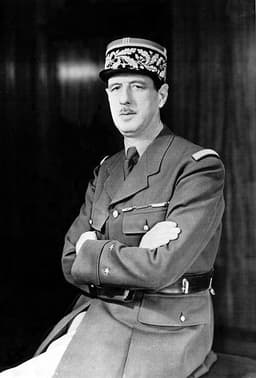
Charles de Gaulle
Politician · Modern
68.2Total
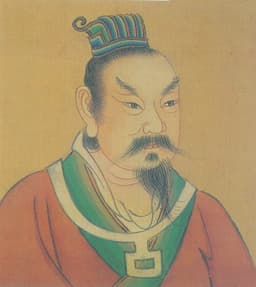
Zhu Wen
Emperor · Medieval
50.3Total
Basic Information
Born
1890
852
Died
1970
912
Era
Modern
Medieval
Nationality
France
China
Occupation
Politician
Emperor
Civilization
Western
Eastern
Score Comparison
Military (10%)
55.0
72.5
Political (20%)
75.0
35.1
Influence (20%)
65.0
53.3
Legacy (20%)
68.0
45.8
Leadership (15%)
78.0
48.4
Strategy (15%)
65.0
57.5
TOTAL
68.2
50.3
Charles de Gaulle — Complete Timeline
1940 AD
Appeal of 18 June 1940Political Action
From London, de Gaulle broadcast a radio appeal urging French resistance against Nazi occupation. He called on French soldiers and citizens to continue the fight, founding the Free French Forces and becoming the symbol of French defiance.
World War IIResistanceLeadership
Impact: nationalconstructive
1958 AD
Founding of the Fifth RepublicPolitical Action
De Gaulle returned to power during the Algerian crisis and oversaw the drafting of a new constitution. The Fifth Republic established a strong executive presidency, replacing the unstable parliamentary system of the Fourth Republic.
ConstitutionGovernment ReformPolitical System
Impact: nationalconstructive
1962 AD
End of the Algerian WarPolitical Action◆ Major
De Gaulle negotiated the
DecolonizationPeace TreatyAlgeria
Impact: regionalconstructive
1968 AD
May 1968 CrisisPolitical Action◆ Major
Mass student protests and general strikes paralyzed France, challenging de Gaulle's government. De Gaulle briefly fled to Germany, then returned to dissolve the National Assembly and call elections, which his party won, but his authority was weakened.
ProtestPolitical CrisisSocial Unrest
Impact: nationaldestructive
1969 AD
Resignation as PresidentPolitical Action
De Gaulle resigned after losing a referendum on regional reform and Senate restructuring. The defeat marked the end of his political career, as he withdrew from public life and died the following year.
ResignationPolitical DefeatReferendum
Impact: nationaltragic
Zhu Wen — Complete Timeline
881 AD
Rebellion against TangWar◆ Major
Zhu Wen, originally a rebel under Huang Chao, defected to the Tang dynasty in 882. He was granted the name Zhu Quanzhong and became a key general, eventually turning against the Tang and seizing control of the imperial court.
Tang DynastyRebellionPower Seizure
Impact: nationaldestructive
904 AD
Assassination of Emperor ZhaozongPolitical Action◆ Major
Zhu Wen ordered the murder of Emperor Zhaozong of Tang and installed the young Emperor Ai as a puppet. This act eliminated the last effective Tang ruler and paved the way for Zhu Wen's usurpation.
Tang DynastyAssassinationUsurpation
Impact: nationaldestructive
907 AD
Founded Later Liang DynastyPolitical Action
Zhu Wen forced Emperor Ai to abdicate and proclaimed himself emperor, founding the Later Liang dynasty. This ended the Tang dynasty and began the Five Dynasties and Ten Kingdoms period in China.
Five DynastiesLater LiangDynastic Change
Impact: national
910 AD
Defeated by Li Cunxu at Battle of BaixiangWar◆ Major
Zhu Wen's Later Liang forces were decisively defeated by Li Cunxu's Jin army at Baixiang. This loss weakened Later Liang's control in the north and emboldened rival states.
Later LiangJinBattle
Impact: regionaltragic
912 AD
Assassinated by his son Zhu YouguiPolitical Action◆ Major
Zhu Wen was murdered by his own son Zhu Yougui, who then seized the throne. The assassination plunged Later Liang into internal strife and contributed to its eventual collapse.
Later LiangAssassinationDynastic Crisis
Impact: nationaltragic
Expert Analysis
Charles de Gaulle vs Zhu Wen
# The General and the Usurper
On a June evening in 1940, a tall, awkward French general stood before a BBC microphone in London and spoke words that would echo through history. Across the English Channel, France had fallen. Yet Charles de Gaulle’s voice, trembling with conviction, refused defeat. Seven hundred miles east, in the blood-soaked plains of medieval China, another man had also seized a moment of collapse—but with a very different purpose. Zhu Wen, a former rebel, had just orchestrated the assassination of an emperor. One man built a nation from ashes; the other tore a dynasty down. What drove them to such different ends?
Origins
Charles de Gaulle was born into a devoutly Catholic, nationalist family in Lille in 1890. His father taught philosophy and history, instilling in young Charles a sense of France’s eternal greatness. The humiliation of the Franco-Prussian War hung over his childhood like a shadow. De Gaulle grew up believing that France’s destiny was to lead, and that its salvation required discipline, honor, and sacrifice. He entered Saint-Cyr military academy and was wounded at Verdun in 1916, taken prisoner, and spent nearly three years in captivity—a crucible that hardened his resolve.
Zhu Wen, by contrast, was born in 852 into grinding poverty in rural China. The Tang dynasty was decaying, its authority hollowed out by warlords and rebellions. Zhu Wen had no education, no family legacy of service. He joined the rebellion of Huang Chao, a salt smuggler who promised land and justice. When that rebellion faltered, Zhu Wen betrayed his comrades and defected to the Tang court, trading loyalty for a general’s commission and a new name: Zhu Quanzhong, “Loyalty Entire.” It was a name he would soon make a mockery of.
Rise to Power
De Gaulle’s path was slow, intellectual, and principled. He wrote books on military theory, arguing for mechanized warfare and professional armies—ideas that his superiors ignored. By 1940, he was a temporary brigadier general, barely known. But when France collapsed, he refused to surrender. The Appeal of 18 June 1940 was not a grab for power; it was a desperate gamble to keep France alive as a moral idea. He had no army, no treasury, no country. What he had was an unshakable conviction that he *was* France.
Zhu Wen’s rise was rapid, ruthless, and transactional. After defecting to the Tang, he became a warlord, carving out territory in the Yellow River basin. He played rival factions against each other, eliminated competitors, and accumulated power with cold precision. In 904, he ordered the murder of Emperor Zhaozong, installing a child emperor as his puppet. Three years later, in 907, he forced that child to abdicate and declared himself emperor of the Later Liang dynasty. The Tang dynasty, which had ruled for nearly three centuries, ended not with a battle but with a shove.
Leadership & Governance
De Gaulle’s leadership was defined by vision and sacrifice. As president of the Fifth Republic, founded in 1958, he restored French stability after the chaos of the Fourth Republic. He ended the bloody Algerian War in 1962 through the Évian Accords, defying the military and the pieds-noirs who had brought him to power. He pursued an independent foreign policy, withdrew France from NATO’s integrated command, and cultivated a nuclear deterrent. Domestically, he modernized the economy and strengthened the state. But his style was aloof, almost monarchical. He believed in “a certain idea of France” and governed from above.
Zhu Wen’s governance was pragmatic but brutal. He reformed tax collection, curbed the power of regional warlords, and tried to rebuild a shattered bureaucracy. Yet his Later Liang dynasty was a house of cards. He purged rivals, executed officials on suspicion, and alienated the very allies who had elevated him. His military campaigns were uneven: he won some battles but suffered a decisive defeat at Baixiang in 910 against Li Cunxu, a rival warlord. His reign was a constant struggle to hold together what he had stolen.
Triumph & Tragedy
De Gaulle’s greatest triumph was the liberation of France and the creation of a stable republic that endures today. His tragedy was the May 1968 crisis, when student protests and general strikes paralyzed the nation. De Gaulle fled briefly to Baden-Baden to consult with French generals—a moment of panic that shattered his aura of invincibility. He won a snap election but never recovered his authority. In 1969, he resigned after losing a minor referendum on regional reform. He died the next year, at home in Colombey-les-Deux-Églises, a private citizen.
Zhu Wen’s triumph was the destruction of the Tang and the founding of his own dynasty. But his tragedy was immediate. In 912, his son Zhu Yougui, fearing disinheritance, stabbed him to death in the palace. The Later Liang collapsed into civil war and was overthrown within a decade. Zhu Wen’s dynasty was the shortest of the Five Dynasties, remembered only as the beginning of chaos.
Character & Destiny
De Gaulle was rigid, proud, and often insufferable. Churchill once said that “the heaviest cross I have to bear is the Cross of Lorraine.” Yet his arrogance was rooted in principle. He believed in France, not in himself. He could have stayed in power after 1968; he chose to leave when the people rejected his vision. His character was his destiny: a man who could not bend, but who therefore never broke.
Zhu Wen was cunning, paranoid, and ultimately self-destructive. He trusted no one, not even his own sons. His betrayal of the Tang was mirrored by his son’s betrayal of him. He had no vision beyond power—and power, when obtained without legitimacy, is brittle. His character was also his destiny: a man who could only take, never build.
Legacy
De Gaulle is remembered as the savior of French honor, the founder of the Fifth Republic, and the architect of modern France. His name adorns airports, streets, and the aircraft carrier that carries France’s nuclear deterrent. He is a symbol of national resilience, even if his vision of a grand, independent France has faded.
Zhu Wen is remembered, if at all, as a usurper who ended a golden age. The Tang dynasty, with its poetry, trade, and cosmopolitan culture, is mourned; its destroyer is despised. In Chinese historiography, he is a cautionary tale—a man who climbed to the top on a ladder of corpses and found no one there to greet him.
Conclusion
Both men lived through the collapse of an old order. De Gaulle chose to rebuild; Zhu Wen chose to plunder. One saw himself as the servant of a nation; the other saw the nation as his servant. Their differences were not merely of era or culture—they were differences of soul. De Gaulle’s France still stands; Zhu Wen’s Liang has vanished. In the end, what endures is not the power we seize, but the faith we keep.
Rankings
🥇
Charles de GaulleLeader
Mil: 55.0Pol: 75.0Inf: 65.0
68.2
🥈
Zhu Wen
Mil: 72.5Pol: 35.1Inf: 53.3
50.3
+17.9 behind
How This Comparison Works
Algorithm
Each figure is scored on 6 dimensions (0—100 scale) based on structured historical data: Military (10%), Political (20%), Influence (20%), Legacy (20%), Leadership (15%), Strategy (15%). The weighted total produces the final ranking.
Data Sources
Scores are computed from structured sub-indicators in the database. Scale factors adjust for era (Ancient ×0.85, Modern ×1.0) and civilization size (Eastern ×1.05, Other ×0.80) to account for differences in population and military scale.
Maximum 3 Figures
Comparisons are limited to 2—3 figures to ensure readability and statistical meaningfulness.
Error Margins
±5 points per dimension — Sub-scores are derived from historical records with inherent uncertainty. Two figures within 5 points on a dimension should be considered roughly equivalent in that area.
Total Score Accuracy
±3 points overall — The weighted combination of 6 dimensions produces a total score with approximately ±3 points of uncertainty. Differences of less than 3 points are not statistically significant— the figures are effectively tied.
Known Limitations
- Historical records are incomplete and uneven across civilizations
- Figures from oral-tradition societies may be underrepresented
- Occupation labels can misclassify multi-role figures
- Scores measure capability and impact, not moral character
- Quantitative scoring is a comparison tool, not absolute truth
Capability Radar
Military (10%) — Battles & Warfare
Battles
60
65
Win Rate
55
60
Expansion
20
55
Political (20%) — Governance & Reform
Reform
95
25
Diplomacy
90
35
Economy
70
30
Influence (20%) — Cultural & Global Reach
Cultural
70
25
Global
80
15
Legacy (20%) — Historical Impact
Historical
85
45
Longevity
75
20
Leadership (15%) — Power & Stability
Tenure
85
40
Stability
75
20
Strategy (15%) — Tactics & Innovation
Strategy
85
60
Tactics
70
55
Reform
80
30
Similar Comparisons
Comments & Discussion
DEFIANT GAULLE6/16/2026
Apples and oranges here. De Gaulle’s BBC broadcast was a call to resistance rooted in moral authority—he legitimized Free France through guts and legal continuity. Zhu Wen? He stabbed a Tang emperor in the back after years of playing loyalist. One stood for a nation’s soul; the other for his own ambition. Different strokes for different eras, sure, but Gaulle had spine while Zhu had craft.
数字篡位者6/16/2026
历史上,赵匡胤黄袍加身是经典,但朱温简直是混乱邪恶的典中典。贬低亡唐皇帝后火速称帝,篡位剧本都不带改的。戴高乐呢?1944年巴黎解放,他直接从凯旋门走向圣母院,堂堂正正。朱温要是有戴高乐半分气节,后梁也不至于16年就凉透。实力悬殊?不,这是道义的差。