Loading...
Al-Mustansir vs Tailapa II
Tailapa II leads by 4.8 pts · 2 figures compared
…
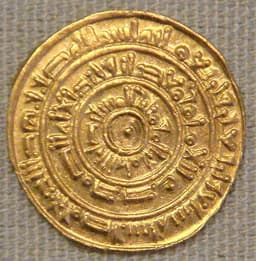
Al-Mustansir
Emperor · Medieval
55.6Total
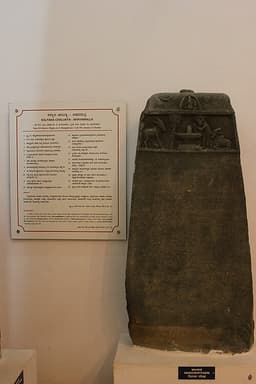
Tailapa II
Emperor · Medieval
60.4Total
Basic Information
Born
1192
957
Died
1242
997
Era
Medieval
Medieval
Nationality
Abbasid Caliphate
India
Occupation
Emperor
Emperor
Civilization
Middle Eastern
Indian
Score Comparison
Military (10%)
20.0
74.7
Political (20%)
68.0
53.8
Influence (20%)
55.0
61.0
Legacy (20%)
58.0
52.0
Leadership (15%)
71.0
72.0
Strategy (15%)
45.0
58.0
TOTAL
55.6
60.4
Al-Mustansir — Complete Timeline
1227 AD
Foundation of the Mustansiriya MadrasaCultural◆ Major
Al-Mustansir established the Mustansiriya Madrasa in Baghdad, a major educational institution that taught Islamic law, medicine, mathematics, and literature. It became one of the most prominent centers of learning in the medieval Islamic world, operating for centuries.
Impact: regionalconstructive
Tailapa II — Complete Timeline
973 AD
Founding of the Western Chalukya DynastyPolitical Action◆ Major
Tailapa II overthrew the Rashtrakuta ruler Karka II and established the Western Chalukya dynasty. This marked the end of Rashtrakuta rule in the Deccan and the beginning of a new Chalukya era.
Impact: regional
995 AD
Defeat of the Paramara King MunjaWar◆ Major
Tailapa II defeated and captured the Paramara king Munja of Malwa. This victory consolidated Western Chalukya control over the northern Deccan and established their military reputation.
Impact: regional
Expert Analysis
Al-Mustansir vs Tailapa II
The Scholar and the Sword
In 1227, as Baghdad’s scholars gathered beneath the soaring arches of a newly founded madrasa, they could hardly have imagined that half a world away, a very different kind of ruler was carving his name into the Deccan plateau with blood and iron. Al-Mustansir, the Abbasid caliph, poured his energies into ink and parchment, while Tailapa II, the founder of the Western Chalukya dynasty, wrote his legacy in battlefield victories. Both men ruled in the same broad medieval era, yet their paths diverged so sharply that they seem to inhabit different universes—one of quiet scholarship, the other of relentless conquest. What drove such contrasting destinies?
Origins
Al-Mustansir was born into the twilight of the Abbasid Caliphate, a dynasty that had once ruled from Spain to Persia but now clung to a shrinking territory centered on Baghdad. His father, al-Zahir, and grandfather, al-Nasir, had spent decades navigating the treacherous currents of declining power, relying on diplomacy and religious authority rather than military might. The caliphate had become a shadow of its former self, its armies hollowed by Turkic slave soldiers and its coffers drained by endless intrigues. Al-Mustansir inherited not a sword but a title—Commander of the Faithful—whose real power had long since evaporated.
Tailapa II, by contrast, emerged from the chaos of the Rashtrakuta Empire’s collapse in 973 CE. He was a feudatory chief of the Chalukya lineage, a family that had once ruled the Deccan but had been subjugated by the Rashtrakutas for over two centuries. Unlike the caliph, who was born into a throne, Tailapa had to seize his. The Rashtrakuta king Karka II was weak, and the political landscape of India was a free-for-all of competing dynasties—Paramaras, Cholas, and countless lesser kingdoms. Tailapa saw an opportunity where Al-Mustansir saw only tradition.
Rise to Power
Al-Mustansir’s ascent was smooth, almost predetermined. He became caliph in 1226 upon his father’s death, inheriting a court more concerned with ceremony than conquest. His defining act came the following year, when he founded the Mustansiriya Madrasa in Baghdad. This was no mere school; it was a vast complex that taught Islamic law, medicine, mathematics, and literature, drawing scholars from across the Muslim world. The madrasa was a statement—a bid to restore the caliphate’s prestige through intellectual rather than military means. It was a gamble that Baghdad could still be the beacon of civilization, even as Mongol storm clouds gathered on the horizon.
Tailapa’s rise was the opposite—violent, audacious, and deeply personal. In 973, he led a rebellion against Karka II, defeated the Rashtrakuta army, and proclaimed himself king of the Western Chalukyas. But founding a dynasty was only the beginning. For the next two decades, he fought relentlessly to secure his borders. In 995, he captured the Paramara king Munja of Malwa, a victory that sent shockwaves through central India. Unlike Al-Mustansir, who built institutions, Tailapa built an army. His path to power was paved with corpses, not manuscripts.
Leadership & Governance
Al-Mustansir governed as a patron, not a warrior. His political score of 66.6 reflects a ruler who understood the soft power of culture and religion. The Mustansiriya Madrasa was his masterpiece—a place where Sunni and Shia scholars could debate, where the sciences flourished alongside theology. He maintained peace within his diminished realm through careful diplomacy, balancing the ambitions of local governors and the ever-present threat of the Mongol Empire. But his military score of 37.0 tells the truth: he was no general. When the Mongols finally came—just sixteen years after his death—Baghdad fell in a week, and the Abbasid Caliphate was extinguished.
Tailapa II governed with the sword in one hand and the plow in the other. His military score of 67.3 and strategy of 55.4 show a commander who relied on raw aggression rather than intricate maneuvers. He crushed the Paramaras, raided Chola territories, and reestablished Chalukya dominance over the Deccan. Yet he was also a shrewd politician, using marriage alliances and land grants to bind local chiefs to his cause. His political score of 62.2 is modest but effective. He understood that a dynasty built on conquest must also reward loyalty. Unlike the caliph, who built for eternity, Tailapa built for survival.
Triumph & Tragedy
Al-Mustansir’s greatest triumph was the Mustansiriya Madrasa, a monument that outlasted his caliphate. It survived the Mongol sack of Baghdad in 1258, a testament to the power of ideas over armies. But his tragedy was that he could not see the storm coming. While he debated theology, the Mongols sharpened their swords. His legacy is one of missed opportunities—a ruler who chose the library over the battlefield when both were needed.
Tailapa’s triumph was his dynasty. The Western Chalukyas would rule for over two centuries, leaving behind the magnificent temples of Belur and Halebidu. His capture of Munja in 995 was a masterstroke that ended Paramara ambitions for a generation. But his tragedy was the cost. Endless warfare bled the Deccan dry, and his successors would face the same enemies he had fought—the Cholas, the Paramaras, and the rising power of the Delhi Sultanate. He won the throne but could not secure peace.
Character & Destiny
Al-Mustansir was a scholar-king in an age of barbarians. His personality—patient, intellectual, devout—shaped his decisions. He believed that knowledge could save his civilization, and he was wrong. The Mongols did not care for madrasas. Tailapa was a warrior-king in an age of empires. His personality—ambitious, ruthless, pragmatic—drove him to conquer. He believed that strength could secure his dynasty, and he was right—for a time. But both men were prisoners of their eras. The caliph’s world was dying, and he chose to preserve its soul. The Chalukya’s world was being born, and he chose to forge its body.
Legacy
Al-Mustansir is remembered as a patron of learning, his madrasa still standing in Baghdad as a symbol of Islamic scholarship. But his caliphate fell, and his name is obscure outside specialist circles. Tailapa II is remembered as a founder, his dynasty’s temples still drawing pilgrims and tourists. But his kingdom, too, eventually crumbled. Both men achieved greatness within their limits, yet neither could transcend the forces that defined them.
Conclusion
Standing before the ruins of the Mustansiriya Madrasa or the carved pillars of a Chalukya temple, one cannot help but wonder: which path was wiser? The scholar who built for the mind, or the warrior who built for the state? The answer, perhaps, is that history requires both—but rarely rewards either. Al-Mustansir and Tailapa II were men of their times, doing what their worlds demanded. One left a library; the other left a kingdom. In the end, both were swept away by the currents they tried to master. And we, looking back, can only marvel at the difference between ink and iron.
Rankings
🥇
Tailapa IILeader
Mil: 74.7Pol: 53.8Inf: 61.0
60.4
🥈
Al-Mustansir
Mil: 20.0Pol: 68.0Inf: 55.0
55.6
+4.8 behind
How This Comparison Works
Algorithm
Each figure is scored on 6 dimensions (0—100 scale) based on structured historical data: Military (10%), Political (20%), Influence (20%), Legacy (20%), Leadership (15%), Strategy (15%). The weighted total produces the final ranking.
Data Sources
Scores are computed from structured sub-indicators in the database. Scale factors adjust for era (Ancient ×0.85, Modern ×1.0) and civilization size (Eastern ×1.05, Other ×0.80) to account for differences in population and military scale.
Maximum 3 Figures
Comparisons are limited to 2—3 figures to ensure readability and statistical meaningfulness.
Error Margins
±5 points per dimension — Sub-scores are derived from historical records with inherent uncertainty. Two figures within 5 points on a dimension should be considered roughly equivalent in that area.
Total Score Accuracy
±3 points overall — The weighted combination of 6 dimensions produces a total score with approximately ±3 points of uncertainty. Differences of less than 3 points are not statistically significant— the figures are effectively tied.
Known Limitations
- Historical records are incomplete and uneven across civilizations
- Figures from oral-tradition societies may be underrepresented
- Occupation labels can misclassify multi-role figures
- Scores measure capability and impact, not moral character
- Quantitative scoring is a comparison tool, not absolute truth
Capability Radar
Military (10%) — Battles & Warfare
Battles
5
70
Win Rate
5
75
Expansion
5
75
Political (20%) — Governance & Reform
Reform
70
65
Diplomacy
40
60
Economy
50
65
Influence (20%) — Cultural & Global Reach
Cultural
70
55
Global
50
40
Legacy (20%) — Historical Impact
Historical
65
60
Longevity
60
50
Leadership (15%) — Power & Stability
Tenure
60
70
Stability
30
60
Strategy (15%) — Tactics & Innovation
Strategy
5
70
Tactics
5
65
Reform
5
60
Similar Comparisons
Comments & Discussion
RustyBladeReborn6/16/2026
Tailapa II was a military pragmatist who understood that empire is built on iron, not ink. While Al-Mustansir was busy funding calligraphy workshops, Tailapa was dismantling Rashtrakuta power in a single decisive campaign. The 973 CE siege of Manyakheta wasn't just a battle; it was a surgical strike that reshaped Deccan politics for centuries. You can't win back lost glory with parchment and piety. Tailapa proved that real power comes from knowing when to march and whom to destroy. Comfortable b
数字门徒6/16/2026
数据不会说谎。Al-Mustansir 的巴格达在1227年控制着不到9万平方公里的领土,而Tailapa二世在巅峰时期统治着超过24万平方公里的德干地区。一个是缩水的精神权威,一个是扩张的军事机器。你无法用图书馆统治世界,除非你把书扔出去当墙。学者们歌颂知识,但知识没有军队就不会传播。Tailapa用实际战果证明,领土比头衔更值钱。
LexiconLeper6/16/2026
Please. Al-Mustansir founded the Mustansiriyya Madrasa, one of the earliest universities in the world, where Ibn Khaldun’s intellectual ancestors debated law, medicine, and astronomy. Meanwhile, Tailapa II’s greatest legacy is a list of dead enemies. Which one of these dynasties still inspires curriculum today? The Abbasid caliph built institutions that outlasted his bloodline, while Tailapa’s Chalukya glory crumbled into dust within a century. Military conquests are flashy but ephemeral. A libr
古典刺头6/16/2026
你们这些现代人总爱把征服者捧上天。但别忘了,Tailapa二世是个篡位者,利用了拉什特拉库塔王朝的内斗。他杀了一个君主就自称英雄,而Al-Mustansir 的血统可以追溯到先知家族——这才是真正的合法性。没有继承权的军阀和拥有圣裔身份的哈里发,哪个更"伟大"?战争是技术的胜利,但文明是血统的延续。Tailapa的功业在历史长河里就是一小片水花,而巴格达的阴影覆盖了数个世纪。