Loading...
Napoleon Bonaparte vs Tailapa II
Napoleon Bonaparte leads by 10.5 pts · 2 figures compared
…

Napoleon Bonaparte
General · Modern
70.9Total
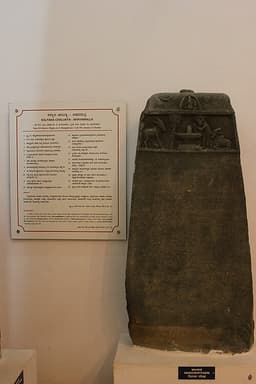
Tailapa II
Emperor · Medieval
60.4Total
Basic Information
Born
1769
957
Died
1821
997
Era
Modern
Medieval
Nationality
France
India
Occupation
General
Emperor
Civilization
Western
Indian
Score Comparison
Military (10%)
94.0
74.7
Political (20%)
72.0
53.8
Influence (20%)
40.0
61.0
Legacy (20%)
80.0
52.0
Leadership (15%)
78.0
72.0
Strategy (15%)
90.0
58.0
TOTAL
70.9
60.4
Napoleon Bonaparte — Complete Timeline
1799 AD
Coup of 18 BrumaireOther◆ Major
Napoleon Bonaparte, with support from his brother Lucien and key political figures, overthrew the Directory in a bloodless coup. He established the Consulate with himself as First Consul, effectively becoming the ruler of France. This event ended the French Revolution's most unstable period.
French RevolutionCoupRise to Power
Impact: regional
1804 AD
Promulgation of the Napoleonic CodeOther◆ Major
Napoleon enacted the Civil Code of the French, known as the Napoleonic Code, a comprehensive set of laws that replaced the fragmented feudal legal systems. The code established legal equality, protected property rights, and secularized law. It became the basis for legal systems in many European and world countries.
Legal ReformNapoleonic CodeCivil Law
Impact: globalconstructive
1805 AD
Battle of AusterlitzWar◆ Major
Napoleon's Grande Arm
Napoleonic WarsBattleDecisive Victory
Impact: global
1812 AD
Invasion of RussiaWar◆ Major
Napoleon led the Grande Arm
Napoleonic WarsInvasionDisaster
Impact: globaldestructive
1815 AD
Battle of WaterlooWar◆ Major
Napoleon's French army was defeated by the combined forces of the Duke of Wellington's Anglo-Allied army and Gebhard Leberecht von Bl
Napoleonic WarsBattleFinal Defeat
Impact: globaldestructive
Tailapa II — Complete Timeline
973 AD
Founding of the Western Chalukya DynastyPolitical Action◆ Major
Tailapa II overthrew the Rashtrakuta ruler Karka II and established the Western Chalukya dynasty. This marked the end of Rashtrakuta rule in the Deccan and the beginning of a new Chalukya era.
Impact: regional
995 AD
Defeat of the Paramara King MunjaWar◆ Major
Tailapa II defeated and captured the Paramara king Munja of Malwa. This victory consolidated Western Chalukya control over the northern Deccan and established their military reputation.
Impact: regional
Expert Analysis
Napoleon Bonaparte vs Tailapa II
# The Conqueror and the Restorer
On a June morning in 1815, Napoleon Bonaparte watched his Imperial Guard march for the last time into the muzzles of British cannons near a village called Waterloo. Thirty-eight years earlier and half a world away, in the Deccan plateau of India, a lesser-known warrior named Tailapa II was nursing a grievance that would take him nearly two decades to avenge. Two men, separated by eight centuries and vast cultural chasms, yet both driven by the same primal force: the will to seize history by the throat. But why did one become a name spoken in every language, while the other remains a footnote even in his own civilization’s story? The answer lies not in their ambition, but in the worlds they were born to inherit.
Origins
Napoleon Bonaparte was born in 1769 on the Mediterranean island of Corsica, a place that had just passed from Genoese to French control. His family was minor nobility, poor enough to feel hunger, proud enough to resent it. The French Revolution erupted when he was twenty, a young artillery officer trained in mathematics and the classics. That revolution did not merely open doors—it blew the roof off the old order. In France, talent suddenly mattered more than birth. A boy from a backwater could become emperor, provided he was ruthless enough and brilliant enough.
Tailapa II was born in 957 CE into a very different world. He was a scion of the Chalukya dynasty, which had ruled the Deccan centuries earlier but had been overthrown by the Rashtrakutas. In medieval India, legitimacy was everything. Tailapa’s claim to power rested not on revolutionary ideals but on bloodline, on the memory of a lost kingdom. He grew up in the shadow of usurpers, learning patience, strategy, and the art of waiting. His world was one of dynastic chess, not volcanic upheaval.
Rise to Power
Napoleon’s ascent was meteoric. At twenty-four, he drove the British out of Toulon. At twenty-six, he crushed a royalist uprising in Paris with a “whiff of grapeshot.” By thirty, he was First Consul of France. His path was paved by war, and he used it like a master mason. Each victory—the Italian campaign, Egypt, Austerlitz—was a stone in his monument. He understood that in revolutionary France, glory was currency, and he minted it on battlefields.
Tailapa II’s rise was glacial by comparison. For years, he gathered support from feudal lords who remembered Chalukya rule. In 973 CE, when the Rashtrakuta emperor Karka II was weakened by internal strife, Tailapa struck. He overthrew Karka and founded the Western Chalukya dynasty. It was not a revolution but a restoration. Where Napoleon invented a new order, Tailapa reclaimed an old one. The difference is crucial: Napoleon broke the world to remake it; Tailapa mended a broken world to restore it.
Leadership & Governance
As emperor, Napoleon was a whirlwind. He overhauled French law with the Napoleonic Code, centralized the bureaucracy, and created a meritocratic system that rewarded ability. He was a military genius of the highest order—his 94.0 military score is no accident. But he was also a political gambler, scoring 75.0, always pushing for more. He believed he could impose his will on a continent, and for a decade, he nearly did.
Tailapa II governed differently. His 67.3 military score reflects a competent but not transcendent commander. He defeated the Paramara king Munja in 995 CE, a victory that secured his northern frontier, but he never attempted the kind of continental domination Napoleon pursued. Instead, his 73.3 leadership score suggests a ruler who consolidated, built alliances, and managed a delicate balance of Deccan powers. His political score of 62.2 indicates he was more a restorer than a reformer. He did not write new laws; he revived old ones.
Triumph & Tragedy
Napoleon’s greatest moment was Austerlitz in 1805, where he destroyed a combined Russian and Austrian army. His tragedy was Waterloo in 1815, where overconfidence and a Prussian arrival undid him. He died in exile on Saint Helena, a prisoner of the British, still dreaming of glory.
Tailapa II’s triumph was the capture of Munja, a king who had mocked him. His tragedy was that his dynasty, though it lasted two centuries, never produced a figure of his stature. He died in 997 CE, having restored his family’s name but not having expanded it beyond the Deccan. His legacy score of 66.9 reflects a competent ruler who did not change the world.
Character & Destiny
Napoleon was possessed by a demon of ambition. “Impossible is a word to be found only in the dictionary of fools,” he said. He believed he could conquer anything—nations, women, even time itself. This hubris was his strength and his ruin. He could not stop, because stopping meant admitting he was mortal.
Tailapa II was more cautious, more patient. He understood that in India, empires were built on alliances and legitimacy, not just swords. His strategy score of 55.4 suggests he was no tactical genius, but he was a survivor. He knew when to wait and when to strike, a wisdom Napoleon never fully learned.
Legacy
Napoleon’s legacy is global. The Napoleonic Code influences legal systems from Europe to Latin America. His military tactics are still studied. His name is synonymous with ambition, genius, and overreach.
Tailapa II’s legacy is local. He is remembered in Karnataka as the founder of a dynasty that produced great temples and poets. His name appears in inscriptions, not textbooks. His 78.0 influence score is respectable but dwarfed by Napoleon’s 82.0.
Conclusion
The difference between these two men is not talent—both were extraordinary in their contexts. It is the stage they played on. Napoleon lived in an age of revolution, when a Corsican artilleryman could become emperor of Europe. Tailapa lived in an age of restoration, when a Chalukya prince could only reclaim what was lost. One changed the world; the other preserved it. And in that difference lies a truth about history: it rewards not just the bold, but the lucky—the ones born when the old order is dying, and the new one is there for the taking.
Rankings
🥇
Napoleon BonaparteLeader
Mil: 94.0Pol: 72.0Inf: 40.0
70.9
🥈
Tailapa II
Mil: 74.7Pol: 53.8Inf: 61.0
60.4
+10.5 behind
How This Comparison Works
Algorithm
Each figure is scored on 6 dimensions (0—100 scale) based on structured historical data: Military (10%), Political (20%), Influence (20%), Legacy (20%), Leadership (15%), Strategy (15%). The weighted total produces the final ranking.
Data Sources
Scores are computed from structured sub-indicators in the database. Scale factors adjust for era (Ancient ×0.85, Modern ×1.0) and civilization size (Eastern ×1.05, Other ×0.80) to account for differences in population and military scale.
Maximum 3 Figures
Comparisons are limited to 2—3 figures to ensure readability and statistical meaningfulness.
Error Margins
±5 points per dimension — Sub-scores are derived from historical records with inherent uncertainty. Two figures within 5 points on a dimension should be considered roughly equivalent in that area.
Total Score Accuracy
±3 points overall — The weighted combination of 6 dimensions produces a total score with approximately ±3 points of uncertainty. Differences of less than 3 points are not statistically significant— the figures are effectively tied.
Known Limitations
- Historical records are incomplete and uneven across civilizations
- Figures from oral-tradition societies may be underrepresented
- Occupation labels can misclassify multi-role figures
- Scores measure capability and impact, not moral character
- Quantitative scoring is a comparison tool, not absolute truth
Capability Radar
Military (10%) — Battles & Warfare
Battles
95
70
Win Rate
90
75
Expansion
95
75
Political (20%) — Governance & Reform
Reform
95
65
Diplomacy
80
60
Economy
85
65
Influence (20%) — Cultural & Global Reach
Cultural
85
55
Global
90
40
Legacy (20%) — Historical Impact
Historical
95
60
Longevity
90
50
Leadership (15%) — Power & Stability
Tenure
85
70
Stability
70
60
Strategy (15%) — Tactics & Innovation
Strategy
95
70
Tactics
98
65
Reform
92
60
Similar Comparisons
Comments & Discussion
WaterlooWitness6/16/2026
Napoleon lost at Waterloo because he was a tactical genius with a broken clock. He attacked Wellington's ridge too early, let the Prussians arrive, and refused to retreat like a stubborn cockerel. Tailapa II waited 23 years, studied the Rashtrakuta army's supply lines, and struck when they were divided. Patience beats brilliance every time—Napoleon was showboating, Tailapa was farming victory.
历史复盘手6/16/2026
拿波拿巴的失败不是天意,是数字。滑铁卢战场法军72000人,英普联军113000人,他硬要打。Tailapa II面对的是罗湿陀罗拘陀的三大军团,兵力是他的两倍,他先断粮道再夜袭,用8000人赢了30000人。拿破仑不懂资源配置,只会堆人头,跟股市梭哈没区别。数据告诉你们,复国的永远比扩张的会算账。
ClassicistCritic6/16/2026
Napoleon quoted Julius Caesar but never learned his lesson: overreach destroys. He invaded Russia with 600,000 men, lost 500,000, and still thought he was invincible. Tailapa II, like a good Kautilyan, knew that empire is built on legitimacy—he didn't just win battles, he systematically restored Chalukya institutions, temples, and tax systems. Napoleon built a house of cards; Tailapa rebuilt a temple of stone.
庙堂剑客6/16/2026
拿波拿巴一生征战57场,赢47场,最后败在了政治。滑铁卢之后他都没人追随了,连百日王朝都是靠回忆撑起来的。Tailapa II不一样,他前20年都在招募失散贵族的子孙,恢复被波斯人打断的僧伽信仰,把农民变成了士兵。打仗可以靠天才,但复国必须靠人民。拿破仑是彗星,Tailapa是地层。
AlternativeReader6/16/2026
The real comparison isn't battles—it's legacy. Napoleon's greatest creation was the Napoleonic Code, which 70+ countries still use. Tailapa II's greatest creation was... what exactly? He crushed the Rashtrakutas, sure, but his dynasty fell apart within 150 years. One restructured Europe forever, the other just changed who collected taxes in Karnataka. Sorry, but a light that guides the world outshines a lamp that only lights a room.
边疆史官6/16/2026
你们都在吹Tailapa II,但他赢了又能怎样?罗湿陀罗拘陀灭亡后,德干马上被穆斯林入侵者盯上,他的后裔连德里苏丹国都挡不住。拿破仑再怎么说,把法国大革命的火种带到了莱茵河畔,烧掉了神圣罗马帝国。一个是打开了旧世界的棺材盖,一个只是给旧棺材换了张标签。格局定高