Loading...
Charles de Gaulle vs Tailapa II
Charles de Gaulle leads by 7.8 pts · 2 figures compared
…
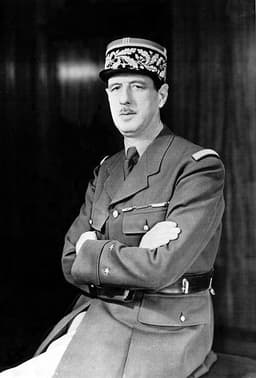
Charles de Gaulle
Politician · Modern
68.2Total
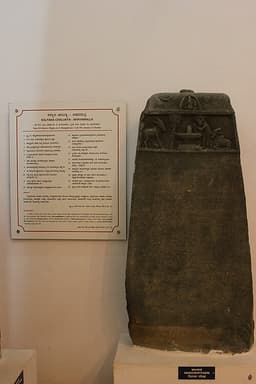
Tailapa II
Emperor · Medieval
60.4Total
Basic Information
Born
1890
957
Died
1970
997
Era
Modern
Medieval
Nationality
France
India
Occupation
Politician
Emperor
Civilization
Western
Indian
Score Comparison
Military (10%)
55.0
74.7
Political (20%)
75.0
53.8
Influence (20%)
65.0
61.0
Legacy (20%)
68.0
52.0
Leadership (15%)
78.0
72.0
Strategy (15%)
65.0
58.0
TOTAL
68.2
60.4
Charles de Gaulle — Complete Timeline
1940 AD
Appeal of 18 June 1940Political Action
From London, de Gaulle broadcast a radio appeal urging French resistance against Nazi occupation. He called on French soldiers and citizens to continue the fight, founding the Free French Forces and becoming the symbol of French defiance.
World War IIResistanceLeadership
Impact: nationalconstructive
1958 AD
Founding of the Fifth RepublicPolitical Action
De Gaulle returned to power during the Algerian crisis and oversaw the drafting of a new constitution. The Fifth Republic established a strong executive presidency, replacing the unstable parliamentary system of the Fourth Republic.
ConstitutionGovernment ReformPolitical System
Impact: nationalconstructive
1962 AD
End of the Algerian WarPolitical Action◆ Major
De Gaulle negotiated the
DecolonizationPeace TreatyAlgeria
Impact: regionalconstructive
1968 AD
May 1968 CrisisPolitical Action◆ Major
Mass student protests and general strikes paralyzed France, challenging de Gaulle's government. De Gaulle briefly fled to Germany, then returned to dissolve the National Assembly and call elections, which his party won, but his authority was weakened.
ProtestPolitical CrisisSocial Unrest
Impact: nationaldestructive
1969 AD
Resignation as PresidentPolitical Action
De Gaulle resigned after losing a referendum on regional reform and Senate restructuring. The defeat marked the end of his political career, as he withdrew from public life and died the following year.
ResignationPolitical DefeatReferendum
Impact: nationaltragic
Tailapa II — Complete Timeline
973 AD
Founding of the Western Chalukya DynastyPolitical Action◆ Major
Tailapa II overthrew the Rashtrakuta ruler Karka II and established the Western Chalukya dynasty. This marked the end of Rashtrakuta rule in the Deccan and the beginning of a new Chalukya era.
Impact: regional
995 AD
Defeat of the Paramara King MunjaWar◆ Major
Tailapa II defeated and captured the Paramara king Munja of Malwa. This victory consolidated Western Chalukya control over the northern Deccan and established their military reputation.
Impact: regional
Expert Analysis
Charles de Gaulle vs Tailapa II
# The General and the Emperor
On a June evening in 1940, a tall, awkward French general stood before a BBC microphone in London, his voice trembling slightly as he told his countrymen that "the flame of French resistance must not be extinguished." Few listened. Most French citizens, stunned by the Nazi blitzkrieg, had already resigned themselves to defeat. Across the centuries and continents, in 973 CE, another man—a warrior of the Deccan plateau named Tailapa II—raised his sword against the Rashtrakuta emperor Karka II, a ruler so despised that his own subjects welcomed the rebellion. Both men were outsiders who would reshape their worlds. But their paths diverged as dramatically as their fates.
Origins
Charles de Gaulle was born in 1890 into a devoutly Catholic, nationalist family in Lille. His father taught philosophy and history, filling the young Charles with tales of French glory and the humiliation of 1871, when Prussia seized Alsace-Lorraine. De Gaulle grew up with a sense of destiny so acute that as a child, he reportedly played at being the king of France. He entered the military academy of Saint-Cyr, served with distinction in World War I, and was wounded and captured at Verdun. Five escape attempts failed, but the experience forged in him an iron will and a conviction that France needed a leader who could see beyond the trenches.
Tailapa II, born in 957, belonged to a different world. He was a feudatory chief of the Rashtrakuta Empire, which had dominated the Deccan for two centuries. The Rashtrakutas were patrons of art and learning, but by the 970s, their power had rotted from within. Tailapa claimed descent from the earlier Chalukya dynasty, which the Rashtrakutas had overthrown. His identity was tied to restoration, not creation. Where de Gaulle dreamed of an eternal France, Tailapa dreamed of avenging his ancestors.
Rise to Power
De Gaulle’s rise was a slow, painful climb through a collapsing world. As a colonel in the 1930s, he wrote books arguing for mechanized warfare—ideas that were ignored by the French high command. When Germany invaded in 1940, he briefly commanded a tank division, but the defeat came too fast. His true ascent began in exile. The Appeal of 18 June was a gamble by a man with no army, no territory, and no legitimacy. Yet he refused to accept that France was finished. Over the next four years, he maneuvered among the Allies, suppressed rivals, and built the Free French Forces from scratch. By 1944, he entered Paris as the face of liberation.
Tailapa’s path was more direct, more brutal. In 973, he raised a rebellion against Karka II. The Rashtrakuta emperor had alienated his vassals and lost control of the countryside. Tailapa marched on the capital, Manyakheta, and in a single decisive campaign, killed Karka and seized the throne. There was no exile, no radio broadcast. He simply took what his ancestors had lost. Within months, he declared the Western Chalukya dynasty reborn.
Leadership & Governance
De Gaulle governed with a vision of national grandeur. He believed France could only be great if it were independent—from the United States, from NATO, from supranational authority. As president of the Fifth Republic, which he founded in 1958, he concentrated power in the executive, ending the revolving-door governments of the Fourth Republic. He withdrew France from NATO’s military command, developed an independent nuclear deterrent, and vetoed British entry into the European Economic Community. Domestically, he modernized the economy and promoted state-led industry. But his style was aloof, almost monarchical. He once said, "A country worthy of the name has no friends."
Tailapa ruled a medieval kingdom where governance meant war. He spent his reign consolidating control over the Deccan, fighting the Paramara king Munja of Malwa and the Chola emperor Rajaraja I. His greatest military triumph came in 995, when he captured Munja and humiliated him, reportedly forcing the Paramara king to wear a woman’s sari before executing him. This was not mere cruelty; it was a message to rivals that the Western Chalukyas would not be challenged. Tailapa also patronized temples and literature, but his state was a warrior’s state—centralized around the king’s person, sustained by plunder and tribute.
Triumph & Tragedy
De Gaulle’s greatest moment was the resolution of the Algerian War. In 1962, he signed the Évian Accords, granting independence to Algeria after a brutal eight-year conflict. The decision cost him the loyalty of the French army and the pieds-noirs settlers, who attempted a coup against him. But de Gaulle held firm, arguing that decolonization was the only way to preserve France’s global standing. His tragedy came in 1968, when student protests and a general strike paralyzed France. De Gaulle, bewildered by the youth revolt, briefly fled to Germany to consult with the French army commander. He returned, called elections, and won—but his aura was shattered. The following year, he lost a referendum on minor reforms and resigned. He died in 1970, a lonely figure.
Tailapa’s triumph was the founding of a dynasty that would last two centuries. He died in 997, having secured his kingdom against external threats and established a line of succession. His tragedy was that he left behind a system built on personal dominance. His successors would struggle to match his military prowess, and within generations, the Western Chalukyas would fragment.
Character & Destiny
De Gaulle was a man of immense ego and immense insecurity. He believed he was France, and in many ways, he was right. But his rigidity made him unable to adapt to the changing world of the 1960s. Tailapa was a pragmatist. He fought when necessary, negotiated when possible, and killed when useful. He had no illusions about a greater destiny—only the immediate goal of restoring his family’s honor.
Legacy
De Gaulle left behind a constitution, a nuclear arsenal, and a style of leadership that still defines French politics. He is remembered as the man who saved France’s honor twice: in 1940 and in 1958. Tailapa II is remembered by historians, but his name is not widely known outside India. His dynasty’s temples—such as the ones at Lakkundi and Gadag—stand as stone witnesses to his ambition.
Conclusion
Two men, two worlds. De Gaulle spoke to the ages; Tailapa spoke to his sword. One tried to restore a nation’s soul; the other, a family’s throne. Both succeeded, and both failed. Perhaps the difference lies not in their achievements, but in what they believed they were fighting for. De Gaulle fought for an idea of France that could never die. Tailapa fought for a kingdom that would eventually crumble. And yet, the kingdom lasted longer than the man who built it—while the idea, fragile and elusive, still haunts the general’s countrymen today.
Rankings
🥇
Charles de GaulleLeader
Mil: 55.0Pol: 75.0Inf: 65.0
68.2
🥈
Tailapa II
Mil: 74.7Pol: 53.8Inf: 61.0
60.4
+7.8 behind
How This Comparison Works
Algorithm
Each figure is scored on 6 dimensions (0—100 scale) based on structured historical data: Military (10%), Political (20%), Influence (20%), Legacy (20%), Leadership (15%), Strategy (15%). The weighted total produces the final ranking.
Data Sources
Scores are computed from structured sub-indicators in the database. Scale factors adjust for era (Ancient ×0.85, Modern ×1.0) and civilization size (Eastern ×1.05, Other ×0.80) to account for differences in population and military scale.
Maximum 3 Figures
Comparisons are limited to 2—3 figures to ensure readability and statistical meaningfulness.
Error Margins
±5 points per dimension — Sub-scores are derived from historical records with inherent uncertainty. Two figures within 5 points on a dimension should be considered roughly equivalent in that area.
Total Score Accuracy
±3 points overall — The weighted combination of 6 dimensions produces a total score with approximately ±3 points of uncertainty. Differences of less than 3 points are not statistically significant— the figures are effectively tied.
Known Limitations
- Historical records are incomplete and uneven across civilizations
- Figures from oral-tradition societies may be underrepresented
- Occupation labels can misclassify multi-role figures
- Scores measure capability and impact, not moral character
- Quantitative scoring is a comparison tool, not absolute truth
Capability Radar
Military (10%) — Battles & Warfare
Battles
60
70
Win Rate
55
75
Expansion
20
75
Political (20%) — Governance & Reform
Reform
95
65
Diplomacy
90
60
Economy
70
65
Influence (20%) — Cultural & Global Reach
Cultural
70
55
Global
80
40
Legacy (20%) — Historical Impact
Historical
85
60
Longevity
75
50
Leadership (15%) — Power & Stability
Tenure
85
70
Stability
75
60
Strategy (15%) — Tactics & Innovation
Strategy
85
70
Tactics
70
65
Reform
80
60
Similar Comparisons
Comments & Discussion
GallicGhost6/16/2026
De Gaulle’s BBC broadcast was a brilliant PR stunt, not a military miracle. In 1940, he commanded zero tanks or troops—just a microphone and a dream. Real leadership requires logistics, not rhetoric. Tailapa II? He actually seized power through brute force, crushing Karka II’s army in battle. De Gaulle’s “flame” was a metaphor; Tailapa’s sword spilled blood. History favors poets over pragmatists, but I’ll take a rebel who finishes the fight. #MilitaryHistorian
DeccanDagger6/16/2026
泰拉帕二世是真正的“铁血逆袭者”。他用西遮娄其的骑兵碾碎了罗湿陀罗拘陀的腐朽统治,就像一把匕首刺穿帝国的喉咙。戴高乐呢?他1944年才跟着盟军坦克回巴黎,像个被请回席位的客人。泰拉帕在973年就单枪匹马重建了王朝,戴高乐只是搭了英美顺风车。别跟我谈“自由法国”,那是一场政治剧,不是战争。 #军事历史学家
SkepticScribe6/16/2026
The comparison reeks of cherry-picked trivia. De Gaulle’s “flame” speech had zero listeners in 1940—BBC French service reached maybe 100,000 people, and most were abroad. Meanwhile, Tailapa’s revolt is documented in vague Sanskrit inscriptions, not reliable battle records. We’re comparing a radio voice with a legend. Data-wise, both are overhyped. De Gaulle didn’t liberate France; the Allies did. Tailapa’s “empire” was just a regional power grab. Let’s not pretend these are equivalent. #DataSkep
经典学者6/16/2026
比较这两位领袖就像拿罗马的凯旋式比雅典的悲剧。戴高乐流淌着高卢的修辞血液——他的《战争回忆录》刻意模仿凯撒的《高卢战记》,用“荣誉”和“命运”包装政治。泰拉帕二世则活在梵文铭文的战场里,他的壮举被刻在石柱上,没有装饰,只有战争和朝贡。戴高乐是文人笔下的英雄,泰拉帕是石匠凿出的帝王。古典世界的精神不同,别混淆了。 #古典学学者
GallicGrinder6/16/2026
De Gaulle was a mythmaker, not a conqueror. Tailapa II actually built an empire from scratch—the Western Chalukya dynasty lasted over 200 years. De Gaulle’s Fifth Republic? It’s been 65 years and still crumbling under gridlock. Tailapa didn’t need a constitution or radio speeches; he crushed the Rashtrakutas at Kalyani and installed his own rule. De Gaulle’s legacy is a big head and a