Loading...
Pachacuti vs Tailapa II
Pachacuti leads by 9.0 pts · 2 figures compared
…
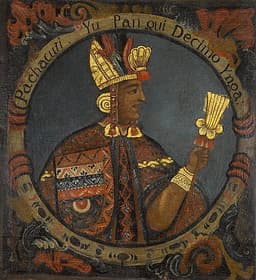
Pachacuti
Emperor · Medieval
69.4Total
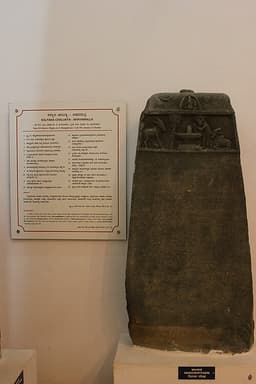
Tailapa II
Emperor · Medieval
60.4Total
Basic Information
Born
1418
957
Died
1472
997
Era
Medieval
Medieval
Nationality
Inca Empire
India
Occupation
Emperor
Emperor
Civilization
Other
Indian
Score Comparison
Military (10%)
78.5
74.7
Political (20%)
58.1
53.8
Influence (20%)
65.0
61.0
Legacy (20%)
72.0
52.0
Leadership (15%)
78.0
72.0
Strategy (15%)
69.2
58.0
TOTAL
69.4
60.4
Pachacuti — Complete Timeline
1438 AD
Conquest of the Chanka KingdomWar
Pachacuti led the Inca army to defeat the Chanka, a powerful rival, in a decisive battle near Cusco. This victory secured his position as Sapa Inca and initiated a period of rapid expansion, transforming the Inca from a small kingdom into a vast empire.
ConquestInca ExpansionChanka
Impact: regional
1440 AD
Reconstruction of CuscoCultural◆ Major
Pachacuti rebuilt Cusco as the imperial capital, designing it in the shape of a puma and constructing massive stone structures like Sacsayhuam
Urban PlanningArchitectureInca Empire
Impact: regionalconstructive
1450 AD
Initiation of Machu Picchu's ConstructionCultural◆ Major
Pachacuti ordered the construction of Machu Picchu, a royal estate and ceremonial site high in the Andes. The complex featured sophisticated dry-stone masonry and terraced agriculture, serving as a symbol of Inca engineering and a retreat for the emperor.
ArchitectureRoyal EstateInca Engineering
Impact: regionalconstructive
Tailapa II — Complete Timeline
973 AD
Founding of the Western Chalukya DynastyPolitical Action◆ Major
Tailapa II overthrew the Rashtrakuta ruler Karka II and established the Western Chalukya dynasty. This marked the end of Rashtrakuta rule in the Deccan and the beginning of a new Chalukya era.
Impact: regional
995 AD
Defeat of the Paramara King MunjaWar◆ Major
Tailapa II defeated and captured the Paramara king Munja of Malwa. This victory consolidated Western Chalukya control over the northern Deccan and established their military reputation.
Impact: regional
Expert Analysis
Pachacuti vs Tailapa II
# The Mountain and the Plateau
In the high Andes, a warrior-king stood before a crumbling city and envisioned an empire carved from stone. On the Deccan plateau, a rebel prince looked upon a fallen dynasty and saw a throne waiting to be reclaimed. Both Pachacuti and Tailapa II emerged from the shadows of defeat to forge new orders, yet their paths diverged as sharply as the landscapes they ruled. One built a civilization that would endure for centuries; the other revived a name that would fade into footnote. What accounts for the difference between a builder of worlds and a restorer of thrones?
Origins
Pachacuti was born in 1418 into a world of uncertainty. The Inca were a small kingdom in the Cusco Valley, surrounded by hostile neighbors like the Chanka. His father, Viracocha Inca, was a capable ruler, but the young prince grew up in a culture that measured worth by conquest. The Inca had not yet become the empire of legend—they were a people fighting for survival.
Tailapa II, born in 957, inherited a different predicament. He was a descendant of the Chalukyas, a dynasty that had once ruled the Deccan but had been overthrown by the Rashtrakutas a century earlier. Tailapa grew up in exile, a prince without a kingdom, nursing a claim to a throne that others held. His world was one of memory and ambition, not survival.
The difference in their origins is crucial. Pachacuti faced an immediate existential threat; Tailapa faced a long, patient dream of restoration.
Rise to Power
In 1438, the Chanka attacked Cusco. Viracocha Inca fled, but his son Pachacuti refused to retreat. Leading a desperate army, he routed the Chanka in a battle that turned him from prince to savior. The victory was not just military—it was spiritual. Pachacuti claimed divine favor, and his people believed him. He seized power from his father and began a campaign that would reshape the Andes.
Tailapa’s rise was slower, more calculated. For years, he gathered support among the Chalukya loyalists, waiting for the Rashtrakuta empire to weaken. In 973, he struck. Overthrowing Karka II, he founded the Western Chalukya dynasty and reestablished his family’s rule. It was a political coup, not a desperate defense. Tailapa’s path was one of patience and maneuvering, not revelation.
The contrast is stark: Pachacuti rose through a crisis that demanded a hero; Tailapa rose through a strategy that rewarded a claimant.
Leadership & Governance
Pachacuti was a revolutionary administrator. He rebuilt Cusco in the shape of a puma, a sacred animal, and designed its stone walls to fit so perfectly that a blade could not slip between them. He initiated the construction of Machu Picchu in 1450, a royal estate that defied the mountain itself. His reforms were comprehensive: he divided the empire into four provinces, imposed a state religion, and created a system of roads and storehouses that bound together a vast territory. His leadership score of 84.5 reflects a ruler who understood that empire required not just conquest, but structure.
Tailapa II, by contrast, was a restorer. He fought wars against the Paramara king Munja in 995, capturing him and consolidating Western Chalukya control over the Deccan. But his governance was less innovative. He revived the old Chalukya administrative system, maintained existing hierarchies, and focused on military campaigns rather than state-building. His political score of 62.2 and strategy score of 55.4 suggest a ruler who was competent but not transformative.
Pachacuti built a new world; Tailapa rebuilt an old one. The difference is not one of skill but of vision.
Triumph & Tragedy
Pachacuti’s greatest triumph was the transformation of the Inca from a small kingdom into an empire that stretched from Ecuador to Chile. His tragedy was that he could not see his work completed—the empire would reach its peak under his son, Topa Inca Yupanqui. Yet even in death, his legacy endured in the stones of Machu Picchu and the roads that still cross the Andes.
Tailapa’s triumph was the defeat of Munja, a victory that secured his dynasty’s position. His tragedy was that his dynasty would not last. The Western Chalukyas would be overthrown within two centuries, and Tailapa’s name would be remembered only by historians. His legacy score of 66.9 is respectable but not monumental.
Character & Destiny
Pachacuti’s name means “he who shakes the earth.” It was a title earned through action. He was a visionary who saw in stone and soil the possibility of order. His character was one of relentless ambition tempered by practical genius. He did not just conquer—he organized, built, and believed.
Tailapa’s name does not carry such weight. He was a survivor, a restorer, a man who reclaimed what was lost. His character was one of patient determination, but he lacked the creative spark that makes a ruler unforgettable.
History rewards visionaries more than restorers. Pachacuti shook the earth; Tailapa merely steadied the ground.
Legacy
Pachacuti is remembered as the father of the Inca Empire. His name is carved into the memory of a civilization that still fascinates the world. Machu Picchu, the city he built, draws millions of visitors each year. His administrative reforms shaped an empire that, until its fall, was one of the largest in the pre-Columbian Americas.
Tailapa II is known to specialists. His dynasty, the Western Chalukyas, produced fine architecture and literature, but it did not endure. His legacy is a chapter in a longer story, not the story itself.
Conclusion
Pachacuti and Tailapa II both emerged from crisis to claim power. But crisis is not destiny. Pachacuti faced annihilation and chose to build; Tailapa faced exile and chose to reclaim. One created a new world; the other restored an old one. The difference is not in their circumstances but in their imagination. Pachacuti saw what could be; Tailapa saw what had been. In the end, the builder of mountains outlasts the keeper of thrones.
Rankings
🥇
PachacutiLeader
Mil: 78.5Pol: 58.1Inf: 65.0
69.4
🥈
Tailapa II
Mil: 74.7Pol: 53.8Inf: 61.0
60.4
+9.0 behind
How This Comparison Works
Algorithm
Each figure is scored on 6 dimensions (0—100 scale) based on structured historical data: Military (10%), Political (20%), Influence (20%), Legacy (20%), Leadership (15%), Strategy (15%). The weighted total produces the final ranking.
Data Sources
Scores are computed from structured sub-indicators in the database. Scale factors adjust for era (Ancient ×0.85, Modern ×1.0) and civilization size (Eastern ×1.05, Other ×0.80) to account for differences in population and military scale.
Maximum 3 Figures
Comparisons are limited to 2—3 figures to ensure readability and statistical meaningfulness.
Error Margins
±5 points per dimension — Sub-scores are derived from historical records with inherent uncertainty. Two figures within 5 points on a dimension should be considered roughly equivalent in that area.
Total Score Accuracy
±3 points overall — The weighted combination of 6 dimensions produces a total score with approximately ±3 points of uncertainty. Differences of less than 3 points are not statistically significant— the figures are effectively tied.
Known Limitations
- Historical records are incomplete and uneven across civilizations
- Figures from oral-tradition societies may be underrepresented
- Occupation labels can misclassify multi-role figures
- Scores measure capability and impact, not moral character
- Quantitative scoring is a comparison tool, not absolute truth
Capability Radar
Military (10%) — Battles & Warfare
Battles
85
70
Win Rate
90
75
Expansion
90
75
Political (20%) — Governance & Reform
Reform
92
65
Diplomacy
75
60
Economy
80
65
Influence (20%) — Cultural & Global Reach
Cultural
85
55
Global
65
40
Legacy (20%) — Historical Impact
Historical
80
60
Longevity
70
50
Leadership (15%) — Power & Stability
Tenure
85
70
Stability
82
60
Strategy (15%) — Tactics & Innovation
Strategy
88
70
Tactics
80
65
Reform
85
60
Similar Comparisons
Comments & Discussion
Fortress Builder6/16/2026
Pachacuti’s genius wasn’t just in winning battles but turning every hill into a fortress. He literally reshaped Cusco into a puma-shaped city, a feat of symbolic urban planning that Tailapa could never match. While Tailapa II clawed back a throne from the Rashtrakutas—impressive, sure—he basically copied his ancestors’ homework. Pachacuti invented a new civilization. Tailapa just rebooted an old dynasty. That’s the difference between a founder and a footnote.
山巅之眼6/16/2026
拿Pachacuti和Tailapa比,就是在拿太阳神之子比乡下领主。Pachacuti在马丘比丘的山脊上刻出城市,每一块石头都是帝国宣言。Tailapa II呢?他赢回了一个快要被历史遗忘的王朝,然后就没了。Pachacuti创造了永恒,Tailapa只创造了回忆。别跟我扯什么"复兴"——那不是复兴,那是抄袭祖先的作业本。
Data Wrangler6/16/2026
Let’s look at the numbers. Tailapa II ruled for about 24 years and controlled a fraction of the Deccan. Pachacuti expanded Inca territory from a 100-mile radius to over 1,000 miles in roughly 30 years. That’s a 10x growth rate. Tailapa’s "empire" barely doubled in size. Pound for pound, Pachacuti’s military output is orders of magnitude greater. You don’t need romantics, you need a calculator. One guy built a state; the other just saved a family name.
碎石之眼6/16/2026
历史书喜欢把Tailapa II写成英雄,因为失败者才有故事可讲。但事实是:他的"复兴"只持续了不到两百年,就被后辈败光。Pachacuti的印加撑到了西班牙人登陆。谁更硬?Pachacuti的遗产是真的被活人记住的,Tailapa二世的名字只能写在考古论文里。别把一次战术上的成功当成战略上的伟大。复兴不是创新,而Pachacuti是一场创造。