Loading...
Al-Mustansir vs Kamehameha V
Al-Mustansir leads by 10.6 pts · 2 figures compared
…
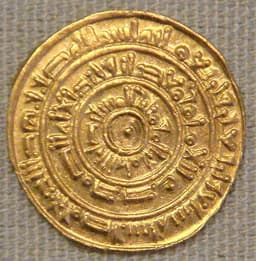
Al-Mustansir
Emperor · Medieval
55.6Total
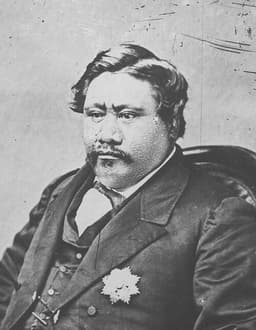
Kamehameha V
Emperor · Modern
45.0Total
Basic Information
Born
1192
1830
Died
1242
1872
Era
Medieval
Modern
Nationality
Abbasid Caliphate
Hawaii
Occupation
Emperor
Emperor
Civilization
Middle Eastern
Other
Score Comparison
Military (10%)
20.0
11.3
Political (20%)
68.0
46.6
Influence (20%)
55.0
50.2
Legacy (20%)
58.0
42.5
Leadership (15%)
71.0
74.0
Strategy (15%)
45.0
26.5
TOTAL
55.6
45.0
Al-Mustansir — Complete Timeline
1227 AD
Foundation of the Mustansiriya MadrasaCultural◆ Major
Al-Mustansir established the Mustansiriya Madrasa in Baghdad, a major educational institution that taught Islamic law, medicine, mathematics, and literature. It became one of the most prominent centers of learning in the medieval Islamic world, operating for centuries.
Impact: regionalconstructive
Kamehameha V — Complete Timeline
1863 AD
Ascended to the Throne as Kamehameha VPolitical Action◆ Major
Lot Kapuāiwa became King Kamehameha V after the death of his brother Kamehameha IV. He was the last monarch of the Kamehameha dynasty.
Impact: national
1864 AD
Promulgated the 1864 ConstitutionReform◆ Major
Kamehameha V abrogated the 1852 constitution and promulgated a new one that increased royal power. The 1864 constitution abolished the office of kuhina nui (premier), gave the king veto power, and restricted suffrage to property owners.
Impact: national
1865 AD
Oversaw Economic Growth and Public WorksReform
Kamehameha V promoted economic development, including the expansion of the sugar industry, construction of roads and harbors, and the establishment of the Hawaiian Board of Health. His reign saw increased foreign investment and trade.
Impact: nationalconstructive
1867 AD
Refused to Sign the Reciprocity TreatyPolitical Action◆ Major
Kamehameha V refused to sign a reciprocity treaty with the United States that would have reduced tariffs on Hawaiian sugar. He believed the treaty would compromise Hawaiian sovereignty and lead to American domination.
Impact: national
1872 AD
Died Without an HeirOther◆ Major
Kamehameha V died without naming an heir, ending the Kamehameha dynasty. His death triggered a succession crisis that led to the election of Lunalilo as the next king.
Impact: nationaltragic
Expert Analysis
Al-Mustansir vs Kamehameha V
# The Scholar and the Sovereign: Al-Mustansir and Kamehameha V
On a sweltering summer day in 1227, the streets of Baghdad hummed with the sound of hammers and chisels. Workers were laying the final stones of what would become the Mustansiriya Madrasa, a sprawling complex of lecture halls, libraries, and courtyards. Its patron, the Abbasid Caliph Al-Mustansir, stood watching, his robes dusty from the construction site. Seven hundred years later and half a world away, another monarch—Kamehameha V of Hawaii—sat in his palace in Honolulu, staring at a document that would define his reign. The 1864 Constitution lay before him, a piece of parchment that would either preserve his kingdom’s traditions or sweep them away. Both men faced the same fundamental question: how to rule in an age of change. But their answers—and their fates—could not have been more different.
Origins
Al-Mustansir was born into the twilight of the Abbasid Caliphate, a dynasty that had once ruled from Spain to Persia but now controlled little more than Iraq. His father, Caliph Al-Nasir, had spent decades trying to revive the caliphate’s prestige through diplomacy and religious authority. Young Al-Mustansir grew up in a world where the caliph’s power was more symbolic than real, where Mongol armies were gathering on the eastern horizon, and where the great Islamic civilization was fragmenting into rival sultanates. He inherited a throne that required careful negotiation between military commanders, religious scholars, and urban merchants.
Kamehameha V, born Lot Kapuāiwa in 1830, came from a different kind of twilight. His grandfather, Kamehameha I, had united the Hawaiian Islands through conquest just forty years before. By Lot’s birth, Hawaii was already caught in the gravitational pull of Western powers—American missionaries, British traders, and French warships. His education was a strange hybrid: traditional Hawaiian chants and navigation alongside English grammar and Christian theology. He was a man of two worlds, fluent in both, comfortable in neither.
Rise to Power
Al-Mustansir’s path to power was straightforward. He was the designated heir, and when his father died in 1226, he ascended the throne without opposition. But inheriting the caliphate in 1226 was like inheriting a sinking ship—the treasury was empty, the army was weak, and the Mongols under Genghis Khan had already ravaged the eastern Islamic world. Al-Mustansir’s challenge was not to expand his power but to preserve what remained.
Kamehameha V’s rise was more complicated. He became king in 1863 at age thirty-three, following the sudden death of his brother Kamehameha IV. The new king had spent years as a diplomat in Europe and America, observing how constitutional monarchies worked—and how they often failed. He returned to Hawaii with a clear vision: the monarchy must be strong enough to resist the encroaching powers. His brother had tried a liberal constitution in 1852 that gave significant power to an elected legislature, but Lot saw this as a path to American annexation.
Leadership & Governance
Here the two rulers diverged most sharply. Al-Mustansir’s great achievement was the Mustansiriya Madrasa, founded in 1227. This was no ordinary school—it was a university that taught Islamic law, medicine, mathematics, and astronomy. Students received stipends, lived in dormitories, and studied under the finest scholars of the age. The madrasa became a beacon of learning in a darkening world, attracting students from as far as Spain and India. Al-Mustansir understood that in an age of political decline, cultural preservation was the highest form of leadership. As a contemporary chronicler wrote, “He built a citadel of knowledge when the walls of Baghdad were crumbling.”
Kamehameha V chose a different path. In 1864, he simply abrogated the existing constitution and promulgated his own, which concentrated power in the monarchy. He personally appointed judges, controlled the cabinet, and reduced the legislature to an advisory role. Then he set about building roads, harbors, and sugar plantations. He expanded Hawaii’s economy but refused to sign a reciprocity treaty with the United States in 1867, fearing it would lead to annexation. His leadership was decisive but autocratic—he believed that only a strong king could protect Hawaii from the wolves at the door.
Triumph & Tragedy
Al-Mustansir’s triumph was the Mustansiriya, which survived for centuries after his death, educating generations of scholars. His tragedy was that he could not save Baghdad. When the Mongols sacked the city in 1258, sixteen years after his death, they threw the madrasa’s books into the Tigris River, turning the water black with ink. All his learning could not stop the horsemen.
Kamehameha V’s triumph was economic growth and political stability during his reign. His tragedy was more personal: he died in 1872 without naming an heir, ending the Kamehameha dynasty. His refusal to accept a liberal constitution had preserved Hawaiian sovereignty in the short term, but his failure to secure a succession left the kingdom vulnerable. Within twenty years, American businessmen would overthrow the monarchy and annex Hawaii.
Character & Destiny
Al-Mustansir was a builder, not a warrior. His military score of 37 reflects a ruler who chose libraries over battalions. He seemed to understand that the Abbasid Caliphate could not match Mongol military power, so he invested in what would endure: knowledge. His leadership score of 74.4 suggests a man who ruled through persuasion and patronage rather than force.
Kamehameha V was a fighter in a different arena. His leadership score of 78.5 reflects a man of iron will who believed that authority must be concentrated to be effective. But his political score of 50.2 reveals the flaw: he could not build the coalitions necessary for long-term survival. He ruled by decree, but decrees cannot name successors.
Legacy
Al-Mustansir is remembered today primarily for the Mustansiriya, which still stands in Baghdad as a symbol of Islamic scholarship. His name appears in textbooks on medieval education, not on lists of great conquerors. He chose preservation over expansion, and in that choice, he found a quiet immortality.
Kamehameha V is remembered as the last king of the Kamehameha line, a monarch who tried to hold back the tide of Western influence. His constitution is studied as a failed experiment in royal absolutism. His refusal to sign the reciprocity treaty is debated by historians as either wise nationalism or foolish isolationism. He is a tragic figure—a strong king who could not find a way to make his strength last.
Conclusion
Standing at the Mustansiriya today, one can still see the arches where students once sat studying jurisprudence and astronomy. In Honolulu, the Iolani Palace stands as a monument to a kingdom that vanished. Both rulers faced the same dilemma: how to preserve a civilization in an age of upheaval. Al-Mustansir built a school; Kamehameha V built a constitution. One chose culture, the other chose power. The school outlasted the caliphate. The constitution outlasted the king—but not the kingdom. Perhaps the lesson is that no ruler can truly halt the forces of history; they can only decide what to leave behind when the tide comes in.
Rankings
🥇
Al-MustansirLeader
Mil: 20.0Pol: 68.0Inf: 55.0
55.6
🥈
Kamehameha V
Mil: 11.3Pol: 46.6Inf: 50.2
45.0
+10.6 behind
How This Comparison Works
Algorithm
Each figure is scored on 6 dimensions (0—100 scale) based on structured historical data: Military (10%), Political (20%), Influence (20%), Legacy (20%), Leadership (15%), Strategy (15%). The weighted total produces the final ranking.
Data Sources
Scores are computed from structured sub-indicators in the database. Scale factors adjust for era (Ancient ×0.85, Modern ×1.0) and civilization size (Eastern ×1.05, Other ×0.80) to account for differences in population and military scale.
Maximum 3 Figures
Comparisons are limited to 2—3 figures to ensure readability and statistical meaningfulness.
Error Margins
±5 points per dimension — Sub-scores are derived from historical records with inherent uncertainty. Two figures within 5 points on a dimension should be considered roughly equivalent in that area.
Total Score Accuracy
±3 points overall — The weighted combination of 6 dimensions produces a total score with approximately ±3 points of uncertainty. Differences of less than 3 points are not statistically significant— the figures are effectively tied.
Known Limitations
- Historical records are incomplete and uneven across civilizations
- Figures from oral-tradition societies may be underrepresented
- Occupation labels can misclassify multi-role figures
- Scores measure capability and impact, not moral character
- Quantitative scoring is a comparison tool, not absolute truth
Capability Radar
Military (10%) — Battles & Warfare
Battles
5
4
Win Rate
5
9
Expansion
5
11
Political (20%) — Governance & Reform
Reform
70
20
Diplomacy
40
30
Economy
50
35
Influence (20%) — Cultural & Global Reach
Cultural
70
30
Global
50
10
Legacy (20%) — Historical Impact
Historical
65
35
Longevity
60
20
Leadership (15%) — Power & Stability
Tenure
60
40
Stability
30
25
Strategy (15%) — Tactics & Innovation
Strategy
5
15
Tactics
5
15
Reform
5
21
Similar Comparisons
Comments & Discussion
IRONFIST6/16/2026
This comparison's an insult to Kamehameha V. Al-Mustansir built a madrasa and ruled as a puppet; Kamehameha V literally drafted the 1864 Constitution, fought foreign minister Robert Wyllie tooth and nail, and defended Hawaiian sovereignty against American missionaries. The Abbasids were already dead men walking—Baghdad fell to Mongols in 1258. Hawaii? Kamehameha V kept it independent until his death. Building libraries doesn't equal preserving a kingdom's soul.
书斋剑客6/16/2026
拿一个建了几间图书馆的傀儡哈里发跟夏威夷最后的实权君主比,简直是侮辱常识。穆斯坦绥尔在位仅十几年就被蒙古屠城,合罕五世可是实实在在通过1864年宪法废除了《Kuokoa》的影响力,强推夏威夷语公立教育。巴格达的末日从阿拔斯内部分裂就注定了,而卡美哈梅哈五世是靠自己本事把外国势力推到了门外一个朝代。懂历史的人自己掂量。