Loading...
Al-Mustansir vs Alexios I Komnenos
Alexios I Komnenos leads by 22.8 pts · 2 figures compared
…
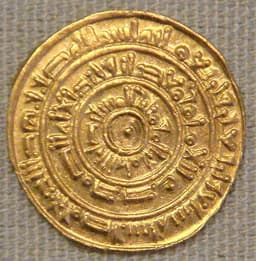
Al-Mustansir
Emperor · Medieval
55.6Total
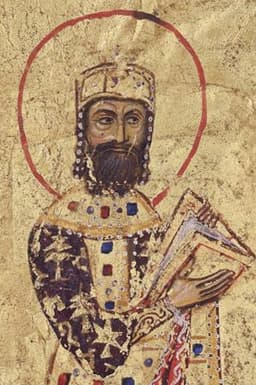
Alexios I Komnenos
Emperor · Medieval
78.4Total
Basic Information
Born
1192
1048
Died
1242
1118
Era
Medieval
Medieval
Nationality
Abbasid Caliphate
Byzantine Empire
Occupation
Emperor
Emperor
Civilization
Middle Eastern
Western
Score Comparison
Military (10%)
20.0
61.7
Political (20%)
68.0
78.0
Influence (20%)
55.0
88.0
Legacy (20%)
58.0
80.0
Leadership (15%)
71.0
78.0
Strategy (15%)
45.0
68.0
TOTAL
55.6
78.4
Al-Mustansir — Complete Timeline
1227 AD
Foundation of the Mustansiriya MadrasaCultural◆ Major
Al-Mustansir established the Mustansiriya Madrasa in Baghdad, a major educational institution that taught Islamic law, medicine, mathematics, and literature. It became one of the most prominent centers of learning in the medieval Islamic world, operating for centuries.
Impact: regionalconstructive
Alexios I Komnenos — Complete Timeline
1081 AD
Battle of DyrrhachiumWar◆ Major
Alexios I Komnenos was defeated by the Norman army under Robert Guiscard at Dyrrhachium. The Byzantine forces were routed, and Alexios barely escaped. This loss allowed the Normans to occupy much of the western Balkans, though Alexios later recovered some territory.
Norman InvasionDefeatBalkans
Impact: regionaltragic
1090 AD
Reforms of the Byzantine Military and EconomyReform◆ Major
Alexios I implemented a series of reforms to restore Byzantine power. He reorganized the army by relying more on foreign mercenaries, reformed the currency (the hyperpyron), and granted tax exemptions to the Church. These measures stabilized the empire after decades of decline.
Military ReformEconomic ReformKomnenian Restoration
Impact: nationalconstructive
1095 AD
Appeal to the West: Council of PiacenzaPolitical Action
Alexios I sent envoys to Pope Urban II at the Council of Piacenza, requesting military aid against the Seljuk Turks. This appeal contributed to Urban's call for the First Crusade at the Council of Clermont later that year, initiating the Crusader movement.
First CrusadePope Urban IISeljuk Turks
Impact: global
1097 AD
First Crusade: Siege of NicaeaWar◆ Major
Alexios I cooperated with the Crusader army to besiege and capture Nicaea from the Seljuk Turks. The city was surrendered to Byzantine control, and Alexios used the Crusaders to recover key territories in Anatolia, though tensions later arose over land claims.
First CrusadeNicaeaByzantine-Crusader Relations
Impact: regionalconstructive
Expert Analysis
Alexios I Komnenos vs Al-Mustansir
# The Emperor and the Caliph: Two Paths of Medieval Power
On a dusty plain near Dyrrhachium in October 1081, Alexios I Komnenos watched his army shatter. Norman lances drove through Byzantine lines, and the newly crowned emperor barely escaped with his life. Forty-six years later, in the bustling streets of Baghdad, Al-Mustansir presided over the opening of a grand madrasa, its courtyards filled with scholars debating law and medicine. One man rebuilt an empire through war and diplomacy; the other built a legacy through learning and patience. Both faced the same fundamental question of medieval rule—how to hold power in a world of shifting loyalties—but their answers could not have been more different.
Origins
Alexios was born into the Byzantine military aristocracy in 1048, a world where the empire’s frontiers were collapsing. The Seljuk Turks had crushed the imperial army at Manzikert in 1071, and Norman adventurers were carving out kingdoms in southern Italy. His family, the Komnenoi, had produced generals and rebels, and young Alexios learned early that survival meant mastering the art of intrigue. He rose through the ranks as a soldier, commanding troops against rebels and Turks alike, his mind sharpened by constant crisis.
Al-Mustansir entered a very different world in 1192. The Abbasid Caliphate was a shadow of its former glory, reduced to a ceremonial and religious authority in Baghdad while military power belonged to the Seljuk sultans and, increasingly, to the Khwarazmian empire. His father, Al-Zahir, had restored some dignity to the caliphate, but the family’s role was to bless, not to command. Al-Mustansir grew up in the palace, surrounded by scholars and poets, learning that a caliph’s true weapon was not the sword but the word.
Rise to Power
Alexios seized the throne in 1081 through a military coup, marching on Constantinople while the previous emperor, Nikephoros III Botaneiates, dithered. At thirty-three, Alexios was young, ambitious, and desperately needed. The treasury was empty, the army was a collection of mercenaries and demoralized veterans, and enemies pressed from every side. He was crowned in Hagia Sophia, a man who knew that legitimacy meant nothing without survival.
Al-Mustansir became caliph in 1226, inheriting a position that was more spiritual than political. His rise was quiet, almost ceremonial—a matter of succession rather than conquest. He did not storm gates or defeat rivals; he simply waited his turn. The caliphate he inherited was a religious institution that happened to control Baghdad, and Al-Mustansir understood that his power lay not in armies but in the moral authority of his office.
Leadership & Governance
Alexios governed through improvisation and iron will. He reformed the Byzantine military by relying increasingly on foreign mercenaries—Varangians, Normans, and Turks—while granting land grants (pronoiain) to loyal aristocrats in exchange for military service. He debased the currency to pay his troops and negotiated ruthlessly with Venice for naval support. His political genius lay in playing enemies against each other: he used the First Crusade as a tool to recover Anatolian cities from the Turks, though he never fully trusted the crusaders. The Siege of Nicaea in 1097 showed his method: he cooperated with the crusading army but insisted on Byzantine control of the surrendered city, a masterclass in using others’ strength for one’s own ends.
Al-Mustansir governed through patience and patronage. His single greatest act was the foundation of the Mustansiriya Madrasa in 1227, a monumental institution that taught Islamic law, medicine, mathematics, and literature. It was the first madrasa to teach all four Sunni schools of law under one roof, and its library rivaled any in the Islamic world. Al-Mustansir understood that in an age of military decline, cultural power was the only lasting power. He could not defeat the Mongols or the Khwarazmians on the battlefield, but he could ensure that Baghdad remained the intellectual capital of the Islamic world.
Triumph & Tragedy
Alexios’s greatest triumph was survival itself. He held the Byzantine Empire together for thirty-seven years, recovering lost territories in Anatolia and the Balkans, and establishing the Komnenian dynasty that would rule for a century. His greatest tragedy was the First Crusade itself: he had asked for a few hundred mercenaries and received tens of thousands of armed pilgrims who despised him as much as they needed him. The crusaders carved out their own kingdoms in Antioch and Jerusalem, and Alexios spent the rest of his reign trying to limit the damage.
Al-Mustansir’s triumph was the Mustansiriya Madrasa, which educated generations of scholars and became a model for Islamic institutions across the world. His tragedy was that he built a house of learning while the house of Abbasid power was crumbling. The Mongols were gathering on the eastern horizon, and within sixteen years of his death, Baghdad would fall to Hulagu Khan, the madrasa’s books thrown into the Tigris.
Character & Destiny
Alexios was a pragmatist, a man who could weep in public to win sympathy and betray an ally when necessary. His memoirs, written by his daughter Anna Komnene, show a ruler consumed by anxiety, constantly calculating, never resting. He was not a great general—his military score of 71.2 reflects competence, not brilliance—but he was a great survivor. His destiny was to hold a crumbling empire together long enough for his successors to rebuild.
Al-Mustansir was a builder, not a warrior. His military score of 37.0 is the lowest among the two, but his political score of 66.6 and leadership score of 74.4 show a man who understood soft power. He was patient where Alexios was frantic, scholarly where Alexios was martial. His destiny was to create something beautiful in the shadow of destruction, a monument to knowledge that would outlast his dynasty.
Legacy
Alexios is remembered as the founder of the Komnenian restoration, the emperor who began the Crusades and saved Byzantium from collapse. His legacy is complex: he strengthened the empire but also opened the door to Western intervention that would eventually contribute to the Fourth Crusade’s sack of Constantinople in 1204. His total score of 74.7 reflects a ruler who was effective but not transformative.
Al-Mustansir is remembered as a patron of learning, the caliph who built the Mustansiriya Madrasa. His legacy is quieter but perhaps more enduring: the madrasa continued to function for centuries, a symbol of Baghdad’s intellectual golden age. His total score of 65.3 is lower, but it measures a different kind of power—not military conquest but cultural influence.
Conclusion
One emperor rebuilt an empire through war and diplomacy, holding back the tide of Norman and Turkish invasion. One caliph built a school, trusting that knowledge would outlast armies. Both were right in their own way, and both were wrong. Alexios’s empire fell, and Al-Mustansir’s Baghdad was sacked. But the Mustansiriya Madrasa was rebuilt, and the Komnenian dynasty’s story still echoes in the chronicles of the Crusades. The difference between them is not a matter of better or worse, but of what kind of power endures—and for whom.
Rankings
🥇
Alexios I KomnenosLeader
Mil: 61.7Pol: 78.0Inf: 88.0
78.4
🥈
Al-Mustansir
Mil: 20.0Pol: 68.0Inf: 55.0
55.6
+22.8 behind
How This Comparison Works
Algorithm
Each figure is scored on 6 dimensions (0—100 scale) based on structured historical data: Military (10%), Political (20%), Influence (20%), Legacy (20%), Leadership (15%), Strategy (15%). The weighted total produces the final ranking.
Data Sources
Scores are computed from structured sub-indicators in the database. Scale factors adjust for era (Ancient ×0.85, Modern ×1.0) and civilization size (Eastern ×1.05, Other ×0.80) to account for differences in population and military scale.
Maximum 3 Figures
Comparisons are limited to 2—3 figures to ensure readability and statistical meaningfulness.
Error Margins
±5 points per dimension — Sub-scores are derived from historical records with inherent uncertainty. Two figures within 5 points on a dimension should be considered roughly equivalent in that area.
Total Score Accuracy
±3 points overall — The weighted combination of 6 dimensions produces a total score with approximately ±3 points of uncertainty. Differences of less than 3 points are not statistically significant— the figures are effectively tied.
Known Limitations
- Historical records are incomplete and uneven across civilizations
- Figures from oral-tradition societies may be underrepresented
- Occupation labels can misclassify multi-role figures
- Scores measure capability and impact, not moral character
- Quantitative scoring is a comparison tool, not absolute truth
Capability Radar
Military (10%) — Battles & Warfare
Battles
5
75
Win Rate
5
70
Expansion
5
60
Political (20%) — Governance & Reform
Reform
70
85
Diplomacy
40
90
Economy
50
70
Influence (20%) — Cultural & Global Reach
Cultural
70
70
Global
50
75
Legacy (20%) — Historical Impact
Historical
65
85
Longevity
60
80
Leadership (15%) — Power & Stability
Tenure
60
80
Stability
30
75
Strategy (15%) — Tactics & Innovation
Strategy
5
85
Tactics
5
80
Reform
5
75
Similar Comparisons
Comments & Discussion
Dyrrhachium's Wrath6/16/2026
Alexios was a tactical genius who squandered his best chance at glory. At Dyrrhachium, he had the Normans pinned against the coast, but his Varangian Guard charge broke ranks prematurely, leading to their massacre. A competent general knows discipline wins wars, not just personal bravery. Al-Mustansir, by contrast, never bloodied his hands—he built schools while Baghdad rotted under Turkic warlords. Give me a commander who fights over a scholar reading poetry any day.
静默的智者6/16/2026
内行人都知道,穆斯坦绥尔在巴格达创办的"穆斯坦绥里耶学堂"可不是什么普通的图书馆。它同时容纳了四大教法学派,还请了天文学家来讲课,这在中世纪是真正的文明灯塔。而阿莱克修斯呢?他打赢了仗,却把帝国拖进了十字军的泥沼。两位都守住了自己的江山,但一个靠刀剑,一个靠书本——后者才是真正能千秋万代的活儿。
Skeptic's Scalpel6/16/2026
Let's stop romanticizing Alexios' "recovery" of the Byzantine Empire. He lost Anatolia permanently to the Turks, debased the currency to pay mercenaries like the Crusaders, and left his successors a debt-ridden state. Al-Mustansir's Baghdad was a cultural powerhouse, sure, but his dynasty was broke too—he couldn't even pay his own guards, leading to a coup in 1242. Both men managed decline, not greatness. The difference is Alexios gets called a savior while Al-Mustansir is forgotten. That's just
铁血与诗书6/16/2026
阿莱克修斯不是重建者,他是帝国的掘墓人。1081年他在杜拉齐翁惨败,后来全靠威尼斯舰队和十字军来救场。穆斯坦绥尔呢?他1217年打退了蒙古人的第一次试探,保住了巴格达三十年和平。在喀喇汗和塞尔柱夹缝中,他没有流一滴血就维护了哈里发的尊严。这就是东方与西方的区别:一边用钱色交易续命,一边用智慧和耐心立威。
Classics Clash6/16/2026
Both inherited dying empires, but Alexios understood the game better. He played the Normans, Turks, and Crusaders against each other like a master strategist, securing Byzantine survival until 1204. Al-Mustansir, for all his libraries, let the Khwarezmians and Mongols dance around his kingdom while he debated theology. Alexios' Alexiad shows a man who knew that knowledge is useless without power to enforce it. The Caliph died in 1242, and sixteen years later Baghdad was ash. That speaks for itse