Loading...
Al-Mustansir vs Kublai Khan
Kublai Khan leads by 18.7 pts · 2 figures compared
…
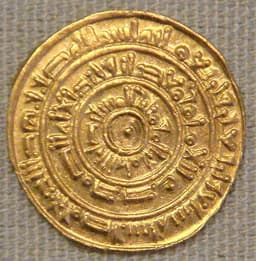
Al-Mustansir
Emperor · Medieval
55.6Total
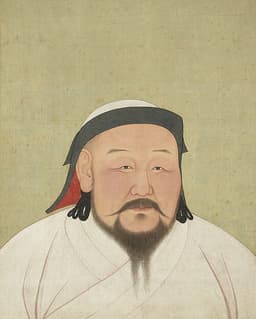
Kublai Khan
Emperor · Medieval
74.3Total
Basic Information
Born
1192
1215
Died
1242
1294
Era
Medieval
Medieval
Nationality
Abbasid Caliphate
Mongolia
Occupation
Emperor
Emperor
Civilization
Middle Eastern
Eastern
Score Comparison
Military (10%)
20.0
77.5
Political (20%)
68.0
79.2
Influence (20%)
55.0
75.0
Legacy (20%)
58.0
70.0
Leadership (15%)
71.0
72.0
Strategy (15%)
45.0
76.0
TOTAL
55.6
74.3
Al-Mustansir — Complete Timeline
1227 AD
Foundation of the Mustansiriya MadrasaCultural◆ Major
Al-Mustansir established the Mustansiriya Madrasa in Baghdad, a major educational institution that taught Islamic law, medicine, mathematics, and literature. It became one of the most prominent centers of learning in the medieval Islamic world, operating for centuries.
Impact: regionalconstructive
Kublai Khan — Complete Timeline
1260 AD
Adoption of Tibetan Buddhism as State ReligionCultural◆ Major
Kublai Khan appointed the Tibetan lama Drog
Tibetan BuddhismReligionMongol-Tibet Relations
Impact: regional
1271 AD
Proclamation of the Yuan DynastyPolitical Action◆ Major
Kublai Khan officially proclaimed the Yuan dynasty, adopting a Chinese-style dynastic name. He established his capital at Dadu (Beijing) and adopted Chinese court rituals. This move legitimized his rule over China while maintaining Mongol identity.
Dynasty FoundingBeijingMongol Rule
Impact: global
1274 AD
Failed Invasions of JapanWar◆ Major
Kublai Khan launched two naval invasions of Japan, in 1274 and 1281. Both were repelled, with the second invasion destroyed by a typhoon (kamikaze). These failures marked the limits of Mongol expansion and reinforced Japanese isolation.
Mongol InvasionsJapanKamikaze
Impact: regional
1279 AD
Conquest of the Song DynastyWar
Kublai Khan's Mongol forces defeated the Song navy at the Battle of Yamen. The last Song emperor drowned, ending the Song dynasty. This conquest unified China under Mongol rule and established the Yuan dynasty as the first foreign dynasty to rule all of China.
Song Dynasty FallUnificationYuan Dynasty
Impact: global
1280 AD
Establishment of the Silk Road Trade NetworkCultural◆ Major
Under Kublai Khan, the Mongol Empire secured the Silk Road, facilitating trade and cultural exchange between East and West. Marco Polo visited his court. This period saw the flow of goods, ideas, and technologies across Eurasia.
Silk RoadTradeCultural Exchange
Impact: globalconstructive
Expert Analysis
Kublai Khan vs Al-Mustansir
# The Emperor and the Caliph: Two Paths of Power in the Medieval World
In the winter of 1260, as Kublai Khan prepared to be crowned Great Khan of the Mongol Empire at his capital in Shangdu, a different kind of ruler had been dead for nearly two decades—Al-Mustansir, the Abbasid caliph who had spent his reign building a madrasa in Baghdad rather than an empire. The contrast between these two men, born only twenty-three years apart, speaks to one of history’s great questions: why do some rulers conquer continents while others build institutions that outlast their names?
Origins
Kublai Khan was born into a world of horse-borne violence and limitless ambition. His grandfather, Genghis Khan, had forged the largest contiguous land empire in history from the steppes of Mongolia. Kublai grew up in a society that measured power in territory taken and enemies crushed. By the time he reached adulthood, the Mongol Empire stretched from the Caspian Sea to the Pacific Ocean.
Al-Mustansir, born in 1192, inherited a dying dream. The Abbasid Caliphate, once the center of Islamic civilization, had been reduced to a shadow of its former glory. Baghdad still held symbolic authority, but real power lay with the Seljuk Turks, the Ayyubids in Egypt, and the Crusader states in the Levant. Where Kublai saw an endless horizon of conquest, Al-Mustansir saw a shrinking world that needed preservation, not expansion.
Rise to Power
Kublai did not inherit his throne easily. In 1260, after the death of his brother Möngke, he fought a bitter civil war against his own younger brother, Ariq Böke, for control of the Mongol Empire. Kublai won—but at a cost. His victory fragmented the empire, leaving him as Great Khan in name but ruler only of China, Mongolia, and parts of Central Asia. It was a lesson in the price of ambition: to gain everything, he had to accept less than everything.
Al-Mustansir became caliph in 1226, not through conquest but through succession. His father, al-Zahir, had ruled briefly, and al-Mustansir stepped into a role that required more diplomacy than military might. He never commanded an army in the field; his battles were fought in court chambers and libraries. His path to power was a corridor, not a battlefield.
Leadership & Governance
Kublai Khan governed as a conqueror who learned to rule. He understood that to hold China, he had to become Chinese. In 1271, he proclaimed the Yuan Dynasty, adopting a Chinese-style dynastic name and establishing his capital at what is now Beijing. He built a bureaucracy staffed by Chinese scholars, adopted Chinese court rituals, and even moved his Mongol nobles into Chinese-style palaces. Yet he never forgot his roots: Mongol generals still commanded his armies, and Mongol law still governed his people.
His military genius was undeniable. In 1279, at the Battle of Yamen, his forces crushed the Song navy, ending a dynasty that had ruled southern China for three centuries. The last Song emperor, a child, drowned while held in the arms of his loyal minister—a scene of such tragedy that it still echoes in Chinese memory. But conquest was only half the story. Kublai also secured the Silk Road, creating a trade network that connected Europe to China. Marco Polo would later travel that road, bringing stories of Kublai’s court to a astonished West.
Al-Mustansir governed differently. He had no armies to match Kublai’s, no empire to expand. What he had was Baghdad, still a center of learning despite its political decline. In 1227, he founded the Mustansiriya Madrasa, an institution that taught Islamic law, medicine, mathematics, and astronomy. It was the Harvard of its age—a place where scholars from across the Islamic world gathered, debated, and wrote. Where Kublai built with swords, al-Mustansir built with books.
Triumph & Tragedy
Kublai’s greatest triumph was also his greatest tragedy. He conquered China, but he could not conquer Japan. In 1274 and again in 1281, he launched massive naval invasions of the Japanese islands. Both failed. The second invasion, involving perhaps 140,000 men, was destroyed by a typhoon—the *kamikaze*, or “divine wind,” that the Japanese believed protected their land. Kublai never understood why his armies, which had swept across Asia, could not cross a strip of water.
Al-Mustansir’s triumph was quieter but more enduring. The Mustansiriya Madrasa survived him, becoming one of the most important educational institutions in the Islamic world. Yet his tragedy was that he could not see what was coming. In 1258, sixteen years after his death, the Mongols under Hulagu, Kublai’s brother, sacked Baghdad. They destroyed the library, burned the books, and killed perhaps a million people. The Abbasid Caliphate ended not with a battle but with a massacre.
Character & Destiny
Kublai Khan was a man of contradictions. He was ruthless enough to conquer, yet flexible enough to adapt. He adopted Tibetan Buddhism as his state religion in 1260, appointing the lama Drogön Chögyal Phagpa as his imperial preceptor, yet he tolerated Nestorian Christians, Muslims, and Daoists. He was curious about the world, yet blind to its limits. His character was shaped by the Mongol belief that the sky was the limit—and that belief both made and unmade him.
Al-Mustansir was a conservative in a revolutionary age. He believed in the power of knowledge, in the slow accumulation of wisdom. He could not imagine that the world he knew would be obliterated by men like Kublai’s brother. His character was shaped by the Abbasid tradition of scholarship and diplomacy—a tradition that could not withstand Mongol horses.
Legacy
Kublai Khan is remembered as a unifier, a builder, and a symbol of Mongol power. The Yuan Dynasty he founded lasted less than a century, but it reshaped China forever. The Silk Road he secured connected civilizations. His name appears in Marco Polo’s travelogue, in Coleridge’s poetry, in the imagination of the West. His legacy scores—78 for influence, 75 for legacy—reflect a ruler who changed the world but could not hold it.
Al-Mustansir is remembered by fewer people, but his legacy is more focused. The Mustansiriya Madrasa still stands in Baghdad, a monument to a caliph who chose learning over conquest. His legacy scores—72 for influence, 68 for legacy—are lower, but they measure a different kind of achievement. He did not expand an empire; he preserved a civilization. And when that civilization was destroyed, his madrasa remained.
Conclusion
What drives a ruler to conquer or to build? Kublai Khan and Al-Mustansir faced the same world—the medieval world of empires and faiths, of trade and war—but they answered its challenges differently. One saw the horizon and wanted to own it. The other saw the library and wanted to fill it. History remembers the conqueror, but it depends on the builder. The Mongol Empire is gone. The Mustansiriya Madrasa still teaches. In the end, perhaps the caliph’s quiet ambition outlasted the khan’s thunderous one.
Rankings
🥇
Kublai KhanLeader
Mil: 77.5Pol: 79.2Inf: 75.0
74.3
🥈
Al-Mustansir
Mil: 20.0Pol: 68.0Inf: 55.0
55.6
+18.7 behind
How This Comparison Works
Algorithm
Each figure is scored on 6 dimensions (0—100 scale) based on structured historical data: Military (10%), Political (20%), Influence (20%), Legacy (20%), Leadership (15%), Strategy (15%). The weighted total produces the final ranking.
Data Sources
Scores are computed from structured sub-indicators in the database. Scale factors adjust for era (Ancient ×0.85, Modern ×1.0) and civilization size (Eastern ×1.05, Other ×0.80) to account for differences in population and military scale.
Maximum 3 Figures
Comparisons are limited to 2—3 figures to ensure readability and statistical meaningfulness.
Error Margins
±5 points per dimension — Sub-scores are derived from historical records with inherent uncertainty. Two figures within 5 points on a dimension should be considered roughly equivalent in that area.
Total Score Accuracy
±3 points overall — The weighted combination of 6 dimensions produces a total score with approximately ±3 points of uncertainty. Differences of less than 3 points are not statistically significant— the figures are effectively tied.
Known Limitations
- Historical records are incomplete and uneven across civilizations
- Figures from oral-tradition societies may be underrepresented
- Occupation labels can misclassify multi-role figures
- Scores measure capability and impact, not moral character
- Quantitative scoring is a comparison tool, not absolute truth
Capability Radar
Military (10%) — Battles & Warfare
Battles
5
95
Win Rate
5
90
Expansion
5
95
Political (20%) — Governance & Reform
Reform
70
88
Diplomacy
40
85
Economy
50
90
Influence (20%) — Cultural & Global Reach
Cultural
70
85
Global
50
85
Legacy (20%) — Historical Impact
Historical
65
90
Longevity
60
80
Leadership (15%) — Power & Stability
Tenure
60
90
Stability
30
80
Strategy (15%) — Tactics & Innovation
Strategy
5
92
Tactics
5
85
Reform
5
88
Similar Comparisons
Comments & Discussion
草原上的书本6/16/2026
Al-Mustansir 修了一座神学院,Kublai 忙着一统天下。结果呢?元朝垮了,蒙古人灰头土脸回了草原。那所神学院倒撑了七百年!谁更成功?建学校的那位。打仗的快意恩仇都是过眼云烟,文化才是硬通货。数据说话:元朝一百年,神学院七百年。
Khan of the Steppe6/16/2026
Kublai conquered an empire; Al-Mustansir built a school. One measured success in blood and territory, the other in ideas and legacy. The Mustansiriyya Madrasa still stands in Baghdad today, but Kublai's Yuan Dynasty collapsed within a century. Maybe building institutions isn't so weak after all. The horse lord won the short game; the caliph played the long one.
Data Decoder6/16/2026
Let's talk numbers. Kublai ruled over maybe 100 million people at his peak; Al-Mustansir controlled a city-state with perhaps 200,000. But Kublai's empire required constant military spending—30-50% of state revenue—just to hold it together. The caliph's madrasa? Lifetime cost equivalent to one minor siege campaign. Efficiency matters, and Al-Mustansir's resource management absolutely clobbers Kublai's. Less really is more.
两顶王冠6/16/2026
一个生在马背上,叫嚣着“我要征服世界”。一个生在图书馆里,念叨着“我要传承智慧”。Kublai 赢了版图,输了历史评价;Al-Mustansir 输了地盘,赢了精神遗产。我站后者。文明不是靠铁蹄传播的,是靠墨水。元朝的火药后来打回蒙古,而巴格达的知识传到今天。谁更有一秒?明摆着。
Revisionist Axe6/16/2026
You can't compare a Mongol warlord to an Abbasid paper-pusher and call it fair. Kublai fought for every inch; Al-Mustansir inherited a caliphate on life support and did nothing to revive it. The caliph couldn't even keep Baghdad safe—Hulagu sacked it in 1258, just years after his death. Meanwhile, Kublai united China, conquered the Song, and built Dadu (modern Beijing). That's real power, not a library.