Loading...
Al-Mustansir vs Alexander the Great
Alexander the Great leads by 29.6 pts · 2 figures compared
…
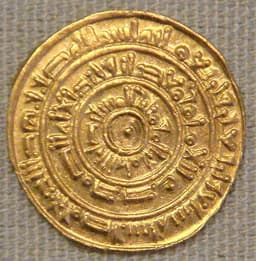
Al-Mustansir
Emperor · Medieval
55.6Total
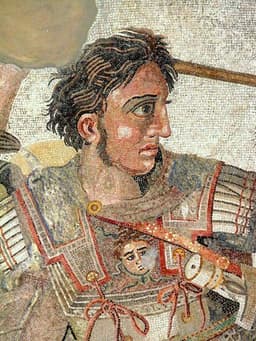
Alexander the Great
General · Ancient
85.2Total
Basic Information
Born
1192
-356
Died
1242
-323
Era
Medieval
Ancient
Nationality
Abbasid Caliphate
Macedon
Occupation
Emperor
General
Civilization
Middle Eastern
Western
Score Comparison
Military (10%)
20.0
95.0
Political (20%)
68.0
60.0
Influence (20%)
55.0
92.0
Legacy (20%)
58.0
90.0
Leadership (15%)
71.0
80.0
Strategy (15%)
45.0
92.0
TOTAL
55.6
85.2
Al-Mustansir — Complete Timeline
1227 AD
Foundation of the Mustansiriya MadrasaCultural◆ Major
Al-Mustansir established the Mustansiriya Madrasa in Baghdad, a major educational institution that taught Islamic law, medicine, mathematics, and literature. It became one of the most prominent centers of learning in the medieval Islamic world, operating for centuries.
Impact: regionalconstructive
Alexander the Great — Complete Timeline
334 BC
Battle of the Granicus RiverWar◆ Major
Alexander led his Macedonian army across the Hellespont into Asia Minor and defeated a Persian force under local satraps at the Granicus River. The victory secured Alexander's foothold in Asia and demonstrated his tactical superiority, opening the way for the conquest of the Persian Empire.
Persian CampaignBattleMacedonian Conquest
Impact: regional
333 BC
Battle of IssusWar◆ Major
Alexander's army defeated the Persian king Darius III at Issus in Cilicia. Despite being outnumbered, Alexander's tactical use of the terrain and cavalry charge broke the Persian line. Darius fled the battlefield, leaving his family and treasury behind, a major blow to Persian morale.
Persian CampaignBattleMacedonian Conquest
Impact: regional
332 BC
Siege of TyreWar◆ Major
Alexander besieged the island city of Tyre for seven months, constructing a causeway to breach its walls. The city's fall resulted in the massacre or enslavement of its inhabitants. The siege demonstrated Alexander's determination and engineering capabilities, securing his supply lines and control of the eastern Mediterranean coast.
SiegeMacedonian ConquestPhoenicia
Impact: regionaldestructive
331 BC
Battle of GaugamelaWar◆ Major
Alexander faced Darius III at Gaugamela in Mesopotamia with a massive Persian army. Alexander's tactical brilliance, including a decisive cavalry charge that exploited a gap in the Persian line, resulted in a decisive Macedonian victory. Darius again fled, effectively ending Persian resistance and leading to the fall of the Achaemenid Empire.
Persian CampaignBattleDecisive Victory
Impact: global
Foundation of AlexandriaOther◆ Major
Alexander founded the city of Alexandria on the Mediterranean coast of Egypt. He personally selected the site and oversaw the initial planning. Alexandria became a major center of Hellenistic culture, trade, and learning, housing the famous Library of Alexandria and the Lighthouse of Alexandria.
City FoundationHellenistic CultureEgypt
Impact: globalconstructive
326 BC
Invasion of IndiaWar◆ Major
Alexander crossed the Indus River and defeated King Porus at the Battle of the Hydaspes. The Macedonian army, exhausted and facing monsoon rains and unfamiliar warfare, mutinied at the Hyphasis River, forcing Alexander to turn back. This campaign marked the easternmost extent of his conquests.
Indian CampaignBattleMutiny
Impact: regional
Expert Analysis
Alexander the Great vs Al-Mustansir
# The Conqueror and the Scholar: Two Paths to Immortality
On a sweltering summer day in 323 BCE, a thirty-two-year-old king lay dying in Babylon, his body ravaged by fever, his empire stretching from the Adriatic Sea to the Indus River. He had never lost a battle. His name would become synonymous with greatness itself. Nearly fifteen centuries later, in the bustling streets of Baghdad, another ruler—a caliph who had never commanded an army—watched students gather beneath the arches of a new madrasa, their voices rising in debate over law, medicine, and astronomy. One man conquered the known world with a spear; the other conquered time with a book. Both sought immortality. Only one understood what it truly required.
Origins
Alexander was born in 356 BCE to Philip II of Macedon, a king who transformed a backward kingdom into a military powerhouse, and Olympias, a woman of fierce ambition and mystical inclinations. His childhood was steeped in Homeric epic: he slept with the *Iliad* beneath his pillow, wept at Achilles’ tomb, and believed himself descended from Heracles. His tutor was Aristotle, who taught him that Greeks were meant to rule and barbarians to serve. The world of Alexander was one of conquest, glory, and the relentless pursuit of *kleos*—the fame that echoes through eternity.
Al-Mustansir was born in 1192, into an Abbasid caliphate that had long since lost its political muscle. The once-mighty empire that had stretched from Spain to Persia was now a shadow, its caliphs spiritual figureheads ruling only a sliver of Iraq. The real power lay with Turkic warlords and, increasingly, with the Mongol horde gathering in the east. Al-Mustansir’s world was one of survival, of preserving what remained. His father and grandfather had been murdered by assassins; his own reign would begin in 1226 under the shadow of extinction. Where Alexander inherited momentum, Al-Mustansir inherited fragility.
Rise to Power
Alexander seized his destiny at twenty. When his father was assassinated in 336 BCE, the Greek city-states rebelled, thinking the young king weak. Alexander marched south, crushed Thebes, and sold its inhabitants into slavery—a message written in blood. Then he turned east. In 334 BCE, he crossed the Hellespont with 40,000 men and never looked back. Battle after battle—Granicus, Issus, Gaugamela—he shattered the Persian Empire, each victory more improbable than the last. His rise was a thunderstorm: sudden, violent, and impossible to ignore.
Al-Mustansir’s ascent was quieter, a matter of courtly maneuvering rather than battlefield glory. He became caliph in 1226 after the death of his father, al-Zahir, inheriting a realm that survived on prestige alone. His power was not won with swords but with patience, diplomacy, and the careful cultivation of religious authority. In a world of crumbling empires, the caliph’s greatest weapon was his legitimacy—and Al-Mustansir wielded it shrewdly.
Leadership & Governance
Alexander ruled through sheer force of personality. He led from the front, charging into battle with his Companions, sharing their rations, and sleeping on the ground. His soldiers adored him, but his generals grew wary. He married foreign princesses, adopted Persian dress, and demanded proskynesis—the ritual prostration reserved for gods. His political wisdom, however, lagged behind his military genius. He created an empire but no system to hold it together, appointing satraps who often betrayed him, leaving conquered peoples resentful, and failing to name a competent heir. His leadership score of 82.0 reflects a man better at winning wars than governing peace.
Al-Mustansir governed from a desk. His military score of 37.0 tells us he was no general—he never led an army. But his political score of 66.6 and leadership of 74.4 suggest a different kind of strength. In 1227, he founded the Mustansiriya Madrasa, a monumental institution that taught Islamic law, medicine, mathematics, and astronomy. It was a university before the word existed, a place where Sunni and Shia scholars debated side by side, where students received stipends and housing, where knowledge was treated as sacred. While Alexander spread Greek culture by the sword, Al-Mustansir spread learning by endowment. One conquered bodies; the other cultivated minds.
Triumph & Tragedy
Alexander’s greatest triumph was also his greatest tragedy. By 326 BCE, he had reached the Hydaspes River in India, defeating King Porus in a battle that showcased his tactical brilliance. But his army, exhausted and homesick, mutinied. He was forced to turn back. The return march through the Gedrosian Desert killed thousands. Back in Babylon, he died in 323 BCE, possibly from malaria, poison, or grief. His last words, according to legend, were “to the strongest”—and his empire immediately shattered into warring fragments. The man who conquered the world could not conquer succession.
Al-Mustansir’s tragedy was quieter but no less profound. He died in 1242, sixteen years before the Mongol sack of Baghdad. His madrasa survived the destruction, but the world he had tried to preserve—the Abbasid caliphate, the center of Islamic learning, the fragile peace of the Middle East—was annihilated. The Mongols would kill hundreds of thousands, burn libraries, and throw the Qur’ans into the Tigris until the river ran black with ink. Al-Mustansir’s triumph was the Mustansiriya; his tragedy was that he built a lighthouse on a shore about to be swept away.
Character & Destiny
Alexander’s character was forged in fire. He was brilliant, reckless, and insatiable. He wept when there were no more worlds to conquer. His ambition was a disease that consumed him and everyone around him. He killed his friend Cleitus in a drunken rage, executed his own generals on suspicion, and may have ordered the death of his father’s assassin—or perhaps his father himself. His personality drove him to greatness and to destruction. He was, in the end, a man who could not stop.
Al-Mustansir was a builder, not a destroyer. His character was shaped by necessity: a weak caliphate required a caliph of wisdom, not war. He invested in institutions, not armies. His legacy score of 68.5 is lower than Alexander’s 90.0, but it is more concentrated. Alexander’s influence spread across three continents; Al-Mustansir’s settled into stone and ink. One left a legend; the other left a library.
Legacy
Alexander’s legacy is the Hellenistic world: the fusion of Greek and Eastern cultures that produced Alexandria, the Septuagint, and the spread of Greek philosophy to India. His military tactics are still taught at West Point. His name adorns cities from Egypt to Afghanistan. But his empire died with him.
Al-Mustansir’s legacy is the Mustansiriya Madrasa, which operated for centuries and inspired universities across the Islamic world. It is a quieter legacy, but more durable. While Alexander’s soldiers marched and died, Al-Mustansir’s students studied and taught. The madrasa still stands in Baghdad today, damaged by war but not destroyed—a testament to the power of knowledge over the power of the sword.
Conclusion
We remember conquerors because they make noise. We remember builders because they make shelter. Alexander the Great and Al-Mustansir both sought to shape the world, but they used different tools. One reached for the stars and burned out; the other planted a tree whose shade he would never sit in. In the end, the question is not who was greater—the general with a 96.0 military score or the scholar with a 37.0—but what kind of greatness the world needs. Perhaps the truest immortality is not in the empires we build, but in the minds we awaken.
Rankings
🥇
Alexander the GreatLeader
Mil: 95.0Pol: 60.0Inf: 92.0
85.2
🥈
Al-Mustansir
Mil: 20.0Pol: 68.0Inf: 55.0
55.6
+29.6 behind
How This Comparison Works
Algorithm
Each figure is scored on 6 dimensions (0—100 scale) based on structured historical data: Military (10%), Political (20%), Influence (20%), Legacy (20%), Leadership (15%), Strategy (15%). The weighted total produces the final ranking.
Data Sources
Scores are computed from structured sub-indicators in the database. Scale factors adjust for era (Ancient ×0.85, Modern ×1.0) and civilization size (Eastern ×1.05, Other ×0.80) to account for differences in population and military scale.
Maximum 3 Figures
Comparisons are limited to 2—3 figures to ensure readability and statistical meaningfulness.
Error Margins
±5 points per dimension — Sub-scores are derived from historical records with inherent uncertainty. Two figures within 5 points on a dimension should be considered roughly equivalent in that area.
Total Score Accuracy
±3 points overall — The weighted combination of 6 dimensions produces a total score with approximately ±3 points of uncertainty. Differences of less than 3 points are not statistically significant— the figures are effectively tied.
Known Limitations
- Historical records are incomplete and uneven across civilizations
- Figures from oral-tradition societies may be underrepresented
- Occupation labels can misclassify multi-role figures
- Scores measure capability and impact, not moral character
- Quantitative scoring is a comparison tool, not absolute truth
Capability Radar
Military (10%) — Battles & Warfare
Battles
5
98
Win Rate
5
99
Expansion
5
99
Political (20%) — Governance & Reform
Reform
70
75
Diplomacy
40
80
Economy
50
70
Influence (20%) — Cultural & Global Reach
Cultural
70
95
Global
50
95
Legacy (20%) — Historical Impact
Historical
65
98
Longevity
60
95
Leadership (15%) — Power & Stability
Tenure
60
60
Stability
30
55
Strategy (15%) — Tactics & Innovation
Strategy
5
98
Tactics
5
99
Reform
5
85
Similar Comparisons
Comments & Discussion
SwordAndSandalSkeptic6/16/2026
Sure, Alexander conquered a lot of dirt, but for what? He died young with no succession plan, and his empire fragmented instantly. Real immortality isn't a sacking spree—it's building something that lasts. Al-Mustansir's Baghdad madrasa educated generations; Alexander's heirs just fought over corpses. I'll take the scholar who founded a library over the warlord who just founded graveyards. Give me the caliph's pen, not the king's sword.
铁学究6/16/2026
Alexander the Great 一生没打过败仗?别闹了,那是军事史的神话。深入看波斯战役,他多次险象环生,要不是运气好加波斯内乱,他早成历史注脚了。军事天才这标签得打折扣,他更像是个敢赌的少年,而非战略大师。至于和 Al-Mustansir 比,前者靠武力,后者靠智慧,哪条路更长久不言而喻。我站 caliph,他的书比 Alexander 的剑更有分量。
ClassicsDeepDive6/16/2026
Comparing a Homeric hero to a medieval scholar is like comparing epic poetry to a textbook. Alexander was chasing *kleos*, the glory Achilles had—he quite literally lived the *Iliad*. But Al-Mustansir? He built a university, the Mustansiriya, which taught medicine, math, even music. Alexander's legacy is a corpse in a golden sarcophagus; the caliph's legacy is the knowledge that outlived him by centuries. I know which immortality I'd rather have.
战史考据狂6/16/2026
别急着否定 Alexander 的军事才能。他不仅赢了高加米拉战役,更是在伊苏斯以少胜多,用骑兵侧翼包围战术打得大流士三世溃败。这策略后来给拿破仑和汉尼拔都启发了。但问题是,他光会打不会管,征服后的行政一塌糊涂。Al-Mustansir 倒是聪明——在他那个摇摇欲坠的 Abbasid 王朝,他用教育稳根基,虽然没扩土,但没瞎折腾。一个破坏王,一个建设者,我更佩服后者。