Loading...
Al-Mustansir vs Emperor Uda
Al-Mustansir leads by 8.4 pts · 2 figures compared
…
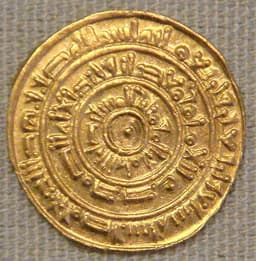
Al-Mustansir
Emperor · Medieval
55.6Total
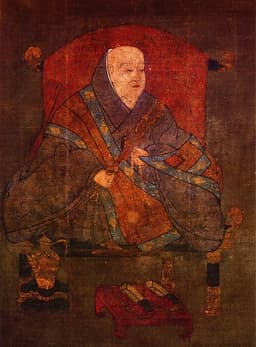
Emperor Uda
Emperor · Medieval
47.2Total
Basic Information
Born
1192
867
Died
1242
931
Era
Medieval
Medieval
Nationality
Abbasid Caliphate
Japan
Occupation
Emperor
Emperor
Civilization
Middle Eastern
Eastern
Score Comparison
Military (10%)
20.0
52.0
Political (20%)
68.0
37.9
Influence (20%)
55.0
50.2
Legacy (20%)
58.0
42.5
Leadership (15%)
71.0
41.5
Strategy (15%)
45.0
68.9
TOTAL
55.6
47.2
Al-Mustansir — Complete Timeline
1227 AD
Foundation of the Mustansiriya MadrasaCultural◆ Major
Al-Mustansir established the Mustansiriya Madrasa in Baghdad, a major educational institution that taught Islamic law, medicine, mathematics, and literature. It became one of the most prominent centers of learning in the medieval Islamic world, operating for centuries.
Impact: regionalconstructive
Emperor Uda — Complete Timeline
887 AD
Attempt to Counter Fujiwara DominancePolitical Action◆ Major
Emperor Uda attempted to rule without a Fujiwara regent after his abdication. He appointed his own advisors and promoted scholarship. His efforts to reduce Fujiwara influence were partially successful but ultimately temporary.
FujiwaraImperial PowerResistance
Impact: national
Promotion of Sugawara no MichizanePolitical Action◆ Major
Emperor Uda elevated the scholar Sugawara no Michizane to high court rank, bypassing the Fujiwara. Michizane became a key advisor and was appointed to the Council of State. This move was part of Uda's strategy to counter Fujiwara power.
Sugawara no MichizaneAdvisorFaction
Impact: nationalconstructive
897 AD
Abdication and Cloistered RulePolitical Action◆ Major
Emperor Uda abdicated and became a Buddhist monk, but continued to exert influence as a retired emperor (daijo tenno). This system of cloistered rule allowed him to govern from behind the scenes, a practice that later emperors would emulate.
Cloistered RuleAbdicationInsei
Impact: national
Expert Analysis
Origins
Al-Mustansir (full name: Abu Ja'far al-Mustansir Billah) was born in 1192 CE into the Abbasid caliphate, a dynasty that had ruled the Islamic world since 750. His father, Caliph al-Nasir, had restored some caliphal authority after centuries of Seljuk domination. Al-Mustansir received a traditional Islamic education, studying jurisprudence, theology, and Arabic literature. He ascended to the caliphate in 1226 at age 34, inheriting a realm that controlled only parts of Iraq and western Iran, with Baghdad as its cultural center.
Emperor Uda was born in 867 CE as the third son of Emperor Koko, during the Heian period of Japan. The Fujiwara clan, particularly Fujiwara no Mototsune, dominated the imperial court as regents (sessho and kampaku). Uda was raised in the imperial palace, receiving a classical Chinese education in poetry and Confucian texts. He became crown prince unexpectedly after the death of his elder brothers and ascended the throne in 887 at age 20.
Rise to Power
Al-Mustansir became caliph in 1226 after his father al-Nasir's death. The transition was smooth, as al-Nasir had consolidated power and secured loyalty from military commanders. Al-Mustansir's early reign focused on stabilizing the caliphate, which faced threats from the Khwarezmian Empire to the east and the Crusader states to the west. He maintained a policy of diplomatic engagement, seeking alliances with Ayyubid rulers in Syria and Egypt.
Emperor Uda's rise was more contentious. He was appointed crown prince in 882, but Fujiwara no Mototsune initially opposed him. When Uda became emperor in 887, Mototsune served as kampaku (regent), effectively controlling the court. In 890, Mototsune died, and Uda seized the opportunity to rule without a regent—a rare move in Heian politics. He appointed his own advisors, notably the scholar Sugawara no Michizane, whom he elevated to high court rank in 891, bypassing the Fujiwara.
Leadership & Governance
Al-Mustansir's leadership focused on cultural and educational patronage rather than military expansion. His most significant achievement was the foundation of the Mustansiriya Madrasa in Baghdad in 1234. This institution was a pioneering university that taught Islamic law, medicine, mathematics, literature, and philosophy. Al-Mustansir personally oversaw the curriculum and provided funding, attracting scholars from across the Islamic world. His governance style was bureaucratic and centralized, relying on viziers and judges to administer justice. He scored 71.0 in leadership and 68.0 in political acumen, reflecting his effective stewardship of a declining empire.
Emperor Uda attempted to counter Fujiwara dominance by promoting non-Fujiwara officials and encouraging scholarship. He appointed Sugawara no Michizane as Minister of the Right in 899, a post traditionally held by Fujiwara. Uda also promoted literature and poetry, commissioning anthologies like the Kokin Wakashū. However, his political score of 37.9 indicates limited success; after his abdication in 897, the Fujiwara reasserted control over his successor, Emperor Daigo. Uda's innovation was the system of cloistered rule (insei), where a retired emperor exercised power from a monastery, a model later used by Emperor Shirakawa.
Triumph & Tragedy
Al-Mustansir's greatest triumph was the Mustansiriya Madrasa, which became a model for later Islamic universities. It operated for centuries and produced many scholars. His tragedy was the looming Mongol threat. Despite diplomatic efforts, the Mongols under Hulagu Khan invaded in 1258, sacking Baghdad and ending the Abbasid caliphate—just 16 years after al-Mustansir's death in 1242. His military score of 20.0 reflects his inability to prepare for this existential threat.
Emperor Uda's triumph was his temporary check on Fujiwara power and the elevation of Michizane, who became a cultural icon. His tragedy was the long-term failure: after his abdication, the Fujiwara regained control, and Michizane was falsely accused of treason, dying in exile in 903. Uda's strategy score of 68.9 highlights his clever use of abdication to retain influence, but his political score of 37.9 shows his reforms were ephemeral.
Character & Destiny
Al-Mustansir was a cultured patron, more interested in learning than warfare. His character was that of a builder, not a warrior. This shaped his destiny: he created an enduring educational institution but failed to strengthen the military, leaving Baghdad vulnerable. Historical assessments praise his intellectual contributions but criticize his neglect of defense.
Emperor Uda was shrewd and determined, using indirect methods like abdication to maintain power. His promotion of Michizane backfired, as the Fujiwara retaliated. His character—patient and strategic—allowed him to pioneer cloistered rule, but his timing was premature. He died in 931, watching his son Emperor Daigo fall under Fujiwara influence.
Legacy
Al-Mustansir's legacy is the Mustansiriya Madrasa, which influenced Islamic education for centuries. It was one of the first universities to offer a broad curriculum, and its library housed thousands of manuscripts. His total score of 55.6 reflects his moderate impact; while the madrasa was important, the Abbasid collapse overshadowed it.
Emperor Uda's legacy is the cloistered rule system, which later emperors used to wield power behind the throne. His promotion of Michizane led to the latter's deification as Tenjin, the god of scholarship. However, his political reforms were short-lived, and his total score of 47.2 indicates limited overall impact.
Conclusion
Al-Mustansir had greater impact than Emperor Uda. His Mustansiriya Madrasa was a transformative institution that advanced knowledge across multiple fields, enduring until the Mongol sack and remaining a symbol of Islamic learning. Uda's reforms were more reactive and less durable; his cloistered rule model only became effective under later, stronger emperors. Al-Mustansir's leadership score of 71.0 versus Uda's 41.5, and legacy score of 58.0 versus 42.5, support this conclusion. While Uda's strategic score of 68.9 exceeds al-Mustansir's 45.0, his overall influence was constrained by the entrenched Fujiwara. Al-Mustansir, despite military weakness, built an institution that defined Baghdad's intellectual golden age.
Rankings
🥇
Al-MustansirLeader
Mil: 20.0Pol: 68.0Inf: 55.0
55.6
🥈
Emperor Uda
Mil: 52.0Pol: 37.9Inf: 50.2
47.2
+8.4 behind
How This Comparison Works
Algorithm
Each figure is scored on 6 dimensions (0—100 scale) based on structured historical data: Military (10%), Political (20%), Influence (20%), Legacy (20%), Leadership (15%), Strategy (15%). The weighted total produces the final ranking.
Data Sources
Scores are computed from structured sub-indicators in the database. Scale factors adjust for era (Ancient ×0.85, Modern ×1.0) and civilization size (Eastern ×1.05, Other ×0.80) to account for differences in population and military scale.
Maximum 3 Figures
Comparisons are limited to 2—3 figures to ensure readability and statistical meaningfulness.
Error Margins
±5 points per dimension — Sub-scores are derived from historical records with inherent uncertainty. Two figures within 5 points on a dimension should be considered roughly equivalent in that area.
Total Score Accuracy
±3 points overall — The weighted combination of 6 dimensions produces a total score with approximately ±3 points of uncertainty. Differences of less than 3 points are not statistically significant— the figures are effectively tied.
Known Limitations
- Historical records are incomplete and uneven across civilizations
- Figures from oral-tradition societies may be underrepresented
- Occupation labels can misclassify multi-role figures
- Scores measure capability and impact, not moral character
- Quantitative scoring is a comparison tool, not absolute truth
Capability Radar
Military (10%) — Battles & Warfare
Battles
5
43
Win Rate
5
49
Expansion
5
50
Political (20%) — Governance & Reform
Reform
70
40
Diplomacy
40
35
Economy
50
25
Influence (20%) — Cultural & Global Reach
Cultural
70
30
Global
50
10
Legacy (20%) — Historical Impact
Historical
65
35
Longevity
60
20
Leadership (15%) — Power & Stability
Tenure
60
30
Stability
30
20
Strategy (15%) — Tactics & Innovation
Strategy
5
55
Tactics
5
57
Reform
5
61
Similar Comparisons
Comments & Discussion
No comments yet. Be the first to share your thoughts!