Loading...
Al-Mustansir vs Bumin Qaghan
Bumin Qaghan leads by 12.0 pts · 2 figures compared
…
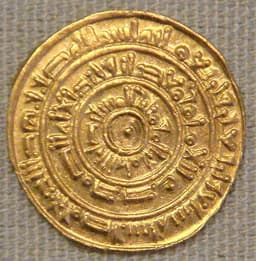
Al-Mustansir
Emperor · Medieval
55.6Total
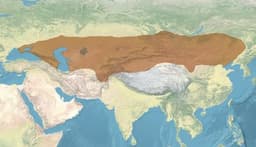
Bumin Qaghan
Emperor · Ancient
67.6Total
Basic Information
Born
1192
490
Died
1242
552
Era
Medieval
Ancient
Nationality
Abbasid Caliphate
Gokturk Khaganate
Occupation
Emperor
Emperor
Civilization
Middle Eastern
Eastern
Score Comparison
Military (10%)
20.0
80.0
Political (20%)
68.0
60.0
Influence (20%)
55.0
82.0
Legacy (20%)
58.0
72.0
Leadership (15%)
71.0
40.0
Strategy (15%)
45.0
61.2
TOTAL
55.6
67.6
Al-Mustansir — Complete Timeline
1227 AD
Foundation of the Mustansiriya MadrasaCultural◆ Major
Al-Mustansir established the Mustansiriya Madrasa in Baghdad, a major educational institution that taught Islamic law, medicine, mathematics, and literature. It became one of the most prominent centers of learning in the medieval Islamic world, operating for centuries.
Impact: regionalconstructive
Bumin Qaghan — Complete Timeline
534 AD
Revolt against the Rouran KhaganatePolitical Action◆ Major
Bumin, a vassal of the Rouran Khaganate, led a revolt of the Turkic tribes (Ashina clan) against Rouran rule. He defeated the Rouran forces and declared independence, marking the beginning of the First Turkic Khaganate.
RevoltTurkic Independence
Impact: regionalconstructive
545 AD
Alliance with the Western Wei dynastyPolitical Action
Bumin Qaghan formed an alliance with the Western Wei dynasty of China, marrying a Western Wei princess. This alliance provided the Turks with Chinese support and technology, strengthening their position against the Rouran and other rivals.
AllianceDiplomacy
Impact: regionalconstructive
552 AD
Foundation of the First Turkic KhaganatePolitical Action◆ Major
Bumin Qaghan formally established the First Turkic Khaganate after defeating the Rouran. He took the title 'Qaghan' and set up his capital in the Orkhon Valley. The khaganate quickly became a major power on the Eurasian steppe.
Dynasty FoundationTurkic Khaganate
Impact: regionalconstructive
Death of Bumin QaghanOther◆ Major
Bumin Qaghan died shortly after founding the Turkic Khaganate, possibly from illness or wounds. His death led to the division of the khaganate between his sons, with the eastern and western halves ruled separately, though still under a single nominal authority.
DeathSuccession
Impact: regionaltragic
Expert Analysis
Al-Mustansir vs Bumin Qaghan
### The Qaghan and the Caliph: Two Paths to Power in a Fractured World
In the year 552, a Turkic chieftain named Bumin, having just crushed the armies of his Rouran overlords, proclaimed himself Qaghan of a new empire on the Mongolian steppe. He was dead within months. About seven centuries later, in 1227, an Abbasid caliph named Al-Mustansir inaugurated a grand madrasa in Baghdad, a temple of learning that would outlive him by centuries. One man built an empire of horsemen and felt it crumble in his hands; the other built an institution of knowledge and watched it endure. Why did their paths diverge so dramatically? The answer lies not in their personal ambitions, which were both formidable, but in the worlds they inherited and the tools they chose to shape them.
### Origins
Bumin Qaghan was born into the Ashina clan, a vassal tribe of the Rouran Khaganate that controlled much of the Mongolian steppe. His world was one of constant movement, tribal loyalty, and the brutal logic of the horse archer—where power was measured in the number of warriors who would follow you into battle. The Rouran were not a sophisticated overlord; they demanded tribute and occasional military service, but they offered little in return. Bumin grew up in a society where a chieftain’s legitimacy rested on his ability to lead raids, forge alliances, and crush rivals. His rise was a product of this harsh environment: he learned to read the shifting winds of steppe politics, to balance the ambitions of his own clan against the demands of his masters.
Al-Mustansir, by contrast, was born into the twilight of the Abbasid Caliphate, a dynasty that had once ruled from Spain to Persia but now controlled little more than Baghdad and its hinterlands. His father, Caliph Al-Nasir, had spent decades trying to restore the caliphate’s prestige through cunning diplomacy and religious patronage, but the world had changed. The Seljuk Turks had reduced the caliphs to figureheads, and the rising power of the Mongols cast a long shadow. Al-Mustansir’s training was not in warfare but in the subtleties of Islamic law, theology, and court protocol. He was a product of a civilization that valued preservation over expansion, where the caliph’s primary duty was to uphold the faith and the law, not to lead armies.
### Rise to Power
Bumin’s ascent was swift and violent. In 534, he led a revolt of the Turkic tribes against the Rouran, exploiting a moment of weakness when the Rouran Khagan was distracted by internal strife. His military acumen was decisive: he defeated the Rouran in a series of battles, driving them from the steppe. But Bumin was no mere warrior. He understood that survival required more than brute force. In 545, he secured an alliance with the Western Wei dynasty of China, marrying a Western Wei princess. This gave him access to Chinese resources, legitimacy, and a strategic buffer against potential enemies. The alliance was a masterstroke of political pragmatism—a steppe chieftain learning to play the game of empires. By 552, he had formally declared the First Turkic Khaganate, taking the title “Qaghan.” His rise was a testament to his leadership (scored 82.7) and political skill (76.3), but it was also a product of timing: the Rouran were crumbling, and the Chinese were eager for allies.
Al-Mustansir’s path to power was quieter but no less significant. He became caliph in 1226 after the death of his father, inheriting a realm that was more a city-state than an empire. His legitimacy rested on his lineage, not his sword. He could not expand the caliphate’s borders—the Mongols were already on the horizon—so he chose to deepen its roots. His most famous act, the foundation of the Mustansiriya Madrasa in 1227, was a deliberate strategy to shore up his authority. By endowing a center of learning that taught all four Sunni schools of law, medicine, and mathematics, he positioned himself as a patron of knowledge and a guardian of Islamic orthodoxy. It was a power play, but one executed with ink rather than iron.
### Leadership & Governance
Bumin’s leadership was defined by action and alliance. He ruled the Turkic Khaganate for only a few months, but in that time he established a system that would endure for centuries. He divided the empire into eastern and western wings, appointed his brother Istämi as ruler of the west, and created a structure that balanced tribal autonomy with centralized authority. His military strategy (72.0) was based on mobility and shock: Turkic horsemen could cover vast distances, strike without warning, and withdraw before a counterattack could form. Yet his governance was fragile. The Khaganate was a coalition of tribes, held together by personal loyalty and the promise of plunder. Without a long reign to cement his authority, Bumin’s empire was vulnerable to the centrifugal forces that had destroyed the Rouran.
Al-Mustansir’s governance was the opposite: institutional, legalistic, and patient. He did not command armies; he presided over a court. The Mustansiriya Madrasa was his legacy, a place where scholars could debate and students could learn, free from the whims of warlords. It was a bulwark against chaos. His political score (66.6) reflects his ability to navigate the treacherous waters of late Abbasid politics, where the caliph was a symbol of unity but had little real power. He maintained the caliphate’s prestige through patronage, not conquest, and ensured that Baghdad remained a center of civilization even as its political influence waned.
### Triumph & Tragedy
Bumin’s greatest triumph was the foundation of the Turkic Khaganate, a moment that reshaped the history of Central Asia. His greatest tragedy was his death in 552, probably from illness or wounds, just after achieving his life’s goal. He left behind a newborn empire with no time to consolidate. His son, Muqan Qaghan, would eventually expand the Khaganate, but Bumin never saw it. His fate was that of many founders: to build the scaffold and die before the building was complete.
Al-Mustansir’s triumph was the Mustansiriya Madrasa, which became a model for Islamic education and survived for centuries. His tragedy was the world he could not save. In 1258, just sixteen years after his death, the Mongols sacked Baghdad, ending the Abbasid Caliphate. The madrasa itself was damaged but not destroyed, a testament to the endurance of ideas over empires. Al-Mustansir had built for the long term, but even he could not foresee the storm.
### Character & Destiny
Bumin was a man of action, driven by the need to break free from subjugation and build something new. His personality—bold, pragmatic, and ruthless—was suited to the steppe, where hesitation meant death. His destiny was shaped by the brutal logic of his environment: he had to rise or be crushed. Al-Mustansir was a man of reflection, shaped by the weight of a thousand-year-old civilization. He knew that the caliphate could not compete with the Mongols on the battlefield, so he chose to compete in the realm of the mind. His personality—patient, scholarly, and strategic—was suited to a world where power was fading but culture could endure.
### Legacy
Bumin’s legacy is the Turkic Khaganate, which would influence the rise of the Göktürks, the Uyghurs, and eventually the Mongol Empire. His name is remembered as the founder of the Turkic people’s first great state. Al-Mustansir’s legacy is the Mustansiriya Madrasa, which stands today as a symbol of Baghdad’s golden age. His score in influence (72.3) and legacy (68.5) reflects his impact on education and Islamic culture. One man built an empire that lasted centuries; the other built an institution that outlived the empire.
### Conclusion
Bumin and Al-Mustansir were both leaders who seized the opportunities of their time, but they operated in different worlds. Bumin’s world was one of movement, violence, and the raw struggle for power. Al-Mustansir’s was one of stasis, learning, and the slow erosion of authority. One built with horsemen, the other with books. In the end, both left marks that transcended their deaths—Bumin on the map, Al-Mustansir on the mind. They remind us that power takes many forms, and that the legacies we leave are shaped not just by our choices, but by the worlds we are born into.
Rankings
🥇
Bumin QaghanLeader
Mil: 80.0Pol: 60.0Inf: 82.0
67.6
🥈
Al-Mustansir
Mil: 20.0Pol: 68.0Inf: 55.0
55.6
+12.0 behind
How This Comparison Works
Algorithm
Each figure is scored on 6 dimensions (0—100 scale) based on structured historical data: Military (10%), Political (20%), Influence (20%), Legacy (20%), Leadership (15%), Strategy (15%). The weighted total produces the final ranking.
Data Sources
Scores are computed from structured sub-indicators in the database. Scale factors adjust for era (Ancient ×0.85, Modern ×1.0) and civilization size (Eastern ×1.05, Other ×0.80) to account for differences in population and military scale.
Maximum 3 Figures
Comparisons are limited to 2—3 figures to ensure readability and statistical meaningfulness.
Error Margins
±5 points per dimension — Sub-scores are derived from historical records with inherent uncertainty. Two figures within 5 points on a dimension should be considered roughly equivalent in that area.
Total Score Accuracy
±3 points overall — The weighted combination of 6 dimensions produces a total score with approximately ±3 points of uncertainty. Differences of less than 3 points are not statistically significant— the figures are effectively tied.
Known Limitations
- Historical records are incomplete and uneven across civilizations
- Figures from oral-tradition societies may be underrepresented
- Occupation labels can misclassify multi-role figures
- Scores measure capability and impact, not moral character
- Quantitative scoring is a comparison tool, not absolute truth
Capability Radar
Military (10%) — Battles & Warfare
Battles
5
70
Win Rate
5
75
Expansion
5
85
Political (20%) — Governance & Reform
Reform
70
70
Diplomacy
40
75
Economy
50
65
Influence (20%) — Cultural & Global Reach
Cultural
70
65
Global
50
65
Legacy (20%) — Historical Impact
Historical
65
80
Longevity
60
70
Leadership (15%) — Power & Stability
Tenure
60
60
Stability
30
55
Strategy (15%) — Tactics & Innovation
Strategy
5
80
Tactics
5
65
Reform
5
60
Similar Comparisons
Comments & Discussion
KHAZAR'S GHOST6/16/2026
Bumin Qaghan's empire was a flash in the pan—dead within months of his death—because steppe power depended on personality cults, not institutions. Al-Mustansir's madrasa, the Mustansiriyya, survived because it trained bureaucrats and judges who kept Baghdad running even when caliphs lost political power. One built a system that outlasted him; the other was just a lucky warlord who died before his coalition fractured. Rome had aqueducts, the steppe had charisma. Guess which lasts longer.
铁骑碎梦6/16/2026
说Bumin是短命军阀太客气了。552年他击败柔然、统一突厥部落,但死前连继位制度都没建立,靠他弟弟和儿子玩命维持帝国。反观Al-Mustansir,1227年建Mustansiriyya Madrasa时,巴格达早不是世界中心了,可他偏要在衰落中种下学问的种子。一个靠刀锋活几个月,一个靠书本活七百年——这才是输赢的关键。
MAPS NOT MEN6/16/2026
Steppe empires are statistical outliers—Bumin's "victory" over the Rouran was just the first domino in a 200-year Turkic expansion that his grandson Tardu would fumble. Al-Mustansir's madrasa wasn't just a building; it was a deliberate strategy to centralize Islamic education under Abbasid control, countering Fatimid and Seljuk influence. Bumin bet on bloodlines and battle, which are notoriously random; Al-Mustansir bet on curriculum and patronage, which compound over generations.
儒将千秋6/16/2026
不懂历史的才吹Bumin。552年他称汗时,突厥部落不过十万众,靠柔然内乱才翻身。Al-Mustansir呢?他是Harun al-Rashid的直系后代,1227年建校时动用了国库大量白银,聘请了Ibn al-Salah等顶级学者。一个靠运气逆天改命,一个用智慧和文化烙印了一个时代。前者是流星,后者是北斗——亮不亮,看你怎么定义权力。
SADDLE SORE6/16/2026
As a classics snob, let me be blunt: Bumin's legacy is an embarrassment—a guy who conquered half Central Asia only to have his empire dissolve into fratricidal wars within a generation. Meanwhile, Al-Mustansir's Mustansiriyya Madrasa housed four separate law schools under one roof, a feat of pluralistic governance the Sassanids couldn't even dream of. Bumin gave us a weekend of glory; Al-Mustansir gave us a blueprint for intellectual infrastructure that lasted until the Mongols sacks in 1258.
沙漠星辰6/16/2026
拿游牧和文明比,太荒唐。Bumin是