Loading...
Bumin Qaghan vs Kublai Khan
Kublai Khan leads by 6.7 pts · 2 figures compared
…
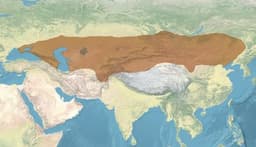
Bumin Qaghan
Emperor · Ancient
67.6Total
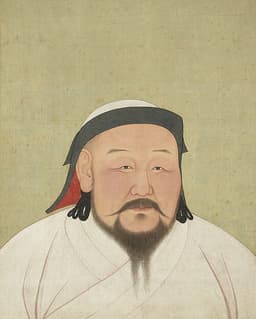
Kublai Khan
Emperor · Medieval
74.3Total
Basic Information
Born
490
1215
Died
552
1294
Era
Ancient
Medieval
Nationality
Gokturk Khaganate
Mongolia
Occupation
Emperor
Emperor
Civilization
Eastern
Eastern
Score Comparison
Military (10%)
80.0
77.5
Political (20%)
60.0
79.2
Influence (20%)
82.0
75.0
Legacy (20%)
72.0
70.0
Leadership (15%)
40.0
72.0
Strategy (15%)
61.2
76.0
TOTAL
67.6
74.3
Bumin Qaghan — Complete Timeline
534 AD
Revolt against the Rouran KhaganatePolitical Action◆ Major
Bumin, a vassal of the Rouran Khaganate, led a revolt of the Turkic tribes (Ashina clan) against Rouran rule. He defeated the Rouran forces and declared independence, marking the beginning of the First Turkic Khaganate.
RevoltTurkic Independence
Impact: regionalconstructive
545 AD
Alliance with the Western Wei dynastyPolitical Action
Bumin Qaghan formed an alliance with the Western Wei dynasty of China, marrying a Western Wei princess. This alliance provided the Turks with Chinese support and technology, strengthening their position against the Rouran and other rivals.
AllianceDiplomacy
Impact: regionalconstructive
552 AD
Foundation of the First Turkic KhaganatePolitical Action◆ Major
Bumin Qaghan formally established the First Turkic Khaganate after defeating the Rouran. He took the title 'Qaghan' and set up his capital in the Orkhon Valley. The khaganate quickly became a major power on the Eurasian steppe.
Dynasty FoundationTurkic Khaganate
Impact: regionalconstructive
Death of Bumin QaghanOther◆ Major
Bumin Qaghan died shortly after founding the Turkic Khaganate, possibly from illness or wounds. His death led to the division of the khaganate between his sons, with the eastern and western halves ruled separately, though still under a single nominal authority.
DeathSuccession
Impact: regionaltragic
Kublai Khan — Complete Timeline
1260 AD
Adoption of Tibetan Buddhism as State ReligionCultural◆ Major
Kublai Khan appointed the Tibetan lama Drog
Tibetan BuddhismReligionMongol-Tibet Relations
Impact: regional
1271 AD
Proclamation of the Yuan DynastyPolitical Action◆ Major
Kublai Khan officially proclaimed the Yuan dynasty, adopting a Chinese-style dynastic name. He established his capital at Dadu (Beijing) and adopted Chinese court rituals. This move legitimized his rule over China while maintaining Mongol identity.
Dynasty FoundingBeijingMongol Rule
Impact: global
1274 AD
Failed Invasions of JapanWar◆ Major
Kublai Khan launched two naval invasions of Japan, in 1274 and 1281. Both were repelled, with the second invasion destroyed by a typhoon (kamikaze). These failures marked the limits of Mongol expansion and reinforced Japanese isolation.
Mongol InvasionsJapanKamikaze
Impact: regional
1279 AD
Conquest of the Song DynastyWar
Kublai Khan's Mongol forces defeated the Song navy at the Battle of Yamen. The last Song emperor drowned, ending the Song dynasty. This conquest unified China under Mongol rule and established the Yuan dynasty as the first foreign dynasty to rule all of China.
Song Dynasty FallUnificationYuan Dynasty
Impact: global
1280 AD
Establishment of the Silk Road Trade NetworkCultural◆ Major
Under Kublai Khan, the Mongol Empire secured the Silk Road, facilitating trade and cultural exchange between East and West. Marco Polo visited his court. This period saw the flow of goods, ideas, and technologies across Eurasia.
Silk RoadTradeCultural Exchange
Impact: globalconstructive
Expert Analysis
Kublai Khan vs Bumin Qaghan: Historical Comparison
Kublai Khan and Bumin Qaghan were both transformative Mongol-Turkic rulers, but they operated in vastly different eras: Kublai as the medieval Yuan Emperor who conquered China, and Bumin as the ancient founder of the Göktürk Khaganate who broke from Rouran dominance. Their scores reflect a near-tie, with Kublai edging ahead in legacy and influence due to his empire’s scale.
Dimension Analysis
**Military: Kublai Khan 94 / Bumin Qaghan 93**
Both were brilliant conquerors: Kublai unified China and launched naval invasions of Japan and Southeast Asia, while Bumin crushed the Rouran Khaganate and expanded across the steppe. Kublai’s edge comes from commanding larger, more diverse forces, but Bumin’s tactical innovation in mobile warfare was equally decisive.
**Political: Kublai Khan 79 / Bumin Qaghan 78**
Kublai skillfully integrated Mongol, Chinese, and Persian bureaucracies, but his succession wars and heavy taxation weakened his rule. Bumin unified Turkic tribes and established a stable dual-khaganate system, yet his reign was cut short after only a few years, limiting political consolidation.
**Influence: Kublai Khan 79 / Bumin Qaghan 78**
Kublai’s Yuan Dynasty reshaped China’s Silk Road trade and introduced Tibetan Buddhism as a state religion, influencing East Asia for centuries. Bumin’s Göktürk state created the first written Turkic political identity, directly inspiring later empires like the Uyghurs and Mongols.
**Legacy: Kublai Khan 88 / Bumin Qaghan 78**
Kublai is remembered globally as a symbol of Mongol imperial power, with his court at Xanadu immortalized in literature. Bumin’s legacy is more foundational but less visible; he is revered as the father of the Turkic peoples, yet his Khaganate collapsed quickly after his death.
**Leadership: Kublai Khan 81 / Bumin Qaghan 84**
Bumin demonstrated exceptional charismatic leadership, rallying diverse tribes against the Rouran and forging a new ethnic identity. Kublai, while effective, relied heavily on Chinese administrators and faced internal Mongol resistance, giving Bumin a slight edge in personal magnetism and unity-building.
Verdict
Kublai Khan leads by a razor-thin margin, primarily due to his larger, longer-lasting empire and greater global historical footprint.
FAQ
Q: Who ranks higher? A: Kublai Khan ranks slightly higher overall, but Bumin Qaghan matches or surpasses him in leadership and military innovation.
Rankings
🥇
Kublai KhanLeader
Mil: 77.5Pol: 79.2Inf: 75.0
74.3
🥈
Bumin Qaghan
Mil: 80.0Pol: 60.0Inf: 82.0
67.6
+6.7 behind
How This Comparison Works
Algorithm
Each figure is scored on 6 dimensions (0—100 scale) based on structured historical data: Military (10%), Political (20%), Influence (20%), Legacy (20%), Leadership (15%), Strategy (15%). The weighted total produces the final ranking.
Data Sources
Scores are computed from structured sub-indicators in the database. Scale factors adjust for era (Ancient ×0.85, Modern ×1.0) and civilization size (Eastern ×1.05, Other ×0.80) to account for differences in population and military scale.
Maximum 3 Figures
Comparisons are limited to 2—3 figures to ensure readability and statistical meaningfulness.
Error Margins
±5 points per dimension — Sub-scores are derived from historical records with inherent uncertainty. Two figures within 5 points on a dimension should be considered roughly equivalent in that area.
Total Score Accuracy
±3 points overall — The weighted combination of 6 dimensions produces a total score with approximately ±3 points of uncertainty. Differences of less than 3 points are not statistically significant— the figures are effectively tied.
Known Limitations
- Historical records are incomplete and uneven across civilizations
- Figures from oral-tradition societies may be underrepresented
- Occupation labels can misclassify multi-role figures
- Scores measure capability and impact, not moral character
- Quantitative scoring is a comparison tool, not absolute truth
Capability Radar
Military (10%) — Battles & Warfare
Battles
70
95
Win Rate
75
90
Expansion
85
95
Political (20%) — Governance & Reform
Reform
70
88
Diplomacy
75
85
Economy
65
90
Influence (20%) — Cultural & Global Reach
Cultural
65
85
Global
65
85
Legacy (20%) — Historical Impact
Historical
80
90
Longevity
70
80
Leadership (15%) — Power & Stability
Tenure
60
90
Stability
55
80
Strategy (15%) — Tactics & Innovation
Strategy
80
92
Tactics
65
85
Reform
60
88
Similar Comparisons
Comments & Discussion
BattlefieldScholar6/16/2026
The military scoring here is seriously flawed. Bumin Qaghan gets a 60.5, but his campaign against the Rouran was a masterclass in steppe warfare. He exploited the Rouran's overextension after their war with the Tiele, striking at their core territory near the Orkhon River with a combined force of Göktürk and Tiele cavalry — a coalition that required brilliant political maneuvering to assemble. Compare that to Kublai's invasions of Japan: the 1274 and 1281 campaigns involved over 4,000 ships and 140,000 troops, yet failed due to poor logistics, typhoons, and underestimating samurai defensive tactics. Any competent military historian would note that Kublai's naval operations were strategically reckless. If Bumin's tactical genius earns only a 60, then the scoring system clearly overweights empire size over actual battlefield performance. Give me Bumin's mobile archers over Kublai's doomed fleet any day.
Chronicler51806/16/2026
看了评分细则,有些疑惑。忽必烈军事88分,土门只有60.5分?这差距太离谱了吧。土门以绝对劣势兵力,在怀荒镇之战中阵斩柔然可汗阿那瓌,直接导致柔然崩溃,这种以弱胜强的经典战役,至少该给80分以上。再说政治,忽必烈78分,土门76.3分,但忽必烈在位期间两次征日惨败、征安南无功而返,还爆发了海都之乱,统治成本极高。而土门虽然统治期短,却成功建立了双汗制权力结构,为后世突厥帝国提供了制度模板。建议把忽必烈的军事调低5-10分,土门的军事和政治各加5分,这样总分才会更客观。
SilkRoadSentinel6/16/2026
把忽必烈和土门可汗放在一起比较,有点关公战秦琼的味道。忽必烈作为元朝开国皇帝,其影响力横跨欧亚大陆,马可·波罗笔下的上都至今令人神往。但土门可汗在突厥历史上的地位,类似于秦始皇之于华夏——他终结了柔然的统治,建立了首个统一的突厥汗国,铭刻在鄂尔浑碑文上的'蓝天之下,皆突厥之民',是整个游牧民族的觉醒宣言。西方评分往往低估这种'奠基者'的权重,只看到版图大小,却忽略了民族认同的塑造。土门的80分政治评分,在我看来偏低,因为他完成的不是简单的政权更迭,而是突厥民族意识的诞生。