Loading...
Bumin Qaghan vs Pachacuti
Pachacuti leads by 1.8 pts · 2 figures compared
…
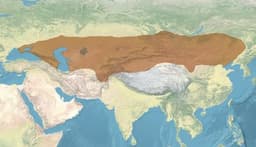
Bumin Qaghan
Emperor · Ancient
67.6Total
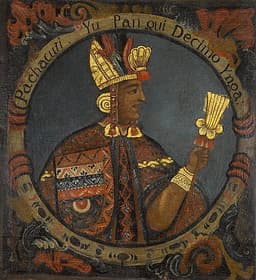
Pachacuti
Emperor · Medieval
69.4Total
Basic Information
Born
490
1418
Died
552
1472
Era
Ancient
Medieval
Nationality
Gokturk Khaganate
Inca Empire
Occupation
Emperor
Emperor
Civilization
Eastern
Other
Score Comparison
Military (10%)
80.0
78.5
Political (20%)
60.0
58.1
Influence (20%)
82.0
65.0
Legacy (20%)
72.0
72.0
Leadership (15%)
40.0
78.0
Strategy (15%)
61.2
69.2
TOTAL
67.6
69.4
Bumin Qaghan — Complete Timeline
534 AD
Revolt against the Rouran KhaganatePolitical Action◆ Major
Bumin, a vassal of the Rouran Khaganate, led a revolt of the Turkic tribes (Ashina clan) against Rouran rule. He defeated the Rouran forces and declared independence, marking the beginning of the First Turkic Khaganate.
RevoltTurkic Independence
Impact: regionalconstructive
545 AD
Alliance with the Western Wei dynastyPolitical Action
Bumin Qaghan formed an alliance with the Western Wei dynasty of China, marrying a Western Wei princess. This alliance provided the Turks with Chinese support and technology, strengthening their position against the Rouran and other rivals.
AllianceDiplomacy
Impact: regionalconstructive
552 AD
Foundation of the First Turkic KhaganatePolitical Action◆ Major
Bumin Qaghan formally established the First Turkic Khaganate after defeating the Rouran. He took the title 'Qaghan' and set up his capital in the Orkhon Valley. The khaganate quickly became a major power on the Eurasian steppe.
Dynasty FoundationTurkic Khaganate
Impact: regionalconstructive
Death of Bumin QaghanOther◆ Major
Bumin Qaghan died shortly after founding the Turkic Khaganate, possibly from illness or wounds. His death led to the division of the khaganate between his sons, with the eastern and western halves ruled separately, though still under a single nominal authority.
DeathSuccession
Impact: regionaltragic
Pachacuti — Complete Timeline
1438 AD
Conquest of the Chanka KingdomWar
Pachacuti led the Inca army to defeat the Chanka, a powerful rival, in a decisive battle near Cusco. This victory secured his position as Sapa Inca and initiated a period of rapid expansion, transforming the Inca from a small kingdom into a vast empire.
ConquestInca ExpansionChanka
Impact: regional
1440 AD
Reconstruction of CuscoCultural◆ Major
Pachacuti rebuilt Cusco as the imperial capital, designing it in the shape of a puma and constructing massive stone structures like Sacsayhuam
Urban PlanningArchitectureInca Empire
Impact: regionalconstructive
1450 AD
Initiation of Machu Picchu's ConstructionCultural◆ Major
Pachacuti ordered the construction of Machu Picchu, a royal estate and ceremonial site high in the Andes. The complex featured sophisticated dry-stone masonry and terraced agriculture, serving as a symbol of Inca engineering and a retreat for the emperor.
ArchitectureRoyal EstateInca Engineering
Impact: regionalconstructive
Expert Analysis
Pachacuti vs Bumin Qaghan
### The Mountain and the Steppe: Two Paths to Empire
In the high Andes, a king reshapes the very stone of the world, carving a sacred city from a mountain peak. On the vast Mongolian steppe, a chieftain raises a banner of revolt, forging a new people from the dust of a fallen empire. Pachacuti and Bumin Qaghan never met, never heard each other’s names. Yet both, in the span of a single lifetime, performed the same impossible feat: they took a small, embattled people and transformed them into the architects of a new world order. Their empires—Inca and Turkic—were among the most formidable of their ages. But the mountains and the steppe shaped not just their empires, but the very nature of their power. Why did one build in stone, the other in bloodlines? Why did one die in glory, the other in the chaos of succession? The answer lies not in their goals, but in the ground beneath their feet.
### Origins: Forged by War, Born of Service
Pachacuti, born in 1418, was not meant to be emperor. He was the son of the Sapa Inca Viracocha, but not the heir. His name, meaning “he who shakes the earth,” was a title earned, not given. The Inca were then a small kingdom in the Cusco Valley, surrounded by powerful rivals like the Chanka. The young prince grew up in the shadow of existential threat. His world was vertical, defined by steep valleys and high passes, where survival meant controlling the land itself.
Bumin Qaghan, born in 490, emerged from a different crucible. He was a chieftain of the Ashina clan, a vassal tribe serving the Rouran Khaganate, the dominant power on the Mongolian steppe. His people were metalworkers and herders, bound to the Rouran by tribute and the sword. Bumin’s world was horizontal, an ocean of grass where power flowed with the herds and alliances shifted like the wind. He learned to rule not by building walls, but by weaving loyalties.
### Rise to Power: The Turning Point
Pachacuti’s rise was a single, desperate gamble. In 1438, the Chanka army marched on Cusco. The Inca king and his chosen heir fled the city. But Pachacuti refused to run. Gathering a small force of warriors and nobles, he met the Chanka in a decisive battle near Cusco. The victory was total. In a single stroke, he saved his kingdom and seized the throne. The old king abdicated, and the earth-shaker began his work.
Bumin’s path was longer and more patient. For decades, he served the Rouran, building his reputation and his army. The turning point came in 534, when he led a revolt of the Turkic tribes against their Rouran overlords. It was not a desperate last stand, but a calculated rebellion. He defeated the Rouran in battle, but he knew that victory alone was not enough. He needed legitimacy. In 545, he forged an alliance with the Western Wei dynasty of China, marrying a princess and securing a powerful patron. With Chinese backing, he crushed the Rouran and in 552 formally declared himself Qaghan, founding the First Turkic Khaganate.
### Leadership & Governance: Stone and Silk
Pachacuti’s genius was architectural in every sense. He understood that an empire of mountains needed a capital that was a physical and spiritual center. Around 1440, he rebuilt Cusco in the shape of a puma, using massive, precisely cut stones that fit together without mortar. He initiated the construction of Machu Picchu around 1450, a royal estate that was part fortress, part temple, part statement of divine power. His rule was centralized, bureaucratic, and deeply religious. He imposed the Inca language, religion, and road system on conquered peoples, integrating them through forced resettlement and the worship of the sun god Inti.
Bumin’s governance was the opposite. He ruled a mobile empire of horsemen. There was no capital city, no stone monuments. His power was personal, based on kinship and oath. He divided his empire among his sons and relatives, creating a system of appanages that would later prove both flexible and fragile. He did not impose a single culture; instead, he absorbed Chinese, Sogdian, and steppe traditions. His alliance with the Western Wei was not a conquest but a marriage—a diplomatic bond that gave his empire access to Chinese silk, technology, and prestige.
### Triumph & Tragedy: The Peak and the Fall
Pachacuti’s greatest triumph was the creation of an imperial system that would endure for nearly a century after his death. He conquered vast territories, but he also built the institutions that held them together: the storehouses, the roads, the mit’a labor system. His tragedy was that his empire was too rigid. When the Spanish arrived in 1532, the Inca system, dependent on the divine authority of the Sapa Inca, collapsed with astonishing speed.
Bumin’s triumph was equally monumental. He united the Turkic tribes for the first time in history, creating an empire that stretched from the Caspian Sea to Manchuria. His tragedy was his timing. He died in 552, the very year he founded the Khaganate, possibly from illness or battle wounds. His death triggered a succession crisis. His empire split almost immediately into eastern and western halves, a division that would define Turkic history for centuries.
### Character & Destiny: The Builder and the Unifier
Pachacuti was a visionary, a man who saw the world as something to be shaped. He was ruthless in war but meticulous in peace. His personality was that of a master architect: he wanted to build something that would outlast him. He succeeded, but his creation was a monument, not a living thing.
Bumin was a pragmatist, a unifier who understood that power was about relationships, not structures. He did not build a capital; he built a people. The Turkic Khaganate was not a place but a lineage, a bloodline that would survive for centuries even as its political form changed. His personality was that of a master weaver, tying threads of loyalty, marriage, and alliance into a fabric that could stretch across continents.
### Legacy: The Temple and the Flag
Pachacuti’s legacy is visible. Machu Picchu stands as a testament to his vision. The Inca road system still scars the Andes. His name is synonymous with Inca greatness. But his empire died with its last emperor, leaving only stone.
Bumin’s legacy is invisible but enduring. The Turkic Khaganate gave birth to a political identity that would echo through the Göktürks, the Uyghurs, the Seljuks, and the Ottomans. The title “Qaghan” became a symbol of steppe sovereignty. Bumin did not build a city; he built a flag. And that flag still flies, in different forms, across Central Asia today.
### Conclusion: Two Kinds of Eternity
Pachacuti and Bumin each achieved a kind of eternity. One carved his name into the living rock of the Andes. The other wove his name into the fabric of a people. One built a temple that still draws pilgrims; the other built a lineage that still shapes nations. They remind us that empires are not made of stone or silk alone, but of the choices of men who see the world differently. Pachacuti saw a mountain and thought, “I will make it mine.” Bumin saw a horizon and thought, “I will make it my home.” Both were right. The question is not which empire was greater, but which kind of eternity we choose to remember.
Rankings
🥇
PachacutiLeader
Mil: 78.5Pol: 58.1Inf: 65.0
69.4
🥈
Bumin Qaghan
Mil: 80.0Pol: 60.0Inf: 82.0
67.6
+1.8 behind
How This Comparison Works
Algorithm
Each figure is scored on 6 dimensions (0—100 scale) based on structured historical data: Military (10%), Political (20%), Influence (20%), Legacy (20%), Leadership (15%), Strategy (15%). The weighted total produces the final ranking.
Data Sources
Scores are computed from structured sub-indicators in the database. Scale factors adjust for era (Ancient ×0.85, Modern ×1.0) and civilization size (Eastern ×1.05, Other ×0.80) to account for differences in population and military scale.
Maximum 3 Figures
Comparisons are limited to 2—3 figures to ensure readability and statistical meaningfulness.
Error Margins
±5 points per dimension — Sub-scores are derived from historical records with inherent uncertainty. Two figures within 5 points on a dimension should be considered roughly equivalent in that area.
Total Score Accuracy
±3 points overall — The weighted combination of 6 dimensions produces a total score with approximately ±3 points of uncertainty. Differences of less than 3 points are not statistically significant— the figures are effectively tied.
Known Limitations
- Historical records are incomplete and uneven across civilizations
- Figures from oral-tradition societies may be underrepresented
- Occupation labels can misclassify multi-role figures
- Scores measure capability and impact, not moral character
- Quantitative scoring is a comparison tool, not absolute truth
Capability Radar
Military (10%) — Battles & Warfare
Battles
70
85
Win Rate
75
90
Expansion
85
90
Political (20%) — Governance & Reform
Reform
70
92
Diplomacy
75
75
Economy
65
80
Influence (20%) — Cultural & Global Reach
Cultural
65
85
Global
65
65
Legacy (20%) — Historical Impact
Historical
80
80
Longevity
70
70
Leadership (15%) — Power & Stability
Tenure
60
85
Stability
55
82
Strategy (15%) — Tactics & Innovation
Strategy
80
88
Tactics
65
80
Reform
60
85
Similar Comparisons
Comments & Discussion
MOUNTAIN MANIAC6/16/2026
Pachacuti's whole 'earth-shaker' shtick is overrated. Sure, he carved Machu Picchu, but his empire collapsed within a century because he built a top-down bureaucracy that rotted without his iron grip. Bumin's Turkic Khaganate lasted longer culturally—his Ashina clan's legacy echoes in half of Central Asia today. Plus, Pachacuti died of old age in bed; Bumin died of a broken empire in 552, right after splitting it. Who really shook the earth? The guy whose system didn't crumble with him. Facts.
草原霸主6/16/2026
Bumin是真正的枭雄,Pachacuti只是个堆石头的建筑师。兄弟,你知道突厥汗国从552年崛起,直到745年才被回纥取代吗?将近两百年!而印加帝国1532年就完蛋了,Pachacuti死后不到一百年。Bumin用草原联盟的灵活制度,把游牧部落捏合成一个持久引擎;Pachacuti那套太阳神崇拜加强制劳役的玩法,本质上是个豪华的专制玩具。谁更牛?看寿命。
CLASSICS SNARK6/16/2026
Please. Pachacuti's Machu Picchu wasn't even a functional city—it was an elite retreat for the emperor and his priests. Bumin's Orkhon inscriptions? That's real statecraft: a legal system, alliance networks, and a written legacy in Turkic script. Pachacuti's 'earth-shaker' title sounds epic until you realize he just conquered a few valley tribes. Bumin actually toppled the Rouran Khaganate—a superpower. Stone temples vs. steel writs? I'll take the inscriptions.
数据毒舌6/16/2026
别被印加神话骗了。Pachacuti的帝国人口约1000万,而突厥汗国高峰期至少1200万,还控制着丝绸之路贸易走廊。Pachacuti死于1471年,24年后西班牙人就来殖民了;Bumin死于552年,他的制度撑到8世纪。更关键:突厥人发明了汗位继承的可汗系统,印加那套长子继承制全看运气。谁更持久?蒙古高原的风沙不骗人,数据说明一切。
反叛理论家6/16/2026
Pachacuti是保守的宗教疯子,Bumin才是革命家。印加把太阳神崇拜强加给被征服者,延续旧美学的暴力;突厥人却大胆反抗柔然主子,用"突厥"这个词重新定义了草原身份——这是对旧秩序的彻底否定。Pachacuti在库斯科堆砌巨石,巩固贵族特权;Bumin在草原上搞起民主式的部落联盟,鼓励流动性。哪个更符合历史进步?当然是Bumin的火种,不是印加的石头墙。