Loading...
Al-Mustansir vs Arnulf of Carinthia
Al-Mustansir leads by 4.5 pts · 2 figures compared
…
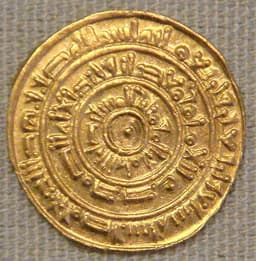
Al-Mustansir
Emperor · Medieval
55.6Total
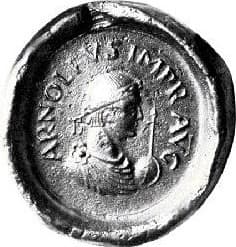
Arnulf of Carinthia
Emperor · Medieval
51.1Total
Basic Information
Born
1192
850
Died
1242
899
Era
Medieval
Medieval
Nationality
Abbasid Caliphate
East Francia
Occupation
Emperor
Emperor
Civilization
Middle Eastern
Western
Score Comparison
Military (10%)
20.0
20.0
Political (20%)
68.0
46.6
Influence (20%)
55.0
53.3
Legacy (20%)
58.0
46.7
Leadership (15%)
71.0
74.0
Strategy (15%)
45.0
60.0
TOTAL
55.6
51.1
Al-Mustansir — Complete Timeline
1227 AD
Foundation of the Mustansiriya MadrasaCultural◆ Major
Al-Mustansir established the Mustansiriya Madrasa in Baghdad, a major educational institution that taught Islamic law, medicine, mathematics, and literature. It became one of the most prominent centers of learning in the medieval Islamic world, operating for centuries.
Impact: regionalconstructive
Arnulf of Carinthia — Complete Timeline
887 AD
Deposition of Charles the FatPolitical Action
Arnulf played a key role in the deposition of his uncle, Charles the Fat, in 887. As the illegitimate son of Carloman, Arnulf was elected King of East Francia by the nobles, ending the unified Carolingian rule and establishing his own dynasty.
DepositionAccessionEast Francia
Impact: regional
891 AD
Battle of the Dyle (891)War◆ Major
Arnulf of Carinthia led an East Frankish army to victory against Viking raiders at the Battle of the Dyle in present-day Belgium. This victory halted Viking incursions into East Francia and demonstrated Arnulf's military capability, boosting his prestige.
BattleVikingsVictory
Impact: regionalconstructive
892 AD
Campaign against the MagyarsWar◆ Major
Arnulf allied with the Magyars (Hungarians) against the Moravian Empire, inviting them into Central Europe. This decision backfired, as the Magyars later turned on East Francia, launching devastating raids. Arnulf's short-term strategy had long-term negative consequences.
AllianceMagyarsRaids
Impact: regionaldestructive
896 AD
Imperial Coronation (896)Cultural◆ Major
Arnulf was crowned Holy Roman Emperor by Pope Formosus on February 22, 896, in Rome. He had marched into Italy to support the pope against rival factions. His coronation was brief, as he suffered a stroke soon after and returned to East Francia.
CoronationEmperorItaly
Impact: regional
899 AD
Death of Arnulf of CarinthiaOther
Arnulf died on December 8, 899, likely from a stroke. He was succeeded by his young son, Louis the Child, whose weak rule led to further fragmentation and vulnerability to Magyar attacks. Arnulf's reign was marked by military successes but also strategic errors.
DeathSuccessionDecline
Impact: regionaltragic
Expert Analysis
Origins
Al-Mustansir, born in 1192, was the 36th Abbasid caliph, ruling from 1226 to 1242. His father was Caliph al-Zahir, and his family had presided over a diminished empire, with real power often held by Seljuk warlords. Al-Mustansir was educated in Islamic jurisprudence and administration, preparing him for a largely ceremonial role. In contrast, Arnulf of Carinthia (c. 850–899) was the illegitimate son of Carloman, King of Bavaria. His birth placed him outside the direct line of succession, but his military prowess and political maneuvering allowed him to rise in the chaotic Carolingian world. Arnulf's early years were spent in Carinthia, where he learned the arts of war and governance.
Rise to Power
Al-Mustansir ascended the caliphate peacefully upon his father's death in 1226. His power was limited, as the Abbasid caliphs had become figureheads under Buyid and later Seljuk control. However, he focused on cultural and religious patronage rather than military expansion. Arnulf's rise was far more turbulent. In 887, he led a rebellion against his uncle, Emperor Charles the Fat, deposing him and claiming the kingship of East Francia. This act ended the unified Carolingian Empire. Arnulf then consolidated power by defeating rival claimants and securing the support of the Bavarian and Frankish nobility. His military campaigns against Vikings at the Battle of the Dyle in 891 boosted his reputation, leading to his coronation as Holy Roman Emperor in 896.
Leadership & Governance
Al-Mustansir's leadership was defined by his patronage of learning. He founded the Mustansiriya Madrasa in Baghdad in 1233, a groundbreaking institution that taught Islamic law, medicine, mathematics, and literature. It was one of the first universities, with a library and endowment. His governance was passive in military affairs, scoring only 20.0 in military metrics, but he maintained stability in a period of declining caliphal authority. Arnulf, scoring 20.0 in military as well, was a hands-on commander. He led troops personally at the Dyle. His governance focused on defending East Francia from external threats: Vikings, Magyars, and Moravians. However, his alliance with the Magyars against Moravia in the 890s proved disastrous, as the Magyars later turned on his kingdom, ravaging the countryside. Arnulf's political score of 46.6 reflects his mixed success in diplomacy.
Triumph & Tragedy
Al-Mustansir's greatest triumph was the Mustansiriya Madrasa, which became a model for later Islamic colleges and attracted scholars from across the Muslim world. Its curriculum included medicine, astronomy, and philosophy, fostering intellectual exchange. His tragedy was the continued decline of Abbasid power; he could not reverse the fragmentation of the empire, and the caliphate would be extinguished by the Mongols in 1258, just 16 years after his death. Arnulf's triumph was the victory at the Dyle, which secured his reign and halted Viking incursions into East Francia. His imperial coronation in Rome was a personal high point. His tragedy was the Magyar alliance: by inviting the Magyars into Central Europe, he unleashed a wave of raids that devastated his kingdom after his death. His son, Louis the Child, was too young to rule, leading to internal strife and the eventual rise of new dynasties.
Character & Destiny
Al-Mustansir was a patron and scholar, content to rule through cultural influence rather than military force. His character shaped a destiny of relative peace but political irrelevance. He scored 71.0 in leadership, indicating effective administration within his sphere. Arnulf was ambitious and pragmatic, willing to depose his uncle and ally with pagans to achieve his goals. His strategy score of 60.0 reflects tactical acumen but strategic blunders. His illegitimacy drove him to seek legitimacy through military success and imperial title, but his short-term alliances compromised his kingdom's future.
Legacy
Al-Mustansir's legacy is the Mustansiriya Madrasa, which endured as a center of learning until the Mongol sack of Baghdad. It influenced the development of university systems in the Islamic world and beyond. His cultural impact scores 58.0 in legacy. Arnulf's legacy is more ambiguous. He is remembered as a defender against Vikings but also as the king who opened the door to Magyar incursions. His deposition of Charles the Fat ended the Carolingian unity, leading to the formation of Germany and France. He scored 46.7 in legacy.
Conclusion
Al-Mustansir had a greater long-term impact on civilization through his educational institution, which promoted knowledge across disciplines. Arnulf's military and political actions were significant but ultimately destabilizing. With a total score of 55.6 vs 51.1, Al-Mustansir's contributions to learning outweigh Arnulf's temporary successes. Al-Mustansir's legacy of scholarship outlasts the ephemeral victories of a Carolingian king.
Rankings
🥇
Al-MustansirLeader
Mil: 20.0Pol: 68.0Inf: 55.0
55.6
🥈
Arnulf of Carinthia
Mil: 20.0Pol: 46.6Inf: 53.3
51.1
+4.5 behind
How This Comparison Works
Algorithm
Each figure is scored on 6 dimensions (0—100 scale) based on structured historical data: Military (10%), Political (20%), Influence (20%), Legacy (20%), Leadership (15%), Strategy (15%). The weighted total produces the final ranking.
Data Sources
Scores are computed from structured sub-indicators in the database. Scale factors adjust for era (Ancient ×0.85, Modern ×1.0) and civilization size (Eastern ×1.05, Other ×0.80) to account for differences in population and military scale.
Maximum 3 Figures
Comparisons are limited to 2—3 figures to ensure readability and statistical meaningfulness.
Error Margins
±5 points per dimension — Sub-scores are derived from historical records with inherent uncertainty. Two figures within 5 points on a dimension should be considered roughly equivalent in that area.
Total Score Accuracy
±3 points overall — The weighted combination of 6 dimensions produces a total score with approximately ±3 points of uncertainty. Differences of less than 3 points are not statistically significant— the figures are effectively tied.
Known Limitations
- Historical records are incomplete and uneven across civilizations
- Figures from oral-tradition societies may be underrepresented
- Occupation labels can misclassify multi-role figures
- Scores measure capability and impact, not moral character
- Quantitative scoring is a comparison tool, not absolute truth
Capability Radar
Military (10%) — Battles & Warfare
Battles
5
45
Win Rate
5
40
Expansion
5
40
Political (20%) — Governance & Reform
Reform
70
35
Diplomacy
40
55
Economy
50
40
Influence (20%) — Cultural & Global Reach
Cultural
70
30
Global
50
30
Legacy (20%) — Historical Impact
Historical
65
45
Longevity
60
35
Leadership (15%) — Power & Stability
Tenure
60
60
Stability
30
45
Strategy (15%) — Tactics & Innovation
Strategy
5
55
Tactics
5
50
Reform
5
30
Similar Comparisons
Comments & Discussion
No comments yet. Be the first to share your thoughts!