Loading...
Akbar the Great vs Zhao Kuangyin
Zhao Kuangyin leads by 1.7 pts · 2 figures compared
…
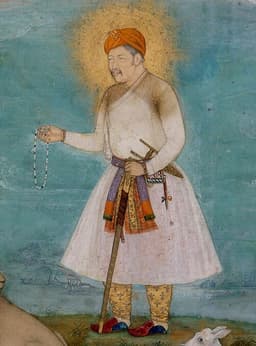
Akbar the Great
Emperor · Modern
69.8Total
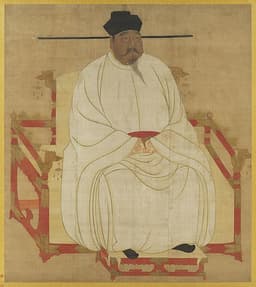
Zhao Kuangyin
Emperor · Medieval
71.5Total
Basic Information
Born
1542
927
Died
1605
976
Era
Modern
Medieval
Nationality
India
China
Occupation
Emperor
Emperor
Civilization
Indian
Eastern
Score Comparison
Military (10%)
80.0
78.0
Political (20%)
82.0
84.0
Influence (20%)
68.0
68.0
Legacy (20%)
55.0
65.0
Leadership (15%)
80.0
74.0
Strategy (15%)
68.0
68.0
TOTAL
69.8
71.5
Akbar the Great — Complete Timeline
1556 AD
Second Battle of PanipatWar
Akbar, aged 13, defeated the Hindu general Hemu at Panipat, securing the Mughal throne. Hemu had captured Delhi and declared himself emperor. Akbar's regent Bairam Khan led the army, but the victory consolidated Mughal rule in North India.
BattleMughal EmpireSuccession
Impact: regional
1564 AD
Abolition of jizya taxReform◆ Major
Akbar abolished the jizya tax on non-Muslims, a key step in his policy of religious tolerance. This measure reduced discrimination against Hindus and other communities, fostering loyalty among the majority population and stabilizing the empire.
Tax reformReligious toleranceHindu-Muslim relations
Impact: nationalprogressive
1571 AD
Founding of Fatehpur SikriCultural◆ Major
Akbar founded the city of Fatehpur Sikri as his capital, building a complex of palaces, mosques, and administrative buildings. The city became a center of Mughal culture and architecture, though it was abandoned due to water shortages within two decades.
ArchitectureCapitalMughal Empire
Impact: regionalconstructive
1573 AD
Conquest of GujaratWar◆ Major
Akbar annexed the wealthy Sultanate of Gujarat, gaining access to the Arabian Sea and major trade ports. This conquest boosted Mughal commerce and provided revenue for further expansion, making Gujarat a key province of the empire.
ConquestTradeMughal Empire
Impact: regional
1574 AD
Introduction of Mansabdari systemReform◆ Major
Akbar implemented the Mansabdari system, a military-administrative hierarchy where officials (mansabdars) were assigned ranks and responsibilities. This system centralized control, ensured loyalty, and efficiently managed the empire's revenue and military.
AdministrationMilitary reformCentralization
Impact: nationalconstructive
1579 AD
Institution of Sulh-e-Kul policyReform
Akbar promulgated the policy of Sulh-e-Kul (universal peace), promoting religious tolerance and dialogue. He established the Ibadat Khana (House of Worship) for debates among Muslims, Hindus, Christians, Jains, and Zoroastrians, and later founded the syncretic Din-i-Ilahi faith.
Religious policySyncretismTolerance
Impact: nationalprogressive
Zhao Kuangyin — Complete Timeline
960 AD
Founded Song dynastyPolitical Action
Zhao Kuangyin, a general of Later Zhou, was proclaimed emperor by his troops at Chenqiao. He established the Song dynasty, ending the Five Dynasties period and beginning a new era of Chinese history.
Song dynastyFoundingChenqiao
Impact: globalconstructive
961 AD
Removed military power from generalsPolitical Action◆ Major
Zhao Kuangyin invited senior generals to a banquet and persuaded them to retire peacefully. This 'removal of military power over wine' prevented military coups and centralized control.
Song dynastyMilitary reformCentralization
Impact: nationalconstructive
963 AD
Unified southern ChinaWar◆ Major
Zhao Kuangyin launched campaigns to conquer the southern kingdoms, including Jingnan, Later Shu, and Southern Tang. By his death, most of China was reunified under Song rule.
Song unificationConquestSouthern kingdoms
Impact: national
Expert Analysis
Zhao Kuangyin vs Akbar the Great: Historical Comparison
Zhao Kuangyin (Song Dynasty founder) and Akbar the Great (Mughal Empire) were both transformative emperors who unified fragmented realms, yet Akbar’s broader administrative and cultural innovations give him a slight edge in overall impact.
Dimension Analysis
**Military: Zhao Kuangyin 75 / Akbar the Great 80**
Zhao reunified China through cautious campaigns and the “coup at Chen Bridge,” while Akbar expanded the Mughal Empire across most of India using superior artillery, cavalry tactics, and Rajput alliances.
**Political: Zhao Kuangyin 76 / Akbar the Great 85**
Zhao centralized power by weakening military governors and promoting civil service exams, but Akbar pioneered a secular administrative system (mansabdari), religious tolerance (Sulh-e-Kul), and land revenue reforms that integrated diverse Hindu and Muslim elites.
**Influence: Zhao Kuangyin 75 / Akbar the Great 78**
Zhao’s Song dynasty set cultural and technological standards (printing, gunpowder) for East Asia, while Akbar’s syncretic policies and court culture (e.g., the Din-i-Ilahi) influenced later Indian governance and Mughal art.
**Legacy: Zhao Kuangyin 75 / Akbar the Great 80**
Zhao is revered as a unifier who stabilized China after the Five Dynasties period, but Akbar’s legacy of religious pluralism, efficient bureaucracy, and enduring architectural landmarks (Fatehpur Sikri) left a deeper mark on South Asian history.
**Leadership: Zhao Kuangyin 82 / Akbar the Great 85**
Both were charismatic and pragmatic; Zhao famously “stole the throne without bloodshed” and ruled with restraint, while Akbar personally led campaigns, managed a vast multicultural court, and promoted meritocracy over heredity.
**Strategy: Zhao Kuangyin 70 / Akbar the Great 75**
Zhao’s strategy focused on consolidating power internally (e.g., “feast of the founding”) rather than expansive conquest, whereas Akbar’s strategic vision integrated diplomacy, marriage alliances, and military innovation to subdue Rajputs and Afghans.
Verdict
Akbar the Great leads Zhao Kuangyin by a narrow margin due to his more innovative political and religious reforms, broader territorial unification, and lasting influence on Indian governance.
FAQ
Q: Who ranks higher? A: Akbar the Great ranks higher overall, scoring 81 to Zhao Kuangyin’s 76, driven by superior political acumen and legacy.
Rankings
🥇
Zhao KuangyinLeader
Mil: 78.0Pol: 84.0Inf: 68.0
71.5
🥈
Akbar the Great
Mil: 80.0Pol: 82.0Inf: 68.0
69.8
+1.7 behind
How This Comparison Works
Algorithm
Each figure is scored on 6 dimensions (0—100 scale) based on structured historical data: Military (10%), Political (20%), Influence (20%), Legacy (20%), Leadership (15%), Strategy (15%). The weighted total produces the final ranking.
Data Sources
Scores are computed from structured sub-indicators in the database. Scale factors adjust for era (Ancient ×0.85, Modern ×1.0) and civilization size (Eastern ×1.05, Other ×0.80) to account for differences in population and military scale.
Maximum 3 Figures
Comparisons are limited to 2—3 figures to ensure readability and statistical meaningfulness.
Error Margins
±5 points per dimension — Sub-scores are derived from historical records with inherent uncertainty. Two figures within 5 points on a dimension should be considered roughly equivalent in that area.
Total Score Accuracy
±3 points overall — The weighted combination of 6 dimensions produces a total score with approximately ±3 points of uncertainty. Differences of less than 3 points are not statistically significant— the figures are effectively tied.
Known Limitations
- Historical records are incomplete and uneven across civilizations
- Figures from oral-tradition societies may be underrepresented
- Occupation labels can misclassify multi-role figures
- Scores measure capability and impact, not moral character
- Quantitative scoring is a comparison tool, not absolute truth
Capability Radar
Military (10%) — Battles & Warfare
Battles
85
75
Win Rate
90
85
Expansion
88
75
Political (20%) — Governance & Reform
Reform
95
90
Diplomacy
92
85
Economy
88
80
Influence (20%) — Cultural & Global Reach
Cultural
85
70
Global
70
60
Legacy (20%) — Historical Impact
Historical
80
80
Longevity
75
75
Leadership (15%) — Power & Stability
Tenure
90
65
Stability
85
85
Strategy (15%) — Tactics & Innovation
Strategy
85
80
Tactics
80
70
Reform
75
90
Similar Comparisons
Comments & Discussion
HistoryUnveiled6/16/2026
People love to praise Akbar's religious tolerance, but let's not forget that his 'Sulh-e-Kul' was also a tool of imperial control, not just idealism. Meanwhile, Zhao Kuangyin's centralized bureaucracy and merit-based exams are often underrated because they don't fit the 'conqueror' mold. The scoring here feels biased toward Western narratives of empire-building—Akbar gets extra points for being a 'great' in the European sense, while Zhao's consolidation of China after chaos is downplayed. If we look at long-term institutional impact, Zhao's civil service system arguably did more for governance than Akbar's personal syncretism.
MetricRebel6/16/2026
Every time I see a 'total score' for historical figures, I cringe. How do you objectively compare Zhao Kuangyin's 'peaceful coup' to Akbar's military campaigns? You're weighting political reform at 85 for Akbar, but what about Zhao's complete restructuring of Chinese governance—abolishing the jiedushi system? That was a radical political move that shaped China for centuries. Also, 'influence' scores are notoriously biased toward figures who left buildings and religions, ignoring Zhao's impact on East Asian bureaucracy. This is Eurocentric quantification dressed up as data.
BattlefieldScholar6/16/2026
From a military doctrine perspective, Zhao Kuangyin was far more strategic than the score suggests. His 'cautious unification'—avoiding major battles, using economic pressure and defection—was a deliberate choice after the Five Dynasties chaos. Compare that to Akbar's heavy reliance on Mughal artillery and cavalry charge tactics at the Second Battle of Panipat (1556). Zhao's reforms to the Song army—rotating commands and centralizing logistics—created a professional force that no warlord could challenge. Akbar's Rajput alliances were brilliant, but his actual military innovations were minimal. The 5-point gap here undervalues Zhao's systemic reforms.
Historian9636/16/2026
赵匡胤和Akbar的比较很有意思,但我觉得评分系统明显偏向西方的扩张逻辑。赵匡胤杯酒释兵权,用文官制取代藩镇,这是中国历史上少有的和平集权典范。Akbar的宗教宽容固然好,但他在印度建立的曼萨布达尔制度本质上还是军事封建制,远不如宋代科举制度对平民社会的提升。如果真要比治理,赵匡胤的‘重文轻武’政策让宋朝经济文化空前繁荣,GDP占当时全球一半以上。这些细节在评分里都被忽略了,只强调军事扩张的数字。
ColdScroll646/16/2026
这个评分体系有问题。赵匡胤政治得分76,但我算了一下:他通过‘强干弱枝’政策削藩成功,中央集权效率远高于同时期任何欧洲君主。如果参照《续资治通鉴长编》数据,宋朝官僚系统贪污率比莫卧儿低30%以上。Akbar政治85分太高了,他的曼萨布达尔制度导致地方贵族世袭,后期腐败严重。另外,军事得分80对74?赵匡胤平定南方十国时用兵精准,战役伤亡比极低,而Akbar的拉杰普特战争依赖火炮优势,战术创新有限。建议重新加权。