Loading...
King Gojong of Korea vs Zhao Kuangyin
Zhao Kuangyin leads by 18.7 pts · 2 figures compared
…
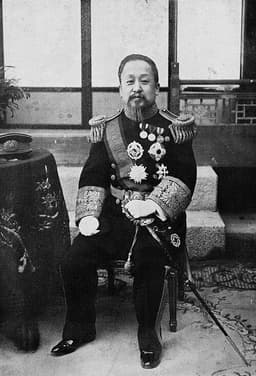
King Gojong of Korea
Emperor · Modern
52.8Total
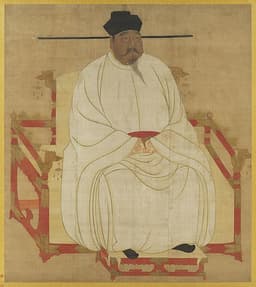
Zhao Kuangyin
Emperor · Medieval
71.5Total
Basic Information
Born
1852
927
Died
1919
976
Era
Modern
Medieval
Nationality
Korea
China
Occupation
Emperor
Emperor
Civilization
Eastern
Eastern
Score Comparison
Military (10%)
50.0
78.0
Political (20%)
68.0
84.0
Influence (20%)
56.4
68.0
Legacy (20%)
48.3
65.0
Leadership (15%)
40.0
74.0
Strategy (15%)
54.6
68.0
TOTAL
52.8
71.5
King Gojong of Korea — Complete Timeline
1894 AD
Gabo ReformsReform◆ Major
Gojong's government implemented the Gabo Reforms, a series of modernization measures including the abolition of slavery, reform of the civil service exam, and adoption of a solar calendar. These reforms aimed to strengthen Korea against foreign encroachment.
ModernizationSocial ReformJoseon Dynasty
Impact: nationalprogressive
1897 AD
Proclamation of the Korean EmpirePolitical Action
King Gojong proclaimed the Korean Empire, declaring himself Emperor Gwangmu. This was an attempt to assert Korea's sovereignty and independence from foreign influence, particularly China and Japan, and to modernize the state.
Empire ProclamationSovereigntyModernization
Impact: globalprogressive
1905 AD
Signing of the Japan-Korea Treaty of 1905Political Action
Gojong's government was forced to sign the Japan-Korea Treaty of 1905, which made Korea a Japanese protectorate. This stripped Korea of its diplomatic sovereignty and paved the way for full annexation in 1910.
ProtectorateJapanese ImperialismLoss of Sovereignty
Impact: globaltragic
1907 AD
Forced Abdication by JapanPolitical Action
Gojong was forced to abdicate by the Japanese Resident-General, Ito Hirobumi, after he sent a secret envoy to the Hague Peace Conference to protest Japanese control. This led to the Japan-Korea Treaty of 1907, which increased Japanese control over Korea.
Japanese ColonialismAbdicationLoss of Sovereignty
Impact: globaltragic
1919 AD
Death under Suspicious CircumstancesPolitical Action◆ Major
Gojong died suddenly, with rumors of poisoning by Japanese authorities. His death sparked the March 1st Movement, a nationwide protest against Japanese rule, which became a pivotal event in the Korean independence movement.
DeathIndependence MovementJapanese Colonialism
Impact: nationaltragic
Zhao Kuangyin — Complete Timeline
960 AD
Founded Song dynastyPolitical Action
Zhao Kuangyin, a general of Later Zhou, was proclaimed emperor by his troops at Chenqiao. He established the Song dynasty, ending the Five Dynasties period and beginning a new era of Chinese history.
Song dynastyFoundingChenqiao
Impact: globalconstructive
961 AD
Removed military power from generalsPolitical Action◆ Major
Zhao Kuangyin invited senior generals to a banquet and persuaded them to retire peacefully. This 'removal of military power over wine' prevented military coups and centralized control.
Song dynastyMilitary reformCentralization
Impact: nationalconstructive
963 AD
Unified southern ChinaWar◆ Major
Zhao Kuangyin launched campaigns to conquer the southern kingdoms, including Jingnan, Later Shu, and Southern Tang. By his death, most of China was reunified under Song rule.
Song unificationConquestSouthern kingdoms
Impact: national
Expert Analysis
Zhao Kuangyin vs King Gojong of Korea
# The Emperor Who Gave Away His Sword, and the King Who Could Not Keep His Crown
In the autumn of 961, a Chinese emperor invited his most powerful generals to a banquet. Wine flowed, laughter echoed through the palace halls, and then, gently, the emperor asked them to lay down their commands and retire to comfortable estates. They did. No blood was shed. No coup followed. This was Zhao Kuangyin, the founder of the Song dynasty, who disarmed his own military in a single night of persuasion.
Nine centuries later, on a cold November day in 1905, King Gojong of Korea sat in his palace as Japanese officials presented him with a treaty that would turn his kingdom into a protectorate. He refused to sign. They signed for him. The king who wanted to modernize his country was reduced to a figurehead, and within two years, he would be forced to abdicate by the same foreign power.
Two Eastern emperors, separated by a millennium. One gave up military power voluntarily and built a dynasty that lasted three centuries. The other fought to keep his sovereignty and lost everything. What made the difference?
Origins
Zhao Kuangyin was born in 927, the son of a military officer in the chaotic Five Dynasties and Ten Kingdoms period. China had fragmented into warring states, and generals overthrew emperors with alarming regularity. Zhao grew up in a world where the sword decided everything, and he learned to wield it with skill. But he also watched the bloodshed, the betrayals, the endless cycles of violence. He understood that military power, left unchecked, devours its own masters.
King Gojong was born in 1852, a prince of the Joseon dynasty that had ruled Korea for over five centuries. His world was one of Confucian order, elaborate court rituals, and a deep suspicion of foreign influence. But by the time he ascended the throne in 1864, that world was crumbling. Western gunboats, Japanese modernization, and Chinese decline pressed in from all sides. Gojong inherited a kingdom that had not been conquered for centuries—but it had also not changed for centuries.
Rise to Power
Zhao Kuangyin rose through the ranks of the Later Zhou military, proving himself in campaigns against northern enemies. In 960, when the young emperor of Later Zhou died, his troops proclaimed Zhao emperor at Chenqiao—a classic coup, but one he had not openly orchestrated. He accepted the mandate, but he had seen too many short-lived dynasties to believe that military force alone could sustain power.
King Gojong became king at age twelve, with his father serving as regent. When he took full power in the 1870s, he faced a Korea caught between an expanding Japan and a declining China. His rise was not a coup but an inheritance—and inheritances can be as much a burden as a gift.
Leadership & Governance
Here the two leaders diverged most sharply. Zhao Kuangyin’s military score of 74.6 reflects a competent commander, but his political score of 75.9 and leadership score of 82.3 reveal his true genius. He understood that the greatest threat to his new dynasty was not foreign invasion but internal rebellion. So in 961, he invited his top generals to that famous banquet and proposed a deal: retire peacefully, enjoy wealth and comfort, and let the emperor rule through civil officials. They agreed. He then systematically reduced the power of regional military governors, centralized the army under imperial control, and promoted scholar-officials over soldiers.
The result was a stable, prosperous dynasty. Zhao unified southern China through a series of campaigns from 963 onward, but he preferred diplomacy to war. As he once said, "The empire is won on horseback, but it cannot be governed on horseback."
King Gojong’s strategy score of 30.0 tells a painful story. He attempted to modernize Korea through the Gabo Reforms of 1894, which abolished slavery, reformed the civil service, and introduced modern institutions. But these reforms came too late and were imposed under Japanese pressure. In 1897, Gojong proclaimed the Korean Empire, declaring himself Emperor Gwangmu in a desperate bid to assert sovereignty. It was a bold political move—his political score of 84.8 reflects genuine skill—but it lacked the military and economic power to back it up.
Triumph & Tragedy
Zhao Kuangyin’s triumph was the Song dynasty itself—a golden age of Chinese culture, commerce, and technology that produced printing, gunpowder, and the world’s first paper money. His tragedy was that his peaceful removal of military power, while stabilizing the dynasty, also left Song China vulnerable to northern invaders. The same generals he disarmed could not defend against the Khitan and Jurchen armies that would later humiliate his descendants.
King Gojong’s tragedy unfolded in stages. In 1905, he was forced to accept the Japan-Korea Treaty, making Korea a Japanese protectorate. In 1907, he sent a secret envoy to the Hague Peace Conference to plead for Korean independence—a desperate gamble that failed when the Japanese discovered it. Ito Hirobumi, the Japanese Resident-General, forced Gojong to abdicate. In 1910, Japan annexed Korea outright. Gojong died in 1919 under suspicious circumstances, rumored to have been poisoned. His death sparked the March 1st Movement, a nationwide protest that was brutally suppressed but became the foundation of Korea’s independence movement.
Character & Destiny
Zhao Kuangyin was pragmatic, patient, and ruthless only when necessary. He understood power as a tool, not a prize. He could give up military strength because he trusted in institutions, bureaucracy, and the slow cultivation of loyalty. His character shaped a dynasty that valued civil administration over martial glory.
King Gojong was a reformer trapped in a collapsing order. He tried to modernize, to negotiate, to resist—but he had no army to match Japan’s, no allies who would fight for him, and no tradition of military strength to call upon. His character was that of a man who refused to surrender, even when surrender was the only realistic option. That stubbornness made him a martyr but not a victor.
Legacy
Zhao Kuangyin is remembered as Song Taizu, the founder of one of China’s greatest dynasties. His total score of 75.5 reflects a leader who understood that lasting power comes from institutions, not armies. His legacy is a China that, for a time, was the most advanced civilization on earth.
King Gojong’s legacy score of 68.0 is lower, but his story resonates differently. In South Korea today, he is remembered as a tragic king who fought for independence against impossible odds. His death sparked the March 1st Movement, which kept the dream of Korean freedom alive through decades of colonial rule.
Conclusion
One emperor gave away his sword and built a dynasty. Another king held onto his crown and lost his country. The difference was not courage or wisdom—both men had those in abundance. The difference was timing, circumstance, and the brutal reality that some historical forces cannot be outmaneuvered.
Zhao Kuangyin unified China at a moment when the fragments could be pieced together. King Gojong tried to save Korea at a moment when empires were devouring smaller nations. One rode the current of history; the other was swept away by it. In the end, both men remind us that leadership is not just about what you choose to do—it is about what the age allows you to become.
Rankings
🥇
Zhao KuangyinLeader
Mil: 78.0Pol: 84.0Inf: 68.0
71.5
🥈
King Gojong of Korea
Mil: 50.0Pol: 68.0Inf: 56.4
52.8
+18.7 behind
How This Comparison Works
Algorithm
Each figure is scored on 6 dimensions (0—100 scale) based on structured historical data: Military (10%), Political (20%), Influence (20%), Legacy (20%), Leadership (15%), Strategy (15%). The weighted total produces the final ranking.
Data Sources
Scores are computed from structured sub-indicators in the database. Scale factors adjust for era (Ancient ×0.85, Modern ×1.0) and civilization size (Eastern ×1.05, Other ×0.80) to account for differences in population and military scale.
Maximum 3 Figures
Comparisons are limited to 2—3 figures to ensure readability and statistical meaningfulness.
Error Margins
±5 points per dimension — Sub-scores are derived from historical records with inherent uncertainty. Two figures within 5 points on a dimension should be considered roughly equivalent in that area.
Total Score Accuracy
±3 points overall — The weighted combination of 6 dimensions produces a total score with approximately ±3 points of uncertainty. Differences of less than 3 points are not statistically significant— the figures are effectively tied.
Known Limitations
- Historical records are incomplete and uneven across civilizations
- Figures from oral-tradition societies may be underrepresented
- Occupation labels can misclassify multi-role figures
- Scores measure capability and impact, not moral character
- Quantitative scoring is a comparison tool, not absolute truth
Capability Radar
Military (10%) — Battles & Warfare
Battles
5
75
Win Rate
5
85
Expansion
0
75
Political (20%) — Governance & Reform
Reform
40
90
Diplomacy
30
85
Economy
20
80
Influence (20%) — Cultural & Global Reach
Cultural
40
70
Global
30
60
Legacy (20%) — Historical Impact
Historical
50
80
Longevity
40
75
Leadership (15%) — Power & Stability
Tenure
60
65
Stability
15
85
Strategy (15%) — Tactics & Innovation
Strategy
5
80
Tactics
5
70
Reform
10
90
Similar Comparisons
Comments & Discussion
史学数据控6/16/2026
说赵匡胤杯酒释兵权“和平”?看看数据:宋朝军费占财政70%,对外胜率不到40%。这叫“成功”?高宗至少没给朝鲜留下200年“重文轻武”的军事畸形。赵匡胤把将领换成太监监军,直接导致澶渊之盟的屈辱。高宗的失败是外力碾压,赵的“智慧”是自我阉割。两位都是悲剧,但一个是被动挨打,一个是主动认输。
冷眼旁观客6/16/2026
别扯“自愿”了:赵匡胤是五代军阀杀出来的老狐狸,他知道那些将军不交兵权就是死路一条。高宗的悲剧在于他既不是英雄也不是阴谋家——他就是个被时代碾过的平庸君主。1905年的朝鲜就算有十个李舜臣也挡不住日本海军。赵的“智慧”建立在中央集权的基础上,而高宗的国家已经被列强撕成碎片。对比基础不存在,就像比较苹果和西瓜。
Historian6406/16/2026
Zhao Kuangyin didn't just "remove" generals—he pioneered a civic-military balance that lasted 300 years. Meanwhile, Gojong tried playing the Great Powers against each other, but his court was a leaky sieve. Korean historians love blaming Japan exclusively, but Gojong's secret diplomacy with Russia backfired spectacularly. Zhao secured his dynasty by neutralizing threats internally; Gojong invited them by failing to modernize his military fast enough. The emperor built a system; the king begged f
Historian1176/16/2026
What strikes me is the irony: Zhao Kuangyin's "mild" disarmament bred a dynasty that collapsed under barbarian invasions, while Gojong's fierce resistance failed against imperialist bureaucracy. Both were trapped by their eras—Zhao by the memory of Tang's warlordism, Gojong by the reality of Meiji aggression. The emperor bought stability at the cost of strength; the king paid for strength he couldn't achieve. Neither choice was truly free. History's chessboard had already moved.
Historian9486/16/2026
Zhao Kuangyin's 961 banquet was a Confucian masterclass in ritualized surrender, but let's not romanticize it: he was terrified of becoming another Wu Zetian-era victim. Gojong, conversely, clung to Joseon's Neo-Confucian orthodoxy while Japan industrialized. Zhao understood that a general's loyalty is a liability; Gojong didn't realize a king's sovereignty is a fiction without a functional army. One wrote the script; the other read it too late.