Loading...
Pedro I of Brazil vs Zhao Kuangyin
Zhao Kuangyin leads by 16.9 pts · 2 figures compared
…
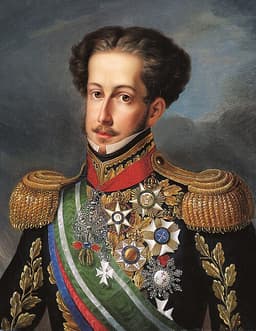
Pedro I of Brazil
Emperor · Modern
54.6Total
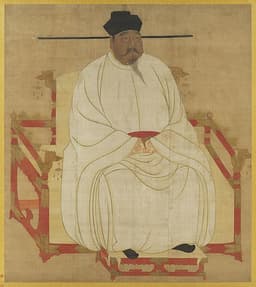
Zhao Kuangyin
Emperor · Medieval
71.5Total
Basic Information
Born
1798
927
Died
1834
976
Era
Modern
Medieval
Nationality
Brazil
China
Occupation
Emperor
Emperor
Civilization
Western
Eastern
Score Comparison
Military (10%)
55.0
78.0
Political (20%)
62.7
84.0
Influence (20%)
59.0
68.0
Legacy (20%)
50.0
65.0
Leadership (15%)
53.2
74.0
Strategy (15%)
45.0
68.0
TOTAL
54.6
71.5
Pedro I of Brazil — Complete Timeline
1822 AD
Declaration of Independence of BrazilPolitical Action
Pedro I declared Brazil's independence from Portugal on September 7, 1822, at the Ipiranga River in S
Impact: globalprogressive
Coronation as Emperor of BrazilPolitical Action◆ Major
Pedro I was crowned Emperor of Brazil on December 1, 1822, in Rio de Janeiro. The coronation formalized the new imperial government, with Pedro I as constitutional monarch, though he retained significant executive powers.
Impact: nationalconstructive
1823 AD
War of Independence of BrazilWar◆ Major
Pedro I led Brazilian forces against Portuguese loyalists in the War of Independence. Key battles occurred in Bahia, Maranh
Impact: national
Dissolution of the Constituent AssemblyPolitical Action◆ Major
Pedro I dissolved the Constituent Assembly after conflicts over the constitution's limits on imperial power. He then imposed the 1824 Constitution, which granted the emperor extensive powers, including the Moderating Power, centralizing authority.
Impact: nationaldestructive
1831 AD
Abdication of the Brazilian ThronePolitical Action
Pedro I abdicated the Brazilian throne in favor of his five-year-old son Pedro II on April 7, 1831. He returned to Portugal to claim the Portuguese throne, leaving Brazil under a regency until his son came of age.
Impact: national
Zhao Kuangyin — Complete Timeline
960 AD
Founded Song dynastyPolitical Action
Zhao Kuangyin, a general of Later Zhou, was proclaimed emperor by his troops at Chenqiao. He established the Song dynasty, ending the Five Dynasties period and beginning a new era of Chinese history.
Song dynastyFoundingChenqiao
Impact: globalconstructive
961 AD
Removed military power from generalsPolitical Action◆ Major
Zhao Kuangyin invited senior generals to a banquet and persuaded them to retire peacefully. This 'removal of military power over wine' prevented military coups and centralized control.
Song dynastyMilitary reformCentralization
Impact: nationalconstructive
963 AD
Unified southern ChinaWar◆ Major
Zhao Kuangyin launched campaigns to conquer the southern kingdoms, including Jingnan, Later Shu, and Southern Tang. By his death, most of China was reunified under Song rule.
Song unificationConquestSouthern kingdoms
Impact: national
Expert Analysis
Pedro I of Brazil vs Zhao Kuangyin
### The Emperor and the Unifier
On a sun-drenched September morning in 1822, a young prince stood by the Ipiranga River in São Paulo, tore the blue-and-white Portuguese cockade from his hat, and shouted “Independence or Death!” A continent shook. A century earlier, on a cold night in 960, a Chinese general at Chenqiao was awakened by his own soldiers, who draped a yellow dragon robe over his shoulders and proclaimed him emperor. Two men, two worlds, two moments when the course of history turned on a single, decisive act. Why did one founder a dynasty that would endure for three centuries, while the other, after a decade of rule, fled his throne in disgrace? The answer lies not merely in their deeds, but in the deeper currents of their times and the characters they forged.
### Origins
Pedro I was born into a world of crumbling empires. The Portuguese court had fled Napoleon’s armies to Rio de Janeiro in 1808, making Brazil the seat of a transatlantic monarchy. Young Pedro grew up in the tropical splendor of the Palace of São Cristóvão, surrounded by a court that was both European and American. He was impulsive, passionate, and fiercely proud—a man who learned to ride before he could read, and who loved music, women, and the thrill of action. His education was haphazard, his discipline nonexistent. He was, in many ways, a creature of the moment.
Zhao Kuangyin, born in 927, came of age in the chaos of the Five Dynasties and Ten Kingdoms period, when China was a patchwork of warring states and generals toppled emperors as casually as they changed their boots. He grew up in a military family, learned the arts of war and command, and rose through the ranks of the Later Zhou dynasty by sheer competence. He was cautious, calculating, and deeply aware of the fragility of power. Where Pedro was fire, Zhao was water—patient, strategic, and always seeking the path of least resistance.
### Rise to Power
Pedro’s path to power was accidental. His father, King João VI, returned to Portugal in 1821, leaving Pedro as regent in Brazil. The Portuguese parliament, the Cortes, tried to reduce Brazil to colonial status, stripping Pedro of his authority. The prince faced a choice: submit or rebel. Encouraged by his wife, Leopoldina, and by the Brazilian elite, he chose rebellion. The “Grito do Ipiranga” on September 7, 1822, was less a calculated plan than a dramatic gesture—a man of action seizing the moment.
Zhao Kuangyin’s rise was the opposite. As a general of the Later Zhou, he led campaigns against the northern Liao dynasty and the southern kingdoms. When the young emperor died in 960, leaving a child on the throne, Zhao’s troops mutinied and offered him the crown. He accepted—but only after extracting promises of loyalty and order. The Chenqiao mutiny was a carefully orchestrated coup, not a spontaneous outburst. Zhao had prepared the ground, neutralized rivals, and ensured that the transition would be bloodless.
### Leadership & Governance
As emperor, Pedro I ruled with the same impulsiveness that had won him independence. He was a charismatic leader—tall, handsome, and fearless in battle. During the War of Independence of Brazil in 1823, he personally led troops against Portuguese loyalists in Bahia, riding into the thick of the fighting. But his political wisdom was shallow. When the Constituent Assembly tried to limit his power, he dissolved it in November 1823 and imposed his own constitution—a liberal document on paper, but one that concentrated authority in his hands. He alienated the Brazilian elite, clashed with the military, and spent lavishly on his court. By 1831, his popularity had evaporated. Facing rebellion and unable to compromise, he abdicated in favor of his five-year-old son, Pedro II, and sailed back to Portugal.
Zhao Kuangyin governed with a genius for stability. His greatest achievement came in 961, when he invited his most powerful generals to a banquet. As they drank wine and reminisced, he gently reminded them that power was fleeting. “If I were you,” he said, “I would retire to my estates, enjoy my wealth, and live out my days in peace.” The generals understood. They resigned their commands without a drop of blood spilled. This “removal of military power over a cup of wine” was a masterstroke of political wisdom. Zhao then spent the next decade conquering the southern kingdoms—Jingnan, Later Shu, Southern Tang—using a combination of military force and diplomacy. He unified China by 976, but he also built a civilian bureaucracy, promoted education, and reformed the tax system. He was a warrior who understood that lasting power came from institutions, not from force.
### Triumph & Tragedy
Pedro’s greatest triumph was also his defining moment: the declaration of independence. He gave Brazil its sovereignty, and his coronation on December 1, 1822, was a spectacle of imperial grandeur. But his tragedy was that he could not sustain what he had created. He was a liberator who could not govern. His abdication in 1831 was a bitter end—a man who had once been hailed as “the Hero of the Fatherland” now a fugitive from his own people.
Zhao’s triumph was the Song dynasty itself. He unified a fractured land, ended centuries of warfare, and laid the foundations for a golden age of Chinese culture, commerce, and technology. His tragedy was subtler: in removing military power from the generals, he inadvertently weakened the Song’s ability to defend its northern borders. The dynasty would never fully conquer the Liao or the Xia, and would eventually fall to the Mongols. Zhao’s peace came at a price.
### Character & Destiny
Pedro was a man of impulse, driven by honor and emotion. He could not tolerate restraint, and his personality—generous, brave, but also arrogant and reckless—led him to make decisions that isolated him. He was a romantic figure, but romantics make poor rulers. Zhao was a man of calculation, guided by a deep understanding of human nature. He knew that power corrupts, and he designed systems to prevent it. He was a pragmatist who believed that the best ruler was the one who ruled least. His personality—patient, wise, and ruthless when necessary—allowed him to build a dynasty that would last until 1279.
### Legacy
Pedro I is remembered in Brazil as the father of independence, but his legacy is ambiguous. He is a national hero, yet his reign was a failure. His son, Pedro II, would rule for nearly fifty years and bring stability to Brazil, but the first emperor remains a symbol of the tumultuous birth of a nation. In Portugal, he is remembered as Pedro IV, the king who abdicated to fight for his daughter’s throne. His total score of 65.7 reflects a man of great moments but flawed governance.
Zhao Kuangyin is revered as one of China’s greatest emperors. His Song dynasty is considered a high point of Chinese civilization—a time of printing, gunpowder, paper money, and the flourishing of Neo-Confucianism. His score of 75.5 reflects a ruler who combined military conquest with political genius. He is the model of the “civil emperor”—a warrior who knew when to put down the sword.
### Conclusion
Pedro I and Zhao Kuangyin faced the same fundamental challenge: how to create order out of chaos. Pedro chose passion; Zhao chose patience. Pedro shouted and fought and burned bright, then extinguished. Zhao built slowly, with a steady hand, and his work endured. Their stories remind us that the greatest rulers are not necessarily those who win the most dramatic victories, but those who understand that the true art of governance is the art of lasting peace. Pedro gave Brazil its birth; Zhao gave China its soul. Both were necessary, but only one built a world that could outlast him.
Rankings
🥇
Zhao KuangyinLeader
Mil: 78.0Pol: 84.0Inf: 68.0
71.5
🥈
Pedro I of Brazil
Mil: 55.0Pol: 62.7Inf: 59.0
54.6
+16.9 behind
How This Comparison Works
Algorithm
Each figure is scored on 6 dimensions (0—100 scale) based on structured historical data: Military (10%), Political (20%), Influence (20%), Legacy (20%), Leadership (15%), Strategy (15%). The weighted total produces the final ranking.
Data Sources
Scores are computed from structured sub-indicators in the database. Scale factors adjust for era (Ancient ×0.85, Modern ×1.0) and civilization size (Eastern ×1.05, Other ×0.80) to account for differences in population and military scale.
Maximum 3 Figures
Comparisons are limited to 2—3 figures to ensure readability and statistical meaningfulness.
Error Margins
±5 points per dimension — Sub-scores are derived from historical records with inherent uncertainty. Two figures within 5 points on a dimension should be considered roughly equivalent in that area.
Total Score Accuracy
±3 points overall — The weighted combination of 6 dimensions produces a total score with approximately ±3 points of uncertainty. Differences of less than 3 points are not statistically significant— the figures are effectively tied.
Known Limitations
- Historical records are incomplete and uneven across civilizations
- Figures from oral-tradition societies may be underrepresented
- Occupation labels can misclassify multi-role figures
- Scores measure capability and impact, not moral character
- Quantitative scoring is a comparison tool, not absolute truth
Capability Radar
Military (10%) — Battles & Warfare
Battles
35
75
Win Rate
40
85
Expansion
30
75
Political (20%) — Governance & Reform
Reform
45
90
Diplomacy
50
85
Economy
30
80
Influence (20%) — Cultural & Global Reach
Cultural
40
70
Global
45
60
Legacy (20%) — Historical Impact
Historical
55
80
Longevity
50
75
Leadership (15%) — Power & Stability
Tenure
55
65
Stability
25
85
Strategy (15%) — Tactics & Innovation
Strategy
35
80
Tactics
30
70
Reform
20
90
Similar Comparisons
Comments & Discussion
黄袍加身哥6/16/2026
别把赵匡胤和佩德罗一世并列。老赵那是五代的终结者,陈桥兵变后杯酒释兵权,用文官制压住军阀,宋朝三百年不是白捡的。佩德罗呢?1822年喊完独立,1824年就关掉制宪议会,搞独裁,1831年被逼退位,你告诉我这叫明君?历史不是谁喊得大声就赢。
金刀书生6/16/2026
佩德罗一世是个失败的浪漫主义者,赵匡胤是务实的统一者。关键不在性格,而在时机。960年,五代分裂让百姓恨透了战乱,赵匡胤顺势而为一统天下,宋朝能稳。1822年拉美独立潮正旺,佩德罗抓住机遇,但没根植本土,贵族和奴隶制矛盾炸掉他。一个人耍个性,一个人玩制度,结局天差地别。
Revisionist Ric6/16/2026
Let’s not romanticize Zhao either—he placed the Song’s fragile stability above national defense, leading to centuries of paying barbarians off. Pedro I, for all his flaws, at least tried to abolish slavery gradually (his son Pedro II finished it). Zhao’s “unification” was a Han-Chinese affair, leaving Tibet, Xinjiang, Mongolia untouched. One sold out security for peace; the other sold out power for a legacy. Neither clean-handed.
Chronicler42026/16/2026
The comparison conveniently skips the tenure lengths: Zhao ruled 16 years, died in power. Pedro lasted 9 years, abdicated. But look at their starts—Zhao’s rebellion had zero foreign backing, while Pedro had the Portuguese prince-turned-emperor narrative propping him. It’s like comparing a self-made startup founder to a nepo-baby franchiser. And the “Independence or Death” line? Pure theater. Without British loans and diplomatic pressure, Brazil wouldn’t have survived a year.
Chronicler41996/16/2026
Your summary compares them as “founding leaders” but ignores context: Zhao unified an already literate, Confucian civilization, while Pedro built a nation from colonial fragments with zero historical precedent here. Pedro’s downfall wasn’t incompetence—it was the impossible task of convincing Portuguese-descended elites that a prince could rule without being a Portuguese king. Zhao had legitimacy baked into the Mandate of Heaven; Pedro had to invent his own. Apples and oranges.