Loading...
Agustin de Iturbide vs Zhao Kuangyin
Zhao Kuangyin leads by 16.2 pts · 2 figures compared
…
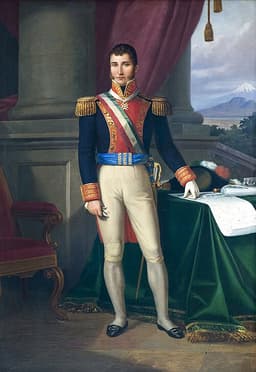
Agustin de Iturbide
Emperor · Modern
55.3Total
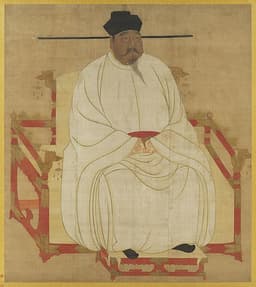
Zhao Kuangyin
Emperor · Medieval
71.5Total
Basic Information
Born
1783
927
Died
1824
976
Era
Modern
Medieval
Nationality
Mexico
China
Occupation
Emperor
Emperor
Civilization
Western
Eastern
Score Comparison
Military (10%)
52.5
78.0
Political (20%)
53.8
84.0
Influence (20%)
57.2
68.0
Legacy (20%)
46.7
65.0
Leadership (15%)
67.0
74.0
Strategy (15%)
60.0
68.0
TOTAL
55.3
71.5
Agustin de Iturbide — Complete Timeline
1820 AD
Switched sides to join the independence movementPolitical Action
Iturbide, a royalist general who had fought against the insurgents, was appointed to command the army against Vicente Guerrero. Instead of fighting, he negotiated with Guerrero and issued the Plan of Iguala on February 24, 1821, proposing independence, constitutional monarchy, and protection of the Catholic Church.
Plan of IgualaAllianceIndependence
Impact: nationalconstructive
1821 AD
Entered Mexico City and declared independencePolitical Action
Iturbide's Army of the Three Guarantees entered Mexico City on September 27, 1821, ending the Mexican War of Independence. The next day, the Declaration of Independence of the Mexican Empire was signed. Iturbide became the head of a provisional government, effectively ruling Mexico.
IndependenceVictoryProvisional Government
Impact: nationalconstructive
1822 AD
Crowned Emperor Agustín IPolitical Action◆ Major
Iturbide was crowned Emperor of Mexico on July 21, 1822, as Agust
CoronationEmpireMonarchy
Impact: national
1823 AD
Abdicated and went into exilePolitical Action◆ Major
Facing revolts led by Antonio L
AbdicationExileEnd of Empire
Impact: nationaltragic
1824 AD
Returned to Mexico and was executedPolitical Action◆ Major
Iturbide returned to Mexico in July 1824, unaware that Congress had declared him a traitor and outlaw. He was captured upon landing and executed by firing squad on July 19, 1824, in Padilla, Tamaulipas. His death ended any possibility of restoring the monarchy.
ExecutionReturnDeath
Impact: nationaltragic
Zhao Kuangyin — Complete Timeline
960 AD
Founded Song dynastyPolitical Action
Zhao Kuangyin, a general of Later Zhou, was proclaimed emperor by his troops at Chenqiao. He established the Song dynasty, ending the Five Dynasties period and beginning a new era of Chinese history.
Song dynastyFoundingChenqiao
Impact: globalconstructive
961 AD
Removed military power from generalsPolitical Action◆ Major
Zhao Kuangyin invited senior generals to a banquet and persuaded them to retire peacefully. This 'removal of military power over wine' prevented military coups and centralized control.
Song dynastyMilitary reformCentralization
Impact: nationalconstructive
963 AD
Unified southern ChinaWar◆ Major
Zhao Kuangyin launched campaigns to conquer the southern kingdoms, including Jingnan, Later Shu, and Southern Tang. By his death, most of China was reunified under Song rule.
Song unificationConquestSouthern kingdoms
Impact: national
Expert Analysis
Zhao Kuangyin vs Agustin de Iturbide
# The Emperor and the Unifier: Two Paths to Power, Two Destinies
On a warm July evening in 1822, Agustín de Iturbide stood before a crowd in Mexico City, a crown placed upon his head by his own hands. He had chosen to crown himself, a gesture that spoke volumes about his ambition and his insecurity. Half a world away and nearly nine centuries earlier, another general, Zhao Kuangyin, had been lifted onto a throne by his soldiers at Chenqiao, but he would spend his reign deliberately dismantling the very military power that had made him emperor. One man craved the trappings of empire; the other understood that true power often lies in restraint. Why did one founder and the other flourish?
Origins
Agustín de Iturbide was born in 1783 in Valladolid (now Morelia), Mexico, into a creole family of Spanish descent. The rigid caste system of New Spain meant that despite his wealth and education, he was forever a second-class citizen compared to peninsulares born in Spain. This resentment simmered beneath his royalist uniform. He was a creature of the colonial world, shaped by its hierarchies and its sudden collapse after Napoleon’s invasion of Spain in 1808.
Zhao Kuangyin, born in 927 in Luoyang, China, came of age during the Five Dynasties and Ten Kingdoms period—an era of almost constant warfare where generals routinely overthrew emperors. He was the son of a military officer, raised in a world where loyalty was fleeting and the only stability came from the sword. His China was fragmented, bleeding, and desperate for unity. While Iturbide inherited a crumbling empire, Zhao inherited chaos—and opportunity.
Rise to Power
Iturbide’s path was a study in contradictions. He spent over a decade fighting for Spain against Mexican insurgents, earning a reputation for brutality. But in 1820, when a liberal revolt in Spain threatened the privileges of the Church and the creole elite, Iturbide switched sides. He saw a chance to lead. He forged the Army of the Three Guarantees—promising independence, religion, and union—and in 1821, he marched into Mexico City. The war was over, and Iturbide was the hero.
Zhao Kuangyin’s rise was quieter but more decisive. In 960, as a general of the Later Zhou dynasty, he was sent to repel a northern invasion. His troops, loyal to him and weary of instability, stopped at Chenqiao and declared him emperor. Zhao accepted—but unlike Iturbide, he did so with a plan. He knew that the generals who had made him could unmake him.
Leadership & Governance
Iturbide’s rule was a gamble. Crowned Emperor Agustín I in July 1822, he faced a bankrupt treasury, a fractured Congress, and a populace suspicious of monarchy. His military score of 57.6 and political score of 61.9 reflect a leader who was competent but not brilliant. He tried to centralize power, but he lacked the patience for compromise. When Congress resisted, he dissolved it. When Santa Anna revolted, Iturbide sent an army—and lost. Within ten months, he abdicated and sailed for Europe.
Zhao Kuangyin, by contrast, governed with a craftsman’s precision. His military score of 74.6 and political score of 75.9 show a man who excelled at both war and statecraft. In 961, he invited his most powerful generals to a banquet and, over wine, persuaded them to retire—not through force, but through generosity. He granted them wealth and titles in exchange for their swords. This “removal of military power at a feast” was a masterstroke. He then conquered the southern kingdoms one by one, unifying China by 976. His leadership score of 82.3 reflects a ruler who inspired loyalty without fear.
Triumph & Tragedy
Iturbide’s greatest moment was his entry into Mexico City in 1821—a triumph of negotiation and symbolism. But his tragedy was swift and complete. In 1824, believing he could still save Mexico, he returned from exile. He was captured and executed by a firing squad, his body denied a proper burial. He died at 40, a man who had tasted empire and lost everything.
Zhao Kuangyin’s triumph was the Song dynasty itself—a golden age of art, commerce, and innovation that would last three centuries. His tragedy was subtler: by weakening the military, he left China vulnerable to northern invasions. The Song would eventually fall to the Mongols. But Zhao died in 976, likely of natural causes, his work unfinished but his dynasty secure.
Character & Destiny
Iturbide was driven by pride and a sense of entitlement. He believed his blood and his sword entitled him to a throne. But he had no deep political philosophy—only ambition. His strategy score of 65.0 suggests a man who could win battles but not peace. Zhao Kuangyin, by contrast, was a pragmatist. He once said, “The empire is not a place for one man to enjoy alone.” He shared power, built institutions, and trusted his officials. His destiny was to create stability; Iturbide’s was to embody instability.
Legacy
Iturbide is remembered as a flawed founder—a man who both liberated and betrayed Mexico. His legacy score of 64.2 places him as a footnote in Mexican history, overshadowed by figures like Hidalgo and Juárez. Today, his name is often omitted from the national pantheon.
Zhao Kuangyin’s legacy score of 75.1 is higher, but not without controversy. He is celebrated as a unifier and a reformer, but also criticized for creating a culture of civil over military power that led to later weakness. Still, the Song dynasty he founded remains one of China’s most admired eras.
Conclusion
Two generals, two empires, two fates. Iturbide reached for the sun and burned. Zhao Kuangyin built a house of stone and watched it stand. The difference was not in their ambition—both wanted power—but in their understanding of what power requires. Iturbide thought it meant crowns and ceremonies. Zhao knew it meant trust, patience, and the wisdom to let go. In the end, the emperor who crowned himself was forgotten, while the general who unarmed his friends built a dynasty that would outlast them all.
Rankings
🥇
Zhao KuangyinLeader
Mil: 78.0Pol: 84.0Inf: 68.0
71.5
🥈
Agustin de Iturbide
Mil: 52.5Pol: 53.8Inf: 57.2
55.3
+16.2 behind
How This Comparison Works
Algorithm
Each figure is scored on 6 dimensions (0—100 scale) based on structured historical data: Military (10%), Political (20%), Influence (20%), Legacy (20%), Leadership (15%), Strategy (15%). The weighted total produces the final ranking.
Data Sources
Scores are computed from structured sub-indicators in the database. Scale factors adjust for era (Ancient ×0.85, Modern ×1.0) and civilization size (Eastern ×1.05, Other ×0.80) to account for differences in population and military scale.
Maximum 3 Figures
Comparisons are limited to 2—3 figures to ensure readability and statistical meaningfulness.
Error Margins
±5 points per dimension — Sub-scores are derived from historical records with inherent uncertainty. Two figures within 5 points on a dimension should be considered roughly equivalent in that area.
Total Score Accuracy
±3 points overall — The weighted combination of 6 dimensions produces a total score with approximately ±3 points of uncertainty. Differences of less than 3 points are not statistically significant— the figures are effectively tied.
Known Limitations
- Historical records are incomplete and uneven across civilizations
- Figures from oral-tradition societies may be underrepresented
- Occupation labels can misclassify multi-role figures
- Scores measure capability and impact, not moral character
- Quantitative scoring is a comparison tool, not absolute truth
Capability Radar
Military (10%) — Battles & Warfare
Battles
60
75
Win Rate
65
85
Expansion
50
75
Political (20%) — Governance & Reform
Reform
45
90
Diplomacy
55
85
Economy
30
80
Influence (20%) — Cultural & Global Reach
Cultural
40
70
Global
35
60
Legacy (20%) — Historical Impact
Historical
50
80
Longevity
30
75
Leadership (15%) — Power & Stability
Tenure
30
65
Stability
20
85
Strategy (15%) — Tactics & Innovation
Strategy
60
80
Tactics
55
70
Reform
40
90
Similar Comparisons
Comments & Discussion
墨西哥的秦始皇6/16/2026
伊图尔比德就是墨西哥的赵匡胤,可惜只学了皮毛。赵匡胤"杯酒释兵权"解决了五代十国武将篡位的顽疾,宋代延续319年。伊图尔比德封自己为皇帝不到一年就被推翻,流放意大利。更讽刺的是,他1824年回国竟傻到公开露面,被捕后立即处决。赵匡胤知道权力的本质是制度而非个人,伊图尔比德却以为紫袍加身就够了。
Bayonet & Brush6/16/2026
Military historians obsess over Song's weak army, but that's missing Zhao's point. He lived through 5 dynasties in 53 years—every single one ended with a general stabbing his emperor in the back. Zhao deliberately weakened frontier generals, rotated commands, and centralized logistics. It made Song vulnerable to Liao and Jin, sure. But China got 167 years of internal peace, cultural renaissance, and economic explosion. Iturbide couldn't even give Mexico a decade. Zhao chose stability over conque
数字侦探6/16/2026
数据不会说谎:赵匡胤建立宋朝时人口约3000万,到他弟弟赵光义继位时已超过3500万。反观伊图尔比德,墨西哥独立时人均GDP已经暴跌13%,他在位期间又下降5%。更致命的是,他的"三国保证军"仅仅维持了11个月的统一,北部省份就开始叛乱。赵匡胤用经济繁荣证明政权的合法性,伊图尔比德却连基本治安都搞不定。数字面前,两个"建国者"高下立判。
Chronicler80646/16/2026
The Chenqiao mutiny vs self-coronation tells you everything: Zhao Kuangyin didn't *want* to be emperor—he was literally draped in yellow robes by his troops. Iturbide *staged* the whole production. Zhao spent 16 years systematically stripping military power from regional commanders. Iturbide lasted 10 months. One understood that legitimacy comes from civilian control; the other thought a crown made him legitimate. Zhao's real genius wasn't conquering—it was knowing when *not* to fight.