Loading...
Ahmed Sanjar vs Edgar the Peaceful
Ahmed Sanjar leads by 7.5 pts · 2 figures compared
…
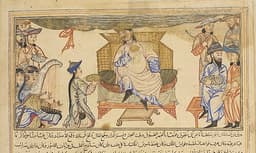
Ahmed Sanjar
Emperor · Medieval
61.0Total
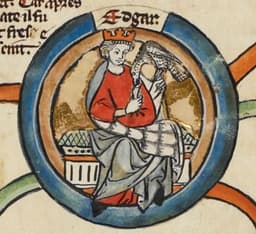
Edgar the Peaceful
Emperor · Medieval
53.5Total
Basic Information
Born
1085
943
Died
1157
975
Era
Medieval
Medieval
Nationality
Seljuk Empire
England
Occupation
Emperor
Emperor
Civilization
Middle Eastern
Western
Score Comparison
Military (10%)
64.4
21.2
Political (20%)
68.0
65.0
Influence (20%)
59.0
56.4
Legacy (20%)
49.2
49.2
Leadership (15%)
74.0
78.0
Strategy (15%)
62.5
35.7
TOTAL
61.0
53.5
Ahmed Sanjar — Complete Timeline
1141 AD
Battle of QatwanWar◆ Major
Ahmed Sanjar was defeated by the Kara Khitai at the Battle of Qatwan near Samarkand. This defeat ended Seljuk dominance in Transoxiana and led to the loss of Khorasan to the Kara Khitai, marking the beginning of the Seljuk decline.
BattleKara KhitaiSeljuk Decline
Impact: regionaltragic
1153 AD
Revolt of the Oghuz TurksWar◆ Major
Oghuz Turk tribes in Khorasan revolted against Sanjar's rule, capturing him in battle. Sanjar was held captive for three years, during which the Oghuz plundered Khorasan and destroyed Seljuk authority in the region.
RevoltOghuzCaptivity
Impact: regionaltragic
1156 AD
Restoration and DeathPolitical Action◆ Major
Sanjar escaped Oghuz captivity in 1156 and returned to Merv, but his authority was shattered. He died the following year, and his death marked the end of the Great Seljuk Empire, as his successors could not reunite the fragmented territories.
EscapeDeathEnd of Empire
Impact: regionaltragic
Edgar the Peaceful — Complete Timeline
959 AD
Coronation as King of EnglandPolitical Action◆ Major
Edgar succeeded his brother Eadwig as King of England. His reign was marked by stability and the consolidation of monastic reform under Dunstan.
Impact: nationalconstructive
970 AD
Naval defense reformsReform
Edgar organized a standing navy and divided England into naval districts to defend against Viking raids. This created a period of peace and security along the coasts.
Impact: nationalconstructive
Council of WinchesterCultural◆ Major
Edgar convened the Council of Winchester, which established the Regularis Concordia, a code for monastic life. This standardized Benedictine practices across England.
Impact: nationalconstructive
Expert Analysis
Origins
Ahmed Sanjar was born around 1085 in the Seljuk Empire, likely in Khorasan. He was the son of Sultan Malik Shah I and a concubine. His early life was shaped by the imperial court and the political intrigues of the Seljuk dynasty. After his father's death in 1092, Sanjar was appointed governor of Khorasan at a young age, gaining experience in administration and military command. Edgar the Peaceful was born around 943 in Wessex, England, the son of King Edmund I and Ælfgifu of Shaftesbury. He was raised in the context of the English monarchy's consolidation after the Viking invasions. His education was overseen by monastic reformers, particularly Dunstan, who later became his chief advisor. Edgar's early years were marked by the murder of his father and the reign of his older brother Eadwig, which exposed him to the instability of royal succession.
Rise to Power
Sanjar's rise began when he was appointed governor of Khorasan in 1097, after the death of his brother Berkyaruq. He gradually asserted independence from the central Seljuk sultanate, and by 1118, he had established himself as the de facto ruler of the eastern Seljuk domains. His military campaigns against the Ghaznavids and the Qarakhanids expanded his territory. Edgar's path to power was more straightforward: he succeeded his brother Eadwig as King of England in 959 after Eadwig's death. Edgar's coronation at Bath was delayed until 973, a deliberate move to signify a new era of unity and reform. His rise was supported by the monastic party, led by Dunstan and Æthelwold, who had been exiled under Eadwig.
Leadership & Governance
Sanjar governed through a combination of military force and patronage. He maintained the Seljuk administrative system, appointing local governors and relying on the iqta system of land grants. However, his rule was challenged by the Oghuz Turks, who were crucial to his military but resentful of their treatment. Edgar's leadership focused on peace and reform. He implemented the Regularis Concordia at the Council of Winchester (970), standardizing Benedictine monasticism. He also reformed the coinage and organized a standing navy, dividing England into naval districts. Edgar's governance was consultative, relying on advisors like Dunstan. His political score of 65.0 reflects this stability, while Sanjar's 68.0 indicates his broader but more fragile empire.
Triumph & Tragedy
Sanjar's greatest triumph was his long reign (1097-1157) and his ability to maintain Seljuk power in the east for decades. He successfully campaigned against the Ghaznavids in 1117 and the Qarakhanids. However, his tragedy was the catastrophic defeat at the Battle of Qatwan in 1141 against the Kara Khitai, which ended Seljuk dominance in Transoxiana. Even worse, in 1153, the Oghuz Turks rebelled, captured him, and held him for three years. After his escape in 1156, his authority was shattered. Edgar's triumph was the peaceful and prosperous reign that earned him the epithet 'the Peaceful'. He secured England against Viking raids through his naval reforms. His tragedy was the lack of a clear succession; his son Edward the Martyr was murdered shortly after Edgar's death, leading to instability. Edgar scored 78.0 in leadership, while Sanjar scored 74.0.
Character & Destiny
Sanjar was a capable military commander and diplomat, but his reliance on Oghuz Turk tribes ultimately led to his downfall. He underestimated their grievances and failed to integrate them effectively. His character was marked by resilience, as seen in his escape from captivity, but also by a certain inflexibility. Edgar was known for his piety and commitment to reform. He was decisive in promoting monasticism and centralizing royal authority. His character fostered loyalty among his advisors, but his death left a power vacuum. Historians note that Edgar's reign was a high point of Anglo-Saxon England, while Sanjar's marked the end of Seljuk prominence. Sanjar's total score of 61.0 surpasses Edgar's 53.5, but leadership scores favor Edgar (78.0 vs 74.0).
Legacy
Sanjar's legacy is complex. He is remembered as the last great Seljuk sultan, but his defeat at Qatwan and the Oghuz revolt hastened the decline of the Seljuk Empire. His death in 1157 led to fragmentation. In Persian and Islamic historiography, he is often portrayed as a tragic figure. Edgar's legacy is more positive: he is remembered as a king who brought peace and religious reform. The Regularis Concordia shaped English monasticism for centuries. His naval reforms laid the groundwork for England's maritime defense. Edgar's legacy score of 49.2 matches Sanjar's, but Edgar's influence (56.4) is slightly lower than Sanjar's (59.0).
Conclusion
Comparing Ahmed Sanjar and Edgar the Peaceful reveals two rulers of different contexts. Sanjar ruled a vast empire but faced catastrophic defeats that ended his dynasty's power. Edgar ruled a smaller kingdom but achieved lasting stability and reform. While Sanjar's total score (61.0) is higher, Edgar's impact on England's institutional development was more enduring. Sanjar's military and political scores are higher, but Edgar's leadership score (78.0) indicates a more effective governance style. Ultimately, Edgar the Peaceful had a greater impact on his realm because his reforms outlasted his reign, whereas Sanjar's empire collapsed soon after his death. Therefore, Edgar is the more successful ruler in terms of legacy and stability.
Rankings
🥇
Ahmed SanjarLeader
Mil: 64.4Pol: 68.0Inf: 59.0
61.0
🥈
Edgar the Peaceful
Mil: 21.2Pol: 65.0Inf: 56.4
53.5
+7.5 behind
How This Comparison Works
Algorithm
Each figure is scored on 6 dimensions (0—100 scale) based on structured historical data: Military (10%), Political (20%), Influence (20%), Legacy (20%), Leadership (15%), Strategy (15%). The weighted total produces the final ranking.
Data Sources
Scores are computed from structured sub-indicators in the database. Scale factors adjust for era (Ancient ×0.85, Modern ×1.0) and civilization size (Eastern ×1.05, Other ×0.80) to account for differences in population and military scale.
Maximum 3 Figures
Comparisons are limited to 2—3 figures to ensure readability and statistical meaningfulness.
Error Margins
±5 points per dimension — Sub-scores are derived from historical records with inherent uncertainty. Two figures within 5 points on a dimension should be considered roughly equivalent in that area.
Total Score Accuracy
±3 points overall — The weighted combination of 6 dimensions produces a total score with approximately ±3 points of uncertainty. Differences of less than 3 points are not statistically significant— the figures are effectively tied.
Known Limitations
- Historical records are incomplete and uneven across civilizations
- Figures from oral-tradition societies may be underrepresented
- Occupation labels can misclassify multi-role figures
- Scores measure capability and impact, not moral character
- Quantitative scoring is a comparison tool, not absolute truth
Capability Radar
Military (10%) — Battles & Warfare
Battles
75
10
Win Rate
70
10
Expansion
68
10
Political (20%) — Governance & Reform
Reform
55
70
Diplomacy
60
70
Economy
58
65
Influence (20%) — Cultural & Global Reach
Cultural
50
40
Global
45
20
Legacy (20%) — Historical Impact
Historical
55
45
Longevity
40
40
Leadership (15%) — Power & Stability
Tenure
65
65
Stability
45
75
Strategy (15%) — Tactics & Innovation
Strategy
74
15
Tactics
72
10
Reform
60
20
Similar Comparisons
Comments & Discussion
No comments yet. Be the first to share your thoughts!