Loading...
Ahmed Hassan al-Bakr vs Denis Sassou-Nguesso
Denis Sassou-Nguesso leads by 2.1 pts · 2 figures compared
…

Ahmed Hassan al-Bakr
General · Modern
47.3Total
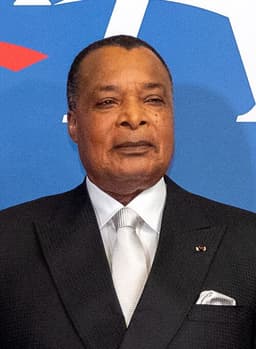
Denis Sassou-Nguesso
General · Modern
49.4Total
Basic Information
Born
1914
1943
Died
1982
—
Era
Modern
Modern
Nationality
Iraq
Congo Republic
Occupation
General
General
Civilization
Middle Eastern
Other
Score Comparison
Military (10%)
25.9
10.2
Political (20%)
46.6
68.0
Influence (20%)
54.9
51.8
Legacy (20%)
45.0
46.7
Leadership (15%)
65.0
62.0
Strategy (15%)
30.3
42.3
TOTAL
47.3
49.4
Ahmed Hassan al-Bakr — Complete Timeline
1963 AD
Role in the 1963 coupPolitical Action◆ Major
Al-Bakr, a senior Ba'athist officer, helped plan and execute the coup that overthrew Qasim. He became Prime Minister briefly but was forced out by President Arif later that year, marking an early setback for the Ba'ath Party.
CoupBa'ath PartyPower Struggle
Impact: national
1968 AD
Ba'athist return to power (17 July Revolution)Political Action
Al-Bakr led a bloodless coup that brought the Ba'ath Party back to power. He became President and Chairman of the Revolutionary Command Council, establishing a regime that would rule Iraq for decades. Saddam Hussein was his deputy.
CoupBa'ath PartyRegime Change
Impact: national
1972 AD
Nationalization of the Iraq Petroleum CompanyPolitical Action◆ Major
Al-Bakr's government fully nationalized the Iraq Petroleum Company, ending foreign control of the country's oil industry. This move dramatically increased state revenue and funded development projects, but also led to Western sanctions.
OilNationalizationEconomic Policy
Impact: nationalconstructive
1979 AD
Forced resignation and succession by Saddam HusseinPolitical Action
Al-Bakr was forced to resign as President, ostensibly for health reasons, and was succeeded by Saddam Hussein. He was placed under house arrest until his death in 1982. The transition consolidated Saddam's absolute power.
SuccessionSaddam HusseinPower Shift
Impact: nationaldestructive
Denis Sassou-Nguesso — Complete Timeline
1979 AD
Seized Power in CoupPolitical Action
Denis Sassou-Nguesso, a military officer, became President of the People's Republic of the Congo after a coup that ousted President Joachim Yhombi-Opango. He led the Congolese Party of Labour (PCT).
Coup d'étatCongoMilitary Rule
Impact: national
1990 AD
Transition to Multi-Party PoliticsReform◆ Major
Under pressure, Sassou-Nguesso's government introduced multi-party politics, ending the one-party Marxist-Leninist system. A national conference was held in 1991, leading to a transition to civilian rule.
Political ReformDemocracyCongo
Impact: national
1992 AD
Lost Presidential ElectionPolitical Action◆ Major
Sassou-Nguesso lost the 1992 presidential election to Pascal Lissouba. This was the first multi-party election in the country since independence, and Sassou-Nguesso peacefully handed over power.
ElectionDemocracyCongo
Impact: national
1997 AD
Returned to Power via Civil WarWar
Sassou-Nguesso's militia, backed by Angolan troops, captured Brazzaville, overthrowing President Pascal Lissouba. This ended a four-month civil war and returned Sassou-Nguesso to the presidency.
Civil WarCongoPower Struggle
Impact: nationaldestructive
2002 AD
Won Controversial Re-electionsPolitical Action◆ Major
Sassou-Nguesso won the 2002 presidential election with over 89% of the vote. The election was boycotted by major opposition candidates and criticized as neither free nor fair.
ElectionCongoControversy
Impact: national
2015 AD
Constitutional Referendum to Extend TermPolitical Action◆ Major
Sassou-Nguesso's government held a constitutional referendum that removed the age limit and two-term limit for the presidency. The change allowed him to run for re-election in 2016 and potentially remain in power.
Constitutional ReformCongoPower Consolidation
Impact: national
Expert Analysis
Origins
Ahmed Hassan al-Bakr was born in 1914 in Tikrit, Iraq, into a Sunni Arab family. He trained as a teacher before joining the Iraqi military, graduating from the Military College in 1938. His early career included participation in the 1941 Rashid Ali al-Gaylani coup attempt, which shaped his pan-Arab and anti-imperialist views. Al-Bakr joined the Ba'ath Party in the late 1950s, attracted by its ideology of Arab unity and socialism.
Denis Sassou-Nguesso was born in 1943 in Edou, French Equatorial Africa (now Republic of Congo), into the Mbochi ethnic group. He joined the French army in 1960, serving in Algeria and later in the Congolese army after independence. He received military training in France and the Soviet Union. Sassou-Nguesso rose through the ranks of the Congolese military, aligning with Marxist-Leninist factions.
Rise to Power
Al-Bakr played a key role in the 1963 coup that overthrew Prime Minister Abd al-Karim Qasim. He served briefly as Prime Minister but was sidelined by President Abdul Salam Arif. Al-Bakr remained influential within the Ba'ath Party, and on July 17, 1968, he led a bloodless coup (the 17 July Revolution) that brought the Ba'ath Party back to power. He became President and Chairman of the Revolutionary Command Council, consolidating control with the help of his relative, Saddam Hussein.
Sassou-Nguesso seized power in a 1979 coup that ousted President Joachim Yhombi-Opango. He became President of the People's Republic of the Congo, a Marxist-Leninist one-party state. He survived a coup attempt in 1982 and maintained power through a combination of military force and political maneuvering. Under pressure, he introduced multi-party politics in 1990, but lost the 1992 presidential election to Pascal Lissouba. However, he returned to power in 1997 after a civil war, backed by Angolan troops, capturing Brazzaville and overthrowing Lissouba.
Leadership & Governance
Al-Bakr's leadership was characterized by Ba'athist ideology, focusing on Arab nationalism, socialism, and state control of the economy. He nationalized the Iraq Petroleum Company in 1972, ending foreign control of Iraq's oil industry and dramatically increasing state revenues. He also implemented land reforms and expanded education and healthcare. However, his governance was authoritarian, with political repression and a cult of personality developing around him. He relied heavily on Saddam Hussein, who gradually accumulated power.
Sassou-Nguesso ruled the Congo with a mix of Marxist-Leninist rhetoric and pragmatic authoritarianism. He nationalized key industries but maintained close ties with France and other Western powers. He transitioned to multi-party politics in 1990, but his government was accused of electoral fraud and human rights abuses. After returning to power in 1997, he consolidated control, winning controversial elections with high percentages (e.g., 89% in 2002) amid opposition boycotts. His rule has been marked by corruption and reliance on oil revenues.
Triumph & Tragedy
Al-Bakr's greatest triumph was the nationalization of Iraq's oil, which gave the state control over its primary resource and funded development. He also maintained stability and kept Iraq unified during a turbulent period. His tragedy was his forced resignation in 1979, orchestrated by Saddam Hussein, after which he was placed under house arrest until his death in 1982. His legacy was overshadowed by Saddam's brutal regime.
Sassou-Nguesso's triumphs include surviving multiple political transitions and maintaining power for decades. He brought an end to the 1997 civil war and restored order. His tragedies include the loss of the 1992 election, which showed his lack of popular support in a free vote, and the authoritarian nature of his rule, with allegations of corruption and human rights abuses. His legacy is mixed, with some crediting him for stability and others condemning his autocracy.
Character & Destiny
Al-Bakr was seen as a cautious, consensus-building leader within the Ba'ath Party, but his dependence on Saddam Hussein ultimately led to his downfall. He lacked the ruthlessness to eliminate rivals, allowing Saddam to build a parallel power structure. Analysts note his military score of 25.9 reflects his limited direct involvement in combat, while his political score of 46.6 indicates moderate skill in navigating factional politics.
Sassou-Nguesso is characterized as a pragmatic survivor, adept at balancing internal factions and external alliances. His military score of 10.2 is low, reflecting his limited battlefield role, but his political score of 68.0 shows his mastery of political maneuvering. He has adapted from Marxism to a more flexible authoritarianism, securing support from France, China, and oil companies. His destiny has been to remain in power for over 40 years, a testament to his strategic acumen.
Legacy
Al-Bakr's legacy is largely tied to the Ba'ath Party's consolidation of power in Iraq and the nationalization of oil. However, his impact is overshadowed by Saddam Hussein's more brutal and aggressive rule. He is remembered as a transitional figure who set the stage for Saddam's dictatorship. His influence score of 54.9 reflects his role in shaping Iraq's trajectory, but his legacy score of 45.0 is diminished by his forced exit.
Sassou-Nguesso's legacy is more enduring, as he remains in power as of 2025. He has shaped Congo's political landscape for decades, transitioning from Marxism to a personalized authoritarian regime. His influence score of 51.8 and legacy score of 46.7 reflect his long tenure and continued relevance. He is often cited as an example of an African strongman who has survived the post-Cold War era.
Conclusion
Denis Sassou-Nguesso has had a greater overall impact than Ahmed Hassan al-Bakr, based on his longevity and sustained influence. While al-Bakr's nationalization of oil was a significant achievement, his legacy was quickly eclipsed by Saddam's more extreme rule. Sassou-Nguesso, with a total score of 49.4 compared to al-Bakr's 47.3, has demonstrated superior political survival skills and continues to shape the Congo's destiny. His ability to return to power after losing an election and maintain control for decades gives him a more lasting impact. However, both leaders represent the authoritarian model of governance in the Middle East and Africa, with mixed legacies of development and repression.
Rankings
🥇
Denis Sassou-NguessoLeader
Mil: 10.2Pol: 68.0Inf: 51.8
49.4
🥈
Ahmed Hassan al-Bakr
Mil: 25.9Pol: 46.6Inf: 54.9
47.3
+2.1 behind
How This Comparison Works
Algorithm
Each figure is scored on 6 dimensions (0—100 scale) based on structured historical data: Military (10%), Political (20%), Influence (20%), Legacy (20%), Leadership (15%), Strategy (15%). The weighted total produces the final ranking.
Data Sources
Scores are computed from structured sub-indicators in the database. Scale factors adjust for era (Ancient ×0.85, Modern ×1.0) and civilization size (Eastern ×1.05, Other ×0.80) to account for differences in population and military scale.
Maximum 3 Figures
Comparisons are limited to 2—3 figures to ensure readability and statistical meaningfulness.
Error Margins
±5 points per dimension — Sub-scores are derived from historical records with inherent uncertainty. Two figures within 5 points on a dimension should be considered roughly equivalent in that area.
Total Score Accuracy
±3 points overall — The weighted combination of 6 dimensions produces a total score with approximately ±3 points of uncertainty. Differences of less than 3 points are not statistically significant— the figures are effectively tied.
Known Limitations
- Historical records are incomplete and uneven across civilizations
- Figures from oral-tradition societies may be underrepresented
- Occupation labels can misclassify multi-role figures
- Scores measure capability and impact, not moral character
- Quantitative scoring is a comparison tool, not absolute truth
Capability Radar
Military (10%) — Battles & Warfare
Battles
10
5
Win Rate
10
5
Expansion
10
5
Political (20%) — Governance & Reform
Reform
40
30
Diplomacy
30
50
Economy
30
30
Influence (20%) — Cultural & Global Reach
Cultural
20
20
Global
20
20
Legacy (20%) — Historical Impact
Historical
40
30
Longevity
20
40
Leadership (15%) — Power & Stability
Tenure
60
70
Stability
20
20
Strategy (15%) — Tactics & Innovation
Strategy
10
5
Tactics
10
5
Reform
20
10
Similar Comparisons
Comments & Discussion
No comments yet. Be the first to share your thoughts!