Loading...
Agustin de Iturbide vs Fu Jian
Fu Jian leads by 9.1 pts · 2 figures compared
…
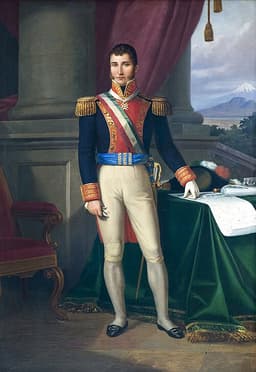
Agustin de Iturbide
Emperor · Modern
55.3Total
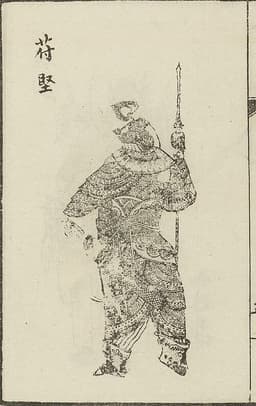
Fu Jian
Emperor · Ancient
64.4Total
Basic Information
Born
1783
338
Died
1824
385
Era
Modern
Ancient
Nationality
Mexico
China
Occupation
Emperor
Emperor
Civilization
Western
Eastern
Score Comparison
Military (10%)
52.5
78.0
Political (20%)
53.8
72.0
Influence (20%)
57.2
59.0
Legacy (20%)
46.7
50.0
Leadership (15%)
67.0
85.0
Strategy (15%)
60.0
58.0
TOTAL
55.3
64.4
Agustin de Iturbide — Complete Timeline
1820 AD
Switched sides to join the independence movementPolitical Action
Iturbide, a royalist general who had fought against the insurgents, was appointed to command the army against Vicente Guerrero. Instead of fighting, he negotiated with Guerrero and issued the Plan of Iguala on February 24, 1821, proposing independence, constitutional monarchy, and protection of the Catholic Church.
Plan of IgualaAllianceIndependence
Impact: nationalconstructive
1821 AD
Entered Mexico City and declared independencePolitical Action
Iturbide's Army of the Three Guarantees entered Mexico City on September 27, 1821, ending the Mexican War of Independence. The next day, the Declaration of Independence of the Mexican Empire was signed. Iturbide became the head of a provisional government, effectively ruling Mexico.
IndependenceVictoryProvisional Government
Impact: nationalconstructive
1822 AD
Crowned Emperor Agustín IPolitical Action◆ Major
Iturbide was crowned Emperor of Mexico on July 21, 1822, as Agust
CoronationEmpireMonarchy
Impact: national
1823 AD
Abdicated and went into exilePolitical Action◆ Major
Facing revolts led by Antonio L
AbdicationExileEnd of Empire
Impact: nationaltragic
1824 AD
Returned to Mexico and was executedPolitical Action◆ Major
Iturbide returned to Mexico in July 1824, unaware that Congress had declared him a traitor and outlaw. He was captured upon landing and executed by firing squad on July 19, 1824, in Padilla, Tamaulipas. His death ended any possibility of restoring the monarchy.
ExecutionReturnDeath
Impact: nationaltragic
Fu Jian — Complete Timeline
370 AD
Conquest of Former YanWar◆ Major
Fu Jian's Former Qin forces conquered the Former Yan state, annexing its territory in northern China. This victory significantly expanded Former Qin's power and territory, bringing Fu Jian closer to unifying the north.
ConquestExpansion
Impact: regionalconstructive
376 AD
Conquest of Former LiangWar◆ Major
Fu Jian's forces conquered the Former Liang state in the northwest, incorporating its territory into Former Qin. This further consolidated his control over northern China.
ConquestExpansion
Impact: regionalconstructive
Conquest of DaiWar
Fu Jian's army conquered the Dai state, a Xianbei confederation in the north. This eliminated a rival and extended Former Qin's influence into the steppe region.
ConquestExpansion
Impact: regionalconstructive
379 AD
Capture of XiangyangWar
Fu Jian's forces captured the strategic city of Xiangyang from the Eastern Jin dynasty. This victory gave Former Qin a foothold south of the Huai River, setting the stage for the invasion that led to the Battle of Fei River.
ConquestCampaign
Impact: regionalconstructive
383 AD
Battle of Fei RiverWar
Fu Jian led a massive Former Qin army against the Eastern Jin dynasty at the Fei River. The Jin forces defeated the Qin army, causing a catastrophic rout. This defeat shattered Fu Jian's unification efforts and led to the collapse of Former Qin.
BattleUnificationDefeat
Impact: regionaltragic
Expert Analysis
Agustin de Iturbide vs Fu Jian
# The Emperor Who Lost Everything Twice
On a late autumn morning in 383, Fu Jian stood atop a hill overlooking the Fei River, watching his army—perhaps the largest force ever assembled in ancient China—prepare to cross the water and crush the Eastern Jin dynasty once and for all. He was fifty kilometers from victory, a single battle away from becoming the man who reunified China after centuries of division. Less than two years later, he would be dead, his empire in ruins, his name a cautionary tale about hubris.
Fourteen centuries later and half a world away, Agustín de Iturbide rode into Mexico City on September 27, 1821, hailed as the Liberator. He had achieved what no one else could: ending eleven years of bloody war and securing Mexican independence with a single, brilliant political stroke. Within eighteen months, he would be forced to abdicate his throne. Within three years, he would be executed as a traitor by the very nation he had freed.
Both men were emperors who rose spectacularly and fell catastrophically. But their stories are not merely parallel tragedies. They reveal something deeper about the nature of power, the weight of timing, and why some leaders are remembered as founders while others are written off as failures.
Origins
Fu Jian was born in 338 into the Di people, a minority group in northern China that had carved out a small state during the chaotic Sixteen Kingdoms period. His grandfather was a tribal chieftain; his uncle founded the Former Qin dynasty. China at the time was a shattered jigsaw of warring kingdoms, each ruled by non-Chinese peoples who had swept down from the steppes. Fu Jian grew up in a world where survival meant conquest, where the only law was the sword, and where a man of ambition could seize heaven itself if he had the will.
Iturbide was born in 1783 in Valladolid, Mexico, into a world of rigid colonial hierarchy. His father was a Spanish Basque who had married into a wealthy Mexican family. Young Agustín grew up in the twilight of New Spain, a society cracking under the weight of caste distinctions, economic resentment, and the distant echoes of revolution from France and the United States. He was a *criollo*—a person of Spanish blood born in the colonies—which meant he could rise high but never to the very top. That ceiling would define his life.
Rise to Power
Fu Jian seized the throne at nineteen, after a palace coup removed his tyrannical cousin. The young emperor immediately revealed a genius for combining military ferocity with political mercy. He appointed a brilliant Han Chinese strategist named Wang Meng as his prime minister, and together they built a war machine that devoured rival states one by one. In 370, Fu Jian’s armies conquered Former Yan. In 376, they swallowed Former Liang and the Dai confederation. By 379, they had captured Xiangyang from the Eastern Jin, giving Former Qin a foothold south of the Yangtze River.
Iturbide’s rise was slower and more contradictory. For a decade, he fought *against* Mexican independence, hunting down insurgents with such brutality that his own superiors complained. But in 1820, when a liberal revolution in Spain threatened the privileges of the Mexican elite, Iturbide saw his moment. He switched sides, but on his own terms. The Army of the Three Guarantees he created was a masterstroke: it promised independence, union of all factions, and protection of the Catholic Church. This was not a revolution from below—it was a negotiation among elites, brokered by a man who understood that in Mexico, the only thing more powerful than the sword was the deal.
Leadership & Governance
Fu Jian ruled with an open hand. He welcomed defeated enemies into his court, integrated their troops into his army, and treated conquered peoples as equals. When his advisors warned that the Xianbei and Qiang tribes he had absorbed were untrustworthy, he dismissed their fears. “I treat all men as my children,” he said. “Why would they rebel?” This generosity made him beloved but also blind. He refused to see that loyalty won by kindness can be broken by ambition.
Iturbide governed with a closed fist. His coronation as Emperor Agustín I in July 1822 was less a celebration of independence than a declaration of monopoly. He disbanded the Congress, arrested his critics, and surrounded himself with sycophants. Where Fu Jian trusted too much, Iturbide trusted too little. He had spent his life in a colonial system where power was a zero-sum game, and he could not imagine any other way to rule.
Triumph & Tragedy
Fu Jian’s greatest moment was also his worst. In 383, he assembled an army so vast that he claimed his soldiers could stop the Fei River by throwing their whips into the water. The Eastern Jin forces were outnumbered perhaps ten to one. But at the moment of crossing, Fu Jian made a fatal error: he ordered his army to retreat slightly to allow the Jin to cross and fight on open ground. The retreat turned into a rout. Panic spread through the giant, multi-ethnic army like fire through dry grass. In a single day, the Former Qin empire collapsed.
Iturbide’s triumph was the entry into Mexico City in 1821. His tragedy was the discovery that independence did not mean unity. Within months, his former ally Antonio López de Santa Anna raised the banner of revolt. Iturbide abdicated in March 1823 and sailed for Europe, a deposed emperor at forty. He returned in 1824, either hoping to reclaim power or simply to retire—historians still argue. Congress declared him an outlaw. He was captured and shot on July 19, 1824.
Character & Destiny
Fu Jian’s personality was his destiny. He was a man of grand visions who could not see small dangers. His mercy was genuine but indiscriminate; his ambition was vast but unmoored from reality. When Wang Meng died in 375, Fu Jian lost the only advisor who dared to tell him no. After that, he listened only to his own optimism.
Iturbide was shaped by a different flaw: he believed that power won by negotiation could be maintained by force. He had brokered Mexican independence as a deal among elites, but he forgot that deals can be unmade. His empire rested on a coalition of factions that wanted different things: republicans wanted no emperor at all, conservatives wanted a Spanish prince, and the Church wanted guarantees Iturbide could not keep. He gave them all something, but no one enough.
Legacy
Fu Jian is remembered as a tragic figure in Chinese history, a brilliant conqueror undone by a single battle. The phrase “the sound of the Fei River” still echoes in Chinese literature as a warning against overconfidence. His empire vanished, but his attempt at unification paved the way for the Sui and Tang dynasties that would succeed two centuries later.
Iturbide’s legacy is more ambiguous. In Mexico, he is the Liberator who is also a traitor, the emperor who is also a failure. For decades, official history treated him as a footnote to the heroes of the independence struggle. Only recently have historians begun to reassess him as a pragmatic leader who understood that revolutions are made not by ideals alone but by the messy compromises of men.
Conclusion
What separates a founder from a failure? Fu Jian and Iturbide shared the same arc—rise, triumph, hubris, fall—but their stories teach different lessons. Fu Jian’s tragedy was that he tried to conquer a world that was not ready to be united. Iturbide’s was that he tried to rule a nation that was not ready to be governed. Both men reached for the impossible and, for a moment, held it in their hands. But empires built on a single battle or a single deal are like houses built on sand. The tide always comes in.
Rankings
🥇
Fu JianLeader
Mil: 78.0Pol: 72.0Inf: 59.0
64.4
🥈
Agustin de Iturbide
Mil: 52.5Pol: 53.8Inf: 57.2
55.3
+9.1 behind
How This Comparison Works
Algorithm
Each figure is scored on 6 dimensions (0—100 scale) based on structured historical data: Military (10%), Political (20%), Influence (20%), Legacy (20%), Leadership (15%), Strategy (15%). The weighted total produces the final ranking.
Data Sources
Scores are computed from structured sub-indicators in the database. Scale factors adjust for era (Ancient ×0.85, Modern ×1.0) and civilization size (Eastern ×1.05, Other ×0.80) to account for differences in population and military scale.
Maximum 3 Figures
Comparisons are limited to 2—3 figures to ensure readability and statistical meaningfulness.
Error Margins
±5 points per dimension — Sub-scores are derived from historical records with inherent uncertainty. Two figures within 5 points on a dimension should be considered roughly equivalent in that area.
Total Score Accuracy
±3 points overall — The weighted combination of 6 dimensions produces a total score with approximately ±3 points of uncertainty. Differences of less than 3 points are not statistically significant— the figures are effectively tied.
Known Limitations
- Historical records are incomplete and uneven across civilizations
- Figures from oral-tradition societies may be underrepresented
- Occupation labels can misclassify multi-role figures
- Scores measure capability and impact, not moral character
- Quantitative scoring is a comparison tool, not absolute truth
Capability Radar
Military (10%) — Battles & Warfare
Battles
60
75
Win Rate
65
70
Expansion
50
80
Political (20%) — Governance & Reform
Reform
45
70
Diplomacy
55
60
Economy
30
65
Influence (20%) — Cultural & Global Reach
Cultural
40
50
Global
35
45
Legacy (20%) — Historical Impact
Historical
50
60
Longevity
30
40
Leadership (15%) — Power & Stability
Tenure
30
65
Stability
20
55
Strategy (15%) — Tactics & Innovation
Strategy
60
70
Tactics
55
65
Reform
40
60
Similar Comparisons
Comments & Discussion
黄河铁骑6/16/2026
把前秦苻坚和墨西哥的伊图尔比德放一起比?太搞笑了。苻坚输淝水是因为真的指挥失误,八十万大军被八万晋军打得满地找牙。伊图尔比德呢?他根本就没打过什么硬仗,靠的是叛变自己人当上皇帝的。一个是战场上的蠢货,一个是政治上的投机分子,完全不是一个物种。
DesertSage6/16/2026
As a military historian, I see a fundamental difference: Fu Jian actually commanded his army in the field at Fei River and made tactical errors that cost him everything. Iturbide never lost a major battle because he never fought one as emperor. He won independence through negotiation, not combat—then lost his throne through political incompetence. Fu Jian's fall is a general's tragedy; Iturbide's is a politician's farce.
江南旧梦6/16/2026
数据说苻坚统一北方后人口超过两千万,军队号称百万,结果淝水之战一输就亡国了。伊图尔比德统治墨西哥只有十个月,实际控制面积不到前秦的三分之一。输得更多更快的是谁?苻坚。从巅峰到灭亡不到两年,墨西哥好歹拖了三年。但历史书总把苻坚写成悲剧英雄,伊图尔比德却是个可笑的失败者。
Alexandros6/16/2026
Classics scholar here. The Fei River anecdote where Fu Jian mistakes vegetation for enemy troops is strikingly similar to Herodotus's account of Xerxes at Thermopylae: both leaders completely misread the battlefield due to overconfidence. Iturbide, by contrast, failed not through strategic blindness but political miscalculation—he thought the old colonial elite would accept his empire. Two types of hubris, one tragic, one naive.