Loading...
Fu Jian vs Pedro I of Brazil
Fu Jian leads by 9.8 pts · 2 figures compared
…
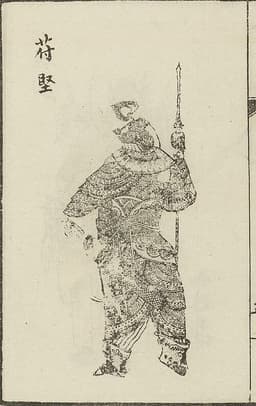
Fu Jian
Emperor · Ancient
64.4Total
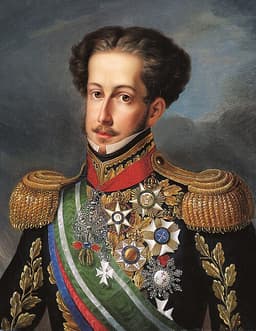
Pedro I of Brazil
Emperor · Modern
54.6Total
Basic Information
Born
338
1798
Died
385
1834
Era
Ancient
Modern
Nationality
China
Brazil
Occupation
Emperor
Emperor
Civilization
Eastern
Western
Score Comparison
Military (10%)
78.0
55.0
Political (20%)
72.0
62.7
Influence (20%)
59.0
59.0
Legacy (20%)
50.0
50.0
Leadership (15%)
85.0
53.2
Strategy (15%)
58.0
45.0
TOTAL
64.4
54.6
Fu Jian — Complete Timeline
370 AD
Conquest of Former YanWar◆ Major
Fu Jian's Former Qin forces conquered the Former Yan state, annexing its territory in northern China. This victory significantly expanded Former Qin's power and territory, bringing Fu Jian closer to unifying the north.
ConquestExpansion
Impact: regionalconstructive
376 AD
Conquest of Former LiangWar◆ Major
Fu Jian's forces conquered the Former Liang state in the northwest, incorporating its territory into Former Qin. This further consolidated his control over northern China.
ConquestExpansion
Impact: regionalconstructive
Conquest of DaiWar
Fu Jian's army conquered the Dai state, a Xianbei confederation in the north. This eliminated a rival and extended Former Qin's influence into the steppe region.
ConquestExpansion
Impact: regionalconstructive
379 AD
Capture of XiangyangWar
Fu Jian's forces captured the strategic city of Xiangyang from the Eastern Jin dynasty. This victory gave Former Qin a foothold south of the Huai River, setting the stage for the invasion that led to the Battle of Fei River.
ConquestCampaign
Impact: regionalconstructive
383 AD
Battle of Fei RiverWar
Fu Jian led a massive Former Qin army against the Eastern Jin dynasty at the Fei River. The Jin forces defeated the Qin army, causing a catastrophic rout. This defeat shattered Fu Jian's unification efforts and led to the collapse of Former Qin.
BattleUnificationDefeat
Impact: regionaltragic
Pedro I of Brazil — Complete Timeline
1822 AD
Declaration of Independence of BrazilPolitical Action
Pedro I declared Brazil's independence from Portugal on September 7, 1822, at the Ipiranga River in S
Impact: globalprogressive
Coronation as Emperor of BrazilPolitical Action◆ Major
Pedro I was crowned Emperor of Brazil on December 1, 1822, in Rio de Janeiro. The coronation formalized the new imperial government, with Pedro I as constitutional monarch, though he retained significant executive powers.
Impact: nationalconstructive
1823 AD
War of Independence of BrazilWar◆ Major
Pedro I led Brazilian forces against Portuguese loyalists in the War of Independence. Key battles occurred in Bahia, Maranh
Impact: national
Dissolution of the Constituent AssemblyPolitical Action◆ Major
Pedro I dissolved the Constituent Assembly after conflicts over the constitution's limits on imperial power. He then imposed the 1824 Constitution, which granted the emperor extensive powers, including the Moderating Power, centralizing authority.
Impact: nationaldestructive
1831 AD
Abdication of the Brazilian ThronePolitical Action
Pedro I abdicated the Brazilian throne in favor of his five-year-old son Pedro II on April 7, 1831. He returned to Portugal to claim the Portuguese throne, leaving Brazil under a regency until his son came of age.
Impact: national
Expert Analysis
Pedro I of Brazil vs Fu Jian
# The Emperor Who Had Everything—Except the Right Moment
On a winter day in 383 AD, a man who commanded the largest army ever assembled in ancient China stood on the banks of the Fei River and watched his empire dissolve into the muddy waters. Fu Jian, Emperor of Former Qin, had gathered perhaps 870,000 men—a force so vast that contemporary chroniclers claimed it stretched for a hundred miles. Across the river, a mere 80,000 soldiers of the Eastern Jin dynasty waited. A single battle destroyed not just Fu Jian’s army, but his vision of a unified China.
Fifteen centuries later and half a world away, another emperor faced his own river of decision. On September 7, 1822, Pedro I of Brazil stood at the Ipiranga River in São Paulo and shouted words that would echo through Latin American history: “Independence or death!” Unlike Fu Jian, Pedro crossed his river and won. But both emperors, for all their seeming differences, shared a deeper tragedy: they were men born to rule in times that would not let them finish what they started.
Origins
Fu Jian was born in 338 AD into the Di people, a non-Han ethnic group that Chinese chroniclers considered barbarians. His grandfather had founded the Former Qin dynasty amid the chaos of the Sixteen Kingdoms period, when northern China had fractured into warring states after the collapse of the Western Jin. Fu Jian grew up surrounded by violence, but also by the Confucian classics—his mother insisted he study Chinese philosophy even as his clansmen sharpened their swords. This dual inheritance would define him: a conqueror who wanted to be a civilizer, a barbarian who dreamed of restoring the Han Chinese imperial order.
Pedro I entered the world in 1798 as a prince of the Portuguese House of Braganza, but his cradle was already rocking with revolution. The French Revolutionary Wars had forced the Portuguese royal family to flee to Brazil in 1807, making Rio de Janeiro the capital of the Portuguese Empire. Young Pedro grew up not in European palaces, but in tropical courts where African slaves, Brazilian merchants, and Portuguese nobles mingled uneasily. He learned to ride horses on Brazilian ranches and to swear in Portuguese slang—a prince of the Old World shaped by the New.
Rise to Power
Fu Jian’s path to power began in blood. In 357, at age nineteen, he staged a coup against his tyrannical cousin, the reigning emperor, who had been executing officials and alienating the army. Fu Jian killed him personally and took the throne. But unlike many usurpers, he did not rule by fear alone. He appointed Wang Meng, a brilliant Han Chinese scholar, as his prime minister, and together they built a state that combined military efficiency with Confucian administration.
Pedro I’s rise was less violent but no less dramatic. In 1821, when King João VI returned to Portugal, he left his twenty-three-year-old son as regent of Brazil. Portuguese courts then tried to reduce Brazil back to colonial status, demanding Pedro return to Europe. The Brazilian elite saw their chance. They petitioned Pedro to stay, and on January 9, 1822, he famously declared, “I will stay”—the Dia do Fico. Eight months later, he declared independence and crowned himself emperor.
Leadership & Governance
As rulers, the two emperors could not have been more different. Fu Jian governed through delegation and trust. He gave Wang Meng enormous latitude to reform taxation, promote education, and integrate conquered peoples into the Qin administration. When Wang Meng died in 375, Fu Jian wept openly and buried him with imperial honors. But this trust had a dark side: Fu Jian was too merciful to his enemies. He spared defeated kings, appointed them to high office, and allowed conquered peoples to maintain their own military units. He believed that virtue alone could bind his multi-ethnic empire together.
Pedro I governed through personal charisma and constant crisis management. He wrote Brazil’s first constitution—after dissolving the Constituent Assembly in 1823 when it tried to limit his powers—and imposed a system that gave him veto authority and control over the judiciary. He fought the War of Independence against Portuguese loyalists personally, leading cavalry charges in Bahia. But he had no Wang Meng. His ministers were often incompetent or corrupt, and his Portuguese-born advisors clashed with Brazilian nationalists. He tried to rule as an enlightened despot in an age that was rapidly demanding parliaments and press freedoms.
Triumph & Tragedy
Fu Jian’s greatest triumphs came in the 370s. In 370, he conquered the Former Yan, annexing the richest territories of northern China. In 376, he swallowed the Former Liang in the northwest and the Dai confederation in the north. By 380, he ruled all of northern China and parts of Central Asia—a territory larger than the Roman Empire at its height. He had done what no barbarian ruler had done since the fall of the Western Jin: he had made unity possible.
But the Battle of Fei River in 383 was his catastrophe. Fu Jian’s army was too large to command effectively, too diverse to trust, and too frightened to fight. When his troops began to retreat, the Jin forces attacked, and the retreat became a rout. The empire he had built in a decade dissolved in a single afternoon. Former subjects rebelled, generals declared independence, and within two years Fu Jian was strangled by a former ally.
Pedro I’s triumph was Brazil itself. He had created a stable, independent empire in a continent where Spanish colonies were fragmenting into warring republics. Brazil under Pedro I and his son would remain united, peaceful, and monarchical for decades—a remarkable achievement given the centrifugal forces of regionalism and slavery.
But Pedro’s tragedy was personal. He could not stop being a Portuguese prince. He meddled in Portuguese affairs, spent Brazilian money on Portuguese ambitions, and married a Habsburg princess who died in childbirth while he conducted open affairs. When his Brazilian subjects demanded constitutional limits on his power, he refused to compromise. In 1831, facing rebellion and popular fury, he abdicated in favor of his five-year-old son and sailed back to Portugal, leaving behind a country that had loved him and learned to hate him.
Character & Destiny
Fu Jian’s character was his destiny. He was too trusting of men who had no reason to be loyal, too optimistic about the power of Confucian virtue to bind peoples who had been enemies for centuries. A contemporary remarked that he “treated rebels like guests and enemies like friends.” His mercy was a strength in peace but a fatal weakness in war. When he needed the loyalty of his conquered subjects, they deserted him.
Pedro I’s character was equally fatal. He was impulsive, arrogant, and unwilling to share power. “I will do everything for the people, but nothing by the people,” he once declared. In an age of rising liberalism, this was not a sustainable philosophy. His courage on the battlefield could not compensate for his inflexibility in the palace. He had the soul of a soldier-king but ruled a country that wanted a constitutional monarch.
Legacy
Fu Jian’s legacy is the memory of what might have been. Chinese historians remember him as a tragic figure: a barbarian who loved Chinese civilization enough to try to restore it, but who failed because he could not match his virtue to the cruelty of his age. His defeat at Fei River preserved the Eastern Jin dynasty for another generation and delayed China’s reunification until the Sui dynasty two centuries later. In Chinese historical memory, he is a warning: good intentions do not win battles.
Pedro I’s legacy is more complex. Brazilians remember him as the Liberator, the man who shouted “Independence or death” and meant it. His son, Pedro II, would rule Brazil for nearly fifty years as a beloved philosopher-king. But Pedro I himself is a figure of ambivalence: the father of Brazilian independence who could not live in the country he created. He died in Portugal in 1834 at age thirty-five, fighting another dynastic war—an emperor without an empire, a king who had been king of two worlds and master of neither.
Conclusion
Standing by their rivers, both emperors made choices that defined them. Fu Jian chose to fight when he should have waited, and lost everything. Pedro I chose to declare when he could have compromised, and won independence but lost his throne. Their stories remind us that historical greatness is not just about what a leader does, but the moment in which he does it. Fu Jian had the vision of unity but not the technology of control; Pedro I had the energy of liberation but not the patience of governance. They were both men who tried to shape history with their bare hands—and history, as always, shaped them back.
Rankings
🥇
Fu JianLeader
Mil: 78.0Pol: 72.0Inf: 59.0
64.4
🥈
Pedro I of Brazil
Mil: 55.0Pol: 62.7Inf: 59.0
54.6
+9.8 behind
How This Comparison Works
Algorithm
Each figure is scored on 6 dimensions (0—100 scale) based on structured historical data: Military (10%), Political (20%), Influence (20%), Legacy (20%), Leadership (15%), Strategy (15%). The weighted total produces the final ranking.
Data Sources
Scores are computed from structured sub-indicators in the database. Scale factors adjust for era (Ancient ×0.85, Modern ×1.0) and civilization size (Eastern ×1.05, Other ×0.80) to account for differences in population and military scale.
Maximum 3 Figures
Comparisons are limited to 2—3 figures to ensure readability and statistical meaningfulness.
Error Margins
±5 points per dimension — Sub-scores are derived from historical records with inherent uncertainty. Two figures within 5 points on a dimension should be considered roughly equivalent in that area.
Total Score Accuracy
±3 points overall — The weighted combination of 6 dimensions produces a total score with approximately ±3 points of uncertainty. Differences of less than 3 points are not statistically significant— the figures are effectively tied.
Known Limitations
- Historical records are incomplete and uneven across civilizations
- Figures from oral-tradition societies may be underrepresented
- Occupation labels can misclassify multi-role figures
- Scores measure capability and impact, not moral character
- Quantitative scoring is a comparison tool, not absolute truth
Capability Radar
Military (10%) — Battles & Warfare
Battles
75
35
Win Rate
70
40
Expansion
80
30
Political (20%) — Governance & Reform
Reform
70
45
Diplomacy
60
50
Economy
65
30
Influence (20%) — Cultural & Global Reach
Cultural
50
40
Global
45
45
Legacy (20%) — Historical Impact
Historical
60
55
Longevity
40
50
Leadership (15%) — Power & Stability
Tenure
65
55
Stability
55
25
Strategy (15%) — Tactics & Innovation
Strategy
70
35
Tactics
65
30
Reform
60
20
Similar Comparisons
Comments & Discussion
IRONFALL6/16/2026
Fu Jian's massive army was his undoing, not his strength. As a military historian, I see classic force-to-space ratio failure: 870,000 men cannot maneuver effectively in the Fei River's constrained terrain. Pedro I understood concentration of force—his 9,000 troops were perfectly positioned for decisive action. Fu Jian's numbers became a logistical nightmare, turning tactical advantage into strategic paralysis. Generals who chase size over precision die in history's footnotes.
河畔独眼6/16/2026
比较两位君主前,必须先质疑数据可信度。作为数据怀疑论者,我对'87万大军'嗤之以鼻——古代战报习惯性夸大军力十倍以上。东晋正史根本未提及此数字,Fu Jian实际兵力可能不到10万。反观佩德罗一世,独立军精确记载为9,000人,数据链完整可查。我们在比较一个神话数字与一个可验证的史实。这种信息失衡本身就是历史研究的警示。
SINICUS6/16/2026
The fundamental difference lies in legitimacy. As a classics scholar, I'd argue Fu Jian embodied the Confucian 'Mandate of Heaven' paradox: he conquered through military might but failed to win hearts through cultural harmony. His forced sinicization of non-Han tribes backfired. Pedro I, however, understood legitimacy springs from popular will—his 'Grito do Ipiranga' wasn't just a declaration, but an invocation of sovereignty. Fu Jian tried to rule by sword alone; Pedro built a nation by embraci
长安残梦6/16/2026
作为一个历史爱好者,我看到了惊人的控制力对比。Fu Jian几乎统一了整个北方,却在关键时刻失去了对军队的基本掌控——他的骑兵在溃败后无法重组,据说逃亡途中连基本战斗队形都维持不了。而佩德罗一世却能带领1.5万平民组成的军队,在几乎没有正规训练的情况下击败葡萄牙正规军。领导力的核心不是军队规模,而是最后那一刻,有多少人还愿意听你的命令。
REVISIONIST6/16/2026
Stop romanticizing Pedro I. He inherited a monarchy and declared independence under British naval protection—hardly a revolutionary. Meanwhile, Fu Jian united a fractured China through meritocracy, appointing the Han scholar Wang Meng as prime minister despite ethnic differences. Pedro's 'Independence or Death' was theater; his regime remained economically dependent on slaving. Fu Jian's tragedy was being too progressive for his time—he genuinely attempted ethnic integration that scared the old