Loading...
Agim Ceku vs Plutarco Elias Calles
Plutarco Elias Calles leads by 11.2 pts · 2 figures compared
…

Agim Ceku
General · Modern
47.3Total
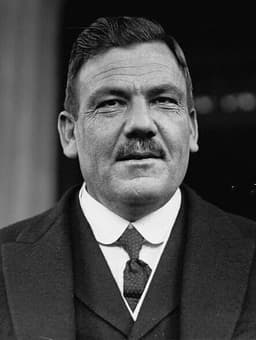
Plutarco Elias Calles
General · Modern
58.5Total
Basic Information
Born
1960
1877
Died
—
1945
Era
Modern
Modern
Nationality
Kosovo
Mexico
Occupation
General
General
Civilization
Western
Western
Score Comparison
Military (10%)
38.3
40.0
Political (20%)
43.7
70.3
Influence (20%)
51.8
68.0
Legacy (20%)
41.7
40.0
Leadership (15%)
61.1
78.0
Strategy (15%)
43.3
52.5
TOTAL
47.3
58.5
Agim Ceku — Complete Timeline
1999 AD
KLA Chief of StaffWar◆ Major
Ceku served as the Chief of Staff of the Kosovo Liberation Army during the final phase of the Kosovo War. He was a key military strategist and commander.
Kosovo WarMilitary Command
Impact: regional
2006 AD
Elected Prime Minister of KosovoPolitical Action◆ Major
Ceku became Prime Minister of Kosovo under UN administration, succeeding Bajram Kosumi. He led the government during the final status negotiations and the run-up to independence.
Kosovo StatusGovernment
Impact: regional
2008 AD
Resigned as Prime MinisterPolitical Action
Ceku resigned after failing to form a coalition government following the 2007 elections. He was succeeded by Hashim Thaci.
Kosovo PoliticsTransition
Impact: regional
Plutarco Elias Calles — Complete Timeline
1915 AD
Governorship of SonoraPolitical Action
Calles served as Governor of Sonora from 1915 to 1919, implementing radical reforms including land redistribution, anti-clerical laws, and labor rights. His governorship established him as a key figure in the Sonoran dynasty and a proponent of revolutionary change.
GovernorshipSonoraReforms
Impact: regionalconstructive
1924 AD
Presidency of MexicoPolitical Action◆ Major
Calles was elected President of Mexico in 1924, serving until 1928. His administration continued revolutionary reforms, including land reform, labor rights, and secularization, but also faced opposition from the Catholic Church and conservative groups.
PresidencyMexican RevolutionReforms
Impact: nationalconstructive
1926 AD
Cristero WarWar◆ Major
Calles enforced anti-clerical laws, including the Calles Law, which restricted the Catholic Church's role in society. This sparked the Cristero War (1926-1929), a violent rebellion by Catholic peasants against the state, resulting in tens of thousands of deaths.
Cristero WarAnti-clericalismReligious Conflict
Impact: nationaldestructive
1928 AD
MaximatoPolitical Action◆ Major
After his presidency, Calles remained the de facto ruler of Mexico during the Maximato (1928-1934), controlling puppet presidents. He continued to influence policy, but his power waned as President L
MaximatoPolitical ControlCárdenas
Impact: national
1929 AD
Founding of the National Revolutionary Party (PNR)Political Action
Calles founded the National Revolutionary Party (PNR) in 1929, which later became the Institutional Revolutionary Party (PRI). This party dominated Mexican politics for over 70 years, institutionalizing the revolution's legacy and centralizing power.
Political PartyPRIInstitutionalization
Impact: nationalconstructive
Expert Analysis
Plutarco Elias Calles vs Agim Ceku
# The General and the Godfather: How Two Strongmen Forged Different Fates
On a sweltering July morning in 1926, Mexican president Plutarco Elías Calles signed a decree that would ignite a three-year civil war, pitting the state against the Catholic Church in a conflict that would claim tens of thousands of lives. Seventy-three years later and thousands of miles away, a Kosovar Albanian commander named Agim Çeku was coordinating guerrilla operations against Serbian forces, fighting not for secularization but for national survival. Both men were generals who became political leaders, yet their paths diverged so sharply that one created a dynasty that ruled for seven decades, while the other faded into the footnotes of a still-unfinished nation. What explains the difference between a man who built an enduring political machine and one who could not hold power beyond a single term?
Origins
Plutarco Elías Calles was born in 1877 in Guaymas, Sonora, into a family of modest means. His father died before he was born, and his mother worked as a seamstress. This early encounter with poverty shaped his worldview: Calles came to see the Catholic Church and the old landed aristocracy as twin obstacles to Mexico's progress. He was a product of the Mexican Revolution, that great upheaval that consumed a generation and remade a nation. By contrast, Agim Çeku was born in 1960 in the village of Çeku, near Peja, in what was then Yugoslavia's Socialist Autonomous Province of Kosovo. His family were ethnic Albanians, a minority that had endured decades of discrimination under Serbian-dominated communist rule. While Calles was forged in the fire of revolution, Çeku was forged in the crucible of ethnic conflict—a struggle for recognition, autonomy, and eventually independence.
Rise to Power
Calles rose through the ranks of the revolutionary army, proving himself a capable administrator and ruthless tactician. In 1915, he became Governor of Sonora, where he implemented radical land reforms and anti-clerical policies that foreshadowed his presidency. His political cunning was evident: he aligned himself with the right patrons, survived the treacherous infighting of revolutionary factions, and emerged as the chosen successor of Álvaro Obregón. When Calles was elected president in 1924, he inherited a nation still bleeding from a decade of civil war. Çeku's rise was more compressed and more violent. He joined the Kosovo Liberation Army (KLA) in the late 1990s, when the organization was little more than a ragtag band of fighters. His military training came not from a national army but from the crucible of the Kosovo War itself. By 1999, he had become Chief of Staff of the KLA, directing operations during NATO's bombing campaign against Serbia. His rise was meteoric but fragile—he was a wartime commander, not a peacetime builder.
Leadership & Governance
Calles governed with an iron fist wrapped in a velvet glove. He enforced the Calles Law of 1926, which severely restricted the Catholic Church's role in education, property ownership, and public life, sparking the Cristero War. Yet he was also a modernizer: he built roads, schools, and irrigation systems; he expanded public health; he laid the foundations for Mexico's oil industry. His political genius, however, lay in the Maximato. After his presidency ended in 1928, he remained the de facto ruler of Mexico for six more years, installing puppet presidents while pulling the strings from behind the scenes. In 1929, he founded the National Revolutionary Party (PNR), which would evolve into the Institutional Revolutionary Party (PRI)—a political machine that would dominate Mexico until 2000. Çeku's governance was more constrained. As Prime Minister of Kosovo from 2006 to 2008, he operated under UN administration, with limited sovereignty. He focused on building state institutions, negotiating with international bodies, and preparing Kosovo for the declaration of independence that came in February 2008. But his tenure was short-lived: after failing to form a coalition government following the 2007 elections, he resigned in 2008. He lacked the institutional base that Calles had so carefully constructed.
Triumph & Tragedy
Calles's greatest triumph was the creation of the PRI—a party that absorbed factions, co-opted opponents, and ensured political stability for generations. His greatest tragedy was the Cristero War, which cost tens of thousands of lives and left deep scars on Mexican society. He was a man who believed in progress through coercion, and his anti-clericalism, while rooted in genuine conviction, unleashed suffering that his secular state could not justify. Çeku's triumph was military: he led the KLA through its most critical phase, helping to force Serbia to the negotiating table. His tragedy was political: he could not translate wartime prestige into lasting power. He was succeeded by Hashim Thaçi, a more cunning politician who would dominate Kosovo's post-independence politics.
Character & Destiny
Calles was a builder, a man who thought in decades and institutions. He understood that power required structure—a party, a bureaucracy, a system of patronage. His personality was cold, calculating, and patient. He was willing to wait, to manipulate, to sacrifice short-term popularity for long-term control. Çeku was a soldier who became a politician by necessity, not by nature. He was decisive in battle but hesitant in governance. He lacked the Machiavellian patience of Calles, the willingness to build a machine that would outlast him. His destiny was to be a transitional figure, a bridge between war and peace, not a founder of dynasties.
Legacy
Calles's legacy is the PRI—a party that brought stability but also corruption, that modernized Mexico but also stifled democracy. He is remembered as both a nation-builder and a dictator, a man who secularized Mexico but at a terrible cost. Çeku's legacy is more ambiguous. He is honored as a military leader who helped win Kosovo's independence, but his political career remains a footnote. He represents the generation that fought for freedom but could not govern it.
Conclusion
Standing at the edge of history, one sees that the difference between these two generals is not one of ambition or courage but of time and circumstance. Calles had a nation to build from the ashes of revolution, and he built a machine that lasted. Çeku had a nation to liberate from occupation, and he did so—but liberation is not the same as governance. One created a dynasty; the other created a moment. In the end, the general who builds a party outlasts the general who only wins a war.
Rankings
🥇
Plutarco Elias CallesLeader
Mil: 40.0Pol: 70.3Inf: 68.0
58.5
🥈
Agim Ceku
Mil: 38.3Pol: 43.7Inf: 51.8
47.3
+11.2 behind
How This Comparison Works
Algorithm
Each figure is scored on 6 dimensions (0—100 scale) based on structured historical data: Military (10%), Political (20%), Influence (20%), Legacy (20%), Leadership (15%), Strategy (15%). The weighted total produces the final ranking.
Data Sources
Scores are computed from structured sub-indicators in the database. Scale factors adjust for era (Ancient ×0.85, Modern ×1.0) and civilization size (Eastern ×1.05, Other ×0.80) to account for differences in population and military scale.
Maximum 3 Figures
Comparisons are limited to 2—3 figures to ensure readability and statistical meaningfulness.
Error Margins
±5 points per dimension — Sub-scores are derived from historical records with inherent uncertainty. Two figures within 5 points on a dimension should be considered roughly equivalent in that area.
Total Score Accuracy
±3 points overall — The weighted combination of 6 dimensions produces a total score with approximately ±3 points of uncertainty. Differences of less than 3 points are not statistically significant— the figures are effectively tied.
Known Limitations
- Historical records are incomplete and uneven across civilizations
- Figures from oral-tradition societies may be underrepresented
- Occupation labels can misclassify multi-role figures
- Scores measure capability and impact, not moral character
- Quantitative scoring is a comparison tool, not absolute truth
Capability Radar
Military (10%) — Battles & Warfare
Battles
35
45
Win Rate
40
50
Expansion
15
30
Political (20%) — Governance & Reform
Reform
25
85
Diplomacy
30
65
Economy
20
60
Influence (20%) — Cultural & Global Reach
Cultural
20
70
Global
20
60
Legacy (20%) — Historical Impact
Historical
25
75
Longevity
15
70
Leadership (15%) — Power & Stability
Tenure
30
70
Stability
15
55
Strategy (15%) — Tactics & Innovation
Strategy
40
55
Tactics
45
40
Reform
20
60
Similar Comparisons
Comments & Discussion
CristeroSkeptic6/16/2026
Calles didn’t just *sign* a decree—he deliberately provoked a civil war to crush Catholic influence, then fled the country during the worst of it like a coward. Real military leaders stay and fight. Çeku actually commanded men under fire during the Kosovo War, while Calles hid behind presidential authority. Calles built a dynasty because he was a backroom dealmaker, not a general. Calles is a bureaucrat with a holster; Çeku is a soldier who happened to govern.
数据铁锤6/16/2026
光看数据对比会骗人。Calles执政七年,Ceku只有短短一年总理任期,但这不是能力差距,而是土壤不同。Calles面对的是革命后权力真空的墨西哥,军阀林立但可收买;Ceku面对的是联合国托管、国际监督下的科索沃,根本没有空间玩长线政治。你让Calles来管科索沃,他连三个月都撑不住。把两个完全不同语境的人硬放在同一坐标上比较,本身就是史学上的懒惰。
GendarmeDivergence6/16/2026
The real difference isn’t policy but personal legacy. Calles created the PRI, which basically *owned* Mexico for 71 years—that’s a political godfather, not a general. Çeku, by contrast, unified Kosovo’s fractious guerrilla factions under the KLA and then voluntarily stepped aside after his term. One built a machine to stay forever; the other understood that nations, not men, should persist. Calles is the Al Capone of Mexican politics; Çeku is a reluctant Cincinnatus.
反体制考据党6/16/2026
别把Çeku捧成圣人。他当年被国际法庭调查过战争罪指控,虽然最后没定罪,但“民族英雄”这标签太干净了。Calles至少明着打教堂、烧圣像,手段粗暴但目标明确。Çeku呢?打着民族解放旗号,手下有没有干过报复性绑架、酷刑?档案没完全解密前,最好别急着一边倒膜拜。历史上每一个“救世主将军”的背后,都藏着没被翻译成英文的文件。
LatinAmericanLens6/16/2026
You miss the structural trap. Calles ruled a nation-state with a coherent territory and army; Çeku led a liberation movement in a disputed province under NATO’s thumb. Calles could suppress the Church and co-opt labor unions because Mexico had a central state to weaponize. Çeku had to negotiate with international envoys, keep Albanian factions united, and manage Kosovo’s ambiguous status. It’s like comparing a cartel boss with a full government to a guerrilla leader running a provisional council